
Paving Management Guide for General Contractors
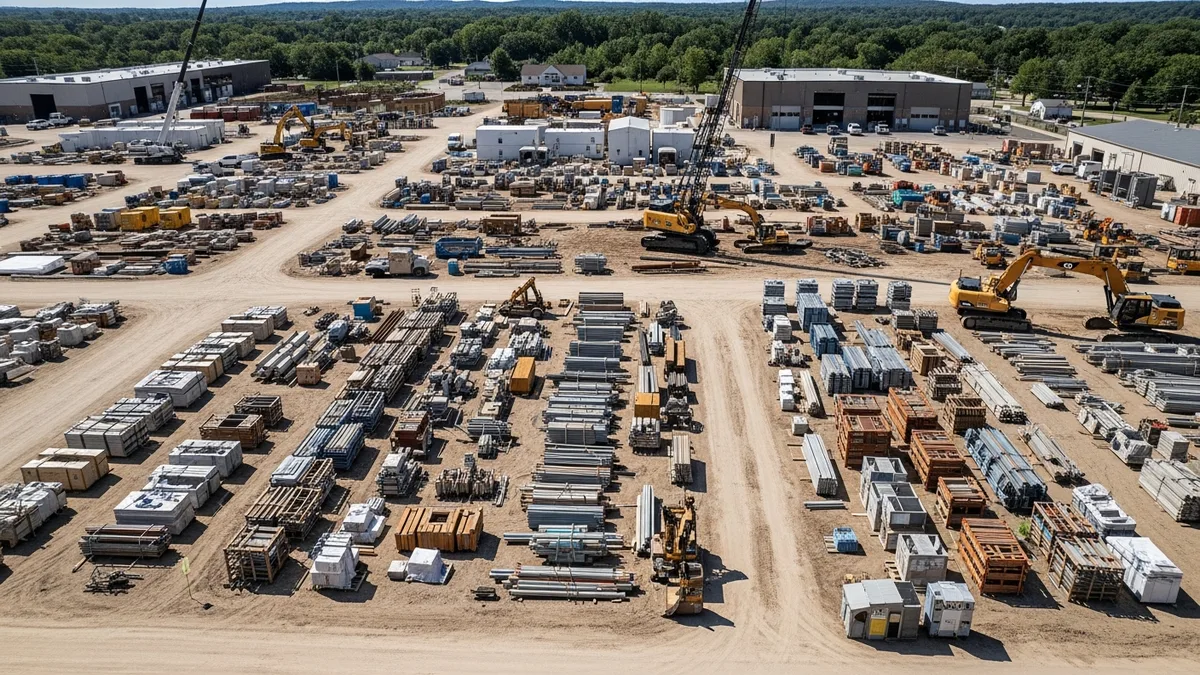
If you have run more than a handful of commercial projects, you know that paving day can either be the smoothest part of your schedule or a total nightmare. There is not much in between. Parking lots and paved areas might seem straightforward compared to the structural work or MEP coordination you deal with on a building, but the reality is that paving involves a surprising number of moving pieces. Subgrade prep, base courses, drainage, curb work, the actual paving, striping, and signage all need to happen in a specific order with specific conditions. Miss one step and you are looking at change orders, rework, or a parking lot that falls apart in two winters.
This guide is written for GCs who coordinate paving scopes on commercial projects. Whether you are building a new retail center parking lot, repaving a warehouse yard, or managing the site work on a mixed-use development, the principles are the same. We will cover what actually matters on paving projects and skip the textbook stuff you already know.
Understanding Your Paving Scope Before You Price It
The biggest mistakes on paving projects happen before anyone fires up a paver. They happen during estimating. If you are not breaking your paving scope down into its real components, you are going to miss something. And on paving work, the things you miss tend to be expensive.
Start with the basics. What is the total area? What is the intended use? A parking lot for a medical office sees different traffic than a distribution center truck yard. The traffic loads drive your section design, which drives your material quantities, which drives your price. Get the geotech report early. If the project does not have one, push for it. Guessing at subgrade conditions is a recipe for disaster.
Your estimating process should break paving into at least these line items: earthwork and subgrade prep, aggregate base course, prime coat or tack coat, asphalt lifts (binder and surface), concrete work (curb, gutter, sidewalks, pads), striping and signage, and stormwater features tied to the paved area. Lump-sum paving bids from subs are fine for simple projects, but on anything over a couple acres, you want unit pricing. Conditions change, quantities shift, and you need a fair way to handle that.
Talk to your paving subs during preconstruction. Ask them about minimum quantities for mobilization, their preferred sequencing, and any site access requirements for their equipment. A paving train is not small. You need room for the material trucks, the paver, the rollers, and usually a skid steer or two. If your site is tight, that changes everything about how you sequence the work.
One more thing on estimating: do not forget about the testing and inspection costs. Most specs require compaction testing on the subgrade, base, and each asphalt lift. That adds up, and it is your responsibility as the GC to make sure it happens.
Subgrade Prep: Where Paving Projects Are Won or Lost
Ask any paving contractor what causes the most callbacks and they will tell you the same thing: bad subgrade. You can lay the most beautiful mat of asphalt anyone has ever seen, and if the dirt underneath is not right, it will crack within a year. Period.
Subgrade preparation starts with getting the grades right. Your site work crew needs to hit the design elevations within tolerance, typically plus or minus a tenth. But elevation is only half the battle. The soil needs to be at the right moisture content and compacted to the specified density, usually 95% of standard Proctor. If the native soils are garbage (high plasticity clays, organics, or anything that holds water), you are looking at undercutting and importing suitable fill. That is a change order conversation you want to have early, not when the paving sub shows up and refuses to pave.
Drainage is critical at this stage. Water is the enemy of every pavement section. If you have got standing water on the subgrade, stop and fix it before you move forward. That might mean installing underdrains, regrading to create positive drainage, or addressing a spring that nobody knew about. Whatever it takes, deal with it now. The cost of fixing drainage at the subgrade level is a fraction of what it costs to tear out and replace failed pavement later.
Proof rolling is one of the best tools you have. Run a loaded dump truck or a heavy roller across the prepared subgrade and watch for deflection. Soft spots will show themselves. Mark them, dig them out, replace with suitable material, and recompact. It takes half a day and can save you months of warranty headaches.
If your project involves paving over areas where utilities were recently installed, pay extra attention to those trench lines. Utility trenches are notorious for settling, even when they were properly compacted at the time of backfill. Give them as much time as possible before paving, and consider additional compaction passes over trench lines. Check out our site logistics guide for more on coordinating utility work with your overall site plan.
Scheduling Paving Work Around Weather and Other Trades
Paving is weather-dependent work, and it is also one of the last things to happen on your site. That combination makes it one of the hardest scopes to schedule with confidence. You are stacking weather risk on top of schedule risk from every trade that comes before you.
For asphalt work, you need dry conditions and warm temperatures. Most specs call for a minimum ambient temperature of 50 degrees Fahrenheit, with the temperature rising. That means spring and fall mornings can be tricky. Early starts in cool weather require careful coordination with the plant to make sure the mix arrives at the right temperature. Your paving sub knows this, but you need to know it too, because it affects when you can schedule the work.
Not sure if Projul is the right fit? Hear from contractors who use it every day.
Concrete paving has its own weather constraints. You cannot pour in freezing conditions without protection measures, and hot weather brings its own set of challenges with rapid moisture loss and plastic shrinkage cracking. Our weather planning guide goes deeper on managing weather-dependent work across your whole project.
The scheduling challenge is not just weather, though. It is the domino effect of every trade that has to finish before paving can start. Underground utilities, storm drainage, curb and gutter, building pad work, landscaping irrigation sleeves under pavement areas. All of that has to be done. If your electrician is two weeks late on the site lighting conduit that runs under the parking lot, your paving sub is sitting at home burning a hole in your schedule.
Build float before paving. Seriously. Put 5 to 7 days of buffer between the last scheduled activity in a paving area and the paving start date. You will use it. And keep your project schedule updated in real time so your paving sub has honest visibility into when they are actually going to mobilize. Nothing burns a relationship with a good paving contractor faster than calling them to mobilize three times and then pushing them each time because the site was not ready.
One scheduling tip that experienced GCs know: try to get your paving sub to commit to a mobilization window rather than a specific date. Give them a week where you will be ready, and let them pick the best weather day within that window. It takes pressure off both of you and usually results in better paving conditions.
Managing Your Paving Subcontractors
Paving subs are a different breed. Most of them run lean crews, they have serious equipment investments, and they are juggling multiple jobs at once because that is the only way the math works on paving. Understanding how they operate will make you better at managing them.
First, respect their production rates. A good paving crew can lay 1,000 to 2,000 tons of asphalt in a day depending on the section design and site conditions. That means they might finish your 200-ton parking lot in half a day. They are going to want to pair your job with another one nearby, and that is fine. Just make sure you are clear on start times and that your material delivery schedule works with their plan.
Communication with paving subs needs to be direct and early. They need to know the tonnage, the mix design, the section thickness, the number of lifts, and any special requirements like handwork around islands or transitions to existing pavement. They also need to know about access. Can a tri-axle dump truck get to every area of the lot? Are there overhead obstructions? Weight restrictions on adjacent roads?
Quality control during paving is your job as the GC. You or your superintendent should be on site during every paving operation. Watch for proper joint construction, check that the mat thickness meets spec (carry a ruler and check the loose mat before compaction), and make sure the rollers are following the paver at the right distance. If something looks wrong, say something immediately. Once asphalt cools, your options for fixing it drop to basically zero.
For more on working effectively with specialty subs, our subcontractor management guide covers the communication and documentation practices that keep projects on track.
Get your testing agency scheduled and confirmed before paving day. You need density tests on the compacted asphalt, and most specs require cores to verify thickness. If the testing agency no-shows, you are either paving without documentation (bad idea) or shutting down and eating a remobilization charge. Neither option is good.
Concrete Paving: Curbs, Gutters, Sidewalks, and Flatwork
Most parking lot projects involve a mix of asphalt and concrete. The asphalt handles the driving and parking surfaces, while concrete is used for curbs, gutters, sidewalks, ADA ramps, dumpster pads, and sometimes high-traffic areas like drive-through lanes or loading docks.
The sequencing between concrete and asphalt work is important to get right. In most cases, concrete curb and gutter goes in before the asphalt. The curb acts as a form for the asphalt edge, gives you a clean line, and needs to be set at the right elevation to ensure proper drainage. If your curb elevations are off, your parking lot drainage is off, and that is a problem that shows up every time it rains.
For the concrete work itself, make sure your concrete sub understands the project tolerances. Curb and gutter work might seem routine, but getting the flow line right requires attention to detail. A quarter inch in the wrong direction on a gutter flow line can send water pooling in the wrong spot. Our concrete basics guide covers the fundamentals that every GC should understand about concrete work on their projects.
ADA compliance is non-negotiable on parking lot concrete. Accessible parking spaces, aisles, ramps, and routes all have specific slope requirements. Cross slopes, running slopes, level landings. All of it gets checked during final inspection, and if it is wrong, you are tearing it out. Make sure your concrete sub has the ADA details in their scope and that your superintendent is checking slopes during placement, not after the concrete has set up.
Concrete finishing on exterior flatwork is different from interior slab work. You are dealing with weather exposure, freeze-thaw cycles, and the need for slip resistance. Broom finishes are standard for sidewalks, and the timing of that broom finish matters more than most people think. Too early and you tear the surface. Too late and you cannot get a consistent texture. If you want to go deeper on this topic, our concrete finishing guide has the details.
Joints in concrete paving are another area where things go wrong. Control joints need to be cut at the right spacing (typically 10 to 12 feet on center for 4-inch sidewalks) and at the right depth (one quarter to one third of the slab thickness). Late sawcutting leads to random cracking, and random cracks on a brand new parking lot sidewalk will get you a callback from the owner every single time. For existing slabs that have already settled or cracked, mudjacking and slab leveling can be a cost-effective repair option before a full replacement.
Striping, Signage, and Closing Out the Paving Scope
You have got a beautiful new parking lot. The asphalt is smooth, the concrete curbs are crisp, and the drainage works. Now you need to stripe it, install signs, and close it out. This last phase is where a lot of GCs lose focus, and it shows.
Striping cannot happen until the asphalt has cured enough. For new asphalt, most striping contractors want to wait at least 48 to 72 hours, and preferably a week, before applying paint. Thermoplastic striping needs even more cure time. Put this in your schedule and do not let the owner pressure you into striping too early. Paint that does not bond to uncured asphalt will peel off in a few months, and you will be back out there re-striping on your dime.
The striping layout needs to match the approved site plan, which needs to match the ADA requirements, which need to match the local fire code for fire lane markings. This sounds obvious, but the number of parking lots that get re-striped because someone used the wrong layout is surprisingly high. Have your superintendent walk the layout with the striping contractor before they start. Verify the accessible space count, the van-accessible spaces, the fire lanes, and any directional arrows or stop bars.
Signage goes in at the same time or shortly after striping. Handicap signs, stop signs, directional signs, fire lane signs. Make sure you have the right sign types for your jurisdiction. Some areas require specific colors, reflectivity ratings, or mounting heights. Your striping and signage sub usually handles all of this, but the GC needs to verify it against the plans and local codes.
For closeout, your paving scope documentation should include all compaction test results for subgrade, base, and asphalt, thickness verification from cores, concrete test results (breaks), as-built grades if required, ADA slope measurements, and photos of the completed work. Get this package together before your final inspection because the inspector will ask for it.
One last thing: protect the new pavement. If there are other trades still working on the building, keep heavy equipment and material deliveries off the new asphalt for as long as possible. Dumpsters, scaffold loads, and concrete trucks parked on fresh asphalt will leave marks and damage that you own. Set up temporary traffic control and designated routes. It is a lot easier to prevent damage than to repair it.
Bringing It All Together
Paving management is not glamorous work, but it separates the GCs who deliver clean projects from the ones who are always fighting fires at the end. The keys are simple: get your subgrade right, schedule with enough float, communicate early and often with your subs, and do not cut corners on quality control during placement.
If you are managing multiple paving projects or juggling paving alongside other active scopes, having a system that gives you real-time visibility into your schedule and your subs’ status makes a real difference. Take a look at how Projul handles project scheduling and request a demo to see if it fits how your team works.
Ready to stop guessing and start managing? Schedule a demo to see Projul in action.
The best parking lots are the ones nobody thinks about. They drain right, they hold up to traffic, and they look good years after the ribbon cutting. That does not happen by accident. It happens because a GC paid attention to every phase, from the dirt up.
Frequently Asked Questions
How long does a commercial parking lot paving project typically take?
What is the minimum temperature for laying asphalt?
Should I choose asphalt or concrete for a commercial parking lot?
How do I coordinate paving with other site trades?
What are the most common paving failures on commercial projects?
Related Articles

Construction Septic System Installation: What Every GC Needs to Know
Septic systems on rural builds bring unique scheduling, permitting, and soil challenges that can wreck your timeline if...
Read More →
Construction Painting Project Management: Coordinating Interior and Exterior Phases
Painting is one of those trades that touches every other trade on the schedule. Get the sequencing wrong, and you're...
Read More →
Epoxy Flooring and Industrial Coatings: A Contractor's Complete Guide
Epoxy flooring and industrial coatings are high-margin work when you get the process right and a fast way to lose money...
Read More →