
Construction Productivity Tips | Reduce Waste & Boost Output
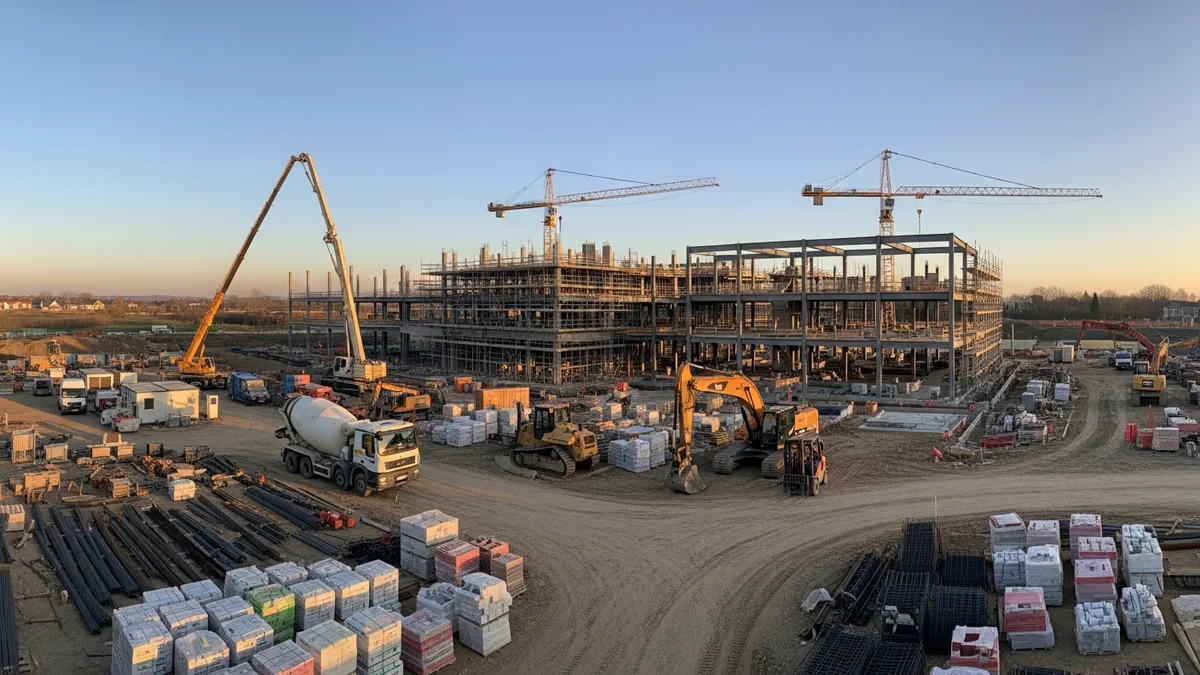
Here is a number that should bother every contractor: construction productivity has been essentially flat for the past 20 years. While manufacturing has doubled its output per worker and agriculture has tripled it, construction has gone sideways. In some studies, it has actually declined.
That is not because construction workers are lazy. Anyone who has spent a day on a job site knows that is not the case. The problem is how we organize the work, move information, and use (or don’t use) the tools available to us.
The good news is that improving productivity does not require a massive investment or a complete overhaul of your business. Most of the biggest gains come from eliminating waste, communicating better, and being more intentional about how you plan each day.
Why Construction Productivity Has Stalled
Before we get into solutions, it helps to understand why construction has fallen behind other industries.
Every project is unique. A factory makes the same product thousands of times and optimizes the process. Every construction project is different: different site, different design, different conditions. That makes it harder to standardize.
The industry is fragmented. A typical commercial project involves the general contractor, 15-30 subcontractors, architects, engineers, inspectors, and the owner. Coordinating all those parties is a massive challenge, and miscommunication between them causes a huge amount of wasted time.
Technology adoption has been slow. Construction ranks near the bottom of all industries for technology investment. Many contractors still run their businesses on spreadsheets, paper timesheets, and phone calls. The information gets lost, arrives late, or never makes it to the field.
The workforce is shrinking. Fewer young workers are entering the trades, and experienced workers are retiring. That means crews are often short-staffed, and less experienced workers need more supervision and produce more rework.
None of these problems will be fixed overnight. But understanding them helps you see where the opportunities are on your own projects.
The Biggest Time Wasters on Job Sites
Multiple studies have tracked how construction workers spend their time on job sites. The results are consistent and a little alarming: skilled trade workers spend only about 30-40% of their day on actual productive work (what researchers call “wrench time”).
The rest of the day goes to:
Waiting for Materials or Equipment
Workers standing around because the materials they need have not arrived or the equipment they need is being used by another crew. This is one of the most common and most preventable time wasters.
Fix it: Plan material deliveries to arrive before they are needed, not the day of. Stage materials close to where they will be installed. Use your scheduling software to coordinate equipment sharing between crews so no one is waiting.
Rework
Doing the same work twice because of errors, miscommunication, or quality problems. Industry data suggests rework accounts for 5-12% of total project costs. On a $1 million project, that is $50,000 to $120,000 of wasted labor and material.
Fix it: Hold pre-construction meetings with every trade to review scope and coordination. Use clear, complete drawings and specifications. Inspect work before it gets covered up. When you catch a mistake, fix it immediately instead of adding it to the punch list.
Travel Between Job Sites
For contractors running multiple projects, crews can lose an hour or more per day just driving between sites. Multiply that by a full crew and it adds up fast.
Fix it: Schedule crews to stay at one site for full days or full weeks whenever possible. Minimize mid-day moves. When someone does need to travel between sites, make sure they have everything they need so they don’t make extra trips.
Looking for Tools and Supplies
It sounds minor, but workers searching for tools, materials, or information adds up to significant lost time over the course of a project. Disorganized job sites and tool trailers make this worse.
Fix it: Organize your tool trailers and material staging areas. Label everything. Assign someone to manage tool inventory. A few hours spent organizing saves dozens of hours over the life of a project.
Unclear Instructions
Workers who don’t know exactly what to do will either wait for direction, do it wrong, or do something else. All three outcomes waste time. This is often the result of poor communication between the office and the field.
Fix it: Provide clear daily work plans. Make sure field supervisors have access to current drawings and specifications. Use project management tools that push information to the field in real time instead of relying on phone calls and texts that get lost.
The 5-Minute Morning Huddle
One of the simplest and most effective productivity tools costs nothing and takes almost no time: the 5-minute morning huddle.
Before the crew starts work each day, the foreman or crew lead gathers everyone for a quick standup meeting. Keep it to five minutes, maximum. Cover three things:
- What are we doing today? Specific tasks, locations, and goals.
- What do we need? Materials, tools, equipment, and access.
- Any safety concerns? Hazards specific to today’s work.
That is it. Five minutes. No chairs, no conference room, no PowerPoint.
Why does this work so well? Because it eliminates the 20-30 minutes that crews otherwise spend figuring out what they are supposed to do. It catches problems (missing materials, equipment conflicts, safety issues) before they waste hours of labor. And it gives every worker a clear picture of what success looks like for the day.
If you do nothing else from this article, start doing morning huddles. The return on that five-minute investment is enormous.
Lean Construction Basics
Lean construction takes principles from lean manufacturing and applies them to the job site. The core concept is simple: any activity that does not directly contribute to the finished product is waste. Your goal is to eliminate as much waste as possible.
The Eight Types of Waste
Lean identifies eight types of waste, adapted here for construction:
- Overproduction: Building more than what is needed or building too early
- Waiting: Crews idle because of missing materials, equipment, or information
- Transportation: Moving materials or equipment more than necessary
- Over-processing: Doing more work than the specification requires
- Inventory: Excess materials stored on site, creating clutter and potential damage
- Motion: Workers walking long distances for tools, materials, or information
- Defects: Errors that require rework
- Unused talent: Not using the skills and ideas of your workforce
Pull Planning
One of the most practical lean tools is pull planning (also called the Last Planner System). Instead of the project manager creating the schedule in isolation, the trades who will do the work plan it together.
The team starts with the milestone date and works backward, with each trade identifying what they need from the previous trade to start their work. This creates a more realistic schedule and builds buy-in from the people who actually have to execute it.
Just-in-Time Delivery
Instead of having all your materials delivered at once (where they take up space, get damaged, and create obstacles), schedule deliveries as close to installation time as possible. This requires better planning and coordination with suppliers, but it keeps the site cleaner and reduces material handling.
Prefabrication: Moving Work Off Site
Prefabrication is one of the biggest opportunities to improve construction productivity. The concept is straightforward: instead of building everything on the job site, assemble components in a controlled shop environment and then install them on site.
Why Prefab Works
Controlled environment. No weather delays, good lighting, proper work surfaces, and easy access to tools and materials.
Parallel work. While site work is happening (foundations, structure), prefabricated components are being built in the shop. This compresses the overall schedule.
Better quality. Shop conditions allow for more precise work with fewer errors. Quality control is easier when everything is at bench height in a well-lit shop.
Less waste. Material cutoffs and scraps are easier to manage and reuse in a shop. On-site material waste runs 10-15% on average; shop waste is typically 2-5%.
Faster installation. Pre-built assemblies install in a fraction of the time compared to stick-building in place.
Common Prefab Applications
- Wall panels and floor trusses
- Electrical conduit racks and panel assemblies
- Plumbing riser assemblies and fixture carriers
- Ductwork sections
- Modular bathroom and kitchen pods
- Structural steel connections
You don’t need a massive shop to start prefabricating. Even small contractors can prefab electrical assemblies, plumbing rough-ins, or framing components in a garage or small warehouse.
Technology for Productivity
Technology is not a magic solution, but the right tools can make a real difference when used consistently.
Scheduling Software
Paper schedules and whiteboards don’t cut it when you are running multiple projects with multiple crews. Good scheduling software lets you see all your projects at once, spot conflicts before they happen, and push schedule updates to the field instantly.
Time Tracking
If you can’t measure it, you can’t improve it. Digital time tracking gives you accurate data on where your labor hours are going. GPS-enabled time tracking eliminates buddy punching and gives you real data on crew locations and site time.
Project Management Software
The biggest productivity killer in most construction companies is information stuck in the wrong place. The plans are in a plan room, the RFIs are in email, the schedule is on a whiteboard, and the daily logs are in a filing cabinet.
Project management software puts everything in one place where the field and office can both access it. When your superintendent can pull up the latest drawing revision on a tablet instead of driving back to the office, that is a direct productivity gain.
Drones and Laser Scanning
For larger projects, drones and 3D laser scanning can dramatically speed up surveying, progress documentation, and quality verification. What used to take a crew a full day to measure can be scanned in an hour.
BIM and 3D Coordination
Building Information Modeling (BIM) catches coordination conflicts between trades before construction starts. Finding a duct-pipe clash on a computer screen costs almost nothing. Finding it on a job site costs thousands.
Crew Scheduling Optimization
How you schedule your crews has a direct impact on productivity. Here are some principles that work:
Batch Similar Work
When possible, schedule crews to complete all similar work in sequence rather than jumping between different types of tasks. A framing crew that frames all the walls on one floor before moving to the next is more productive than one that bounces between framing, blocking, and backing on different floors.
Minimize Crew Moves
Every time a crew moves to a new location, there is setup time, travel time, and a learning curve for the new space. Schedule work to minimize these transitions. If a crew is going to be at a site, give them enough work to stay there for a full day or longer.
Right-Size Your Crews
Bigger crews are not always more productive. In tight spaces, extra workers just get in each other’s way. Match your crew size to the work area and the task. Four workers in a small room will be less productive per person than two.
Stagger Start Times
If multiple trades are working in the same area, consider staggering start times by 30-60 minutes. This reduces congestion at material staging areas, tool rooms, and access points. It also gives the first crew time to get set up before the area gets crowded.
Protect Your Critical Path
Know which activities are on the critical path of your schedule and protect them. If your concrete crew is the bottleneck, make sure they have everything they need to work without interruption. Move other activities around the critical path, not the other way around.
Measuring Construction Productivity
You need to measure productivity to know if your improvement efforts are working. Here is how to do it practically.
Labor Hours Per Unit
The most useful productivity metric is labor hours per unit of work installed. For example:
- Labor hours per square foot of drywall hung
- Labor hours per linear foot of pipe installed
- Labor hours per cubic yard of concrete placed
- Labor hours per light fixture installed
Track these numbers on every project. Over time, you build benchmarks that tell you exactly how your crews are performing compared to your estimates and compared to past projects.
Planned vs. Actual
Compare planned labor hours (from your estimate) against actual labor hours (from your time tracking) for each phase of work. If you estimated 200 hours for framing and you are at 180 hours with 90% of the work done, you are beating your estimate. If you are at 250 hours with 70% done, you have a problem that needs attention now.
Percent Plan Complete (PPC)
This lean construction metric measures how many planned weekly tasks actually get completed. If you planned 20 tasks for the week and completed 16, your PPC is 80%. Track this weekly and investigate why planned tasks did not get completed. The reasons reveal your biggest productivity barriers.
Use Real Data
The key to all of this is accurate data. Paper timesheets filled out from memory at the end of the week are not accurate. Digital time tracking with task-level coding gives you the real numbers you need to make decisions.
Tools like Projul combine scheduling, time tracking, and project management in one platform. That means the data you need to measure and improve productivity is already connected, without manual data entry or spreadsheet gymnastics.
Building a Culture of Productivity
Productivity improvements stick when they become part of your company culture, not just a one-time initiative.
Set Clear Expectations
Your crews need to know what good productivity looks like. Share your targets. If you estimated 0.5 labor hours per square foot for framing, tell the crew. People work differently when they have a clear target.
Recognize Good Performance
When a crew beats the estimate or finishes ahead of schedule, acknowledge it. This does not have to be elaborate. A simple “nice work” from the superintendent or a mention at the next company meeting goes a long way.
Ask Your Crews
The people doing the work know better than anyone what slows them down. Ask your foremen and crew members what gets in their way. Then actually fix those things. When workers see that their feedback leads to real changes, they keep bringing ideas.
Invest in Training
A skilled worker is a productive worker. Invest in training for both technical skills and leadership. Your foremen are the front line of productivity management, and most of them were promoted because they were great carpenters or electricians, not because they were trained in crew management.
Track and Share Results
Post productivity numbers where crews can see them. Not to shame anyone, but to create awareness and friendly competition. When one crew sees that another crew is beating the benchmark, it motivates improvement.
Start Today
You don’t need to implement everything in this article at once. Pick one or two things that address your biggest pain points and start there.
If your crews waste 30 minutes every morning figuring out what to do, start the daily huddle.
If you have no idea where your labor hours are going, start tracking time digitally.
If materials are always showing up late, tighten up your scheduling and procurement process.
Small improvements compound over time. A 10% productivity gain across all your projects can be worth hundreds of thousands of dollars per year in a mid-size construction company. That is real money that drops to your bottom line.
The contractors who will thrive in the next decade are the ones who take productivity seriously today. The tools and methods exist. The question is whether you will put them to work.
Frequently Asked Questions
Why has construction productivity stayed flat for so long?
What are the biggest time wasters on construction job sites?
What is the 5-minute morning huddle and why does it work?
How do you measure construction productivity?
What is lean construction and how does it help productivity?
How does prefabrication improve construction productivity?
Related Articles
Construction Warranty Callback Management: How to Handle Warranty Work Without Losing Money
Warranty callbacks don't have to destroy your margins. This guide covers practical systems for tracking, scheduling,...
Read More →
Building Your Own Contractor Shop or Yard: What Every GC Needs to Know
At some point, every growing contractor faces the same question: do we keep renting, or do we build our own shop? This...
Read More →
Construction Contract Negotiation: 25 Tips to Protect Your Business Before You Sign
Most contractors lose money not because they can't build, but because they signed a bad contract. Here are 25...
Read More →