
12 Construction Productivity Tips for Crews
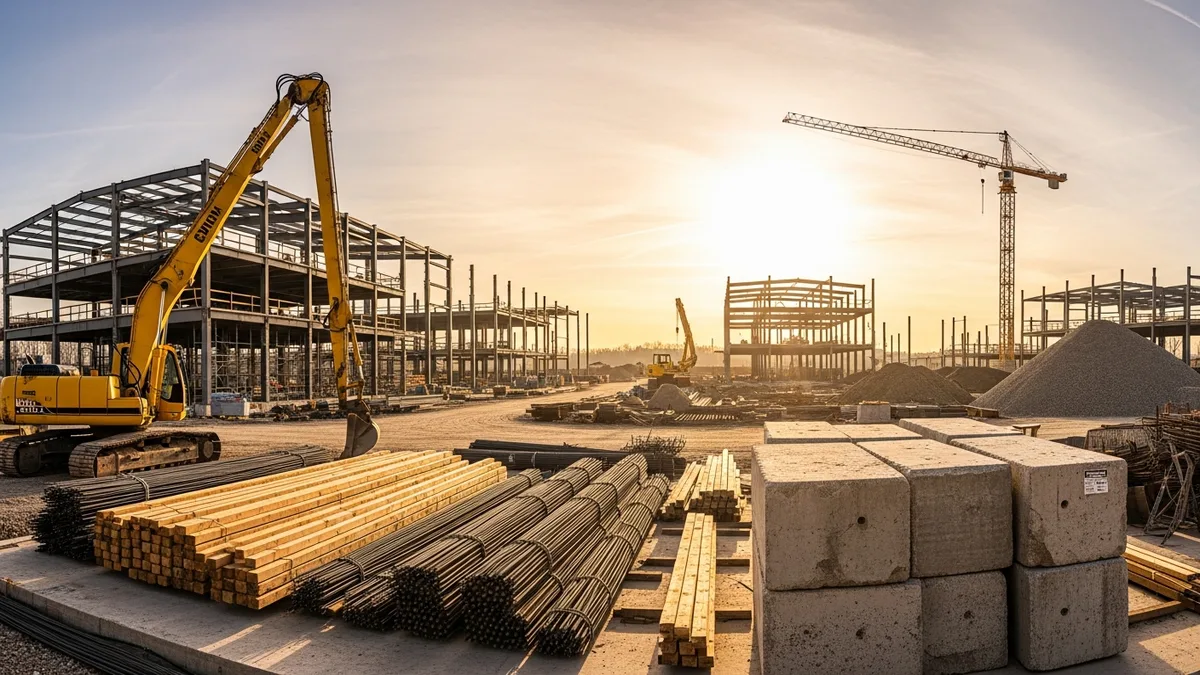
Here’s a number that should bother you: the average construction worker spends less than 60% of their day on actual productive work. The rest? Waiting on materials. Figuring out what they’re supposed to be doing. Walking back and forth to grab tools. Redoing work that wasn’t right the first time.
That’s not a people problem. That’s a systems problem.
If you’re a contractor trying to grow, your first instinct is probably to hire more people. And sometimes that’s the right call. But most of the time, there’s a ton of wasted capacity sitting right inside the crew you already have. You just need to unlock it.
These 12 tips aren’t theory. They come from what we see working contractors do every day to squeeze more output from the same team, without burning people out or cutting corners.
Start Every Day With a 10-Minute Huddle
This is the single easiest productivity win in construction, and most crews skip it entirely.
A morning huddle isn’t a long meeting. It’s 10 minutes, max. Everyone gathers up, and you cover three things: what’s getting done today, what materials or equipment are needed, and what potential problems could slow things down.
Tip 1: Make the huddle non-negotiable. Same time every morning. No phones. No wandering off to start work early. Ten minutes of clarity saves an hour of confusion later.
When your crew knows the plan before they pick up a tool, they stop asking questions all morning. They stop walking over to the foreman every 20 minutes to find out what’s next. They just work.
Tip 2: Assign owners, not just tasks. Don’t say “we need to finish framing the second floor.” Say “Jake, you and Marcus are finishing the second floor framing today. Target is having it ready for inspection by 3 PM.” When someone owns a task with a clear target, they move with purpose.
The huddle also catches problems before they eat your day. If the drywall delivery got pushed to tomorrow, you find out at 7 AM instead of discovering it at 10 when your crew is standing around with nothing to do.
One more thing about huddles: keep them standing up. The moment people sit down, a 10-minute check-in becomes a 30-minute meeting. Stay on your feet, cover the plan, and break. Your crew will respect a huddle that respects their time.
Fix Your Scheduling Before You Fix Anything Else
Bad scheduling is the silent killer of construction productivity. It doesn’t announce itself. It just slowly drains hours out of every week through double-bookings, crews waiting on subs, and people driving across town because nobody checked the calendar.
Tip 3: Put every job and every crew on one visual schedule. If your schedule lives in your head, a spreadsheet, and a group text, you’ve already lost. You need a single source of truth that everyone can see. Projul’s scheduling tools let you drag and drop crews across jobs so you can spot conflicts in seconds instead of finding out about them on-site.
Tip 4: Batch jobs by location when possible. If you have three jobs on the east side of town and two on the west side, don’t send the same crew zigzagging back and forth. Group jobs geographically and schedule crews in clusters. The drive time savings add up fast. A crew that saves 30 minutes of drive time per day gets back 2.5 hours per week. Over a year, that’s more than three full work weeks of recovered time.
Tip 5: Stop overbooking your best people. Every company has that one crew lead or foreman who gets pulled onto every job because they’re reliable. But when you stretch your top performers across too many projects, none of those projects get their best work. Protect their focus. Let them finish what they start.
If you’re managing crews across multiple jobs, our construction crew management guide goes deeper on how to handle the scheduling and communication side of things.
Track Time Like It’s Money (Because It Is)
Labor is your biggest expense. On most residential and commercial jobs, it accounts for 40-60% of total project cost. Yet a shocking number of contractors still track time with paper sheets, or worse, the honor system.
The problem with bad time tracking isn’t just payroll accuracy, although that matters too. The real problem is you can’t improve what you can’t measure.
Tip 6: Use mobile time tracking with GPS verification. When your crew clocks in and out from their phones and the system logs their location, you get accurate data without arguments. No more Friday afternoon guesswork trying to remember who was where on Tuesday. Projul’s time tracking does exactly this, and it syncs straight to your job costing so you can see labor spend in real time.
Tip 7: Track time by task, not just by job. Knowing that your crew spent 40 hours on the Smith renovation is useful. Knowing they spent 18 of those hours on demo, 12 on framing, and 10 on electrical rough-in is way more useful. Task-level tracking shows you where time actually goes, which means you can estimate better and spot inefficiencies faster.
When you have real time data, patterns jump out. You might discover that your crews consistently spend twice as long on cleanup as you estimated. Or that a particular type of job always runs over on the plumbing phase. Those insights let you adjust before the next project, not after you’ve already lost money.
Here’s a real scenario: say you estimated 24 hours for a bathroom tile job and your time tracking shows your crew consistently takes 32 hours. That’s not a crew problem. That’s an estimating problem. Without the data, you’d keep underbidding tile work and wondering why those jobs never hit margin. With the data, you adjust your estimates and protect your profit on every future bid.
Stop guessing where your labor dollars go. Track them, review them weekly, and use what you learn.
Eliminate Rework With Better Daily Documentation
Rework is productivity poison. Industry studies put construction rework at anywhere from 5% to 30% of total project cost, depending on the type of work. That means on a $500,000 job, you could be spending $25,000 to $150,000 doing things twice.
Projul is trusted by 5,000+ contractors. See their reviews to find out why.
Most rework comes from one of three places: unclear instructions, missed details during handoffs, and work that doesn’t match specs. All three are preventable with better documentation habits.
Tip 8: Fill out daily logs every single day. No exceptions. A good daily log captures what work was completed, who was on site, what materials were used, weather conditions, and any issues that came up. It takes 10 minutes at the end of each day, and it creates a record that protects you from disputes, helps with handoffs, and gives you a clear picture of progress. Projul’s daily logs make this easy on mobile so your foreman can knock it out before they leave the site.
Tip 9: Take photos and attach them to your logs. A photo log does what written descriptions can’t. When the plumber says “I left the rough-in ready for inspection” and there’s a photo to prove it, the next crew knows exactly where things stand. When there’s a dispute about whether something was done correctly, photos end the argument fast.
Daily logs also create accountability without micromanagement. When your crew knows that progress gets documented every day, they naturally stay more focused. Nobody wants to write “waited around for materials” in the log three days in a row.
There’s a legal side to this too. When a client disputes a timeline, a subcontractor claims they weren’t responsible for a delay, or an insurance issue comes up, your daily logs are your evidence. Contractors who keep consistent logs win disputes. Contractors who don’t keep logs pay for them.
Cut the Waste That’s Hiding in Plain Sight
There’s a concept in lean manufacturing called “the eight wastes.” Construction has its own version, and most of it is so normal that contractors stop seeing it. Here’s where to look:
Tip 10: Audit your material staging and delivery. How often does your crew stop working because they’re waiting on materials? How many trips does someone make to the supply house in a week? Each trip is at least an hour of lost productivity, usually more. Order materials in advance, have them delivered to the site, and stage them where they’ll actually be used. A 30-minute prep session the day before can save two or three hours the day of.
Tip 11: Standardize your tool and equipment loadouts. If your crew spends 15 minutes every morning hunting for the right drill bits, extension cords, or saw blades, that’s over an hour per week gone. Build standard loadout lists for common job types. Before a crew rolls out, run through the list. Everything goes on the truck the night before.
This also applies to information. How many times does someone call the office to ask about a spec, a change order, or a client preference? Every one of those calls is an interruption that breaks focus. Put your job info in a central place your field team can access from their phone, and you cut those interruptions by half or more.
Here’s a waste most contractors overlook: context switching. Every time your foreman stops what they’re doing to answer a phone call, check a text, or deal with a question from another job, it takes them 10 to 15 minutes to get back to full focus. If that happens six times a day, you’ve lost over an hour of your most experienced person’s productive time. Batch communication into specific times when possible. Let people focus in blocks.
Another one: cleanup and site organization. A messy jobsite is a slow jobsite. When crews have to step over debris, search through piles for materials, or work around yesterday’s waste, everything takes longer. Spend 15 minutes at the end of each day squaring the site away. It pays for itself the next morning when your crew can actually move and find what they need.
Build a Culture That Rewards Getting Things Done
You can have the best scheduling, the best tools, and the best processes in the world. If your crew doesn’t care, none of it matters.
Productivity culture isn’t about pushing people harder. It’s about creating an environment where doing good work feels good and getting things done gets recognized.
Tip 12: Celebrate wins and share the scoreboard. Most crews have no idea how they’re performing relative to the estimate. They show up, do their work, and go home. When you share progress with your team (“we’re two days ahead of schedule on this one”) it creates momentum. People work harder when they can see the finish line and know they’re winning.
Tie incentives to outcomes when you can. If a crew finishes a phase ahead of schedule without sacrificing quality, recognize it. Buy lunch. Hand out a bonus. Even a simple “you guys crushed it this week” in front of the team goes further than most contractors realize.
And here’s one that’s easy to overlook: remove friction from their day. If your crew is fighting with clunky systems, filling out paperwork that nobody reads, or jumping through hoops to get simple approvals, they’ll disengage. The best thing you can do for productivity is make it easy for people to do their actual job.
Training matters here too. A crew that knows the right way to do something finishes faster and produces better work than one that’s figuring it out as they go. Invest time in teaching newer workers how your company does things. Pair them with experienced crew members. The upfront time cost pays back quickly in fewer mistakes and less rework.
And don’t underestimate the power of reliable scheduling. When your crew knows their schedule a week in advance and it doesn’t change three times before Monday, they can plan their lives. That might sound like a soft benefit, but contractors who provide schedule stability have way less turnover. And turnover is the ultimate productivity killer, because every new hire spends weeks getting up to speed.
These 12 tips work best as a system, not a checklist. The morning huddle feeds into better scheduling. Better scheduling reduces wasted time. Time tracking shows you where the remaining waste is. Daily logs create accountability. And a culture of recognition keeps the whole machine running.
You don’t have to implement everything at once. Start with the morning huddle and time tracking. Those two changes alone will show you more about your crew’s productivity than anything else. Once you see the data, the next steps become obvious.
If you’re looking for a tool that ties scheduling, time tracking, and daily logs together in one place your field crews will actually use, take a look at Projul’s features and pricing. It’s built specifically for contractors, and the mobile experience means your crew can stay productive without coming back to the office.
The contractors who win in this market aren’t the ones with the biggest crews. They’re the ones who get the most out of the people they already have. That starts with fixing the systems, not hiring more bodies.
See how Projul makes this easy. Schedule a free demo to get started.
Your crew is capable of more than you think. Give them the right setup, and they’ll prove it.
Frequently Asked Questions
How do I measure construction crew productivity?
What are the biggest productivity killers on construction jobsites?
Can construction management software actually improve productivity?
How do I get my crew to be more productive without micromanaging?
What's the fastest way to improve construction productivity?
Related Articles
How to Implement Construction Software Without Losing Your Mind
Most construction software rollouts fail. Not because the software is bad, but because the rollout was rushed. Here are...
Read More →
How Selections Can Pay for Themselves in Three Easy Steps
Most contractors lose thousands each year on wrong material orders, slow client decisions, and missed upsell chances....
Read More →
3 Free Concrete Estimate Templates for Every Pour Type (2026)
Three ready-to-use concrete estimate templates with realistic line items, material costs, labor rates, and markup...
Read More →