
Construction Project Recovery Guide (2026)
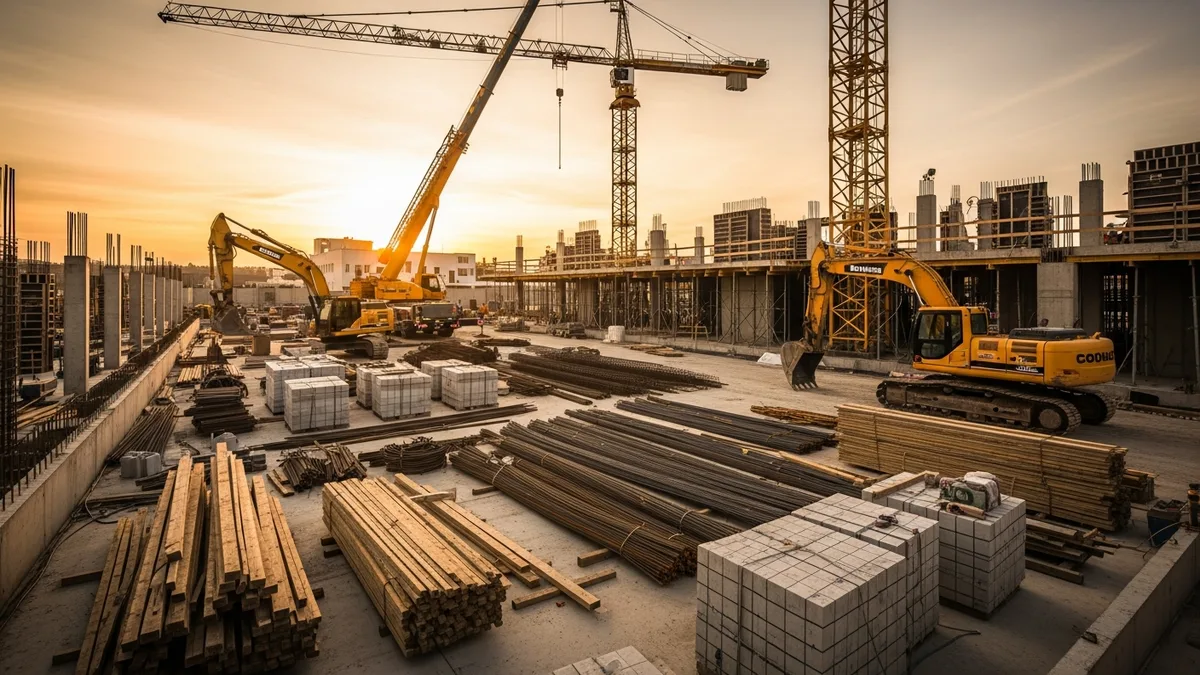
Every contractor has had that sinking feeling. The job started clean. The estimate was solid, the schedule looked good, the crew was locked in. Then somewhere around week three or four, things started slipping. A material delivery got pushed. A sub didn’t show. The client changed their mind on the tile. And before you know it, you’re staring at a project that’s bleeding money, running behind, and testing every relationship on the job.
Here’s the thing: a project going sideways doesn’t mean it’s a lost cause. Some of the best jobs you’ll ever run are the ones you pulled back from the edge. The difference between a project that recovers and one that becomes a nightmare usually comes down to how quickly you recognize the problem, how honestly you assess it, and what steps you take in the first 48 hours after you realize things are off.
This guide is for contractors who are in the middle of it right now, or who want to be ready when it happens. Because it will happen. Let’s talk about how to save the job.
Recognizing the Warning Signs Before It’s Too Late
The biggest mistake contractors make with a struggling project isn’t the thing that caused the problem. It’s waiting too long to admit there is one. We’ve all done it. You tell yourself the schedule will catch up next week. You figure the budget will balance out once that one invoice gets sorted. You assume the client is fine because they haven’t called to yell yet.
But problems on a construction job don’t fix themselves. They compound. A two-day delay becomes a two-week delay once it hits the critical path. A $3,000 overrun on framing becomes a $15,000 problem by the time it ripples through the rest of the trades.
Here are the signals that should trigger your recovery instinct:
- Schedule slippage on critical tasks. Not everything matters equally. If your flooring sub is a day late, that might be fine. If your concrete pour slips by three days and five other trades are stacked behind it, you’ve got a real problem.
- Budget line items creeping past estimates. One line item going over isn’t a crisis. Three or four trending in the wrong direction at the same time? That’s a pattern, and patterns don’t reverse on their own.
- Daily logs going unfilled or getting vague. When your crew stops documenting what’s happening on site, you lose visibility. And when you lose visibility, you lose control. If your daily logs are blank or reduced to “worked on-site,” that’s a red flag.
- Communication gaps between office and field. If your PM hasn’t talked to the lead carpenter in two days, something is getting missed. Guaranteed.
- Client frustration surfacing. By the time a client brings up concerns, they’ve usually been sitting on them for a while. Don’t dismiss early complaints as nitpicking.
The contractors who recover projects fastest are the ones who treat these signals like a check engine light, not a suggestion, but a demand for immediate attention.
Running an Honest Project Assessment
Once you’ve acknowledged the project is off track, the next step is figuring out exactly how far off it is. This isn’t the time for optimistic estimates or rough guesses. You need real numbers and a clear picture.
Start with the schedule. Pull up your project schedule and compare where you are today against where you planned to be. Don’t just look at the overall timeline. Go task by task. Which activities are behind? Which ones haven’t started that should have? Where are the dependencies that could create a cascade of delays?
Then look at the money. Open your job costing reports and do a line-by-line comparison of actual costs versus your original budget. Calculate your cost-to-complete for every remaining phase of work. If you’re already 60% through your drywall budget and only 40% through the drywall work, that’s a number you need to face.
Finally, assess the people side. Talk to your superintendent, your foreman, your subs. Ask direct questions: What’s slowing you down? What do you need that you don’t have? Is anything about this job unclear? You’d be surprised how often the crew knows exactly what’s wrong but nobody asked them.
Document everything you find. Write it down. Not because you’re building a legal case (though that might matter later), but because you need a baseline. You can’t measure recovery if you don’t know where you’re starting from.
A few questions that help cut through the noise:
- What is the actual critical path right now, not the planned one?
- Which budget categories have the highest risk of further overruns?
- Are there any open change orders that haven’t been priced or approved?
- Is the crew clear on what’s expected of them this week?
- When was the last time the client got a meaningful progress update?
Stabilizing the Schedule
With your assessment done, it’s time to stop the bleeding. And for most troubled projects, the schedule is where you start.
The goal here isn’t to build a perfect plan. It’s to create a realistic one. A plan that accounts for where you actually are, not where you wish you were. That means re-sequencing tasks, finding opportunities to run work in parallel, and making hard calls about what stays and what gets cut or deferred.
Here’s a practical approach:
Identify your real critical path. The critical path you had at the start of the job may not be the critical path now. Delays, change orders, and shifting priorities all reshape it. Map it out fresh based on current conditions.
Look for parallel work opportunities. Can your electrician rough in the second floor while plumbing finishes on the first? Can you start exterior work while interior framing wraps up? Running trades in parallel is one of the fastest ways to compress a schedule, but it requires coordination and clear communication.
Add resources to bottleneck activities. Sometimes the answer is more hands. If framing is the bottleneck and you can bring in a second crew for a week, the cost of that crew might be a fraction of what the delay is costing you in overhead, extended general conditions, and client penalties.
Communicate the new plan clearly. A revised schedule that lives only in your head or on your laptop helps nobody. Get it into a shared system, walk your team through it, and make sure every trade knows their updated start dates and durations. Tools like Projul’s scheduling features make it simple to update and share schedules so your entire team sees changes the moment you make them.
Build in a small buffer. Don’t create a recovery schedule with zero margin. Things will still go wrong. Give yourself a day or two of float on critical activities so one more surprise doesn’t blow up the entire plan.
Getting the Budget Back Under Control
Money problems on a construction job tend to follow a predictable pattern. A few line items start running hot, but the overall budget still looks okay because other items haven’t started yet. So you tell yourself it’ll balance out. Then those other items start, and they run hot too. By the time the budget is clearly in trouble, you’ve already spent money you can’t get back.
Breaking that cycle requires a few concrete steps:
Freeze non-essential spending. Before you spend another dollar on anything that isn’t critical to keeping the project moving, put it on hold. That custom hardware allowance the client hasn’t finalized? Don’t order it yet. The landscaping sub who wants to start next week? Push them until you know where the budget stands.
Reconcile every open purchase order and subcontract. You need to know exactly what’s committed, what’s been invoiced, and what’s still outstanding. If you’ve been tracking costs in a spreadsheet, this is the moment to move to a real job costing system that gives you live numbers instead of last week’s best guess.
Run a cost-to-complete analysis. For every remaining scope item, estimate what it will actually cost to finish, not what you originally budgeted. Be honest. If concrete came in 20% over on the first pour, assume the second pour will follow the same trend unless you’ve specifically changed something.
Identify recovery opportunities. Look for areas where you can reduce costs without compromising quality or scope. Can you source materials from a different supplier? Is there a less expensive installation method that meets spec? Can you self-perform work you’d planned to sub out?
Have the money conversation with the client. If the overruns are driven by client changes or unforeseen conditions, you need to have that conversation sooner rather than later. Present the facts clearly: here’s what changed, here’s what it costs, here’s how we move forward. Most clients respect honesty and data. What they don’t respect is getting surprised at the end of the job with a bill they didn’t expect.
Contractors across the country trust Projul to run their businesses. Read their reviews.
If you haven’t already, take a look at Projul’s pricing to see how a proper project management platform pays for itself many times over on even a single recovered project.
Rebuilding Communication and Team Alignment
A project that’s gone sideways almost always has a communication problem somewhere in the mix. Maybe the PM stopped visiting the site. Maybe the sub’s foreman isn’t passing information to his crew. Maybe the client is making requests through the wrong person and things are falling through the cracks.
Fixing communication isn’t about adding more meetings. Nobody on a construction job wants more meetings. It’s about creating simple, consistent habits that keep information flowing.
Hold a brief reset meeting. Get everyone in one place, even if it’s just for 15 minutes. Acknowledge that the project has hit some bumps. Lay out the revised plan. Clarify who’s responsible for what. Answer questions. This isn’t about blame. It’s about getting everyone pointed in the same direction.
Move communication into one system. If your project communication is scattered across text messages, emails, phone calls, and sticky notes on the job trailer wall, you’re going to keep losing information. Centralize it. Use your daily logs to capture what happened on site each day. Use your project management tool to share updates, assign tasks, and flag issues. When everything lives in one place, nothing gets lost.
Set up a daily check-in cadence. It doesn’t have to be long. A five-minute call or a quick message at the end of each day: What got done? What’s the plan for tomorrow? Any blockers? That rhythm alone will catch 80% of problems before they become emergencies.
Re-engage the client. If the client has been left in the dark, now is the time to bring them back in. Send a clear, honest update. Show them the revised schedule. Walk them through any cost impacts. Clients who feel informed and respected are far more likely to work with you through difficulties than clients who feel ignored.
Give your field leaders. Your superintendent or lead foreman is your eyes and ears on the ground. Make sure they have the authority and the tools to make day-to-day decisions without waiting for approval on every little thing. Give them access to the schedule, the budget summary, and the communication channels. Trust them to lead.
The pattern with communication breakdowns is that they rarely happen all at once. They erode gradually, one skipped update at a time, one unanswered question at a time. Recovery means rebuilding those habits deliberately and then protecting them going forward.
Preventing the Next Recovery: Building Systems That Catch Problems Early
Saving a project that’s going sideways is stressful, expensive, and exhausting. The real win is building systems that catch problems when they’re small, before they need a full recovery effort.
That starts with three things: visibility, accountability, and consistency.
Visibility means you can see what’s happening on every job, every day, without having to chase people for updates. Real-time dashboards, daily field reports, and live cost tracking give you the data to spot trouble early. If you’re learning about a $10,000 overrun two weeks after it happened, your visibility is broken.
Accountability means everyone on the job knows what they’re responsible for, and there’s a record of whether it got done. When tasks are assigned in a shared system, there’s no ambiguity. No “I thought someone else was handling that.” No finger-pointing.
Consistency means you follow the same process on every job, not just the big ones. The same daily log format. The same cost tracking cadence. The same client update schedule. When your systems are consistent, problems stand out immediately because they break the pattern.
If you’ve dealt with construction project delays before, you already know that the projects with the fewest surprises are the ones where the team followed a reliable process from day one. Recovery is important, but prevention is where the real money is.
Here’s a simple framework you can implement on your next job:
- Weekly budget reviews. Spend 30 minutes every Friday comparing actual costs to your estimate. If something is trending over, you’ll catch it before it doubles.
- Daily field logs without exception. Even on quiet days. Especially on quiet days. The log that says “nothing notable happened today” is still valuable because it establishes a record.
- Bi-weekly client updates. Even if the client doesn’t ask for them. A quick email or shared report keeps expectations aligned and prevents the “I had no idea things were behind” conversation.
- Post-project reviews. After every job, spend an hour with your team asking: What worked? What didn’t? What would we do differently? Then actually apply those lessons to the next project.
Construction will always have surprises. Weather, supply chain hiccups, design changes, difficult site conditions. You can’t prevent every problem. But you can build a system that spots them early, responds quickly, and learns from each one.
Ready to see how Projul can work for your crew? Schedule a free demo and we will walk you through it.
The contractors who thrive aren’t the ones who never have a job go sideways. They’re the ones who’ve built the muscle to recover fast, and the systems to make recovery less necessary over time. That’s the real competitive advantage in this industry. Not being perfect, but being prepared.
Frequently Asked Questions
What are the first signs a construction project is going sideways?
How do I recover a construction project that's over budget?
Can project management software help save a struggling construction job?
How do I get a delayed construction project back on schedule?
What should I do if communication has broken down on a job site?
Related Articles

Construction Team Meetings: A Practical Guide to Meetings That Actually Get Results
Most construction team meetings waste time. Here's how to run weekly check-ins, safety meetings, kickoffs, and...
Read More →
Project Management for Small Contractors: You Don't Need Enterprise Software
You don't need a 50-person company to benefit from project management. Even a 5-person crew loses money without a...
Read More →
Free Construction Schedule Template
A solid construction schedule keeps your jobs on track, your crews busy, and your clients happy. Grab our free...
Read More →