
Construction Safety Plan Writing Guide | Projul
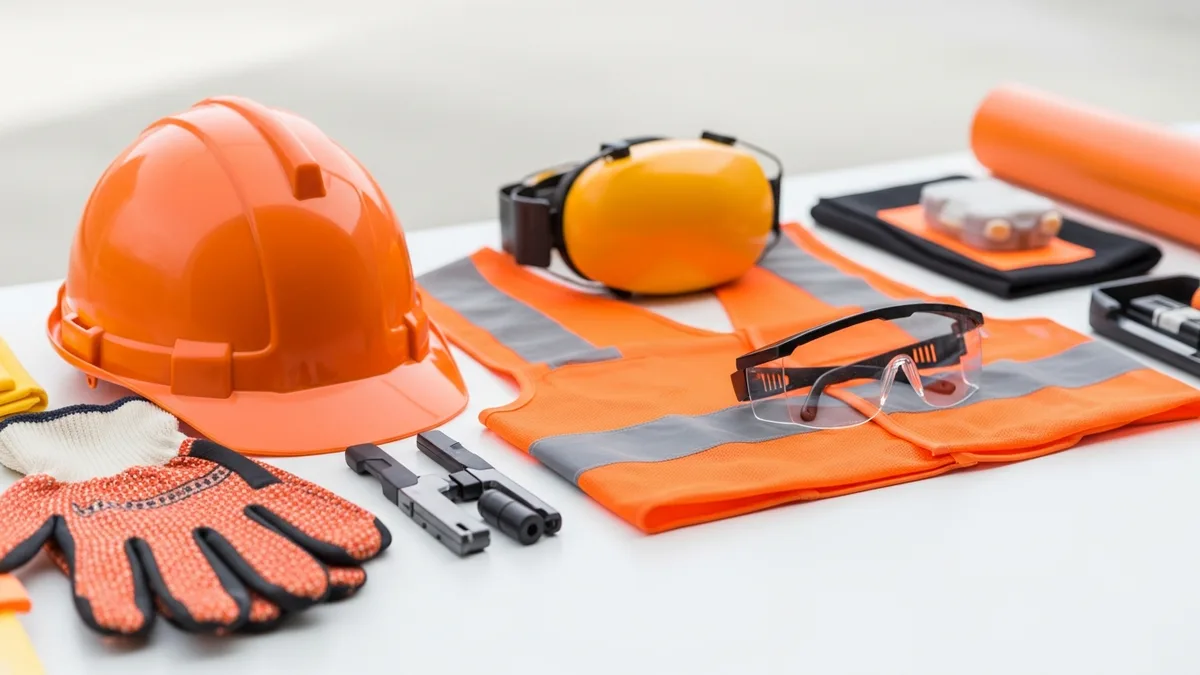
Every contractor has seen it: a thick safety binder sitting on a shelf in the job trailer, untouched since the day it was printed. The plan checks all the boxes on paper, but nobody on the crew has read it, and it does nothing to prevent the fall, the trench collapse, or the electrical contact that sends someone to the hospital.
The problem isn’t that contractors don’t care about safety. Most do. The problem is that most safety plans are written to satisfy an auditor, not to protect a crew. They’re full of generic language copied from templates, legal jargon that no one understands, and procedures that don’t match what’s actually happening on the ground.
This guide is about writing a safety plan that works. One your crew will actually read, understand, and follow. We’ll cover what goes into it, how to make it site-specific, and how to build a culture where the plan isn’t just paperwork, it’s how your team operates every single day.
Start With a Site-Specific Hazard Assessment
A safety plan is only as good as the hazard assessment behind it. If you skip this step or phone it in, the rest of the plan is just decoration.
Before any work begins, walk the site. Look at the terrain, the existing structures, the utilities, the access points. Think about what your crew will be doing at each phase of the project and what could go wrong. This isn’t a five-minute exercise. Take your time.
Here’s what a solid hazard assessment covers:
- Fall hazards. Any work above six feet on a commercial site (or ten feet in residential, depending on the standard) needs fall protection planning. Identify every raised work area: roofs, scaffolding, ladders, open floor holes, and leading edges.
- Struck-by hazards. Cranes, forklifts, material hoists, overhead work. If something can fall on someone or swing into them, document it. For crane-heavy projects, check out our crane safety guide for detailed protocols.
- Caught-in/between hazards. Trenching and excavation, heavy equipment with moving parts, confined spaces. Each of these has specific OSHA requirements that need to be in your plan.
- Electrical hazards. Overhead power lines, temporary wiring, underground utilities, live panels. Map them out and establish clearance distances.
- Health hazards. Silica dust, lead paint, asbestos, noise exposure, heat illness. These are easy to overlook because the damage isn’t immediate, but they’re just as deadly over time.
- Site-specific conditions. Every project is different. Maybe there’s a school next door and you need pedestrian barriers. Maybe the soil is unstable. Maybe you’re working near an active roadway. Capture what makes your site unique.
Document every hazard with three things: what the hazard is, how workers could be exposed, and what controls you’re putting in place to prevent injury. Use the hierarchy of controls: eliminate the hazard if you can, engineer it away if you can’t, and use PPE as the last line of defense, not the first.
Don’t write this alone. Walk the site with your foremen and experienced crew members. They’ve been doing this work for years and they’ll spot things you miss. A guy who’s been framing for 20 years knows exactly where someone’s going to trip, where the wind catches material, and which corners people cut when they’re in a hurry. Tap into that experience and write it into the plan.
Also, talk to your subcontractors before they mobilize. Each trade brings its own hazards. The electrician sees risks the plumber doesn’t, and vice versa. Get their input during the planning phase, not after someone gets hurt.
This assessment isn’t a one-time thing. Update it as the project progresses. The hazards during foundation work are completely different from the hazards during roofing. Build reassessment into your project schedule at every major phase transition.
Write Procedures Your Crew Can Actually Follow
Here’s where most safety plans fall apart. They describe hazards in vague terms, list a bunch of OSHA regulation numbers, and call it done. That’s a compliance document, not a safety plan.
Your procedures need to be written for the people doing the work. That means clear language, specific steps, and practical instructions. Think about the newest guy on your crew. If he reads a procedure, can he understand exactly what to do? If not, rewrite it.
Good procedure example: “Before entering any trench deeper than 4 feet, check for atmospheric hazards with a 4-gas monitor. Confirm the trench is sloped at 1.5:1 or has an approved shoring system installed. Place a ladder within 25 feet of every worker in the trench. A competent person must inspect the trench at the start of each shift and after any rain event.”
Bad procedure example: “Workers shall comply with all applicable OSHA trenching and excavation standards as outlined in 29 CFR 1926 Subpart P.”
See the difference? The first one tells your crew exactly what to do. The second one tells them to go look something up.
For each major task on your project, write procedures that include:
- The specific PPE required (not just “appropriate PPE,” but “hard hat, safety glasses, high-vis vest, steel-toe boots”)
- The setup and inspection steps before work begins
- The actual safe work procedure, step by step
- What to do if something goes wrong
- Who to notify and how
Keep the language at a level that doesn’t require a safety degree to understand. Many crews include workers whose first language isn’t English, so consider translating key sections or using visual aids. Photos and diagrams often communicate better than paragraphs of text.
Build an Emergency Response Plan That People Can Execute Under Stress
When something goes wrong on a jobsite, nobody is going to flip through a 50-page document to figure out what to do. Your emergency response plan needs to be simple enough that someone can follow it while their hands are shaking.
Cover these scenarios at minimum:
- Serious injury or fatality. Who calls 911? Who meets the ambulance at the site entrance? Who notifies the office? Who secures the scene? Assign specific roles by position, not by name, since crews change.
- Fire. Where are the extinguishers? What are the evacuation routes? Where’s the assembly point? Who does a headcount?
- Weather emergencies. Lightning, high winds, extreme heat, flooding. What are your trigger points for stopping work? Where do workers shelter?
- Utility strikes. Gas line hit? Water main break? Electrical contact? Each one has a different response.
- Chemical spill or exposure. Where are the SDS sheets? Where’s the eyewash station? Who’s trained in spill response?
Practice matters more than paper. Run a tabletop exercise with your supervisors at least once per project. Walk through a scenario: “It’s 2 PM on a Tuesday, a worker falls from the second floor and is unconscious. What do you do first? Second? Third?” You’ll quickly find out who knows the plan and who’s going to freeze. That’s the whole point: find the gaps in a meeting room, not during a real emergency.
Post a one-page emergency action summary in the job trailer, at the site entrance, and anywhere else workers gather. Include the site address (your crew needs to tell 911 where they are), emergency phone numbers, the nearest hospital with directions, and the evacuation assembly point.
Run through the emergency plan during your first safety meeting on the project. Don’t just read it out loud. Walk the crew through the evacuation route. Show them where the first aid kit is. Point to the fire extinguisher. Make it physical and real.
Projul is trusted by 5,000+ contractors. See their reviews to find out why.
Document your emergency drills and safety briefings in your daily logs. If OSHA shows up after an incident, one of the first things they’ll ask for is proof that your workers were trained on emergency procedures. Verbal training with no documentation is the same as no training in the eyes of a compliance officer.
Make OSHA Compliance the Floor, Not the Ceiling
Let’s be direct: OSHA compliance is the bare minimum. It’s not a goal. It’s a starting point. But you have to get the basics right before you can build anything on top of them.
Your safety plan needs to address every OSHA standard that applies to your project. For most construction work, that includes:
- Fall protection (Subpart M). Written fall protection plan, competent person designation, training documentation.
- Scaffolding (Subpart L). Erection and dismantling procedures, inspection schedules, capacity ratings.
- Excavation (Subpart P). Soil classification, protective systems, inspection requirements.
- Electrical (Subpart K). GFCI protection, assured grounding program, lockout/tagout.
- Hazard communication (1926.59). Chemical inventory, SDS access, labeling, training.
- PPE (Subpart E). Hazard assessment, selection, training, documentation.
- Cranes and derricks (Subpart CC). Operator certification, load charts, inspection protocols.
For a deeper breakdown of what OSHA expects and how to stay on the right side of an inspection, our OSHA compliance guide covers it in detail.
Beyond the regulatory requirements, build these habits into your plan:
Regular inspections. Don’t wait for OSHA to find your problems. Schedule weekly site safety inspections and document what you find. Take photos of both the issues and the corrections. A tool like Projul’s photo and document management makes it easy to capture, organize, and retrieve this documentation when you need it.
Incident tracking. Every near-miss, every first-aid case, every recordable injury goes into a log. Look for patterns. If three different workers trip on the same cable run in one week, that’s not bad luck. That’s a hazard you haven’t controlled.
Corrective actions. When you find a problem, fix it and document the fix. Write down what the issue was, what you did about it, and when you did it. This creates a paper trail that shows good faith effort if you ever face an OSHA citation.
Train Your Crew and Make It Stick
A safety plan that nobody’s been trained on is just a liability waiting to bite you. Training is where the plan comes to life, or where it dies.
Here’s what most contractors get wrong about safety training: they treat it as a one-time event. They do a safety orientation on day one, have everyone sign a sheet, and never bring it up again. That’s not training. That’s a signature collection exercise.
Effective training looks like this:
New hire orientation. Before anyone picks up a tool, they need to know the site-specific hazards, the emergency procedures, and the basic rules. This isn’t a 30-minute PowerPoint. It’s a walkthrough of the actual site with real examples. For a full breakdown of building a training program that works, see our construction training program guide.
Toolbox talks. Short, focused safety discussions before the shift starts. Pick one topic that’s relevant to the day’s work. If you’re pouring concrete today, talk about silica exposure. If you’re setting trusses, talk about fall protection. Keep it to 10 minutes. Make it a conversation, not a lecture.
Task-specific training. Any time a worker does something new or uses new equipment, they need training on it. This includes powered industrial trucks, aerial lifts, powder-actuated tools, and anything else that can kill someone if used wrong.
Refresher training. Schedule it quarterly at minimum. People forget. Complacency sets in. Regular refreshers keep safety top of mind. Base your refreshers on your incident data. If you’re seeing a spike in hand injuries, run a session on cut prevention and proper glove selection.
Document everything. Every training session needs a record: date, topic, trainer, attendees, and a brief summary of what was covered. Use your time tracking system to log training hours so you have a clear record of investment in worker safety. Digital records are searchable and can’t get lost in a filing cabinet.
One approach that works well: pair new workers with experienced crew members for their first week. Not formal mentoring, just having someone nearby who knows the ropes and can correct bad habits before they become second nature. Most unsafe behaviors aren’t intentional. They’re just habits that nobody ever corrected.
Consider tracking which workers have completed which training modules so you can quickly identify gaps when a new phase of work starts or when someone transfers to your project from another crew. Keeping this organized saves hours of scrambling when an inspector asks for records.
The biggest factor in whether training sticks? Leadership buy-in. If the superintendent skips safety meetings, the crew notices. If the project manager walks past an obvious hazard without saying anything, the crew notices. Safety culture flows downhill. If the people at the top don’t take it seriously, nobody else will either.
Keep the Plan Alive Throughout the Project
Writing the plan is the easy part. Keeping it relevant for the entire duration of the project is where the real work happens.
Construction projects change constantly. New subs show up. The scope shifts. Equipment arrives that wasn’t in the original plan. Weather throws everything sideways. A static safety plan can’t keep up with a project that’s always moving.
Build these practices into your workflow:
Phase reviews. At every major phase transition (site work to foundation, framing to roofing, rough-ins to finishes), revisit the safety plan. The hazards change with the work, and the plan should change with the hazards. Pull out the sections that no longer apply and add new ones for the work ahead.
Pre-task planning. Before any high-risk activity, do a job hazard analysis (JHA) with the crew that will be doing the work. This doesn’t have to be complicated. A one-page form that lists the task, the hazards, and the controls. The value isn’t in the form. It’s in the conversation that happens when the crew talks through the risks together.
Subcontractor integration. Every sub that comes on site needs to see the safety plan and confirm that their work practices align with it. Don’t just hand them a copy and hope for the best. Review the relevant sections with them. Make sure their workers have the required training and certifications. Hold them to the same standard you hold your own crew.
Feedback loops. Give your workers a way to report hazards and suggest improvements without fear of blowback. The people doing the work every day see things that the person who wrote the plan never will. An anonymous suggestion box works. A five-minute check-in at the end of each toolbox talk works better.
Regular audits. Once a month, have someone who didn’t write the plan review it against what’s actually happening on site. Are the procedures being followed? Are the documented controls actually in place? Are there new hazards that aren’t addressed? The gap between what the plan says and what’s happening in the field is where injuries occur.
The goal is a living document, something that grows and adapts with the project. When your crew sees the plan changing based on their feedback and the actual conditions on site, they start to trust it. And when they trust it, they follow it.
The Bottom Line
A construction safety plan that actually gets followed isn’t about fancy formatting or thick binders. It’s about being specific, being practical, and being honest about the risks your crew faces every day. Write it for the people doing the work, not for the people auditing it. Train on it consistently. Update it when things change. And lead by example, because your crew is always watching.
Ready to stop guessing and start managing? Schedule a demo to see Projul in action.
The best safety plan is one that nobody thinks of as paperwork. It’s just how the job gets done.
Frequently Asked Questions
How long should a construction safety plan be?
How often should I update my safety plan?
Does OSHA require a written safety plan?
Who is responsible for the safety plan on a construction site?
What's the difference between a safety plan and a safety program?
Related Articles
OSHA Compliance for Contractors: What You Need to Know in 2026
OSHA fines hit record highs heading into 2026, and new rules are changing how contractors handle everything from heat...
Read More →
Construction Safety Meeting Topics: 20 Toolbox Talk Ideas for 2026
Running out of toolbox talk ideas? These 20 construction safety meeting topics cover everything from fall protection...
Read More →
Construction Site Safety Inspections: Complete Checklist and Process
A practical safety inspection checklist and process that actually prevents accidents instead of just checking boxes.
Read More →