
Construction Safety Training: A Contractor's Complete Guide | Projul
Every contractor knows the deal. You send your crew out to a jobsite, and your number one job is to bring them all home in one piece. Construction safety training is how you make that happen, not just once during onboarding, but every single week your crew is swinging hammers and running equipment.
But here is the thing most contractors figure out the hard way: safety training is not just about checking boxes for OSHA. It is a business decision that affects your insurance rates, your bid competitiveness, your employee retention, and your bottom line. A solid safety program pays for itself many times over.
This guide breaks down everything you need to build a construction safety training program that actually works, from OSHA requirements to toolbox talks to digital documentation.
Why Safety Training Is a Business Decision, Not Just Compliance
Let’s talk dollars and cents, because that is the language contractors speak.
The National Safety Council estimates that the average cost of a medically consulted injury in construction is over $42,000. A fatality can cost an employer more than $1.2 million when you factor in direct costs, lost productivity, legal fees, and increased insurance premiums. Compare that to the cost of running a weekly 15-minute toolbox talk, and the math is obvious.
But the financial case goes deeper than just avoiding incidents:
Insurance premiums. Your Experience Modification Rate (EMR) is directly tied to your safety record. A high EMR means you are paying more for workers’ comp than your competitors. Some contractors see their premiums drop 20 to 30 percent after implementing a real safety program. That savings goes straight to profit.
Bid qualification. More general contractors and project owners are requiring subcontractors to show proof of an active safety program before they will even consider your bid. No safety program means no seat at the table for the best jobs.
Employee retention. Good workers want to work for companies that take their safety seriously. When your crew trusts that you have their back, they stick around. And in a labor market where finding skilled tradespeople is harder than ever, retention is worth real money.
Regulatory costs. OSHA penalties for serious violations now exceed $16,000 per instance. Willful or repeated violations can hit $163,000 each. One bad inspection can wipe out a quarter’s profit on a small to mid-size operation.
The contractors who treat safety training as an investment instead of an expense are the ones winning more work, keeping their best people, and sleeping better at night.
OSHA Requirements Every Contractor Needs to Know
OSHA does not leave construction safety training up to your best judgment. There are specific requirements you need to follow, and ignorance is not a defense when an inspector shows up.
Here are the training requirements that apply to nearly every construction contractor:
OSHA 10 and OSHA 30. The OSHA 10-hour course covers basic safety awareness for entry-level workers. The 30-hour course is designed for supervisors and anyone with safety responsibilities. While OSHA itself does not mandate these courses federally, many states and project owners require them. If you work in New York, Connecticut, Missouri, or several other states, the OSHA 10 is required by law.
Hazard Communication (HazCom). Every worker who might be exposed to hazardous chemicals on site needs training on how to read Safety Data Sheets (SDS), understand labeling, and know what protective measures to take. This is one of the most commonly cited OSHA violations in construction.
Fall Protection. Any worker exposed to fall hazards of 6 feet or more must receive training on fall hazard recognition, proper use of fall protection systems, and what to do if a system fails. This training must be delivered by a competent person.
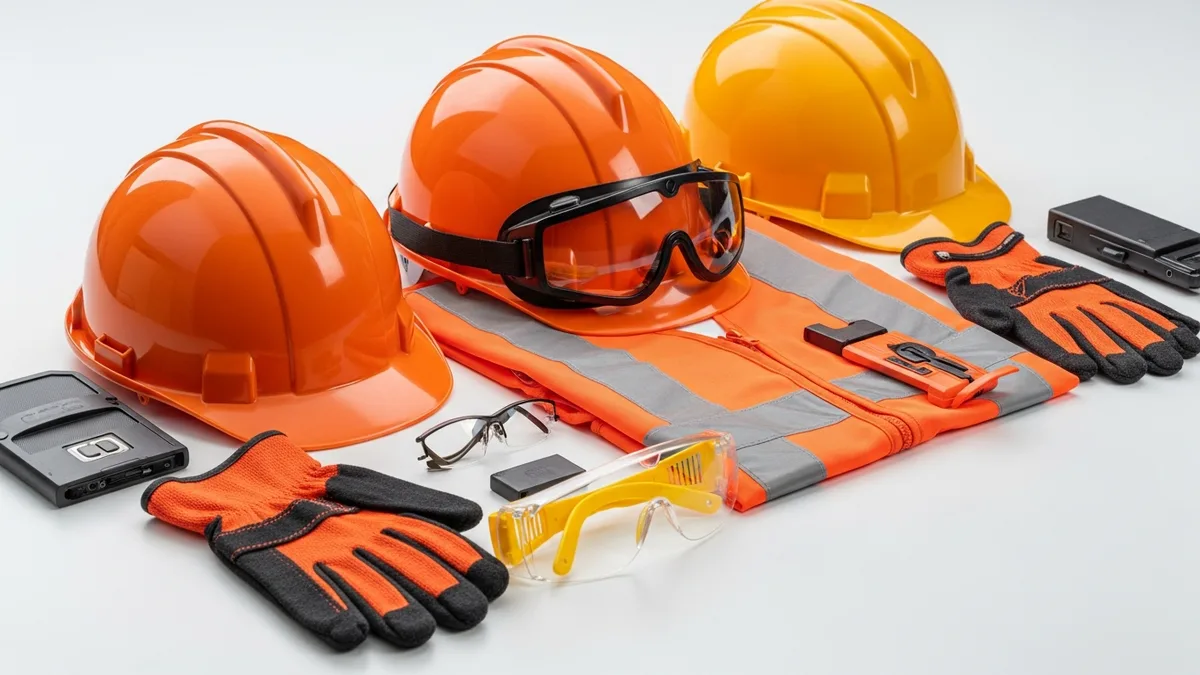
Personal Protective Equipment (PPE). Workers need to know when PPE is required, what type to use, how to put it on and take it off properly, and how to maintain it. You also need to document that this training happened.
Scaffolding. Workers who build, move, or work on scaffolds need training from a competent person on hazard recognition, load limits, and proper assembly procedures.
Electrical Safety. Anyone working near electrical hazards needs to understand lockout/tagout procedures, safe distances from power lines, and proper grounding.
Excavation and Trenching. Workers entering excavations need training on soil types, protective systems, and access/egress requirements. With trenching fatalities rising in recent years, OSHA has been paying extra attention here.
For a deeper look at staying on the right side of OSHA regulations, check out our guide to OSHA compliance for contractors.
The key takeaway: document everything. OSHA does not just want you to do the training. They want proof that you did it, who attended, when it happened, and what was covered.
Building a Jobsite Safety Program From Scratch
If you do not have a formal safety program yet, do not panic. You can build one that works without hiring a full-time safety director or spending a fortune on consultants.
Step 1: Write a safety policy. Keep it simple. One page that states your company’s commitment to safety, who is responsible for what, and what the expectations are for every person on the jobsite. Every employee should sign it.
Step 2: Identify your hazards. Walk your typical jobsites and list every hazard your crew encounters. Falls, struck-by, electrical, caught-between, and trenching are the big ones in construction, but your specific trade might have others. This hazard assessment is the foundation of your entire program.
Step 3: Create training topics from your hazards. Each hazard you identified needs a corresponding training module. You do not need fancy presentations. A one-page outline with key points, a hands-on demonstration, and a sign-in sheet is all you need to start.
Step 4: Set a training calendar. New hire orientation should cover your safety policy, major hazards, and emergency procedures on day one. After that, schedule recurring training based on the work you do. Weekly toolbox talks keep safety front and center without pulling your crew off the job for hours at a time.
Step 5: Assign a competent person. OSHA requires a “competent person” on each jobsite, someone who can identify hazards and has the authority to correct them. This does not require a special certification, but the person needs real knowledge and the backing of management to shut down unsafe conditions.
Step 6: Set up your documentation system. Every training session needs a record. At minimum, log the date, topic, trainer, and attendees. Tools like Projul’s daily logs give you a simple way to record safety activities as part of your normal daily reporting. Pair that with photo and document management to store sign-in sheets and training materials where your whole team can access them.
Step 7: Review and adjust. Your safety program is not a “set it and forget it” document. Review incident reports, near-misses, and inspection findings quarterly. Update your training topics based on what is actually happening on your jobsites.
Toolbox Talks That Actually Work
Toolbox talks are the backbone of ongoing construction safety training. But if your crew is tuning out because every talk feels like a boring lecture, you are wasting everyone’s time.
Thousands of contractors have made the switch. See what they have to say.
Here is how to run toolbox talks that your crew actually pays attention to:
Keep them short. Ten to fifteen minutes is the sweet spot. Anything longer and you lose people. If a topic needs more time, break it into two sessions.
Make them relevant to this week’s work. If your crew is pouring concrete this week, talk about silica exposure and proper PPE for concrete work. If you are doing roofing, talk about fall protection. Generic topics have their place, but the talks that hit hardest are the ones tied to what your crew is doing right now.
Use real examples. Skip the textbook stuff and share real incidents. OSHA publishes fatality and catastrophe reports that are sobering and specific. Even better, share near-misses from your own jobsites. When your crew hears “this almost happened to us last Tuesday,” they listen.
Get your crew talking. The best toolbox talks are conversations, not monologues. Ask your crew what hazards they have noticed. Let your experienced guys share what they have seen. When workers participate, they remember the content better and they feel ownership over safety.
Rotate your presenters. Do not make the same person give every talk. When a framer leads the fall protection talk or an electrician walks through lockout/tagout, it carries more weight than when the boss reads from a sheet. It also builds leadership skills across your team.
Document every single one. Record the date, topic, presenter, and who attended. A quick photo of the group with your phone works as backup proof. Projul’s daily log feature makes it easy to log these alongside your regular daily reports, so your safety documentation is never separate from your project records.
Here is a sample annual rotation to get you started:
- Week 1: Fall protection
- Week 2: PPE inspection and use
- Week 3: Ladder safety
- Week 4: Hazard communication / SDS review
- Week 5: Electrical safety
- Week 6: Heat illness prevention
- Week 7: Trenching and excavation
- Week 8: Fire prevention and extinguisher use
- Week 9: Scaffolding safety
- Week 10: Hand and power tool safety
- Week 11: Struck-by hazard awareness
- Week 12: Emergency action plan review
Repeat and adjust based on your trade, the season, and any incidents or near-misses that come up.
Tracking Safety Training and Certifications
Running great training means nothing if you cannot prove it happened. And with crews that change from project to project, keeping track of who is trained on what gets complicated fast.
Here is what you need to track for every worker:
- OSHA 10 or 30 completion and card number
- Trade-specific certifications (crane operator, forklift, confined space, etc.)
- Date of last training for each required topic
- Expiration dates for certifications that require renewal
- First aid and CPR certification status
Many contractors still manage this with spreadsheets or paper files. It works until someone asks for proof on short notice, like when a GC requires updated records before your crew can access a jobsite, or when an OSHA inspector is standing in your trailer.
The smarter approach is to centralize your records digitally. When you use Projul’s photo and document management, you can store certification cards, training records, and sign-in sheets attached to specific workers or projects. No more digging through filing cabinets.
Tracking also ties directly into workforce management. When you know exactly which certifications each worker holds, you can assign the right people to the right jobs without scrambling at the last minute. Pair your training records with time tracking and you have a clear picture of who was on which jobsite and when, which matters for both safety accountability and compliance audits.
Set up calendar reminders for certification renewals at least 60 days before expiration. Losing a crane operator’s certification mid-project because nobody tracked the renewal date is an expensive and preventable problem.
How Digital Daily Logs Improve Safety Documentation
Paper daily logs have been the standard in construction for decades. But when it comes to safety documentation, paper creates problems that digital tools solve.
The paper problem. Paper logs get lost, damaged, or buried in a box in your storage unit. When you need to find a specific safety record from six months ago, you are looking at hours of searching. And if a log is illegible or incomplete, it is basically useless when OSHA comes asking questions.
What digital daily logs fix:
Searchability. Need to find every toolbox talk about fall protection from the last year? A digital system pulls that up in seconds. Try doing that with a stack of paper.
Photo attachments. With Projul’s daily logs, you can attach photos directly to your log entries. Document hazardous conditions, PPE compliance, equipment inspections, and training sessions with timestamped photos that tell a story no written description can match.
Consistency. Digital log templates make sure your crew captures the same information every time. No more incomplete entries because someone forgot to note the weather conditions or who was on site that day.
Accessibility. Your project managers, safety officers, and office staff can all access the same logs from anywhere. When your superintendent logs a safety observation from the field, your safety manager sees it immediately without waiting for paperwork to make it back to the office.
Accountability. Digital logs create an automatic record of who submitted what and when. This accountability trail matters during incident investigations and OSHA audits.
Integration with your workflow. When your safety documentation lives inside the same system you use for daily logs, photos, and time tracking, nothing falls through the cracks. Your crew is already filling out daily reports. Adding safety observations and training records to that workflow takes seconds instead of creating a whole separate process.
The transition from paper to digital does not have to be complicated or expensive. Projul offers plans that work for contractors of all sizes, and most crews are up and running within a day or two.
Getting Started
Construction safety training is not something you can push to next quarter. Every day without a solid program is a day you are exposed to injuries, fines, and lost business opportunities.
Start with the basics. Write your safety policy, identify your top hazards, and schedule your first toolbox talk for next week. Get your documentation system set up so every training session is recorded and accessible. Then build from there.
The contractors who make safety training a habit, not a reaction to an incident, are the ones who build stronger companies. Their insurance costs are lower. Their crews are more loyal. Their safety records open doors to better projects.
Try a live demo and see how Projul simplifies this for your team.
Your crew is counting on you to take this seriously. Give them a reason to trust that you do.
Frequently Asked Questions
How often is construction safety training required?
What are the most common OSHA violations in construction?
How much does a construction safety training program cost?
Can I do safety training in-house or do I need a third party?
What records do I need to keep for construction safety training?
Related Articles

Construction Tax Deductions: What Every Contractor Can Write Off in 2026
Most contractors pay more in taxes than they need to. Not because they're bad at math, but because nobody told them...
Read More →
Construction Business Insurance: Types Every Contractor Needs
A complete guide to construction business insurance for contractors. Covers general liability, workers comp, commercial...
Read More →
Construction Hiring: How to Find and Recruit Skilled Workers in 2026
Finding good construction workers has never been harder. Between an aging workforce, fewer young people entering the...
Read More →