
Construction Schedule Template: How to Build One That Works | Projul
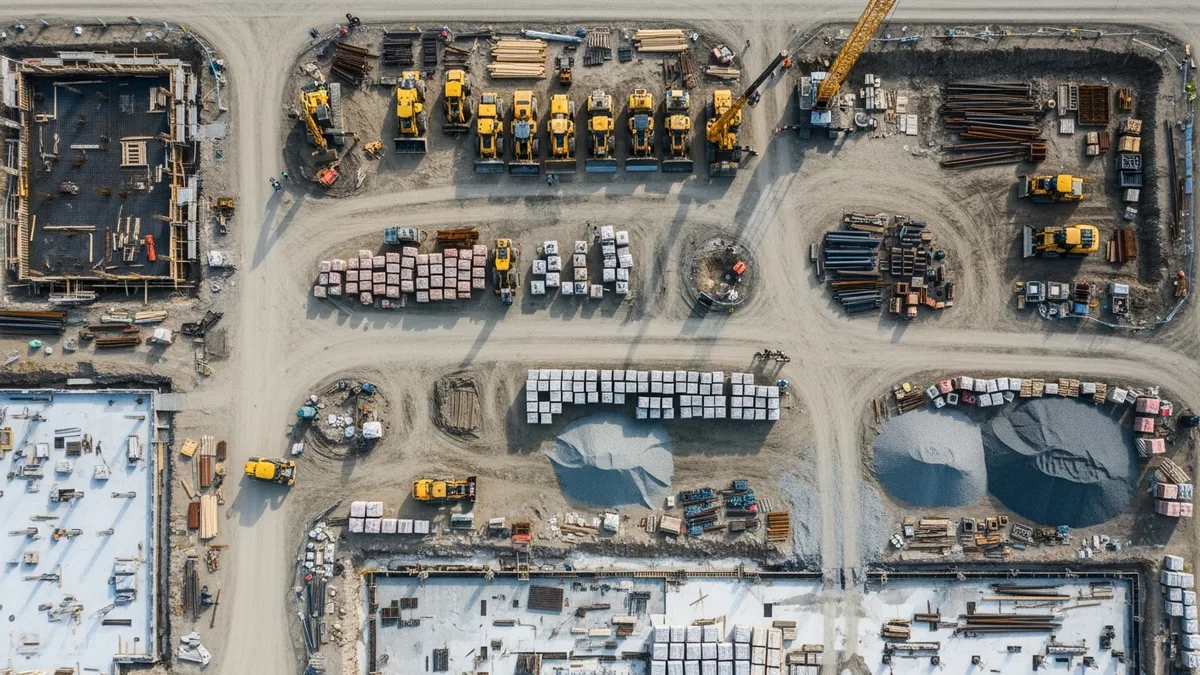
You’ve probably seen a construction schedule template floating around online. Maybe a spreadsheet with some dates and task names. You download it, plug in your project, and within two weeks, the whole thing falls apart.
That’s because most templates don’t account for how construction actually works. Weather delays, subs who don’t show, inspections that take three days instead of one. A good construction schedule template isn’t just a list of tasks with dates. It’s the backbone of your entire project.
This guide walks you through how to build a construction schedule template that actually holds up on a real jobsite. We’ll cover the different schedule types, a step-by-step process for building yours, a sample residential project breakdown, and the mistakes that sink most schedules before they start.
Why Your Construction Schedule Is the Most Important Document on the Job
Ask any GC what separates a profitable project from a money pit, and scheduling comes up every time. Here’s what a solid construction schedule template does for you:
It protects your profit margins. Every day a project runs over schedule costs you money. Tracking those costs in real time with job costing tools makes the impact visible before it spirals. Crew wages, equipment rental, overhead. On a typical residential build, a one-week delay can cost $5,000 to $15,000 depending on your market.
It keeps your subs coordinated. Your electrician can’t rough in until framing is done. Your drywall crew can’t start until rough-ins pass inspection. A schedule makes these dependencies visible so nobody shows up to a jobsite that isn’t ready for them.
It sets client expectations. Homeowners want to know when they’re moving in. Commercial clients have lease deadlines. Your schedule is the document you point to when someone asks “when will this be done?”
It gives you early warning. When one task slips by three days, a good schedule shows you exactly which downstream tasks are affected. You can make adjustments before a small delay turns into a big one.
4 Types of Construction Schedules (and When to Use Each)
Not every project needs the same scheduling approach. Here are the four most common types and where they fit best.
Gantt Chart Schedule
This is the one most contractors know. A Gantt chart shows each task as a horizontal bar on a timeline. The length of the bar represents the duration. You can see overlapping tasks, milestones, and the general flow of the project at a glance.
Best for: Residential projects, remodels, and smaller commercial jobs. It’s visual and easy to share with clients and subs.
Limitations: A basic Gantt chart doesn’t automatically calculate how a delay in one task affects everything else. You need to add dependencies to make it useful beyond a pretty picture.
Critical Path Method (CPM)
CPM takes scheduling up a level. It identifies the longest chain of dependent tasks from start to finish. That chain is your critical path. If any task on the critical path slips, your whole project end date moves.
Tasks NOT on the critical path have “float,” which means they can slip a bit without affecting the finish date.
Best for: Commercial projects, multi-phase residential builds, and any job where you need to know exactly which tasks you can’t afford to delay.
How it works in practice: You list every task, its duration, and its dependencies. Then you calculate the earliest and latest start/finish times for each task. The tasks with zero float form your critical path.
Pull Planning (Last Planner System)
Pull planning flips the script. Instead of scheduling from the start date forward, you start from the completion date and work backward. You pull each trade into the conversation and ask: “What do you need finished before you can do your work?”
This approach gets buy-in from your subs because they’re helping build the schedule instead of just receiving it.
Best for: Larger commercial projects, design-build, and any job where coordination between multiple trades is critical. It’s a core piece of lean construction.
Short-Interval Schedule (Look-Ahead)
A short-interval schedule is a detailed, week-by-week (or two-week) breakdown of upcoming tasks. Think of it as a zoom-in on the next few weeks of your master schedule.
Your master schedule might say “rough plumbing: Week 6.” Your short-interval schedule breaks that into daily tasks: “Monday, run supply lines to master bath. Tuesday, rough in kitchen. Wednesday, tie into main stack.”
Best for: Every project. Seriously. Even if you use a simple Gantt chart as your master schedule, a weekly look-ahead keeps your team focused on what’s happening right now.
How to Build a Construction Schedule Template: Step by Step
Here’s the process for building a schedule that works on real projects, not just on paper.
Step 1: Define Your Work Breakdown Structure (WBS)
Before you touch a calendar, list every task required to complete the project. Break them into phases, then break each phase into individual activities.
Thousands of contractors have made the switch. See what they have to say.
For a residential build, your phases might look like this:
- Pre-construction (permits, surveys, utility locates)
- Site work (clearing, grading, excavation)
- Foundation
- Framing
- Roofing
- Rough mechanicals (plumbing, electrical, HVAC)
- Insulation
- Drywall
- Interior finishes (cabinets, trim, flooring, paint)
- Exterior finishes (siding, flatwork, landscaping)
- Final mechanicals (fixtures, devices, equipment hookups)
- Punch list and closeout
Don’t skip anything. The tasks you forget are the ones that blow your schedule later. If you need a reference for what to check at the end, our construction punch list guide covers closeout items trade by trade.
Step 2: Estimate Durations
For each task, assign a realistic duration. Not the best-case scenario. Not the worst case. The most likely duration based on your experience and crew size.
Talk to your subs. If your framer says a 2,400 sq ft house takes his crew 12 working days, don’t plug in 8 because you want it done faster.
A few rules of thumb:
- Foundation (slab-on-grade): 2-3 weeks including cure time
- Framing: 2-4 weeks depending on complexity
- Roofing: 3-5 days for a standard residential roof
- Rough mechanicals: 2-3 weeks (plumbing, electrical, and HVAC often overlap)
- Drywall (hang, tape, texture): 2-3 weeks
- Interior trim and finishes: 3-5 weeks
- Exterior finishes: 2-4 weeks (can overlap with interior work)
Step 3: Identify Dependencies
This is where most DIY schedules fall apart. You need to map out which tasks depend on other tasks being finished first.
There are four types of dependencies:
- Finish-to-Start (FS): The most common. Task B can’t start until Task A finishes. Example: You can’t pour the foundation until excavation is complete.
- Start-to-Start (SS): Two tasks can start at the same time. Example: Exterior siding and interior drywall can often start simultaneously.
- Finish-to-Finish (FF): Two tasks need to finish at the same time. Less common in construction.
- Start-to-Finish (SF): Rare. Almost never used in construction scheduling.
Map your dependencies carefully. This is the information that makes your schedule actually predict reality instead of just wishing for it.
Step 4: Add Inspections and Lead Times
Two schedule killers that contractors forget about constantly:
Inspections. Every jurisdiction has different turnaround times. Some cities do next-day inspections. Others take 3-5 business days. Build those wait times into your schedule.
Common inspection holds in residential construction:
- Foundation (before pour)
- Rough framing
- Rough plumbing, electrical, and mechanical
- Insulation
- Final inspections
Lead times for materials. Custom windows might take 6-8 weeks. Special-order cabinets could be 4-10 weeks. Electrical panels have had lead times stretching past 12 weeks in some markets. Order early and build those lead times into your schedule.
Step 5: Add Float and Weather Days
If your schedule has zero slack, you’re setting yourself up to fail. Build in buffer:
- Weather days: In most regions, plan for 1-2 lost days per month for weather. In rainy or winter climates, plan for more. Don’t schedule exterior concrete work the week of Thanksgiving in Utah and expect to stay on schedule.
- Float on non-critical tasks: If your painter can start anywhere in a 5-day window, that flexibility helps absorb delays elsewhere.
A good rule: add 10-15% to your total project duration as contingency. You’ll use it. You always use it.
Step 6: Assign Resources
For each task, note who’s responsible. This isn’t just “framing crew.” It’s “Johnson Framing, 4-man crew, confirmed for March 10.”
When you assign specific subs and crews to dates, you’ll quickly spot conflicts. Your electrician might be booked on another job the week you need him. Better to find that out now than the morning he was supposed to show up.
Step 7: Set Milestones
Milestones are checkpoints that help you track progress at a glance. Good milestones for residential construction:
- Permit approved
- Foundation complete
- Framing complete / dried in
- Rough inspections passed
- Drywall complete
- Cabinet install complete
- Certificate of occupancy
- Client walkthrough / punch list
- Project closeout
Sample Schedule Breakdown: 2,400 Sq Ft Custom Home
Here’s a realistic schedule for a single-family custom home build. This assumes a standard slab-on-grade foundation, stick-frame construction, and a reasonably cooperative inspection department.
| Phase | Duration | Weeks |
|---|---|---|
| Pre-construction (permits, engineering, procurement) | 4-6 weeks | 1-6 |
| Site work and excavation | 1-2 weeks | 7-8 |
| Foundation (form, pour, cure, strip, waterproof) | 2-3 weeks | 9-11 |
| Framing (walls, roof, sheathing, windows, doors) | 3-4 weeks | 12-15 |
| Roofing | 1 week | 16 |
| Rough plumbing, electrical, HVAC | 2-3 weeks | 17-19 |
| Insulation and inspection | 1 week | 20 |
| Drywall (hang, tape, texture) | 2-3 weeks | 21-23 |
| Exterior finishes (siding, stone, paint) | 3-4 weeks | 21-25 |
| Cabinets and countertops | 2 weeks | 24-25 |
| Interior trim (doors, base, casing, shelving) | 2-3 weeks | 26-28 |
| Paint (interior) | 1-2 weeks | 29-30 |
| Flooring | 1-2 weeks | 31-32 |
| Final mechanical trim (fixtures, devices) | 1 week | 33 |
| Flatwork, driveway, landscaping | 2-3 weeks | 31-34 |
| Final cleaning and punch list | 1-2 weeks | 35-36 |
| Final inspections and CO | 1 week | 37 |
Total: approximately 8-9 months from permit to certificate of occupancy.
Notice how some phases overlap. Exterior finishes happen while interior drywall is going in. Landscaping and flatwork happen while interior flooring is being installed. That’s normal. Your schedule should reflect how work actually flows, not a neat sequential list.
5 Scheduling Mistakes That Cost Contractors Real Money
1. Building the Schedule Alone
If your subs didn’t help build the schedule, they don’t own it. And tasks nobody owns are tasks that slip. Get your key subs in a room (or on a call) and build the schedule together. Even 30 minutes of input from each trade makes a huge difference.
2. Ignoring Material Lead Times
This one has burned more GCs in the last few years than anything else. Supply chain issues made lead times unpredictable, and even though things have stabilized, custom items and specialty materials still take weeks or months. Check lead times BEFORE you lock your schedule.
3. Not Updating the Schedule
A schedule that hasn’t been updated in three weeks is fiction. Update it weekly at minimum. When a task finishes early or late, adjust the downstream dates. A schedule is only useful if it reflects reality.
4. No Float, No Contingency
Every task finishing exactly on time, with zero buffer, on a 9-month project? That’s not a schedule. That’s a fantasy. Build in contingency and don’t feel guilty about it.
5. Scheduling Without Looking at the Calendar
Your framing crew takes off the week of July 4th. Time tracking software helps you see crew availability before you lock dates. The inspection office closes for a week at Christmas. Your concrete sub won’t pour when it’s below 20 degrees. Real calendars matter. Cross-reference your schedule with holidays, weather patterns, and known crew availability.
Spreadsheets vs. Scheduling Software: What Actually Works
You can build a construction schedule template in Excel or Google Sheets. Many contractors do. And for simple projects, it works fine. You create your task list, add dates, maybe use conditional formatting to create a basic Gantt chart.
But spreadsheets have real limitations:
- No automatic dependency calculations. Move one task, and you’re manually adjusting 30 others.
- No real-time updates for the field. Your super has to call or text to report progress, and someone has to update the spreadsheet.
- Version control chaos. Which version of the spreadsheet is current? The one on your desktop, your PM’s laptop, or the one in the shared drive?
- No notifications. Nobody gets an alert when their task is coming up or when a predecessor just finished.
Construction scheduling software solves these problems. Tools like Projul let you build schedules that automatically adjust when tasks shift, send notifications to subs and crew, and give everyone real-time visibility from the field. No chasing people for updates. No spreadsheet gymnastics.
The right approach depends on your volume. Running two or three jobs a year? A spreadsheet template might be enough. Running 10+ projects with multiple subs on each? You’ll burn more hours managing spreadsheets than the software would ever cost.
Try a live demo and see how Projul simplifies this for your team.
FAQ
What should a construction schedule template include? A construction schedule template should include every project task organized by phase, realistic durations, task dependencies, inspection hold points, material lead times, assigned resources, milestones, and built-in contingency. The best templates also account for weather days and crew availability.
What is the critical path in a construction schedule? The critical path is the longest sequence of dependent tasks from project start to finish. Any delay on a critical path task pushes back your entire project completion date. Tasks not on the critical path have “float,” meaning they can slip without affecting the end date.
How long does it take to build a 2,500 sq ft house? A typical 2,500 sq ft custom home takes 8-10 months from permit to certificate of occupancy. Production homes on established lots can be faster (5-7 months). Factors that affect timeline include weather, inspection turnaround, material lead times, and crew availability.
What’s the difference between a Gantt chart and a CPM schedule? A Gantt chart is a visual tool that shows tasks on a timeline. The Critical Path Method (CPM) is a calculation technique that identifies which tasks control the project end date. You can display a CPM schedule as a Gantt chart, but a basic Gantt chart doesn’t calculate the critical path or float on its own.
How often should you update a construction schedule? Update your construction schedule at least once per week. Many GCs update daily on active phases. The key is that your schedule should always reflect current reality. An outdated schedule is worse than no schedule because people make decisions based on wrong information.
Can I use Excel for construction scheduling? Yes, Excel works for simple projects and small builders. But it has limitations: no automatic dependency tracking, no real-time field updates, and version control problems. For contractors running multiple projects or coordinating many subs, dedicated construction scheduling software saves time and reduces errors.
Build Your Schedule, Then Work Your Schedule
A construction schedule template gives you a starting point. But the real value comes from making it yours, getting input from your subs, updating it consistently, and using it as your primary tool for making decisions on the job.
Start with the step-by-step process in this guide. Build your WBS, estimate durations honestly, map your dependencies, and add buffer for the stuff you can’t predict. Whether you use a spreadsheet or construction scheduling software, the process is the same.
The contractors who finish on time and on budget aren’t lucky. They just have better schedules. And now you know how to build one.
Frequently Asked Questions
What should a construction schedule template include?
Why do most construction schedule templates fail?
How do I build a construction schedule from scratch?
What is the difference between a Gantt chart and a construction schedule?
Can I use a free construction schedule template?
Related Articles

BIM Clash Detection: How to Catch Conflicts Before They Cost You on the Jobsite
BIM Clash Detection: How to Catch Conflicts Before They Cost You on the Jobsite Every contractor has a story about the...
Read More →
Asphalt Paving and Compaction Guide: Mix Types, Laydown Temperatures, and Quality Testing
Asphalt paving looks straightforward from a distance. A truck dumps material, the paver lays it down, and rollers...
Read More →
Construction Jobsite Wi-Fi & Connectivity Guide: Setting Up Reliable Internet in the Field
A practical guide to getting reliable internet on construction job sites. Learn about cellular hotspots, mesh networks,...
Read More →