
Construction Theft Prevention: A Contractor's Guide
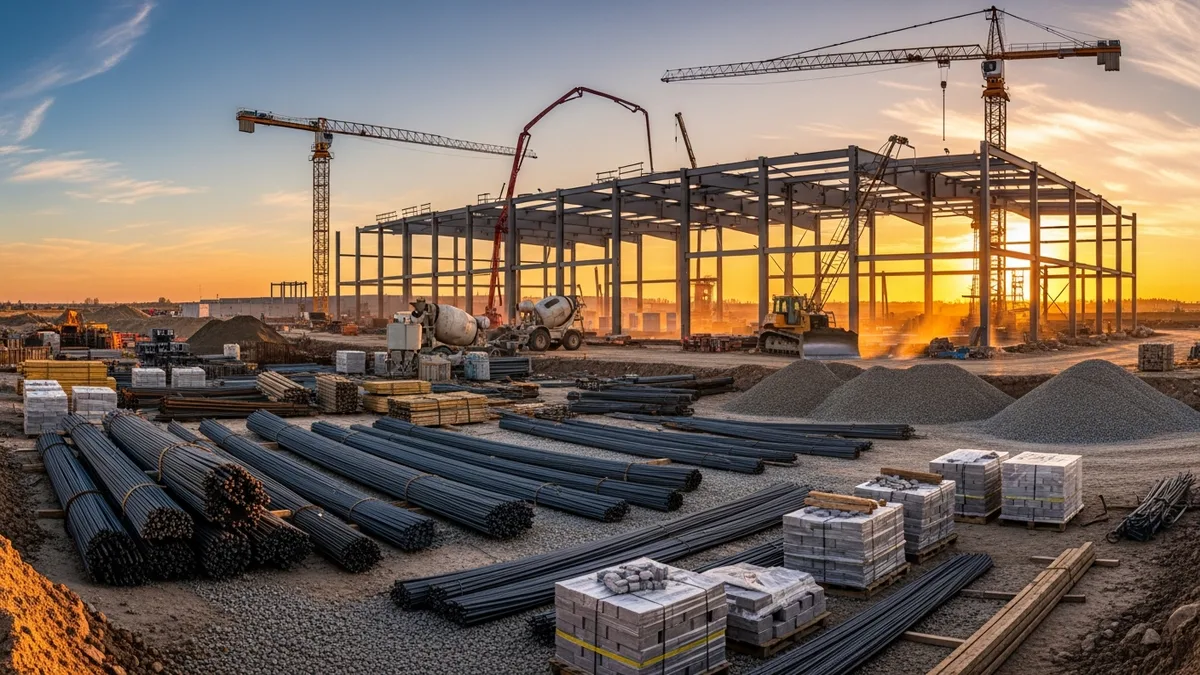
Construction Site Security and Theft Prevention Guide
If you have been in construction long enough, you have a theft story. Maybe it was a trailer full of tools that disappeared over a weekend. Maybe someone walked off with $5,000 worth of copper wire on a Wednesday night. Or maybe you showed up Monday morning to find your skid steer gone and tire tracks leading to the road.
Construction site theft is not a minor inconvenience. It wrecks schedules, kills budgets, and can put you in a tough spot with clients who do not care why the job is behind. The National Equipment Register estimates that construction theft costs the industry over $1 billion a year, and that only counts what gets reported. Plenty of contractors eat smaller losses because filing a report feels like a waste of time.
The good news is that most construction theft is preventable. Thieves go after easy targets, and a site that looks like a hard target usually gets passed over for one that does not. This guide covers the practical security measures that real contractors use to protect their jobsites, their equipment, and their bottom line.
Fencing, Gates, and Access Control
The single most important thing you can do for site security is control who gets in and out. It sounds obvious, but a surprising number of jobsites have wide-open access points, no fencing, and zero way to know who was on site at any given time.
Start with perimeter fencing. For most jobsites, six-foot chain-link fencing with privacy slats does the job. The slats matter because they block the view from the street. If a thief cannot see what is inside, they are less likely to bother. On higher-value projects or in areas with known theft problems, consider anti-climb fencing or adding barbed wire at the top.
Gates need to be just as serious as the fencing. A chain and padlock on a gate is better than nothing, but not by much. Bolt cutters go through most padlocks in seconds. Use shrouded or hidden-shackle padlocks that resist cutting, and consider adding a secondary lock or chain for overnight and weekend security.
Access control goes beyond physical barriers. Every person who enters your jobsite should be accounted for. On larger projects, sign-in sheets or badge systems are standard. On smaller jobs, it can be as simple as making sure the gate gets locked every time the last person leaves. The point is to create a culture where site access is taken seriously, not treated as an afterthought.
If you are running multiple crews across several jobsites, keeping track of who is where becomes a real challenge. That is where construction scheduling software pays off, since it gives you visibility into which crews are assigned to which sites on any given day. If something goes missing, you have a clear record of who had access.
One more thing on fencing: do not forget about deliveries. Material deliveries are a common weak point in site security. Drivers show up, gates get left open, and nobody thinks twice about it. Set clear rules for how deliveries are handled, and make sure gates get secured immediately after.
Camera Systems and Remote Monitoring
Security cameras have gotten cheaper, easier to install, and more practical for construction sites than they were even five years ago. You no longer need a permanent structure or hardwired power to run a camera system. Solar-powered, cellular-connected cameras can be set up in minutes and moved from site to site as projects finish.
The most important thing about cameras is visibility. A hidden camera might catch a thief on tape, but a visible camera prevents the theft from happening in the first place. Mount cameras high enough that they cannot be easily tampered with, but make sure they are obvious. Add signage that says the site is under 24/7 video surveillance. The combination of a visible camera and a warning sign is enough to send most opportunistic thieves looking for an easier target.
For the cameras themselves, look for these features:
- Night vision or infrared: Most theft happens after dark. If your cameras cannot see at night, they are decorating more than they are protecting.
- Motion-activated alerts: You want a notification on your phone when something moves on site after hours, not just a recording you review after the fact.
- Cloud storage: Local storage on an SD card is fine until someone steals the camera too. Cloud backup means you always have the footage.
- Weatherproofing: Construction sites are not climate-controlled offices. Your cameras need to handle rain, dust, extreme heat, and freezing temperatures.
Remote monitoring services are worth considering for high-value sites. These services have live operators watching your camera feeds after hours. If they see something suspicious, they can activate a loudspeaker, flash lights, or call local police. It is more expensive than a standalone camera system, but the response time is dramatically better.
Position cameras to cover entry points, material storage areas, and equipment parking. Do not try to cover every square inch of the site. Focus on the areas where theft is most likely to happen.
Lighting That Actually Works
Good lighting is one of the cheapest and most effective security measures you can put in place, and it is also one of the most overlooked. Thieves want to work in the dark. If your site is lit up like a football field at night, it becomes a much less attractive target.
The key is motion-activated lighting, not lights that stay on all night. Lights that are always on become background noise. Nobody notices them. But when a dark site suddenly floods with light because someone tripped a motion sensor, that gets attention from neighbors, passing cars, and anyone else in the area. It also tells the thief that the site has active security measures.
Place motion-activated lights at every entry point, around material storage areas, and near equipment. Solar-powered LED floodlights are ideal for construction sites because they do not need electrical hookups and can be repositioned as the project progresses.
A few practical tips on lighting:
- Overlap coverage areas. A single dark gap between two lights is all a thief needs.
- Mount lights high enough to prevent tampering but low enough to actually illuminate the ground.
- Check and replace batteries regularly. A dead solar light is the same as no light at all.
- Pair lighting with cameras. A motion-activated light that triggers at the same time a camera starts recording is a powerful combination.
If your project is in a residential neighborhood, be mindful of light pollution. You want to deter thieves, not start a war with the neighbors. Directional fixtures that point into the site rather than out toward the street are a good compromise.
Tool and Material Tracking
Here is a number that should bother you: the average contractor loses between 5% and 10% of their tool inventory every year to theft, loss, and “walking off the job.” On a company running $2 million a year in revenue, that is $10,000 to $20,000 in tools alone.
Tracking tools and materials is not just about preventing theft from outsiders. Internal shrinkage, which is a polite way of saying employees taking things home, is a real problem in construction. You do not have to assume the worst about your people, but you do need systems that create accountability.
Start with a tool inventory. Every tool your company owns should be cataloged with a serial number, photo, and assigned user. When tools go out to a jobsite, there should be a checkout process. When they come back, they get checked in. This does not have to be complicated. A shared spreadsheet works for small operations, though construction management software makes it much easier to track at scale.
For materials, the key is limiting access to storage areas and keeping accurate counts. Lumber, wire, pipe, and other bulk materials should be stored in a locked area with limited access. Do regular counts and compare them against what the job actually needed. If you are burning through 30% more material than your estimates called for, either your estimates are way off or material is leaving the site without your knowledge.
Engraving or marking tools with your company name and a unique ID makes them harder to resell and easier to identify if recovered by police. It is a small step that takes almost no time but makes a real difference.
For contractors managing multiple jobsites, keeping materials and tools organized across locations is a constant challenge. Having a system for job costing in construction helps you spot discrepancies early. If material costs on one job are running way over budget while others are in line, that is a red flag worth investigating.
GPS Tracking on Equipment and Vehicles
Heavy equipment is the biggest-ticket target on any construction site. A single stolen excavator or skid steer can cost $50,000 to $100,000 to replace, and the downtime while you wait for a replacement can cost you even more in schedule delays and penalties.
GPS tracking is the single best investment you can make to protect your equipment fleet. Modern GPS trackers are small, affordable, and can be hidden in locations that are nearly impossible for a thief to find. They provide real-time location data, movement alerts, and geofencing capabilities that tell you the moment a piece of equipment leaves a defined area.
Not sure if Projul is the right fit? Hear from contractors who use it every day.
Here is how to set up GPS tracking effectively:
- Install trackers on every piece of equipment worth more than $5,000. The cost of a GPS tracker ($15 to $50 per month) is negligible compared to the replacement cost of the machine.
- Hide the tracker. Do not mount it somewhere obvious. Tuck it inside the frame, behind a panel, or in another location that requires tools to access.
- Set up geofences. Draw a virtual boundary around each jobsite. If a piece of equipment crosses that boundary outside of working hours, you get an immediate alert.
- Monitor after hours. Most equipment theft happens between 6 PM Friday and 6 AM Monday. Set your alerts accordingly.
- Share data with law enforcement. If something does get stolen, GPS data gives police a real-time location to work with instead of a serial number and a prayer.
GPS tracking also helps with fleet management beyond security. You can see which machines are being used, which ones are sitting idle, and how they are being operated. That data helps you make better decisions about scheduling your construction projects and deploying equipment where it is needed most.
For contractors who are growing and adding equipment, the cost of losses goes up fast. Building good tracking habits early is one of those things that pays off long before you realize you needed it. If you are in that growth phase, a guide to scaling your construction company is worth reading alongside your security planning.
Vehicle tracking is equally important. Company trucks and vans carry thousands of dollars in tools and are easy targets in parking lots and driveways. The same GPS principles apply: track everything, set geofences, and get alerts when something moves when it should not.
Filing Insurance Claims for Construction Theft
Even with the best security measures, theft can still happen. When it does, your ability to recover financially depends on two things: having the right insurance coverage and knowing how to file a claim properly.
Let us start with coverage. Most contractors carry commercial general liability insurance, but that policy typically does not cover stolen tools, materials, or equipment. For that, you need:
- Inland marine insurance (builder’s risk): Covers materials and equipment in transit and on the jobsite.
- Contractor’s equipment floater: Specifically covers owned or leased construction equipment.
- Commercial auto insurance: Covers tools and equipment stolen from company vehicles, depending on your policy.
Talk to your insurance agent now, before you need to file a claim. Make sure you understand what is covered, what your deductibles are, and what documentation you will need if something gets stolen.
When theft does happen, follow these steps:
- Call the police immediately. You need a police report for any insurance claim. Provide serial numbers, photos, and descriptions of everything that was taken.
- Document the scene. Take photos of the point of entry, any damage to fencing or locks, and the area where the stolen items were stored.
- Pull camera footage. If you have surveillance, save and back up all relevant footage immediately.
- Notify your insurance company within 24 hours. Most policies have a time limit for reporting theft. Do not wait.
- Provide a detailed inventory. This is where your tool tracking system pays for itself. A spreadsheet showing every item with its serial number, purchase date, and value makes the claims process dramatically smoother.
- Keep receipts for replacement items. If you need to buy or rent replacement equipment to keep the job moving, save every receipt. Many policies cover reasonable costs incurred to mitigate further damage or delays.
The contractors who have the hardest time with insurance claims are the ones who never documented what they owned in the first place. If you cannot prove you had it, the insurance company is not going to pay for it. Keep an updated inventory, store purchase receipts digitally, and take photos of your equipment regularly.
This is another area where having your finances and job costs organized matters. If you can show the insurance company exactly what materials were on site, what they cost, and what the job required, your claim goes from a guess to a documented loss.
Employee Awareness and Security Culture
You can install every camera, fence, and GPS tracker in the world, but if your crew does not take security seriously, none of it matters. The last person to leave the site who does not lock the gate just undid every dollar you spent on fencing. The foreman who leaves the keys in the excavator overnight just made a thief’s job easy.
Building a security-conscious culture starts with communication. Your team needs to understand why security matters, not just to the company, but to them personally. Theft causes project delays, which can mean lost hours and lost income for hourly workers. It increases insurance premiums, which affects the company’s ability to give raises and invest in better tools. Make it personal and it becomes real.
Here are practical steps to build security awareness:
- Include security in your onboarding process. Every new hire should know the company’s security policies from day one. Cover lockup procedures, key management, and what to do if they see something suspicious.
- Designate a site security lead on every project. This person is responsible for the daily lockup checklist: gates locked, tools secured, equipment keys removed, cameras functioning.
- Hold brief security reminders at regular intervals. A two-minute talk at a morning meeting once a month keeps it on everyone’s radar.
- Create a reporting system. Make it easy for employees to report suspicious activity without fear of being brushed off. A tip about a stranger hanging around the site could prevent a theft.
- Reward good security habits. If a crew goes an entire project without a loss, recognize them. Positive reinforcement works better than punishment.
The reality is that construction sites are inherently hard to secure. They are temporary, they are spread out, and they are full of valuable stuff that is easy to carry and easy to sell. You are never going to eliminate theft completely. But you can make your sites hard targets that thieves skip over in favor of easier ones.
If you are managing a team and looking for ways to keep your jobs running smoothly, managing subcontractors effectively is part of that same discipline. When everyone on the project, whether they are your direct employees or subs, follows the same security protocols, the whole site is safer.
Putting It All Together
Construction site security is not about doing one big thing. It is about doing a dozen small things consistently. A fence without a lock is useless. A camera without night vision is decoration. A GPS tracker on a machine with the keys left in the ignition is just going to tell you where the thief drove it.
The contractors who rarely deal with theft are the ones who treat security as a daily habit, not a reaction to a problem. They lock up every night, they track their tools, they know what is on every site, and they have trained their crews to do the same.
Start with the basics: fencing, lighting, and lockup procedures. Add cameras and GPS tracking as your budget allows. Get your insurance sorted out before you need it. And most importantly, get your whole team bought in.
Ready to see how Projul can work for your crew? Schedule a free demo and we will walk you through it.
Your jobsite is your livelihood. Protect it like it matters, because it does.
Frequently Asked Questions
How much does construction site theft cost the industry each year?
What are the most commonly stolen items on construction sites?
Do security cameras actually deter theft on construction sites?
Is construction site theft covered by insurance?
How can I track stolen construction equipment?
Related Articles
Construction Exit Strategy: How to Sell Your Construction Company
What buyers look for in a construction company and how to get yours ready to sell at the right price.
Read More →
How to Create a Construction Business Continuity Plan
How to keep your construction business running when things go sideways.
Read More →
How to Grow a Construction Business: From $500K to $5M Revenue
Growing a construction company past $500K is a different challenge than starting one. Every revenue milestone demands...
Read More →