
Steel Joist and Metal Building Erection Guide
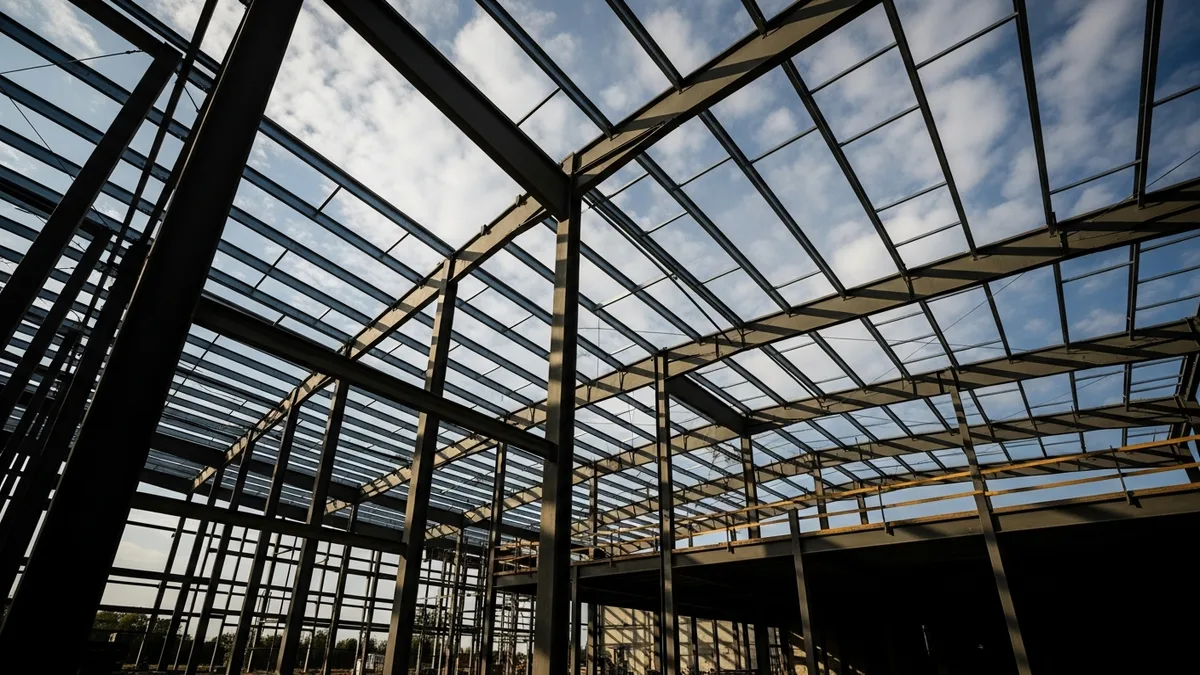
If you have ever watched a metal building go up, you know it can look deceptively simple. A few rigid frames, some purlins and girts, a stack of steel joists, and suddenly you have a building. But anyone who has actually run one of these jobs knows the reality is a lot more involved than it looks from the road.
Steel joist installation and metal building erection sit in a sweet spot where speed meets risk. The materials are lighter than structural steel, the connections are simpler, and the pace is faster. That also means mistakes happen faster, and a single missed bridging connection or an out-of-plumb frame can turn a straightforward job into a serious problem.
This guide covers what you actually need to know to plan, sequence, and manage steel joist and metal building erection projects. If you are planning a smaller project like a contractor shop building, many of the same principles apply at a reduced scale. Whether you are a GC running the whole show or a specialty contractor handling the erection package, the fundamentals here will keep your crew safe and your project on track.
Understanding Steel Joists and Pre-Engineered Metal Building Systems
Before we get into the field work, let’s make sure we are all speaking the same language. Steel joists and pre-engineered metal buildings (PEMBs) overlap in a lot of projects, but they are not the same thing.
Steel joists are open-web, lightweight trusses manufactured to SJI (Steel Joist Institute) standards. They come in three main flavors: K-series for standard roof and floor loads, LH-series (longspan) for heavier loads and longer spans, and DLH-series (deep longspan) for the biggest spans you will see in warehouses, distribution centers, and aircraft hangars. Joists sit on top of structural steel beams or bearing walls, and they support roof deck, floor deck, or both.
Pre-engineered metal buildings are complete structural systems designed and fabricated by a single manufacturer. The package includes rigid frames (the main structural columns and rafters), secondary framing (purlins, girts, eave struts), wall and roof panels, trim, and all the hardware. Many PEMBs also include steel joists as part of the roof system, especially on wider buildings where bar joists replace conventional purlins.
The key difference for the contractor is this: with a PEMB, the manufacturer’s engineering department has already designed every connection, every member size, and every bracing requirement. Your job is to follow the erection drawings exactly. With standalone steel joist projects on conventional steel frames, you are working from the structural engineer’s drawings, and there is more coordination between trades.
Either way, the erection sequence matters more than most contractors realize. Getting it wrong does not just slow you down. It can put your crew in danger. If you are managing complex builds like these, having solid construction project management software in place is not optional. It is the backbone of keeping everything coordinated.
Pre-Erection Planning and Coordination
Read real contractor reviews and see why Projul carries a 9.8/10 on G2.
The work that happens before a single joist leaves the ground determines whether your erection goes smoothly or turns into a mess. Here is what you need to nail down during preconstruction.
Delivery and staging. Steel joists ship in bundles, and they take up space. A typical tractor-trailer carries about 40,000 pounds of joists, and you may need multiple loads. Metal building packages arrive on flatbeds with frames, panels, and hardware spread across several trucks. You need a staging plan that accounts for offloading sequence, storage layout, and the crane’s reach from its setup position. Joists stored on site should be stacked on dunnage, banded, and blocked to prevent rolling.
Foundation and anchor bolt verification. Before any steel goes up, verify every anchor bolt location, elevation, and projection against the erection drawings. On metal buildings, the column base plate patterns are manufacturer-specific, and even a half-inch deviation can create headaches. Survey the anchor bolts independently, and do it early enough that you have time to fix problems before the steel arrives. A solid construction estimating process should account for this verification step as a line item so it does not get skipped.
Erection plan review. OSHA requires a site-specific erection plan for steel joist work under 1926.757. This plan should cover the sequence of erection, bridging installation requirements, fall protection methods, and crane placement. For PEMBs, the manufacturer provides an erection manual that covers frame raising sequence, temporary bracing, and panel installation order. Read it. The number of contractors who skip the manufacturer’s manual and then call the tech support line mid-erection is staggering.
Crane and equipment planning. Determine your crane requirements based on the heaviest and farthest picks. On metal buildings, the rigid frames are usually the heaviest lifts. On joist jobs, the longest joists and any heavy mechanical units going on the roof will drive your crane sizing. A detailed lift plan, including crane setup locations, swing radius, and ground bearing pressure, keeps you from finding out on erection day that your crane cannot reach the far bay.
Crew qualifications. Every worker involved in steel joist or metal building erection needs to be trained on the specific hazards of the work. That means fall protection, connector procedures, and an understanding of the bridging and bracing sequence. OSHA is very specific about who can work as a connector on steel erection, and the training requirements are outlined in Subpart R. Build your crew scheduling around qualified ironworkers and do not plug gaps with laborers who have not been trained.
Steel Joist Erection Sequencing and Bridging
This is where the rubber meets the road. Steel joist erection has a very specific sequence dictated by safety and structural stability, and cutting corners here is how people get hurt.
Step 1: Verify bearing conditions. Before you set the first joist, confirm that the bearing seats are welded or bolted to the supporting steel, that the bearing surfaces are level, and that the support structure is plumbed and braced. Joists landing on a beam that is out of level will not sit properly in the seats, and forcing them creates stress points.
Step 2: Set and stabilize the first joist. The first joist in any bay is the most vulnerable. It has no adjacent joist to brace against, so it must be stabilized immediately. Bolt it to the bearing seats and attach a minimum of one row of bridging before releasing the crane. Some erectors use temporary guy wires or hand lines to hold the first joist plumb while the connections are made.
Step 3: Install bridging progressively. This is the critical safety step. As each subsequent joist is set, bridging must be installed between it and the previously stabilized joist before the crane releases. SJI and OSHA both require that all rows of bridging be installed before any construction loads (deck, mechanical units, workers) are placed on the joists. The bridging diagonal and horizontal members must be fully connected at both ends. Tack welding is not acceptable as a permanent connection, but field bolting is common during erection.
The bridging sequence is not just a safety rule. It is structural. An unbridged joist can roll laterally under surprisingly small loads. A worker walking on the top chord of an unbridged joist can cause it to collapse. This has killed people. Do not let your crew get ahead of the bridging installers.
Step 4: Install joist girders. If your project includes joist girders (heavy trusses that support the joists), these typically go up first in the erection sequence because they form the primary support grid. The same bridging rules apply to joist girders, with additional requirements for temporary support at panel points during erection.
Step 5: Deck installation. Once all joists and bridging are in place and inspected, the steel deck goes on. Deck provides the final lateral bracing for the joist system, but it cannot be relied upon until it is fully welded or fastened per the structural drawings. Track this sequencing in your construction scheduling software so inspections and deck delivery align with the erection pace.
Metal Building Erection: Frame Raising to Closeout
Erecting a pre-engineered metal building follows the manufacturer’s sequence, but the general approach is consistent across most PEMB systems.
Rigid frame erection. The first endwall or rigid frame sets the tone for the entire building. It must be plumbed, leveled, and temporarily braced before you move to the next frame. Most manufacturers require a minimum of two bays of temporary cable bracing (X-bracing) before releasing the crane from the first frame. The rigid frames are typically shipped in two pieces (columns and rafters) that bolt together at the knee and ridge connections.
When raising rigid frames, the columns are typically set first and temporarily braced, then the rafters are lifted into place and bolted at the knee. The ridge connection between opposing rafters is made at height. This is heavy, precise work, and the crane operator needs to be experienced with steel erection. Some contractors are now exploring construction exoskeletons to reduce physical strain on workers handling repetitive overhead tasks during erection. If a frame gets away from you, it can domino into adjacent bays.
Secondary framing. Once the rigid frames are up and braced, the purlins (roof) and girts (walls) are installed. These C or Z-shaped members bolt to the frames using manufacturer-supplied clips. Purlin and girt installation is faster than frame raising, but spacing accuracy matters because the panels are designed to land on specific fastening lines.
On wider buildings where steel joists replace purlins in the roof system, the joist erection sequence described above applies. The joists bear on the rigid frame rafters and must be bridged per SJI standards.
Panel installation. Roof and wall panels go on after all structural and secondary framing is complete and inspected. Panel installation is its own trade skill. Proper lap direction, sealant placement, fastener patterns, and trim detailing all affect the building’s weather tightness and appearance. Most metal building warranties require installation per the manufacturer’s guidelines, so deviating from the manual can void your warranty and leave you holding the bag on leaks.
Accessories and closeout. Doors, windows, louvers, gutters, downspouts, and ridge ventilation get installed last. These are the details that make or break the finished product. Budget adequate time for trim and accessories because they always take longer than the schedule suggests. Managing a clean subcontractor coordination process here prevents the usual finger-pointing when multiple trades are finishing out the building.
Safety Compliance and OSHA Requirements
Steel erection work is one of the most regulated activities in construction, and for good reason. Falls, struck-by incidents, and structural collapses during erection account for a disproportionate share of construction fatalities.
OSHA Subpart R (1926.750-761) governs steel erection, including joist installation. Key requirements include:
- A site-specific erection plan addressing the sequence and method of erection
- Fall protection for workers at heights above 15 feet (not 6 feet, as in general industry, but specific to steel erection connectors)
- Controlled decking zones (CDZs) where workers can operate without conventional fall protection under strict conditions
- Column stability requirements, including four anchor bolts per column minimum
- Bridging installation requirements that prohibit loading joists before bridging is complete
- Training requirements for connectors, signalpersons, and riggers
Fall protection specifics. Connectors working between 15 and 30 feet must have one method of fall protection available (personal fall arrest, positioning device, or safety net). Above 30 feet, fall protection must be in use. The controlled decking zone exception allows trained deckers to work without fall protection only within a very narrow set of conditions outlined in 1926.760.
Crane operations. Every lift during steel erection is a critical lift. The crane operator must be NCCCO certified, the rigging must be inspected daily, and the lift plan must account for wind, ground conditions, and load charts. A thorough safety management plan should cover all of these requirements and establish clear stop-work authority for anyone on site who sees an unsafe condition.
Daily safety briefings. Before each shift, the erection foreman should brief the crew on the day’s sequence, crane operations, weather conditions, and any hazards specific to that day’s work. These are not check-the-box meetings. They are the single best opportunity to catch problems before they become incidents. Document your safety meetings and keep them in your project files. If OSHA compliance feels like a burden, remember that the alternative is a lot worse.
PPE requirements. Hard hats, safety glasses, high-visibility vests, steel-toed boots, and gloves are the baseline. Workers at height need properly fitted harnesses inspected before each use. Connectors need tool lanyards to prevent dropped objects. The erection contractor should have a written PPE policy that covers every role on the crew.
Managing the Project: Scheduling, Costs, and Communication
Getting the iron in the air is only half the battle. Managing the project around the erection is what separates good contractors from the ones who lose money on every metal building job.
Scheduling around lead times. Steel joist lead times run 6 to 12 weeks from release to ship. Metal building packages run 8 to 16 weeks depending on the manufacturer and time of year. These lead times are not negotiable, and they start from the date the manufacturer receives approved drawings and a release to fabricate. Build your master schedule backward from the required erection date, and pad the fabrication window because delays happen. Your scheduling methods need to account for this procurement phase explicitly, not just the field work.
Cost tracking. Steel erection projects have a few cost drivers that can get away from you. Crane rental is usually the biggest variable. A 100-ton crane running $15,000 to $25,000 per week adds up fast if erection takes longer than planned. Weather days, re-work from fabrication errors, and scope changes all extend crane time. Track your crane hours daily and compare them against your budget. If you are falling behind, figure out why before you burn through your contingency.
Material waste on metal buildings is typically low because everything is pre-cut and pre-punched, but damaged panels, missing hardware, and fabrication errors generate change orders back to the manufacturer. Document every discrepancy at delivery with photos and written notes. A good budget tracking system catches these overruns before they surprise you at the end of the job.
Communication between trades. On a typical metal building project, you are coordinating the concrete contractor (foundations), the erection crew, the panel installers, electricians, plumbers, and HVAC subs. The erection crew drives the critical path, so every other trade revolves around their progress. Daily updates from the erection foreman to the project manager are not optional. Use your project management platform to push schedule updates to all subs so they can adjust their mobilization dates in real time.
Quality control checkpoints. Build inspection holds into your schedule at these stages: anchor bolt survey (before erection), frame plumb and alignment (after each bay), bridging completion (before deck), deck fastening (before rooftop loads), and final panel and trim (before closeout). Catching a frame that is a quarter-inch out of plumb before the purlins go on is a 30-minute fix. Catching it after the roof panels are installed is a nightmare.
Documentation. Keep daily erection logs that record pieces set, connections completed, bridging installed, weather conditions, crew size, crane hours, and any safety incidents or near-misses. These logs protect you during disputes, support your payment applications, and provide a record for warranty claims. A solid daily reporting habit, backed by construction project management tools, turns your field data into an asset instead of a liability.
Common Mistakes and How to Avoid Them
After watching hundreds of steel joist and metal building jobs, certain mistakes keep showing up. Here are the ones that cost contractors the most time and money.
Skipping the anchor bolt survey. This is the most preventable problem in metal building erection, and it happens constantly. A column base plate that does not line up with the anchor bolts means field modifications, delays, and sometimes re-pouring concrete. Survey every bolt before the steel shows up. Period.
Getting ahead of bridging. The pressure to keep the crane moving and set joists as fast as possible leads crews to skip ahead of the bridging installers. This is a life-safety issue. One unbridged joist rolling can take out an entire bay and anyone standing on it. Enforce the bridging sequence religiously. If it means the crane waits 20 minutes, the crane waits 20 minutes.
Ignoring the erection manual. Every PEMB manufacturer provides an erection manual specific to your building. It covers frame raising sequence, bracing requirements, panel lap directions, fastener types, and sealant locations. When contractors deviate from the manual, they void warranties and create leak problems that haunt the building owner for years. Read the manual, follow the manual.
Underestimating trim and accessories. The structural erection of a metal building typically takes 40 to 50 percent of the total erection time. The other 50 to 60 percent is panels, trim, doors, windows, and accessories. Contractors who bid the erection based on frame-raising speed get crushed on the back end when trim work drags on for weeks.
Poor weather planning. Steel erection stops in high winds, lightning, and heavy rain. Most crane operators will not swing loads in sustained winds above 25 to 30 mph. Metal building panel installation is also wind-sensitive because large panels act like sails. Build weather days into your schedule based on historical data for your region. If you are erecting in tornado alley in April, plan for lost days.
Not documenting delivery discrepancies. When the steel arrives on site, inspect every piece against the shipping list. Photograph any damage, missing items, or fabrication errors before you sign the delivery ticket. If you sign clean and discover problems later, the manufacturer will push back on replacement costs. Protect yourself with documentation from day one.
Want to see this in action? Get a live demo of Projul and find out how it fits your workflow.
Running a steel joist or metal building erection project is a test of planning, coordination, and discipline. The work moves fast, the stakes are high, and the margin for error is thin. But when you nail the planning, enforce the safety protocols, and stay on top of the daily management, these jobs can be some of the most profitable and satisfying projects in your portfolio. The right tools and processes turn a complex erection job into a repeatable system, and that is how you scale a contracting business.
Frequently Asked Questions
How long does it take to erect a pre-engineered metal building?
What is the difference between steel joists and structural steel beams?
Do I need a PE-stamped erection plan for steel joist installation?
What is bridging and why is it critical during joist erection?
Can I erect a metal building without a crane?
Related Articles
Construction Septic System Installation: What Every GC Needs to Know
Septic systems on rural builds bring unique scheduling, permitting, and soil challenges that can wreck your timeline if...
Read More →
Construction Painting Project Management: Coordinating Interior and Exterior Phases
Painting is one of those trades that touches every other trade on the schedule. Get the sequencing wrong, and you're...
Read More →
Epoxy Flooring and Industrial Coatings: A Contractor's Complete Guide
Epoxy flooring and industrial coatings are high-margin work when you get the process right and a fast way to lose money...
Read More →