
Structural Concrete Repair & Restoration Guide for Contractors | Projul
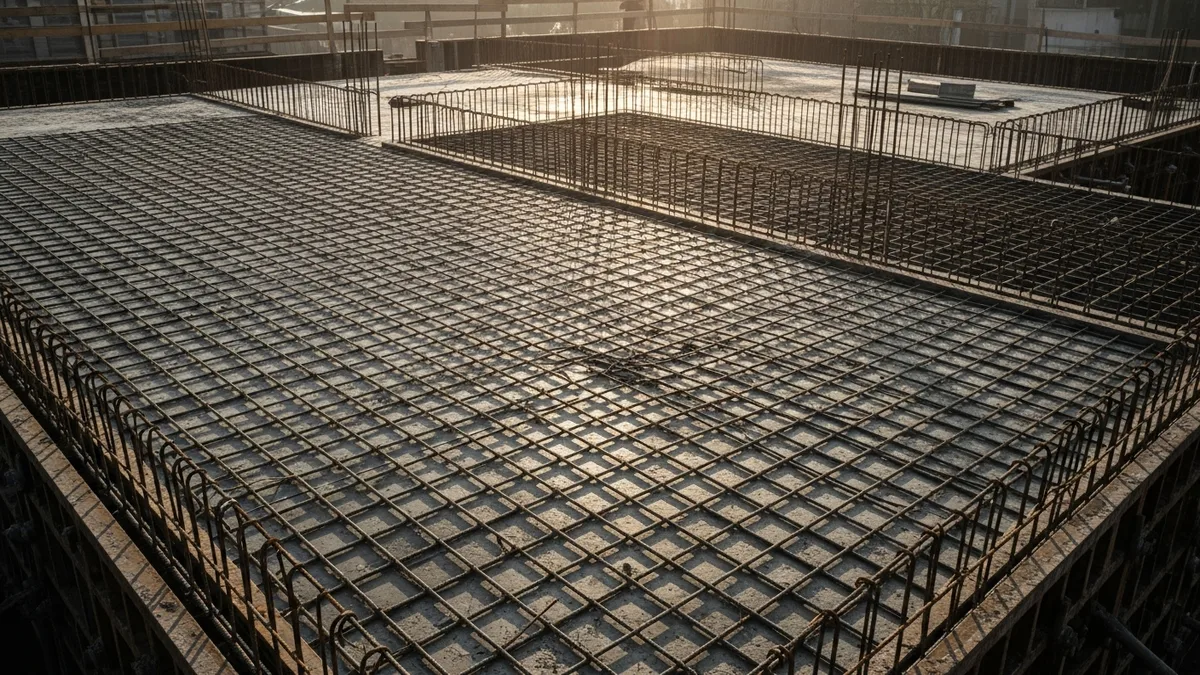
Structural Concrete Repair and Restoration: A Contractor’s Field Guide
Concrete is tough, but it’s not invincible. After 20, 30, or 50 years of service, even well-built concrete structures start showing their age. Cracks open up. Rebar corrodes and the surface starts spalling off in chunks. Water finds its way in, and once it does, the deterioration accelerates fast.
If you’re a contractor who works on commercial buildings, parking structures, bridges, or any kind of concrete infrastructure, you’re going to run into structural concrete repair work. And when you do, the worst thing you can do is treat it like a simple patch job. Getting concrete restoration right means understanding what caused the damage, choosing the correct repair method, and knowing when a structure is past the point of saving.
This guide covers the repair methods you’ll actually use in the field, how to assess damage before you start, and how to make the call between repair and demolition. Whether you’re bidding your first concrete restoration project or your fiftieth, there’s something here for you.
Structural Assessment: What to Do Before You Touch Anything
Every concrete repair project starts with an assessment, and skipping this step is the fastest way to waste money and lose credibility. You need to know what you’re dealing with before you can recommend a solution, price the work, or pull permits.
Start with a visual survey. Walk the entire structure and document every crack, spall, delamination, stain, and area of exposed rebar. Photograph everything and note the location, size, and pattern of each defect. Crack mapping is especially important because crack patterns tell you a lot about what’s happening inside the concrete.
Vertical cracks that follow the rebar layout usually point to corrosion-induced expansion. Horizontal cracks in walls suggest lateral soil pressure or overloading. Map-pattern cracking (also called pattern cracking or checking) can indicate alkali-silica reaction, drying shrinkage, or thermal cycling damage.
After the visual survey, you’ll want non-destructive testing. The most common methods include:
- Chain drag or hammer sounding to detect delamination. You drag a chain across the surface and listen for hollow sounds that indicate the concrete has separated into layers.
- Ground-penetrating radar (GPR) to locate rebar, post-tension cables, and voids without cutting into the concrete.
- Half-cell potential testing to map areas where the rebar is actively corroding, even if no surface damage is visible yet.
- Chloride ion testing from core samples to determine how deep salt contamination has penetrated. This is critical for parking structures and any concrete exposed to deicing chemicals.
- Carbonation testing using phenolphthalein indicator on fresh cores to see how far the concrete’s natural alkaline protection has been lost.
Once you have all this data, get a structural engineer involved. Seriously. This isn’t the kind of work where you eyeball it and start mixing patch material. A structural engineer will analyze the data, determine the root cause of deterioration, assess remaining structural capacity, and specify the appropriate repair methods. Their report and stamped drawings are what you’ll use for permits, and they’re your protection if anything goes sideways later.
If you’re tracking all this assessment data across multiple site visits and team members, having a solid construction project management system makes a real difference. You need one place where photos, notes, test results, and engineer reports all live together.
Spalling Repair: Fixing Surface Deterioration the Right Way
Spalling is probably the most visible type of concrete damage you’ll encounter. It’s that classic look where chunks of the surface are popping off, often with rusty rebar showing underneath. It happens when moisture gets into the concrete, the embedded steel corrodes, and the expanding rust forces the cover concrete to crack and separate.
The repair process for spalling follows a consistent sequence, but the details matter a lot:
Step 1: Define the repair boundaries. Sound the area around the visible damage with a hammer to find all the delaminated concrete, not just the stuff that’s already fallen off. Mark your repair boundaries at least 1 inch into sound concrete on all sides. Cut the perimeter with a concrete saw to a minimum depth of 3/4 inch. This gives the patch material a clean edge to bond against instead of a feathered edge that will crack and fail.
Step 2: Remove deteriorated concrete. Use a chipping hammer to remove all unsound concrete down to solid material. If the rebar is corroding, you need to expose the full circumference of each bar with at least 3/4 inch clearance all around. Don’t leave corroding rebar buried under patch material. It will just keep corroding and blow the patch off in a few years.
Step 3: Treat the rebar. Clean exposed rebar to near-white metal using sandblasting or mechanical cleaning. If more than 25 percent of a bar’s cross-section is gone, the engineer will need to specify supplemental reinforcement. Coat the cleaned bars with a zinc-rich primer or an epoxy coating designed for rebar protection.
Step 4: Apply the patch. Use a repair mortar that matches the existing concrete’s properties as closely as possible. The repair material should have similar compressive strength, modulus of elasticity, and thermal expansion coefficient. If the patch material is too stiff relative to the surrounding concrete, it will crack at the bond line. Apply a bonding agent to the prepared surface, then place and finish the repair mortar per the manufacturer’s specifications.
This is where quality control really matters. Every step of a spalling repair has to be done right, or the repair won’t last. Document each step with photos and keep records of the materials used, surface preparation, and curing conditions. If you’re managing a large-scale restoration with dozens of patch locations, solid documentation is what separates a professional operation from a hack job.
Crack Injection: Epoxy vs. Polyurethane and When to Use Each
Not every crack in concrete is a structural concern, but every crack is a pathway for water, chlorides, and other contaminants to reach the reinforcing steel. Crack injection is the primary method for sealing and (in some cases) structurally repairing cracks in concrete.
Epoxy injection is the go-to method when you need to restore structural capacity. A properly injected epoxy repair creates a bond that is actually stronger than the surrounding concrete. The process involves installing injection ports along the crack at intervals roughly equal to the wall thickness, sealing the surface between ports with an epoxy paste, then injecting low-viscosity epoxy under low pressure starting from the lowest port and working up.
Epoxy injection works best when:
- The crack is dormant (not actively moving)
- The concrete is dry or can be dried before injection
- You need to restore tensile and shear capacity across the crack
- Crack widths range from 0.002 inches to about 1/4 inch
The big limitation of epoxy is that it’s rigid. If the crack is still moving due to thermal cycling, ongoing settlement, or live loads, the epoxy will crack again right next to the original repair. You need to address the root cause of movement before injecting with epoxy.
Polyurethane injection is the better choice when you’re dealing with active water leaks or cracks that may still be moving. Polyurethane resins react with water to expand and fill the crack, creating a flexible seal. Some polyurethane products can expand 10 to 20 times their original volume, which makes them especially effective for chasing water through irregular crack paths.
Use polyurethane when:
- The crack is actively leaking water
- You need flexibility to accommodate minor ongoing movement
- The primary goal is waterproofing, not structural repair
- You’re working in wet conditions where epoxy won’t cure properly
One common mistake is using polyurethane on a structural crack because it’s easier to work with. Polyurethane does not restore load-carrying capacity. If the engineer’s report calls for structural repair, you need epoxy. Period.
For either type of injection, surface preparation and proper port spacing are critical. If you’re managing a project with hundreds of linear feet of crack injection across a parking structure, keeping track of what’s been injected, what material was used, and which areas still need work requires organized job management from day one.
Carbon Fiber Reinforcement: Adding Strength Without Adding Weight
Carbon fiber reinforced polymer (CFRP) systems have become a standard tool for structural concrete repair over the last two decades. When a concrete member needs more capacity than it currently has, whether from original under-design, increased loading, or deterioration, carbon fiber is often the most practical solution.
CFRP works by bonding high-strength carbon fiber fabric or strips to the surface of the concrete using structural epoxy. The carbon fiber carries tensile forces that the concrete or damaged rebar can no longer handle. It’s incredibly strong relative to its weight. A single layer of carbon fiber fabric can add significant flexural and shear capacity to a beam, column, or slab.
Common applications include:
- Flexural strengthening of beams and slabs. Carbon fiber strips or fabric bonded to the tension face (usually the bottom) increase the member’s moment capacity.
- Shear strengthening. U-wraps or full wraps around beams provide additional shear capacity, similar to adding more stirrups.
- Column confinement. Wrapping columns with carbon fiber increases their axial load capacity and ductility. This is especially common in seismic retrofit work.
- Slab openings. When you need to cut a new opening in an existing slab for mechanical or plumbing work, carbon fiber strips around the opening can restore the capacity lost by cutting the reinforcement.
The installation process requires meticulous surface preparation. The concrete surface must be ground smooth to remove any irregularities, laitance, or coatings. Corners must be rounded to a minimum radius (usually 1/2 inch to 3/4 inch) to prevent stress concentrations in the fabric. The surface must be dry and within the temperature range specified by the manufacturer.
After surface prep, you apply a primer coat of epoxy, then a layer of saturating resin, lay the carbon fiber fabric into the wet resin, and roll out any air bubbles. Multiple layers can be applied to increase capacity. The system cures to form a composite that’s bonded directly to the concrete surface.
One thing to keep in mind: carbon fiber is a surface-applied system, which means it’s only as good as the concrete it’s bonded to. If the concrete substrate is deteriorated, delaminated, or weak, the carbon fiber will peel off before it reaches its design capacity. The concrete needs to have a minimum pull-off tensile strength (typically 200 psi) confirmed by testing before you start the installation.
Carbon fiber work is specialty work. If you’re a GC subbing this out, make sure your sub has certified installers who have been trained by the specific system manufacturer. This is not a “figure it out on the job” kind of installation. And make sure the scope, schedule, and costs are clearly defined in your scope of work documents before the sub mobilizes.
Cathodic Protection and Shotcrete: Long-Term Solutions for Severe Deterioration
When concrete deterioration is widespread and driven by ongoing corrosion of the reinforcing steel, patching and crack injection may not be enough. Two methods that address large-scale problems are cathodic protection and shotcrete (also called gunite) restoration.
Cathodic Protection
Corrosion of rebar in concrete is an electrochemical process. When chlorides from deicing salts or seawater penetrate the concrete and reach the rebar, they break down the passive oxide layer that normally protects the steel. The rebar starts to corrode, and that corrosion produces the expansive rust that causes cracking and spalling.
Cathodic protection fights this by making the rebar the cathode in an electrochemical cell, which stops the corrosion reaction at the source. There are two types:
Impressed current cathodic protection (ICCP) uses an external power source to push a small electrical current through anodes installed on or in the concrete, through the concrete itself, and into the rebar. The current shifts the rebar’s electrical potential into a range where corrosion cannot occur. ICCP systems are common on parking structures, bridges, and marine structures.
Sacrificial (galvanic) cathodic protection uses zinc or other metals that are more electrochemically active than steel. These sacrificial anodes corrode preferentially, protecting the rebar without an external power source. Galvanic systems are simpler and require less maintenance but provide less current, making them better suited for moderate corrosion environments.
Curious what other contractors think? Check out Projul reviews from real users.
Cathodic protection is often combined with concrete repair. You fix the existing damage with patches and crack injection, then install cathodic protection to prevent future corrosion in areas where chlorides have already penetrated but haven’t yet caused visible damage. It’s a long-term investment that can extend the service life of a structure by 25 to 50 years.
Shotcrete and Gunite Restoration
When large areas of a concrete structure need new material, whether to replace deteriorated concrete, add cover over corroding rebar, or build up sections to new dimensions, shotcrete is often the most efficient method.
Shotcrete is concrete or mortar that’s pneumatically projected at high velocity onto a surface. There are two processes:
- Dry-mix (gunite): The dry ingredients are mixed and fed into a hose, with water added at the nozzle. The nozzleman controls the water content, which requires significant skill but allows for excellent quality control.
- Wet-mix (shotcrete): The fully mixed concrete is pumped through a hose and compressed air is added at the nozzle to project it. Wet-mix produces less dust and rebound and is generally faster for large volumes.
Both methods produce dense, high-strength concrete when applied by skilled operators. The key is the nozzleman. A good nozzleman produces concrete with minimal rebound, proper compaction around rebar, and consistent quality. A bad one produces voids, sand pockets, and material that looks solid on the surface but is full of defects inside.
Shotcrete is commonly used for:
- Structural repairs on bridges, tunnels, and retaining walls
- Encasing corroded steel members in new concrete
- Building up deteriorated columns and beams
- Swimming pool and water tank construction
- Slope stabilization and rock support
The surface preparation for shotcrete is similar to patching: remove all deteriorated material, clean the rebar, and install any supplemental reinforcement specified by the engineer. For overhead work, multiple passes may be needed because the material can’t be built up too thick in a single pass without sagging or falling.
If you’re running a project that involves both cathodic protection and shotcrete work, you’re looking at a complex job with multiple specialty subs, phased work, and significant budget tracking requirements. These projects often run into unexpected conditions once demolition starts, so build contingency into your estimates and keep your change order process tight from the beginning.
When to Repair vs. When to Demolish: Making the Call
This is the question that makes or breaks concrete restoration projects. Not every structure is worth saving, and not every damaged structure needs to come down. Making the right call requires objective analysis, not sentiment.
Here are the factors that push toward repair:
- The structure is historically significant or has architectural value that can’t be reproduced.
- The damage is localized to specific areas while the majority of the structure is sound.
- The root cause can be addressed. If you can stop the source of deterioration (add waterproofing, install cathodic protection, fix drainage), repairs will hold up long-term.
- Repair cost is significantly less than replacement. The general threshold is that repair makes economic sense when it costs less than 40 to 50 percent of full replacement.
- The structure still meets code requirements or can be brought into compliance with reasonable upgrades.
- Occupancy or operations must continue during the work, making full demolition and reconstruction impractical.
Here are the factors that push toward demolition:
- Widespread material deterioration such as alkali-silica reaction, severe carbonation throughout the cross-section, or pervasive chloride contamination.
- Significant loss of reinforcing steel. When corrosion has reduced rebar cross-sections by more than 30 percent in large areas, adding supplemental reinforcement becomes impractical.
- Structural deficiencies that can’t be reasonably corrected. If the original design doesn’t meet current code and the required upgrades are extensive, starting over may be cheaper and safer.
- Repair costs approach or exceed replacement costs. Once you factor in engineering, specialty contractors, phased construction, and the risk of discovering worse conditions during work, the economics often favor demolition.
- The foundation or primary structural system is compromised. Surface repairs won’t help if the bones of the structure are failing.
A good structural engineer’s assessment will give you the data you need to make this decision. They’ll estimate the remaining service life with and without repair, quantify the extent of deterioration, and help you develop repair vs. replacement cost comparisons.
If you do decide on demolition, make sure you have a solid demolition plan that accounts for hazardous materials (older concrete structures may contain asbestos in fireproofing or lead paint on surfaces), structural stability during selective demolition, and protection of adjacent structures.
And whether you repair or demolish, accurate estimating on concrete work is absolutely critical. Concrete restoration projects are notorious for cost overruns because hidden conditions only become apparent once you start removing material. Build contingency into every estimate, and document every changed condition as you go.
Structural concrete repair is demanding work that requires real expertise, careful planning, and the right team. It’s not the kind of project where you can cut corners and hope for the best. But when it’s done right, a well-executed restoration can add decades of service life to a structure and save owners millions compared to full replacement.
Try a live demo and see how Projul simplifies this for your team.
If you’re growing your concrete repair business or managing restoration projects alongside your other work, having a system that keeps your scheduling, documentation, and costs organized in one place makes everything easier. Projul was built for contractors who need to keep complex projects on track without drowning in paperwork. If that sounds like you, it’s worth a look.
Frequently Asked Questions
How much does structural concrete repair typically cost?
What is the difference between epoxy and polyurethane crack injection?
When should you demolish concrete instead of repairing it?
How long do structural concrete repairs last?
Do you need a structural engineer for concrete repair work?
Related Articles
Construction Septic System Installation: What Every GC Needs to Know
Septic systems on rural builds bring unique scheduling, permitting, and soil challenges that can wreck your timeline if...
Read More →
Construction Painting Project Management: Coordinating Interior and Exterior Phases
Painting is one of those trades that touches every other trade on the schedule. Get the sequencing wrong, and you're...
Read More →
Epoxy Flooring and Industrial Coatings: A Contractor's Complete Guide
Epoxy flooring and industrial coatings are high-margin work when you get the process right and a fast way to lose money...
Read More →