
Construction Temporary Utilities & Site Services Guide | Projul
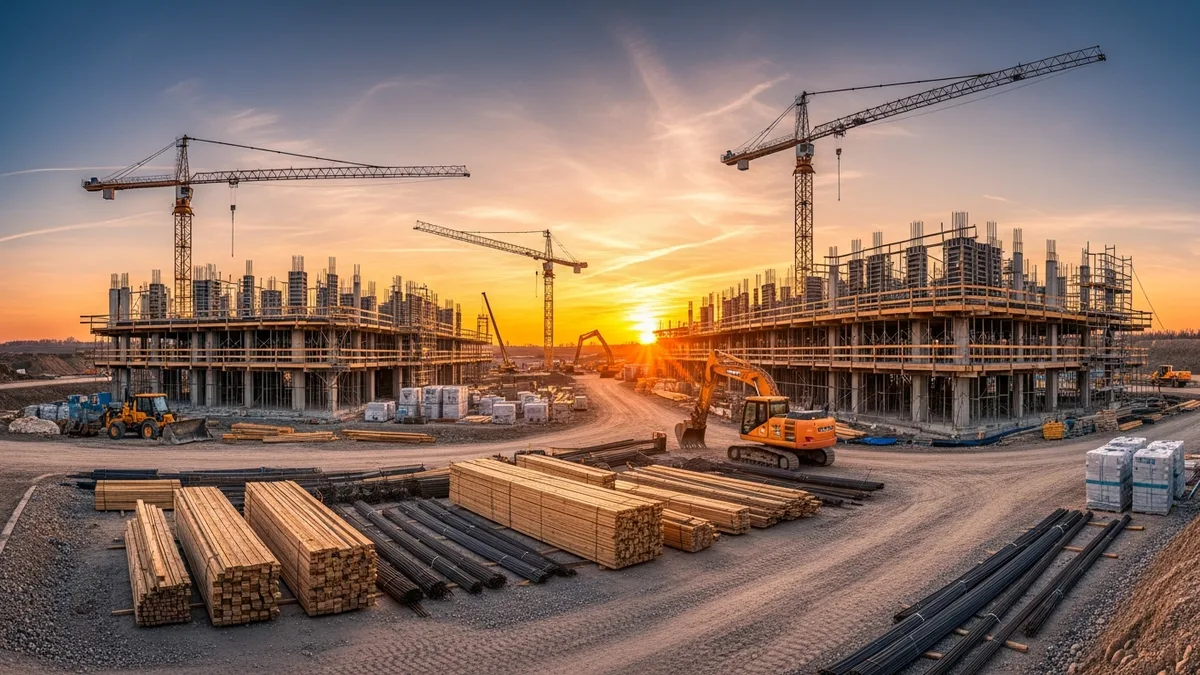
Temporary utilities and site services are some of the most overlooked line items in construction budgeting, but they can make or break your project timeline. If your crew shows up on day one and there is no power, no water, and nowhere to use the bathroom, you are already behind. And once you fall behind on a construction project, catching up costs real money.
Whether you are a GC running a ground-up commercial build or a specialty contractor handling a large residential remodel, getting your temporary site services planned out early is critical. This guide walks through every major category of temporary utilities and site services, with practical advice on timing, costs, and the mistakes that trip up even experienced contractors.
Temporary Power: Keeping the Lights On and the Tools Running
Temporary electrical service is usually the first utility you need to arrange, and it is also the one with the longest lead time. Depending on your local utility company, getting a temporary power drop can take anywhere from two weeks to two months. Do not wait until the last minute.
For most commercial projects, you will need a temporary power panel rated for the loads your crews will be pulling. Think about what equipment will be on site: welders, compressors, concrete pumps, tower cranes, and job trailers all need juice. A 200-amp single-phase panel might work for a small project, but larger jobs often need 400-amp or even 600-amp three-phase service.
Here is what you need to plan for:
- Utility application and connection fees. These vary wildly by region. Some utilities charge a flat fee for temporary service; others bill based on the size of the service drop. Budget $500 to $5,000 depending on your area and project size.
- Panel and distribution equipment. You can rent temporary power panels from electrical supply houses or specialty rental companies. Monthly rental runs $200 to $800 depending on the panel size.
- Generator backup. If your utility connection will be delayed or if the site is too remote for grid power, you will need generators. Diesel generators in the 50kW to 200kW range rent for $1,500 to $5,000 per month, plus fuel.
- GFCI protection. OSHA requires ground-fault circuit interrupter protection on all temporary wiring used during construction. Make sure your temp panel and spider boxes are compliant before the first inspection.
One common mistake: contractors assume the permanent electrical service will be available early enough to power construction activities. It almost never works out that way. Plan for temporary power from day one, and treat the switch to permanent power as a milestone, not an assumption.
If you are still tracking your project milestones on spreadsheets, take a look at how construction scheduling software can help you stay on top of utility timelines and avoid costly delays.
Temporary Water and Sewer Connections
Water is essential on a construction site for more than just drinking. You need it for dust control, concrete work, masonry, testing fire suppression systems, and cleaning up at the end of each day. Getting a temporary water connection set up early keeps your crews productive and your site compliant with environmental regulations.
Temporary water options include:
- Municipal water tap. The most common approach for urban and suburban projects. You apply for a temporary water meter through the local water authority, and they install a metered connection at the property line. Expect $300 to $2,000 for the tap and meter deposit, plus monthly usage charges.
- Water trucks and storage tanks. For rural sites or projects where municipal water is not yet available, you can bring water in by truck and store it in temporary tanks. This works but gets expensive fast if you need large volumes for concrete or dust control.
- Well water. Some larger projects in rural areas drill a temporary well. This only makes sense for long-duration projects where the well can later serve as the permanent water source.
For sewer, most temporary construction sites rely on portable sanitation (more on that below). But if your project involves underground utility work, you may need to connect to the municipal sewer system early for testing and inspection purposes.
A key part of managing temporary water is making sure you are not wasting it. Leaking hose bibs and running connections add up on the meter, and in drought-prone areas, water waste can actually result in fines. Assign someone to check connections at the end of each day.
Understanding how to track these kinds of ongoing costs is important. Our construction budget tracking guide covers methods for keeping tabs on expenses that accumulate quietly over the life of a project.
Sanitation: Portable Toilets and Handwash Stations
This is nobody’s favorite topic, but it is one of the most important site services you will arrange. OSHA requires that construction sites provide toilet facilities for workers, and the ratios are specific:
- 1 toilet for up to 20 workers
- 2 toilets for 21 to 40 workers
- Add 1 toilet for each additional 40 workers after that
Beyond the minimum OSHA requirements, you should also plan for:
- Handwash stations. OSHA requires handwashing facilities on construction sites. Standalone handwash stations typically rent alongside portable toilets for an additional $75 to $150 per month each.
- ADA-compliant units. If your site will have visitors, inspectors, or owner representatives, you should have at least one ADA-accessible unit on site.
- Placement. Put toilets within a reasonable walking distance of work areas, but not so close that they create a nuisance. Upwind and on stable ground are good rules of thumb. Also keep them accessible for the servicing truck.
- Service frequency. Standard service is once per week, but high-traffic sites with large crews may need twice-weekly or even daily service. A single portable toilet that is serviced weekly costs $150 to $300 per month in most markets.
The biggest mistake contractors make with sanitation is underestimating the number of units they need. When crews have to walk ten minutes to use the bathroom, productivity drops and workers get frustrated. It is a small expense relative to the cost of lost labor hours.
Planning your site layout carefully ties into your overall preconstruction checklist. Getting sanitation placement right from the start saves you from moving units around later.
Fencing, Security, and Site Access Control
Curious what other contractors think? Check out Projul reviews from real users.
Temporary fencing serves three purposes: it keeps unauthorized people out, it keeps your materials and equipment from walking off, and it satisfies local ordinance requirements for construction site barriers.
Chain-link fencing is the standard for most commercial projects. Six-foot chain-link panels with privacy screening are available from fencing rental companies and typically cost $5 to $15 per linear foot per month. For a mid-size commercial site with 800 linear feet of perimeter fencing, you are looking at $4,000 to $12,000 per month.
Beyond the physical barrier, think about these security measures:
- Lockable gates. You need at least two access points: one for vehicles and equipment, and one for pedestrian traffic. Make sure gates are wide enough for your largest delivery trucks.
- Security cameras. Wireless, solar-powered cameras have gotten cheap enough that there is no excuse not to have them. Systems that send alerts to your phone run $200 to $500 per camera, and they pay for themselves the first time they prevent a theft.
- Lighting. Temporary site lighting serves double duty as both a safety measure and a security deterrent. Solar-powered light towers are available for rent and eliminate the need to run temporary power to the perimeter.
- Guard service. High-value projects or sites in areas with theft problems may warrant a security guard during off-hours. This is expensive ($15 to $30 per hour), so weigh it against the value of what you are protecting.
Theft on construction sites is a real and growing problem. The National Equipment Register estimates that construction equipment theft costs the industry $300 million to $1 billion per year. Do not assume it will not happen to you.
Tracking your equipment and materials ties directly into your job costing. If you are not already using a system to track where your money goes on each project, check out our construction cost codes guide for a framework that works.
Temporary Roads, Staging Areas, and Office Trailers
Once you have utilities and security covered, the next category of site services deals with the physical infrastructure your team needs to work efficiently.
Temporary Roads and Access
On larger sites, especially those with soft soil or steep grades, you will need temporary roads to get equipment and materials where they need to go. Common approaches include:
- Crushed stone or gravel roads. The workhorse of temporary construction access. A 20-foot-wide gravel road costs roughly $15 to $30 per linear foot to install, depending on soil conditions and the depth of stone needed.
- Timber mats or steel plates. For sites with very soft or wet conditions, timber crane mats or steel plates provide a stable surface for heavy equipment. Mats rent for $50 to $200 per mat per month, and you will need a crane or forklift to place them.
- Stabilized earth. On some sites, you can stabilize the existing soil with lime or cement to create a temporary driving surface. This is cheaper than importing stone but requires dry conditions to install.
Plan your temporary roads to follow the path of your permanent roads and parking areas where possible. That way, the gravel base you install for construction access can serve as sub-base for the permanent paving.
Staging and Laydown Areas
Every project needs a designated area for material storage and equipment staging. When planning your staging area, consider:
- Proximity to the work area (close enough to be efficient, far enough to stay out of the way)
- Drainage (materials stored in standing water are ruined materials)
- Access for delivery trucks (can an 18-wheeler get in and out without a 15-point turn?)
- Security (is the staging area inside your fenced perimeter?)
Office Trailers and Job Site Offices
For projects lasting more than a few months, a job site office trailer gives your project team a place to hold meetings, review drawings, and get out of the weather. Here is what to expect:
- Single-wide trailers (8x20 to 8x40) rent for $300 to $800 per month, plus delivery and setup.
- Double-wide trailers for larger project teams run $800 to $2,000 per month.
- Setup costs include delivery, blocking and leveling, skirting, steps, and utility connections. Budget $1,500 to $4,000 for setup and the same for removal at the end of the project.
Your trailer needs power (from your temporary panel or a dedicated generator), data/internet connectivity, and climate control. Do not forget to budget for the monthly internet bill, which is easy to overlook.
Getting the site layout right, including trailer placement, is a key part of project mobilization planning. A few hours spent on a good site logistics plan saves days of rework later.
Budgeting for Temporary Utilities and Site Services
Now that we have covered what you need, let’s talk about what it all costs and how to make sure it lands in your budget correctly.
The total cost of temporary utilities and site services typically falls between 1% and 3% of the total project cost on commercial projects. On a $5 million project, that means $50,000 to $150,000 in temporary site service costs. For residential projects, the percentage can run higher because many of the fixed costs (utility connections, fencing minimums, trailer delivery) are the same regardless of project size.
Building Your Site Services Budget
Here is a framework for estimating temporary utility and site service costs:
| Category | Typical Monthly Cost | Notes |
|---|---|---|
| Temporary power (panel rental + usage) | $500 - $2,000 | Higher if generators are needed |
| Temporary water | $200 - $800 | Plus meter deposit |
| Portable toilets and handwash | $300 - $1,200 | Depends on crew size |
| Perimeter fencing | $2,000 - $12,000 | Based on site perimeter length |
| Security (cameras + lighting) | $500 - $2,000 | One-time plus monthly monitoring |
| Dumpsters and waste removal | $800 - $3,000 | Depends on volume and material type |
| Office trailer | $500 - $2,500 | Plus setup/teardown |
| Temporary roads | $5,000 - $20,000 | One-time installation |
| Internet and communications | $100 - $300 | Monthly service |
Dumpsters and Waste Management
We have not covered dumpsters yet, and they deserve attention because waste removal costs can sneak up on you fast.
For most construction projects, you will need at least one roll-off dumpster on site at all times. Standard sizes are 20-yard, 30-yard, and 40-yard containers. A 30-yard dumpster with weekly pickup runs $400 to $800 per month in most markets, but the cost depends heavily on what you are throwing away.
Clean construction debris (wood, drywall, metal) is the cheapest to dispose of. Mixed waste costs more. And if you have any hazardous materials like asbestos, lead paint, or contaminated soil, you are looking at specialized disposal that costs significantly more and requires proper documentation.
Some tips for keeping waste costs under control:
- Separate recyclable materials. Metal, clean wood, and cardboard can often be recycled for free or even sold. Keeping separate containers for recyclables reduces your landfill disposal costs.
- Right-size your dumpsters. A half-empty 40-yard container costs the same to haul as a full one. Match your dumpster size to your actual waste volume.
- Schedule pickups based on actual fill rates. Do not pay for weekly pickup if your dumpster only fills up every two weeks.
Waste management ties into the broader topic of reducing material waste on construction projects. Good waste management practices save money on both materials and disposal.
Tips for Controlling Site Service Costs
- Get competitive bids. Portable toilet companies, dumpster services, and fencing providers all have competitors. Get at least three quotes for each service.
- Negotiate long-term rates. If your project will run 12 months or more, negotiate a long-term contract rate instead of paying month-to-month. You can often save 15% to 25%.
- Bundle services when possible. Some site service companies offer packages that include toilets, fencing, and dumpsters. Bundling can reduce your total cost and simplify your vendor management.
- Track costs against your budget monthly. Site service costs are recurring, which means small overages compound over time. A $200 per month overage on dumpster service does not sound like much, but over an 18-month project that is $3,600 you did not plan for.
- Plan for mobilization and demobilization. Setup and teardown costs for fencing, trailers, and temporary roads can be significant. Include these one-time costs in your project budget alongside the monthly recurring charges.
Keeping a close eye on these costs is easier when you have a reliable system for tracking your project budget. If you are still doing it by hand, a good construction budget management approach will save you from the kind of cost creep that eats your margins.
Managing temporary utilities and site services is not the most exciting part of construction, but it is one of the most practical. Get it right, and your crews have what they need to work safely and productively every day. Get it wrong, and you are dealing with delays, safety violations, and budget overruns that could have been avoided with a little planning up front.
The best contractors treat site services as a first-class part of their project planning, not an afterthought. Start early, budget accurately, track your costs, and your projects will run smoother from mobilization through punch list.
Ready to see how Projul can work for your crew? Schedule a free demo and we will walk you through it.
DISCLAIMER: We make no warranty of accuracy, timeliness, and completeness of the information presented on this website. Posts are subject to change without notice and cannot be considered financial advice.
Frequently Asked Questions
What are temporary utilities in construction?
How much do temporary site services cost on a typical project?
Who is responsible for temporary utilities on a construction site?
When should I order temporary utilities for a new project?
Do I need permits for temporary construction utilities?
Related Articles

BIM Clash Detection: How to Catch Conflicts Before They Cost You on the Jobsite
BIM Clash Detection: How to Catch Conflicts Before They Cost You on the Jobsite Every contractor has a story about the...
Read More →
Asphalt Paving and Compaction Guide: Mix Types, Laydown Temperatures, and Quality Testing
Asphalt paving looks straightforward from a distance. A truck dumps material, the paver lays it down, and rollers...
Read More →
Construction Jobsite Wi-Fi & Connectivity Guide: Setting Up Reliable Internet in the Field
A practical guide to getting reliable internet on construction job sites. Learn about cellular hotspots, mesh networks,...
Read More →