
Construction Warehouse & Yard Management Guide | Projul
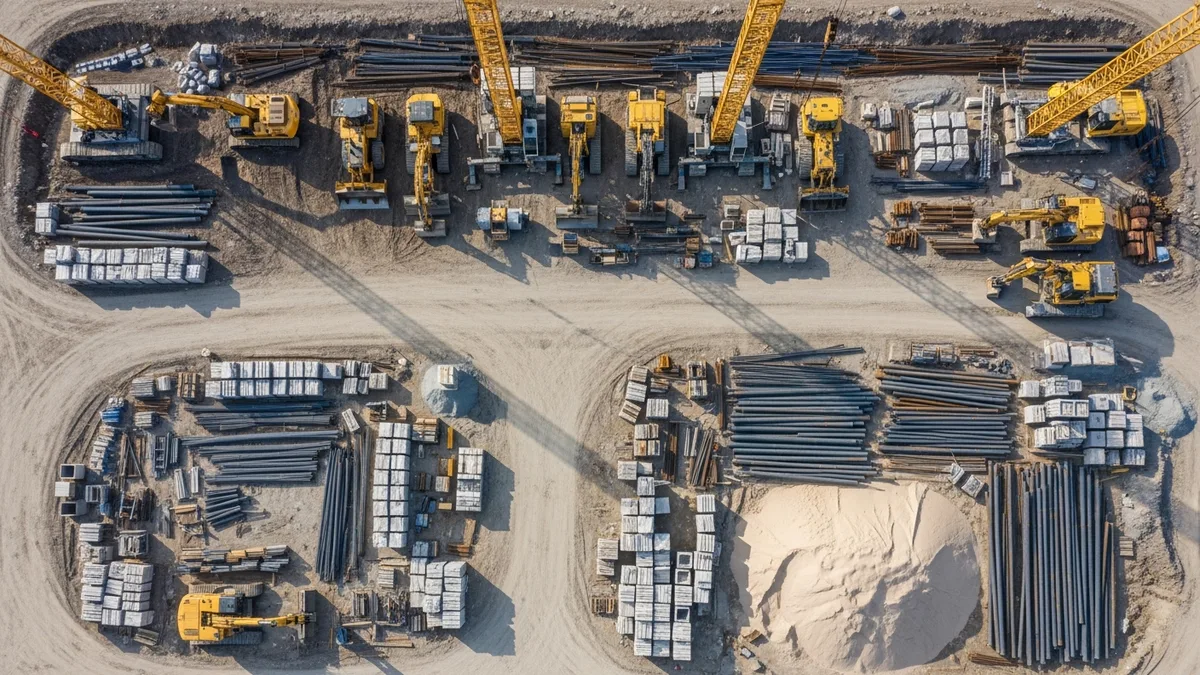
If you have ever spent half a morning tearing through a shop yard looking for a specific fitting, a pallet of drywall that got buried behind a concrete pour’s leftover forms, or the one piece of equipment that nobody remembers parking, you already know the cost of a disorganized yard. It is not just frustrating. It burns labor hours, delays jobs, and chips away at your margins in ways that never show up on a single line item but absolutely show up on your bottom line at the end of the year.
Your warehouse and yard are the hub of your operation. Every material, tool, and piece of equipment flows through that space at some point. When it is set up well, your crews load out fast in the morning, deliveries land where they should, and you actually know what you have on hand. When it is not, you get chaos disguised as a normal workday.
This guide walks through how to set up and manage a construction company’s warehouse and shop yard so it actually works for you instead of against you. Whether you are running a five-truck operation out of a rented lot or managing a full warehouse and yard for a mid-size GC, these principles apply.
1. Laying Out Your Yard: Zones That Make Sense
The biggest mistake contractors make with their yard is treating it like one big open space where stuff just goes wherever there is room. That works until it does not, and it usually stops working a lot sooner than you think.
Instead, think of your yard like a job site. You would not stack lumber in the middle of a traffic lane on a project, and you should not do it at your shop either. Break the space into distinct zones with clear purposes:
Receiving and staging area. This is where deliveries come in. It should be near the main gate, with enough room for a flatbed or box truck to pull in, unload, and turn around without doing a 47-point turn. Keep this area clear at all times. If materials pile up here because nobody moved them to their proper zone, your next delivery becomes a problem.
Bulk material storage. Lumber, pipe, rebar, aggregate, sheet goods. These take up the most space and get moved the most often. Put them in an area with good forklift access and firm ground. If your yard turns to mud every time it rains, gravel or pave your bulk storage lanes first. Nothing kills productivity like trying to pull a loaded forklift through six inches of muck.
Small parts and hardware. This belongs inside your warehouse or in a shipping container with shelving. Bins, labels, and a checkout system keep fittings, fasteners, connectors, and consumables from walking off or getting lost. A contractor who tracks job costs carefully knows that small parts add up fast when they keep disappearing.
Equipment parking. Every piece of rolling stock needs a home spot. Excavators, skid steers, trailers, trucks, and lifts should park in the same area every time they come back. This makes morning dispatch faster and lets you do visual checks without walking the entire property. If you are managing a fleet, having a system for tracking equipment across jobs and back to the yard is not optional.
Waste and recycling. Dumpsters, scrap bins, and recycling containers go at the back or side of the yard, away from your staging and storage areas but still accessible for pickup trucks. Keep them organized by material type if you recycle, which you should since disposal costs add up.
Employee parking and office access. Separate personal vehicles from the working yard. You do not want a crew member’s truck blocking a forklift lane at 6:30 AM when you are trying to load out three jobs.
Draw this layout on paper or in a simple diagram. Paint lines, set up signs, and make it clear to everyone where things go. It sounds simple because it is. The hard part is enforcing it every single day.
2. Material Receiving: Stop Letting Deliveries Run Your Day
A delivery truck shows up. Where does it go? Who checks it in? Where does the material end up? If the answer to any of those questions is “whoever is around” or “wherever there is room,” you have a receiving problem.
Curious what other contractors think? Check out Projul reviews from real users.
Set up a receiving process that is the same every time:
Designate a receiving person or rotation. Somebody needs to own this. They check the packing slip against the PO, inspect for damage or shortages, and sign off. If nobody does this, you will find out three weeks later that you are short 200 feet of conduit, and by then the supplier is not going to make it right without a fight.
Check it before you accept it. Count the material. Look at it. Open boxes if needed. Damaged goods that get accepted and shelved become your problem. Drivers are in a hurry, but taking ten minutes to verify a load saves you hours of headaches later.
Move it to the right zone immediately. Do not let deliveries sit in the staging area for three days. The receiving area needs to stay clear. If you do not have the labor to put materials away the same day, schedule receiving windows around your crew availability. Many contractors find that having deliveries arrive between 7 and 9 AM, when the yard crew is fresh and available, works best.
Log it in your system. Whether you use a spreadsheet, a whiteboard, or construction management software, record what came in, when, for which job, and where it was stored. This is the foundation of your inventory tracking, and it connects directly to your budget management when you need to know how much material is sitting in your yard versus already on a job site.
This process takes maybe 15 to 20 minutes per delivery once it is dialed in. Skipping it costs you a lot more than that in lost materials, reorders, and wasted trips.
3. Inventory Management: Know What You Have
Here is a scenario that plays out in construction yards every single week: A project manager orders material for a job. That material is already sitting in the warehouse from a previous job that came in under on quantities. Nobody knew it was there because nobody tracks inventory. The company just paid twice for the same material.
Inventory management does not need to be complicated, but it does need to exist. Here is how to set it up:
Categorize everything. Group materials by type, trade, or job. Use whatever system makes sense for your operation, but be consistent. If your electricians call it “MC cable” and your inventory says “armored cable,” you have got a problem that will only get worse.
Label your storage locations. Warehouse racks, bins, and yard zones should all have clear location codes. Row A, Shelf 3, Bin 12. When someone needs a part, they should be able to find it without asking three people and checking four locations. This is the same principle behind good cost code systems where everything has a place in the structure.
Track quantities in and out. Every time material comes in from a supplier or goes out to a job, record it. This does not have to be fancy. A clipboard and a form work for small operations. Larger shops benefit from barcode scanning or software that ties into their project management system.
Set reorder points for common items. If you always need PVC glue, certain fastener sizes, or safety supplies, set a minimum quantity. When stock drops below that number, it triggers a reorder. This keeps you from finding out you are out of something critical at 6 AM on a Monday.
Do regular counts. A quarterly full count is the minimum. Monthly is better for high-volume yards. Spot-check expensive items weekly. Compare physical counts to your records and investigate discrepancies. Shrinkage is real in construction, and the sooner you catch it, the smaller the hole in your budget.
The payoff is knowing exactly what you have on hand, which means fewer emergency orders, fewer double purchases, and crews that actually get what they need when they need it. If you have ever looked at your profit and loss statement and wondered where the money went, untracked inventory is a good place to start looking.
4. Equipment Storage and Fleet Management in the Yard
Your equipment is probably your biggest asset after your people. How you store it, maintain it, and dispatch it from your yard has a direct impact on your daily productivity and your long-term costs.
Assign parking spots. This sounds basic, and it is, but most yards do not do it. When every machine, truck, and trailer has a designated spot, you can see at a glance what is in the yard and what is out on jobs. A simple painted number on the pavement or a sign on a post is all it takes.
Keep keys organized. A key box or key management system near the dispatch area means nobody is hunting for keys at 6 AM. Label every key. If you use a lockbox with numbered hooks, match the hook number to the parking spot number. Simple and effective.
Do return inspections. When a piece of equipment comes back to the yard, somebody needs to walk around it. Check for damage, fluid levels, tire condition, and cleanliness. Log the hours. This is your early warning system for maintenance needs, and it protects you from disputes about when damage occurred. Having a good equipment maintenance program starts right here in the yard.
Fuel and fluid station. If your yard has a fuel tank, keep it in a designated area with spill containment and proper signage. Log every fill-up by unit number. This tracks fuel consumption, flags potential theft, and helps you calculate true operating costs per machine. Those numbers matter when you are deciding whether to rent or buy equipment for your next project.
Seasonal and long-term storage. Equipment you are not using right now still needs care. Store it on solid ground, preferably under cover. Disconnect batteries, grease exposed metal, and put it on a maintenance schedule even when it is sitting. Equipment that deteriorates in your yard because nobody thought about storage is money rotting in the sun.
Dispatch planning. Before your crews show up in the morning, know what equipment is going where. A dispatch board, whether it is a whiteboard or a screen, shows the day’s plan: which units go to which jobs, who is driving, and when they need to be there. This turns your morning from a scramble into a process.
5. Security: Protecting Your Yard Investment
Construction theft is a real and expensive problem. The National Equipment Register estimates that construction equipment theft alone costs the industry close to a billion dollars a year in the US. And that is just equipment. Add in materials, tools, and fuel, and the number climbs fast.
Your yard is where most of your assets are concentrated when they are not on a job site. Securing it is not paranoia. It is basic business sense.
Perimeter fencing. A solid fence is your first line of defense. Chain link with privacy slats or a solid fence at least six feet tall, topped with barbed wire or razor ribbon if local codes allow it. Make sure there are no gaps, low spots, or places where someone could drive through.
Gates and access control. Limit entry points. One main gate is ideal, two at most. Use key card, code, or key access so you have a record of who enters and when. If you have a manned gate during business hours, even better.
Lighting. A well-lit yard is a less attractive target. Install bright lights on timers or motion sensors, covering the perimeter, parking areas, and storage zones. LED fixtures are cheap to run and last forever.
Cameras. Put cameras at every entry point, at high-value storage areas, and at the fuel station. Modern IP cameras with cloud storage are affordable and let you check your yard from your phone. Motion-triggered recording saves storage space and makes it easier to review footage when something happens.
Locked storage for high-value items. Copper, power tools, electronics, and small equipment should be in a locked building, container, or compound. A standard shipping container with a lockbox over the handle and a good padlock is surprisingly effective and affordable.
Signage. “Premises under video surveillance” and “authorized personnel only” signs are cheap deterrence. They will not stop a determined thief, but they filter out opportunistic ones.
Insurance. Make sure your policy covers yard storage, not just job site and transit. Document your inventory with photos and serial numbers. When a claim does happen, having records makes the difference between getting paid and fighting with your adjuster for months.
Security is one of those things that feels like an overhead cost until the night someone cuts through your fence and drives off with a skid steer. Then it feels like the best money you ever spent.
6. Daily Yard Operations: Making It All Work Together
A well-designed yard with great security and clear zones still falls apart if nobody manages the daily flow. The operational rhythm of your yard is what ties everything together and keeps it productive.
Morning dispatch. This is the most important 30 minutes of your day. Crews get their assignments, load their trucks, grab their equipment, and head out. If your yard is organized, this happens fast and clean. If it is not, you lose an hour across your workforce every single morning, and that time adds up to real money that shows up as a profit killer at the end of the quarter.
Load-out prep the night before. For jobs that need specific materials or equipment, stage what you can the afternoon before. Pull the materials, set them near the loading area, and tag them with the job name. When crews arrive in the morning, they grab and go instead of searching and waiting.
End-of-day returns. Equipment comes back, gets parked in its spot, and gets inspected. Materials returning from a job get checked back in and put away. Trash and debris from the day get cleaned up. The yard should be reset and ready for the next morning before the last person leaves.
Weekly yard walk. Once a week, walk the entire yard with a checklist. Check zone compliance, look for materials that got left in the wrong area, inspect fencing and lighting, and note anything that needs attention. This takes 30 minutes and prevents small problems from becoming big ones.
Communication with the field. Your yard and your job sites need to talk to each other. When a project manager needs materials pulled and delivered to a site, that request should flow through a system, not a random text to whoever might be at the shop. When equipment breaks down on a job and needs to come back to the yard, there needs to be a process for that too. Good construction scheduling software can tie your yard operations into your overall project timeline so nothing falls through the cracks.
Seasonal maintenance. Your yard itself needs upkeep. Grade the gravel areas before they become mud pits. Patch the asphalt before potholes swallow a pallet. Clear drainage channels before the rainy season. Trim vegetation away from fences and lighting. A yard that falls into disrepair drags down everything that happens in it.
Yard culture. This is the hardest part and the most important. An organized yard only stays organized if everyone who uses it treats it that way. That means consistent expectations, consequences for leaving messes, and leading by example. When the owner or superintendent keeps their area clean, the rest of the crew follows. When leadership tolerates a sloppy yard, the standard drops fast.
Your yard is a reflection of how you run your company. Clients who visit see it. Potential hires see it. Your crews see it every single day. A sharp, well-run yard tells everyone that you take your business seriously, and that attitude carries over to your job sites, your estimates, and your reputation.
The contractors who figure out yard management are not the ones with the biggest budgets or the fanciest setups. They are the ones who treat their yard like what it is: the operational center of their business. Get it right, and everything else gets a little easier. Let it slide, and you will spend every day fighting problems that did not need to exist.
Ready to stop guessing and start managing? Schedule a demo to see Projul in action.
Start with the zones. Set up a receiving process. Track your inventory. Park your equipment where it belongs. Lock the gate. And do it all again tomorrow. That is yard management. It is not glamorous, but it is the kind of work that separates the contractors who grow from the ones who stay stuck.
Frequently Asked Questions
How much space do I need for a construction shop yard?
What is the best way to organize materials in a construction yard?
How do I keep my construction yard secure after hours?
Should I invest in yard management software?
How often should I do a full yard inventory count?
Related Articles

BIM Clash Detection: How to Catch Conflicts Before They Cost You on the Jobsite
BIM Clash Detection: How to Catch Conflicts Before They Cost You on the Jobsite Every contractor has a story about the...
Read More →
Asphalt Paving and Compaction Guide: Mix Types, Laydown Temperatures, and Quality Testing
Asphalt paving looks straightforward from a distance. A truck dumps material, the paver lays it down, and rollers...
Read More →
Construction Jobsite Wi-Fi & Connectivity Guide: Setting Up Reliable Internet in the Field
A practical guide to getting reliable internet on construction job sites. Learn about cellular hotspots, mesh networks,...
Read More →