
3 Free Deck Building Estimate Templates (2026)
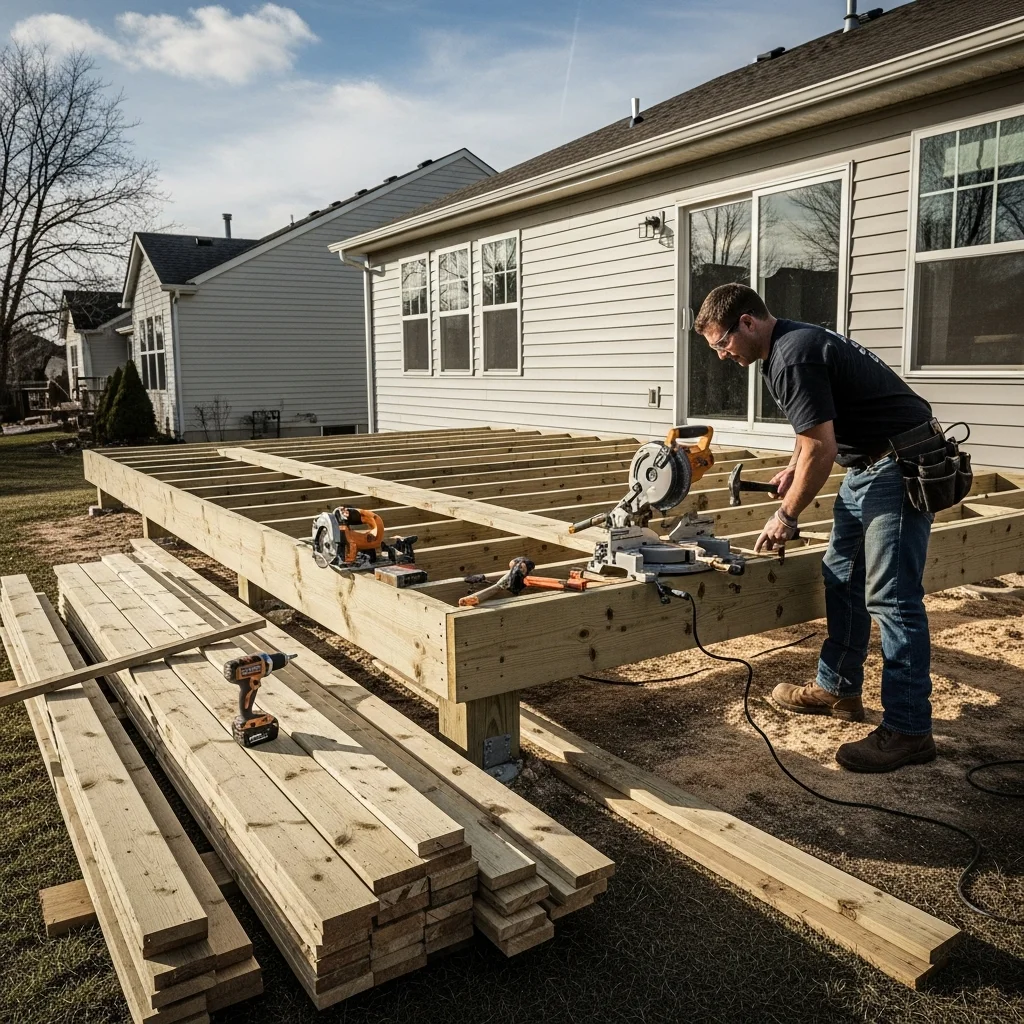
TL;DR: Download three free deck building estimate templates (new pressure-treated, composite, and repair) with real 2026 pricing. This guide also covers material costs per square foot, profitable add-ons like pergolas and cable railing, permit and code requirements, and how to price multi-level and wraparound decks. If you want to skip the spreadsheets, Projul’s estimating tools let you build and send deck estimates from your phone.
Building a deck is one of the most popular home improvement projects in the country, and it is one of the most frequently under-estimated. Homeowners see a flat platform in their backyard and think it should be simple. They do not think about the footings, the ledger board attachment, the joist spacing, the railing code requirements, or the permit process.
As a deck builder, your job is to show the customer what their project actually involves. A detailed estimate does that better than any sales pitch. When a homeowner sees 30 line items covering footings, framing, decking, stairs, railings, hardware, and finishing, they understand why the project costs what it costs. They also trust that you have thought through every detail.
The flip side is also true. A vague estimate with three or four lines and a lump sum total invites comparison shopping on price alone. The cheapest bid wins, and nobody wins when the cheapest bidder cuts corners on structural work.
These three templates cover the most common deck projects: a new pressure-treated wood deck, a composite deck upgrade, and deck repair work. Each one includes realistic 2026 pricing that you can adjust for your local market.
📥 Get Your Free Deck Building Estimate Templates
Download Projul’s free deck estimate templates as Google Sheets, ready to customize with your own pricing and branding.
Download Free Deck Templates →
What Every Deck Estimate Should Include
Before we get into the templates, here are the sections every professional deck estimate needs:
- Customer and project details. Name, address, and job site location.
- Design specifications. Deck size, shape, height above grade, and number of levels.
- Material selections. Decking type (wood species or composite brand), railing style, and hardware.
- Foundation and framing. Footings, posts, beams, joists, and ledger connection.
- Decking and surface. Board layout, fastener type, and finish treatment.
- Railings, stairs, and accessories. Code-compliant railings, stair stringers, and any built-ins.
- Labor broken out by phase. Foundation, framing, decking, railings, and finishing as separate sections.
- Permit and inspection fees. Listed as their own line item.
- Overhead and profit. Your markup on direct costs.
- Payment terms, timeline, and exclusions. Clear expectations in writing.
Template 1: New Pressure-Treated Wood Deck (16x20, 320 sq ft)
This template covers a standard single-level deck attached to the house, approximately 320 square feet, built with pressure-treated lumber. It includes stairs (4-foot wide, 4 risers), railings on three sides, and concrete footings.
Foundation and Framing Materials
| Line Item | Quantity | Unit | Unit Cost | Total |
|---|---|---|---|---|
| Concrete footings (sono tubes + concrete) | 9 | each | $45.00 | $405.00 |
| Post bases (adjustable, galvanized) | 9 | each | $28.00 | $252.00 |
| 6x6 pressure-treated posts (8 ft) | 9 | each | $32.00 | $288.00 |
| 2x10 pressure-treated joists (16 ft) | 22 | each | $28.00 | $616.00 |
| 2x10 pressure-treated beam stock (16 ft) | 6 | each | $28.00 | $168.00 |
| 2x10 pressure-treated ledger board (16 ft) | 2 | each | $28.00 | $56.00 |
| Ledger board flashing (aluminum) | 20 | lin ft | $3.50 | $70.00 |
| Joist hangers (2x10) | 22 | each | $4.50 | $99.00 |
| Structural screws and bolts (assorted) | 1 | lot | $180.00 | $180.00 |
| Lag bolts for ledger (1/2” x 4”) | 20 | each | $3.00 | $60.00 |
| Foundation/Framing Materials | $2,194.00 |
Decking and Surface Materials
| Line Item | Quantity | Unit | Unit Cost | Total |
|---|---|---|---|---|
| 5/4x6 pressure-treated decking (16 ft) | 44 | boards | $22.00 | $968.00 |
| Deck screws (stainless steel, 5 lb box) | 4 | boxes | $45.00 | $180.00 |
| Wood stain/sealer (5-gal) | 3 | buckets | $55.00 | $165.00 |
| Decking Materials | $1,313.00 |
Railing and Stair Materials
| Line Item | Quantity | Unit | Unit Cost | Total |
|---|---|---|---|---|
| 4x4 railing posts (42”) | 14 | each | $18.00 | $252.00 |
| 2x4 top and bottom rails | 12 | each | $12.00 | $144.00 |
| 2x2 balusters (36”) | 90 | each | $3.50 | $315.00 |
| Post caps (decorative) | 14 | each | $8.00 | $112.00 |
| 2x12 stair stringers (8 ft) | 3 | each | $24.00 | $72.00 |
| 5/4x6 stair treads | 8 | boards | $14.00 | $112.00 |
| Stair hardware (angles, bolts) | 1 | lot | $65.00 | $65.00 |
| Railing/Stair Materials | $1,072.00 |
Labor
| Task | Quantity | Unit | Unit Cost | Total |
|---|---|---|---|---|
| Layout and footing excavation | 9 | footings | $55.00 | $495.00 |
| Pour and set footings | 9 | footings | $40.00 | $360.00 |
| Set posts and beams | 1 | lot | $600.00 | $600.00 |
| Install ledger board | 1 | lot | $350.00 | $350.00 |
| Frame joists and blocking | 320 | sq ft | $3.00 | $960.00 |
| Install decking | 320 | sq ft | $3.50 | $1,120.00 |
| Build and install stairs | 1 | set | $550.00 | $550.00 |
| Install railings and balusters | 48 | lin ft | $12.00 | $576.00 |
| Stain/seal application | 320 | sq ft | $1.25 | $400.00 |
| Cleanup and debris removal | 1 | lot | $300.00 | $300.00 |
| Labor Subtotal | $5,711.00 |
Equipment and Other Costs
| Item | Quantity | Unit | Unit Cost | Total |
|---|---|---|---|---|
| Permit fee | 1 | each | $350.00 | $350.00 |
| Concrete mixer rental | 1 | day | $75.00 | $75.00 |
| Material delivery | 1 | each | $150.00 | $150.00 |
| Dumpster rental (construction debris) | 1 | each | $400.00 | $400.00 |
| Equipment Subtotal | $975.00 |
Summary
| Amount | |
|---|---|
| Foundation/Framing materials | $2,194.00 |
| Decking materials | $1,313.00 |
| Railing/Stair materials | $1,072.00 |
| Labor | $5,711.00 |
| Equipment and other | $975.00 |
| Direct Cost Subtotal | $11,265.00 |
| Overhead (15%) | $1,689.75 |
| Profit (12%) | $1,554.57 |
| Total Estimate | $14,509.32 |
Tips for This Template
- The 9 footings assume a standard layout with posts every 8 feet. Your local code may require different spacing. Check with your building department before you dig.
- Pressure-treated lumber prices can swing 15-25% between seasons. Spring is typically the most expensive time to buy. Update your template pricing quarterly.
- Always list the specific stain/sealer product. Homeowners who compare estimates will see the difference between a $30 bucket and a $55 premium product.
- Include a note about re-staining. Pressure-treated decks need re-staining every 2-3 years. This plants the seed for future maintenance work.
Template 2: Composite Deck Build (16x20, 320 sq ft)
This template uses composite decking (Trex, TimberTech, or similar) with aluminum railings. The substructure is still pressure-treated lumber, but the surface materials are higher-end with a longer lifespan.
Foundation and Framing Materials
| Line Item | Quantity | Unit | Unit Cost | Total |
|---|---|---|---|---|
| Concrete footings (sono tubes + concrete) | 9 | each | $45.00 | $405.00 |
| Post bases (adjustable, galvanized) | 9 | each | $28.00 | $252.00 |
| 6x6 pressure-treated posts (8 ft) | 9 | each | $32.00 | $288.00 |
| 2x10 pressure-treated joists (16 ft) | 22 | each | $28.00 | $616.00 |
| 2x10 pressure-treated beam stock (16 ft) | 6 | each | $28.00 | $168.00 |
| 2x10 pressure-treated ledger board (16 ft) | 2 | each | $28.00 | $56.00 |
| Ledger board flashing (aluminum) | 20 | lin ft | $3.50 | $70.00 |
| Joist hangers (2x10) | 22 | each | $4.50 | $99.00 |
| Structural screws and bolts | 1 | lot | $180.00 | $180.00 |
| Lag bolts for ledger (1/2” x 4”) | 20 | each | $3.00 | $60.00 |
| Foundation/Framing Materials | $2,194.00 |
Composite Decking and Surface Materials
| Line Item | Quantity | Unit | Unit Cost | Total |
|---|---|---|---|---|
| Composite decking boards (16 ft, grooved) | 44 | boards | $48.00 | $2,112.00 |
| Hidden fastener clips | 320 | each | $1.25 | $400.00 |
| Fascia boards (composite, 12 ft) | 6 | each | $55.00 | $330.00 |
| Starter clips and end caps | 1 | kit | $45.00 | $45.00 |
| Decking Materials | $2,887.00 |
Railing and Stair Materials
| Line Item | Quantity | Unit | Unit Cost | Total |
|---|---|---|---|---|
| Aluminum railing sections (6 ft) | 8 | sections | $120.00 | $960.00 |
| Aluminum railing posts | 14 | each | $45.00 | $630.00 |
| Post mounts and hardware | 14 | each | $18.00 | $252.00 |
| Composite stair treads (48”) | 8 | each | $35.00 | $280.00 |
| Stair stringers (pressure-treated, 2x12) | 3 | each | $24.00 | $72.00 |
| Stair railing section (aluminum) | 1 | section | $180.00 | $180.00 |
| Railing/Stair Materials | $2,374.00 |
Labor
| Task | Quantity | Unit | Unit Cost | Total |
|---|---|---|---|---|
| Layout and footing excavation | 9 | footings | $55.00 | $495.00 |
| Pour and set footings | 9 | footings | $40.00 | $360.00 |
| Set posts and beams | 1 | lot | $600.00 | $600.00 |
| Install ledger board | 1 | lot | $350.00 | $350.00 |
| Frame joists and blocking | 320 | sq ft | $3.00 | $960.00 |
| Install composite decking with hidden clips | 320 | sq ft | $5.00 | $1,600.00 |
| Install fascia boards | 52 | lin ft | $6.00 | $312.00 |
| Build and install stairs | 1 | set | $650.00 | $650.00 |
| Install aluminum railings | 48 | lin ft | $15.00 | $720.00 |
| Cleanup and debris removal | 1 | lot | $300.00 | $300.00 |
| Labor Subtotal | $6,347.00 |
Equipment and Other Costs
| Item | Quantity | Unit | Unit Cost | Total |
|---|---|---|---|---|
| Permit fee | 1 | each | $350.00 | $350.00 |
| Concrete mixer rental | 1 | day | $75.00 | $75.00 |
| Material delivery | 1 | each | $175.00 | $175.00 |
| Dumpster rental | 1 | each | $400.00 | $400.00 |
| Equipment Subtotal | $1,000.00 |
Summary
| Amount | |
|---|---|
| Foundation/Framing materials | $2,194.00 |
| Composite decking materials | $2,887.00 |
| Railing/Stair materials | $2,374.00 |
| Labor | $6,347.00 |
| Equipment and other | $1,000.00 |
| Direct Cost Subtotal | $14,802.00 |
| Overhead (15%) | $2,220.30 |
| Profit (12%) | $2,042.68 |
| Total Estimate | $19,064.98 |
Tips for This Template
- Composite decking costs about double the material price of pressure-treated wood, but the labor is similar for the framing and slightly higher for the surface install (hidden clips take more time than face-screwing).
- The selling point for composite is low maintenance. No staining, no sealing, no splinters. Make sure your estimate mentions the 25-year or lifetime warranty from the manufacturer. Homeowners are willing to pay more when they understand the long-term savings.
- Hidden fastener clips add $400 to $500 in materials for a 320-square-foot deck, but they give a clean look with no visible screw heads. Most composite manufacturers require or recommend specific clip systems for warranty coverage.
- Aluminum railings are more expensive than wood but require zero maintenance. They also come in kit form, which saves labor time compared to building wood railings from scratch.
Template 3: Deck Repair and Restoration
This template covers common deck repairs: replacing rotted boards, fixing structural issues, re-staining, and bringing an older deck up to code. These jobs vary widely, so adjust the quantities to match your specific project.
Materials
| Line Item | Quantity | Unit | Unit Cost | Total |
|---|---|---|---|---|
| 5/4x6 pressure-treated decking (replacement) | 12 | boards | $22.00 | $264.00 |
| 2x10 joist stock (for sistering/replacement) | 4 | each | $28.00 | $112.00 |
| 2x2 balusters (replacement) | 20 | each | $3.50 | $70.00 |
| Stair treads (replacement) | 4 | each | $14.00 | $56.00 |
| Joist hangers (replacement) | 6 | each | $4.50 | $27.00 |
| Structural screws and hardware | 1 | lot | $85.00 | $85.00 |
| Deck screws (stainless, 5 lb) | 2 | boxes | $45.00 | $90.00 |
| Wood stain/sealer (5-gal) | 2 | buckets | $55.00 | $110.00 |
| Flashing tape (for ledger repair) | 1 | roll | $35.00 | $35.00 |
| Materials Subtotal | $849.00 |
Labor
| Task | Quantity | Unit | Unit Cost | Total |
|---|---|---|---|---|
| Inspect and assess damage | 2 | hours | $85.00 | $170.00 |
| Remove damaged decking boards | 2 | hours | $85.00 | $170.00 |
| Sister or replace damaged joists | 4 | hours | $95.00 | $380.00 |
| Install replacement decking | 3 | hours | $85.00 | $255.00 |
| Repair or replace stair treads | 2 | hours | $85.00 | $170.00 |
| Replace damaged balusters | 1.5 | hours | $85.00 | $127.50 |
| Power wash entire deck | 2 | hours | $75.00 | $150.00 |
| Apply stain/sealer (full deck) | 4 | hours | $75.00 | $300.00 |
| Cleanup | 1 | hour | $75.00 | $75.00 |
| Labor Subtotal | $1,797.50 |
Equipment and Other Costs
| Item | Quantity | Unit | Unit Cost | Total |
|---|---|---|---|---|
| Pressure washer rental | 1 | day | $85.00 | $85.00 |
| Travel/mobilization | 1 | trip | $75.00 | $75.00 |
| Debris disposal | 1 | load | $150.00 | $150.00 |
| Equipment Subtotal | $310.00 |
Summary
| Amount | |
|---|---|
| Materials | $849.00 |
| Labor | $1,797.50 |
| Equipment and other | $310.00 |
| Direct Cost Subtotal | $2,956.50 |
| Overhead (15%) | $443.48 |
| Profit (15%) | $509.99 |
| Total Estimate | $3,909.97 |
Tips for This Template
- Joist repair (sistering) is structural work. Charge a higher hourly rate for it because of the skill and liability involved. The $95/hour rate above reflects this.
- Power washing before staining is not optional. Stain does not bond to dirty, weathered wood. Include it as a separate line item so the customer sees the value.
- When replacing individual decking boards on an older deck, the new boards will not match the color of the existing ones until they weather. Let the customer know this up front. Staining the entire deck after repairs gives a uniform look.
- Many repair jobs turn into bigger projects once you start pulling boards and finding rot underneath. Include a note: “If additional structural damage is found during repair, a separate estimate will be provided before proceeding.”
Common Deck Building Line Items and 2026 Pricing Ranges
Use this reference table to sanity-check your estimates or build a custom template from scratch.
Material Costs
| Material | Unit | Low Range | Mid Range | High Range |
|---|---|---|---|---|
| 5/4x6 pressure-treated decking (16 ft) | board | $16.00 | $22.00 | $30.00 |
| Composite decking board (16 ft) | board | $35.00 | $48.00 | $75.00 |
| PVC/cellular decking board (16 ft) | board | $50.00 | $65.00 | $90.00 |
| 2x10 pressure-treated joist (16 ft) | each | $22.00 | $28.00 | $36.00 |
| 6x6 pressure-treated post (8 ft) | each | $24.00 | $32.00 | $42.00 |
| Concrete sono tube + concrete | footing | $30.00 | $45.00 | $65.00 |
| Joist hanger (2x10) | each | $3.00 | $4.50 | $6.50 |
| Wood railing (per linear foot, materials) | lin ft | $8.00 | $14.00 | $22.00 |
| Aluminum railing (per linear foot, materials) | lin ft | $18.00 | $28.00 | $45.00 |
| Cable railing (per linear foot, materials) | lin ft | $25.00 | $40.00 | $65.00 |
| Deck stain/sealer (5-gal) | bucket | $35.00 | $55.00 | $80.00 |
Labor Rates
| Task | Low Range | Mid Range | High Range |
|---|---|---|---|
| Footing excavation and pour (each) | $65.00 | $95.00 | $140.00 |
| Framing (per sq ft) | $2.00 | $3.00 | $5.00 |
| Wood decking install (per sq ft) | $2.50 | $3.50 | $5.50 |
| Composite decking install (per sq ft) | $3.50 | $5.00 | $7.50 |
| Wood railing install (per lin ft) | $8.00 | $12.00 | $18.00 |
| Aluminum railing install (per lin ft) | $10.00 | $15.00 | $22.00 |
| Stair construction (per set) | $400.00 | $550.00 | $900.00 |
| Stain/seal application (per sq ft) | $0.75 | $1.25 | $2.00 |
| Old deck demolition (per sq ft) | $3.00 | $5.00 | $8.00 |
Common Add-On Costs
| Item | Typical Range |
|---|---|
| Building permit | $200 - $500 |
| Engineering stamp (if required) | $300 - $800 |
| Concrete mixer rental (per day) | $50 - $100 |
| Dumpster rental (20-yard) | $300 - $500 |
| Material delivery | $100 - $250 |
| Soil/grading work | $200 - $600 |
2026 Deck Costs by Material
Knowing your all-in cost per square foot by material type is the fastest way to sanity-check any deck estimate. These ranges include decking, framing, fasteners, basic railings, and stairs for a standard single-level build. Labor is included. Site prep, permits, and add-ons are not.
Pressure-treated lumber: $15 to $25 per square foot. This is the workhorse of the deck building world. It is affordable, widely available, and structurally sound. The trade-off is maintenance. Customers will need to stain and seal every two to three years, which you should mention when presenting the estimate. A 320-square-foot pressure-treated deck typically lands between $4,800 and $8,000 in direct material and labor costs before overhead and profit.
Composite decking: $25 to $45 per square foot. Trex, TimberTech, and Fiberon are the big names. The substructure is still pressure-treated lumber, but the surface boards are a wood-plastic composite that resists rot, fading, and insects. Hidden fastener systems add cost but deliver a clean finished look. Composite is the most popular upgrade request from homeowners who want low maintenance without the price tag of exotic hardwoods.
Cedar: $20 to $35 per square foot. Western red cedar is naturally rot-resistant and looks great without stain, though it does gray over time if left untreated. Cedar is softer than pressure-treated lumber, so it dents and scratches more easily. It is a good middle ground for customers who want a natural wood look without the chemical treatment. Factor in that cedar boards are often sold at a premium in regions outside the Pacific Northwest.
Tropical hardwood (ipe, cumaru, tigerwood): $30 to $60 per square foot. These are the high-end options. Ipe is incredibly dense, naturally resistant to rot and insects, and can last 40 to 75 years. The downside is that it is extremely hard to cut and drill, which drives up labor time. Pre-drilling every screw hole is mandatory. Your crew will go through saw blades faster. Price your labor 20 to 30 percent higher than a standard pressure-treated build.
PVC/cellular decking: $28 to $42 per square foot. Brands like AZEK and TimberTech Advanced PVC offer a fully synthetic board with no wood content at all. PVC will not rot, stain, or absorb moisture. It stays cooler underfoot than darker composite boards in direct sunlight. The downside is cost and the fact that it can feel less natural underfoot. PVC is popular in coastal and high-moisture environments where even composite boards can have issues.
When building your estimates, do not forget to add railing costs on top of these per-square-foot numbers. Wood railings run $8 to $22 per linear foot for materials. Aluminum railings run $18 to $45 per linear foot. Cable railing systems can hit $50 to $120 per linear foot installed, depending on the post material and cable hardware. Stairs add $100 to $250 per step depending on width and material. Use Projul’s budgeting tools to track actual costs against your estimates and tighten your pricing over time.
Deck Add-Ons That Boost Profit
The base deck is where you get the job. The add-ons are where you grow your margins. These are the most commonly requested upgrades and what they typically cost to install in 2026.
Pergolas: $3,000 to $8,000. A pergola over part of the deck creates a shaded outdoor living space and immediately makes the project feel more custom. Pressure-treated pergolas are on the low end. Cedar or composite pergola kits from companies like Toja Grid land in the middle. Fully custom cedar or redwood pergolas with notched beams and decorative rafter tails push toward the high end. Labor for a pergola is typically 8 to 16 hours for a two-person crew.
Built-in lighting: $500 to $2,000. Low-voltage LED deck lighting is a high-margin add-on. Post cap lights, stair riser lights, and under-rail strip lighting are all easy to install during the build and much harder (and more expensive) to retrofit later. Sell it during the estimate phase by explaining the retrofit cost. A basic lighting package with 10 to 12 fixtures and a transformer runs about $500 in materials. A full package with in-deck recessed lights and post cap LEDs can hit $1,500 to $2,000 in materials and labor.
Cable railing: $50 to $120 per linear foot installed. Cable railing is one of the most requested upgrades thanks to its clean, modern look and unobstructed views. The posts can be wood, aluminum, or stainless steel, and the cable hardware (tensioners, swage fittings, and through-post fittings) adds up. Stainless steel posts with cable push you toward the top of this range. Aluminum posts with cable land in the middle. Always include a note about periodic cable tension adjustment in the first year.
Under-deck drainage: $3 to $6 per square foot. Systems like Trex RainEscape or DrySpace turn the area under a second-story deck into usable dry space. This is a great upsell for two-story decks where the homeowner wants a dry patio underneath. The drainage panels install between the joists before the decking goes down, so it must be part of the original build plan. Retrofitting is expensive and messy.
Outdoor kitchen rough-in: $2,000 to $5,000. If the homeowner is thinking about a built-in grill or outdoor kitchen, running gas lines, electrical, and water during the deck build saves thousands compared to doing it after the fact. You may need to sub out the gas and electrical work to licensed trades, so include those subs as line items. Even just framing a bump-out for a future grill island adds $800 to $1,200 and positions you as the contractor who thinks ahead.
Track every add-on as its own line item in your estimate. This makes it easy for the customer to see what is included and to add or remove options without you having to rebuild the entire estimate. Projul’s estimate and change order system handles this automatically. When a customer says yes to the pergola but no to the lighting, you update one line item and resend.
Permit and Code Requirements
Skipping the permit conversation is one of the fastest ways to lose money on a deck project. Permits protect you as much as they protect the homeowner. If an un-permitted deck fails and someone gets hurt, the liability falls squarely on you.
When you need a permit. Almost every jurisdiction requires a permit for a deck that is attached to the house or stands more than 30 inches above grade. Some areas require permits for any deck, period. Freestanding ground-level decks under 200 square feet are sometimes exempt, but you need to verify this with your local building department for every single job. Never assume.
Setback requirements. Most residential lots have setback rules that restrict how close you can build to the property line. These vary by municipality but typically range from 5 to 15 feet. If the homeowner wants a deck that pushes close to the property line, check the setback before you finalize the design. A variance request can add weeks or months to the timeline and hundreds in fees.
Ledger board flashing. This is the number one item inspectors flag. The ledger board must be flashed with self-adhering membrane or metal flashing that directs water away from the house. The IRC requires flashing at the top of the ledger and between the ledger and the house. Some local codes go further and require specific flashing products. If the existing siding needs to be cut back to install the ledger properly, include that labor in your estimate. A failed ledger connection is the leading cause of deck collapses in the United States.
Footing depth by frost line. Your footings must extend below the frost line to prevent heaving. Frost line depths vary from 6 inches in the Deep South to 60 inches or more in northern Minnesota and upstate New York. Check your local frost line depth and price your footing excavation accordingly. The difference between digging 12-inch holes and 48-inch holes is significant in both labor time and concrete volume. For difficult soil conditions, helical piers may be required, which can run $150 to $300 per pier installed.
Railing height and baluster spacing. The IRC requires a minimum 36-inch railing height for residential decks, but many local codes have moved to 42 inches, especially for decks more than 30 inches above grade. Baluster spacing must be less than 4 inches (a 4-inch sphere cannot pass through). Stair railings are required on any stairway with four or more risers in most jurisdictions. These details matter because they affect material quantities and labor.
Include permit and inspection fees as a line item on every deck estimate. Typical permit fees run $200 to $500, and engineering stamps (when required) add $300 to $800. Use Projul’s scheduling tools to build inspection hold points into your project timeline so your crew does not frame over footings that have not been inspected yet.
How to Handle Multi-Level and Wraparound Decks
Multi-level decks and wraparound designs are where the real money is in deck building. They are also where most estimating mistakes happen. You cannot just multiply a single-level price by the number of levels and call it done.
Pricing complexity multipliers. A good rule of thumb is to add 25 to 40 percent to your per-square-foot cost for each additional level. The second level needs its own set of footings, posts, beams, and stairs connecting to the first level. Transitions between levels require additional framing, blocking, and sometimes custom joist layouts. A 500-square-foot two-level deck is significantly more work than a 500-square-foot single-level deck, even though the total square footage is the same.
Structural engineering requirements. Many jurisdictions require stamped engineering plans for any deck that exceeds a certain size or height. Multi-level decks almost always trigger this requirement. The engineer reviews your footing design, beam sizing, joist spans, and connections. This is not optional where required, and the cost ($300 to $800) needs to be in your estimate. Some engineers charge more for complex multi-level designs with cantilevers or unusual angles.
Stairs and landings. Every transition between levels needs stairs, and stairs are one of the most labor-intensive parts of a deck build. Budget $100 to $250 per step depending on width and material. A landing between stair runs needs its own footings and framing, which can add $500 to $1,200 per landing. Wraparound stairs with curved or angled runs are even more complex. If you do not have experience pricing multi-run stairs, walk through the stringer layout on paper before you put a number on the estimate.
Wraparound considerations. A wraparound deck follows two or more sides of the house, which means multiple ledger board attachments, inside and outside corners in the framing, and potentially different heights on different sides of the house. Measure each section separately and price it as its own mini-deck, then combine the sections. Do not average the height or the complexity across the whole project.
For complex deck projects, you want your estimate to clearly show the customer what each section costs. Break the estimate into sections by level or by wing. This way, if the homeowner needs to cut scope, they can drop one section without you having to redo everything from scratch. Projul’s invoicing features let you convert each estimate section into a separate invoice milestone, so you bill as each section is completed.
Tips for Writing Accurate Deck Estimates
Visit the Site Before You Price
Never estimate a deck from a phone call or a set of photos. You need to see the yard in person. Check the grade, measure the distance from the door threshold to the ground, look at the soil conditions, and note any obstacles like trees, AC units, or utility boxes. A 10-minute site visit saves hours of rework when your estimate does not match reality.
Understand Your Local Code
Deck codes vary by jurisdiction, and they change regularly. Some areas require engineered plans for any deck over a certain size. Others have specific requirements for railing height (36” vs 42”), baluster spacing (less than 4” gaps), lateral bracing, and footing depth below the frost line. Build these code requirements into your template so you do not get caught short.
Price by Phase, Not by Square Foot
Quoting a flat per-square-foot price might be simpler, but it hides important details. A deck with 12-foot ceiling heights needs longer posts and more bracing than a deck 24 inches off the ground. Multi-level decks with multiple stair sets cost far more per square foot than a simple rectangle. Pricing by phase (foundation, framing, decking, railings, stairs) lets you adjust each section for the actual complexity of the job.
Account for Seasonal Lumber Pricing
Lumber prices peak in spring and early summer when demand is highest. If you are estimating a job in February for a May build, check current pricing AND projected spring pricing. A 15-20% increase in framing lumber can add $500 to $1,000 to a typical deck project. Put an expiration date on your estimate (30 days) to protect yourself from price swings.
Include Maintenance Recommendations
For pressure-treated decks, include a note about re-staining every 2-3 years. For composite, mention that while the boards are low maintenance, the pressure-treated substructure still needs periodic inspection. This positions you as someone who thinks about the long-term, not just the initial build. It also opens the door for future maintenance contracts.
Do Not Forget the Grading
If the ground under the deck slopes toward the house, water will pool against the foundation. You may need to add grading work before you start building. This is easy to miss on a quick site visit, but it can add $200 to $600 to the project. Better to include it in the estimate than to eat the cost later.
Common Mistakes in Deck Estimates
Not checking the frost line depth. Footings that do not go below the frost line will heave and crack over the winter. In northern states, the frost line can be 48 inches deep. That is a lot more concrete and labor than a 12-inch footing in Texas. Know your local requirement and price accordingly.
Underestimating stair complexity. A simple set of 4 stairs off a low deck is straightforward. A long run of stairs with a landing and a turn is a completely different job. Stair stringers need to be cut precisely, the landing needs its own footings, and code compliance gets more complicated. Price stairs as their own section, not as an afterthought.
Forgetting hardware costs. Joist hangers, post bases, structural screws, carriage bolts, and ledger lags add up fast. On a 320-square-foot deck, hardware alone can run $400 to $600. Always walk through every connection point and count the hardware.
Ignoring the ledger board connection. The ledger board is the most critical structural element on an attached deck. It needs to be lag-bolted through the rim joist with proper flashing to prevent water intrusion. Some jurisdictions now require specific ledger connection details. If the existing rim joist is rotten or the siding makes attachment difficult, add labor and materials for this work.
Giving one price for all railing types. Wood, aluminum, cable, and glass railings have vastly different material and labor costs. A customer who asks for cable railing “like they saw on Pinterest” might not realize it costs three to four times as much as basic wood balusters. Always list the specific railing type and cost on the estimate.
What Every Deck Estimate Needs Beyond the Numbers
- Design description. Deck dimensions, shape, height, number of levels, and material selections. “320-square-foot single-level deck, pressure-treated framing with composite decking (Trex Transcend, Spiced Rum color), aluminum railings (black), one set of 4-riser stairs.”
- Site prep notes. Any grading, vegetation removal, or utility relocation included (or excluded).
- Timeline. “Permit application submitted within 5 business days of signed contract. Construction begins within 2 weeks of permit approval. Estimated build time: 7-10 working days.”
- Payment terms. “33% deposit at contract signing. 33% due when framing is complete. 34% due upon final inspection and walkthrough.”
- Warranty. Workmanship warranty (typically 1-2 years on labor) plus manufacturer warranty information for decking and railings.
- Exclusions. “This estimate does not include landscaping restoration, electrical work for deck lighting, or outdoor kitchen/grilling station. Soil conditions requiring helical piers instead of standard footings will be quoted separately.”
Frequently Asked Questions
Check the FAQ section above for answers to the most common questions about deck estimates, including cost per square foot, estimate vs. quote, build timelines, permit requirements, demolition, material lifespan, best time of year to build, and composite vs. wood ROI.
Start Sending Better Deck Estimates Today
These templates give you a solid foundation for new deck builds, composite upgrades, and repair projects. Customize them with your local pricing, add your branding, and start sending professional estimates that win more jobs.
If you are ready to move beyond spreadsheets, Projul’s estimating features let you build, send, and track estimates from your phone or computer. Create estimates on the job site right after a customer meeting, send them for e-signature approval with one tap, and convert accepted estimates into active projects automatically. Track your crew’s hours with built-in time tracking, manage your customer contacts in Projul’s CRM, and run everything from any device.
Need templates for other trades? Check out our free construction scope of work templates and free change order templates.
Projul offers three plans starting at $399/month with no per-user fees. Rated 9.8 out of 10 on G2. Book a Free Demo and see how it works for your crew.
📥 Get Your Free Deck Building Estimate Templates
Download Projul’s free deck estimate templates as Google Sheets, ready to customize with your own pricing and branding.
Download Free Deck Templates →
DISCLAIMER: We make no warranty of accuracy, timeliness, and completeness of the information presented on this website. Posts are subject to change without notice and cannot be considered financial advice.
Frequently Asked Questions
How much does it cost to build a deck per square foot?
What is the difference between a deck estimate and a deck quote?
How long does it take to build a deck?
Do I need a permit to build a deck?
Should I include demolition of an old deck in my estimate?
How long does each type of decking material last?
When is the best time of year to build a deck?
Is composite decking worth the extra cost over pressure-treated wood?
Related Articles

Construction Bidding Strategies: How to Win More Jobs at Better Margins
Most contractors lose bids not because their price is wrong, but because their process is. These bidding strategies...
Read More →
Construction Estimating for Beginners: A Plain-English Guide
Construction estimating does not have to be complicated. This guide breaks it down into plain English so you can create...
Read More →
Free Cabinet and Countertop Estimate Templates
Three ready-to-use cabinet and countertop estimate templates with realistic line items, material costs, labor rates,...
Read More →