
3 Free Epoxy Flooring Estimate Templates (2026)
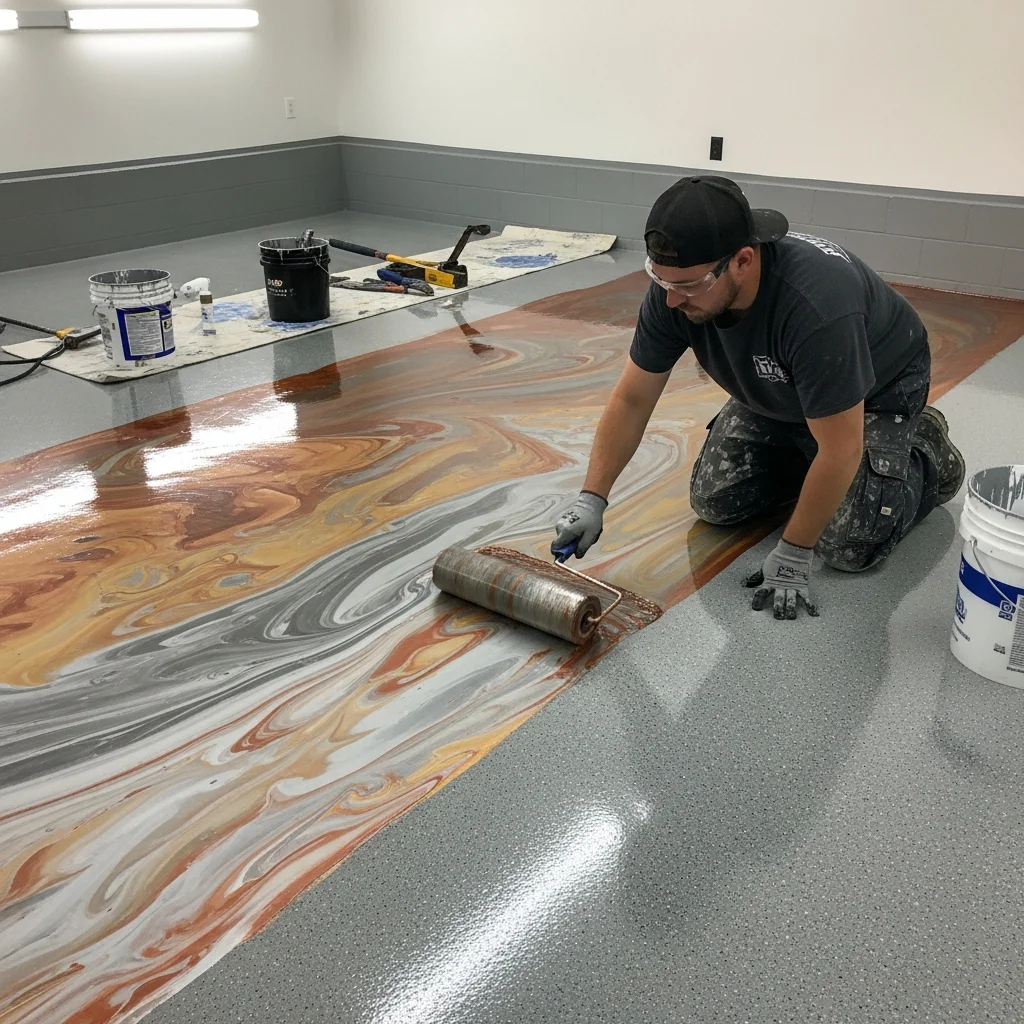
TL;DR: Three free epoxy flooring estimate templates (residential garage, commercial warehouse, decorative metallic) with real line items, material costs, labor rates, and markup formulas. Plus pricing breakdowns by epoxy type ($3 to $15+ per square foot), surface prep costs that make or break your margins, and formulas for hitting 40%+ profit on every job.
Epoxy flooring is one of the fastest-growing segments in the coatings industry. Homeowners want showroom-quality garage floors. Warehouses need chemical-resistant surfaces. Restaurants and breweries need floors that can handle daily washdowns. And all of them need an estimate before the work starts.
The problem most flooring contractors face is not applying the coating. That part is straightforward once you know your products and your process. The problem is pricing the job correctly. Epoxy flooring has a lot of variables: floor condition, coating system, square footage, prep work, and cure times. Miss any of these in your estimate and you are either leaving money on the table or eating unexpected costs on the job.
These three templates cover the most common epoxy flooring scenarios: a residential garage floor, a commercial warehouse floor, and a decorative metallic epoxy installation. Each one includes realistic line items, material costs, labor rates, and markup formulas based on 2026 pricing.
Copy the template that fits your job, adjust the numbers for your market, and send a professional estimate that wins work.
Want free estimate templates you can download and customize right now?
Projul offers free construction estimate templates built by contractors who actually do this work. Stop guessing and start sending estimates that close.
What Every Epoxy Flooring Estimate Should Include
Epoxy flooring estimates need more detail than most trades because the prep work often determines the success or failure of the coating. Here is what to include on every estimate.
Floor Assessment Details
Before you price anything, you need to assess the concrete. Document these details in your estimate:
- Total square footage
- Current floor condition (bare concrete, painted, previously coated, oil stains, cracks, spalling)
- Moisture test results (calcium chloride or relative humidity test)
- Concrete profile (smooth, broom finish, previously ground)
- Floor flatness and any low spots that need leveling
- Joint and crack locations
Why does this matter? Because a floor in good condition needs minimal prep, while a floor with old paint, moisture problems, or heavy damage can double your prep time and material costs. Document the condition so the customer understands why prep work is part of the price.
Coating System Specification
Tell the customer exactly what coating system you are installing. Include:
- Primer type and purpose
- Base coat product name, color, and thickness
- Flake, quartz, or metallic pigment (if applicable)
- Topcoat product name and type (epoxy, polyaspartic, or urethane)
- Number of coats for each layer
- Total system thickness in mils
Specifying the exact products matters because not all epoxy is the same. A $30-per-gallon hardware store epoxy and a $150-per-gallon commercial-grade system are completely different products with different performance. Your estimate should make it clear which one you are using.
Prep Work Breakdown
Floor preparation is typically 30 to 50 percent of the total job cost. Break it out so the customer sees where their money goes:
- Diamond grinding or shot blasting
- Crack repair (routing and filling)
- Spall repair and patching
- Oil stain treatment
- Moisture mitigation (if needed)
- Cleaning and vacuuming
Timeline and Cure Schedule
Epoxy flooring has specific cure times between coats and before the floor can handle traffic. Include:
- Day-by-day schedule of work
- Cure time between coats
- When light foot traffic is allowed
- When heavy traffic or vehicles are allowed
- Temperature and humidity requirements during installation
This is especially important for commercial jobs where downtime costs the customer money. They need to plan around your schedule.
Template 1: Residential Garage Epoxy Floor Estimate
This is the bread-and-butter job for most epoxy flooring contractors. A standard two-car garage with a full-flake broadcast system and polyaspartic topcoat.
Job Details
- Project: Residential garage floor epoxy coating
- Area: 480 square feet (20 ft x 24 ft standard two-car garage)
- Floor condition: Bare concrete, minor cracks, light oil stains, no previous coating
- System: 100% solids epoxy base coat, full vinyl flake broadcast, polyaspartic topcoat
Floor Preparation
| Line Item | Quantity | Unit | Unit Cost | Total |
|---|---|---|---|---|
| Diamond grinding (concrete surface profile 2-3) | 480 | SF | $1.25 | $600.00 |
| Crack repair (polyurea joint filler) | 25 | LF | $6.50 | $162.50 |
| Oil stain treatment and degreasing | 3 | EA | $35.00 | $105.00 |
| Patch and level low spots | 2 | EA | $65.00 | $130.00 |
| Final vacuum and tack | 480 | SF | $0.15 | $72.00 |
Prep Subtotal: $1,069.50
Materials
| Line Item | Quantity | Unit | Unit Cost | Total |
|---|---|---|---|---|
| 100% solids epoxy base coat (12-15 mil) | 5 | GAL | $145.00 | $725.00 |
| Vinyl color flake (1/4” blend) | 50 | LB | $3.75 | $187.50 |
| Polyaspartic topcoat (clear, UV stable) | 3 | GAL | $175.00 | $525.00 |
| Crack repair material (polyurea cartridges) | 3 | EA | $45.00 | $135.00 |
| Concrete patch compound | 1 | BAG | $55.00 | $55.00 |
| Mixing supplies, rollers, squeegees, spike shoes | 1 | SET | $125.00 | $125.00 |
Materials Subtotal: $1,752.50
Labor
| Line Item | Quantity | Unit | Unit Cost | Total |
|-----------|----------|------|-----------|-------| | Floor prep and grinding (2-man crew) | 6 | HR | $110.00 | $660.00 | | Crack and spall repair | 2 | HR | $110.00 | $220.00 | | Epoxy base coat application | 3 | HR | $110.00 | $330.00 | | Flake broadcast | 1 | HR | $110.00 | $110.00 | | Scrape excess flake and vacuum | 2 | HR | $110.00 | $220.00 | | Polyaspartic topcoat application | 2 | HR | $110.00 | $220.00 |
Labor Subtotal: $1,760.00
Equipment
| Line Item | Quantity | Unit | Unit Cost | Total |
|---|---|---|---|---|
| Diamond grinder (planetary, 20”) | 1 | DAY | $275.00 | $275.00 |
| Industrial vacuum with HEPA | 1 | DAY | $85.00 | $85.00 |
| Diamond tooling (wear allowance) | 1 | SET | $95.00 | $95.00 |
Equipment Subtotal: $455.00
Summary
| Category | Amount |
|---|---|
| Floor Preparation | $1,069.50 |
| Materials | $1,752.50 |
| Labor | $1,760.00 |
| Equipment | $455.00 |
| Subtotal | $5,037.00 |
| Overhead (15%) | $755.55 |
| Profit (15%) | $868.88 |
| Total Estimate | $6,661.43 |
Per Square Foot: $13.88
Notes for This Template
The $13.88 per square foot price is in the middle of the market for a quality full-flake system. Budget operators charging $5 to $7 per square foot are using inferior products or cutting corners on prep. Premium installers in high-cost markets charge $15 to $20 per square foot for the same system. Know your market and price accordingly.
The polyaspartic topcoat is more expensive than an epoxy topcoat but cures in 4 to 6 hours instead of 24. This means the homeowner gets their garage back a full day sooner. It also resists UV yellowing, which is important for garages with sunlight exposure. Most professional installers have switched to polyaspartic topcoats for residential work.
Diamond grinding is the preferred prep method for garage floors. Shot blasting is faster but creates a more aggressive profile that uses more epoxy. Acid etching is the cheapest option but gives inconsistent results. Always grind.
Template 2: Commercial Warehouse Epoxy Floor Estimate
Commercial jobs have higher material requirements, more coats, and need to withstand forklift traffic, chemical exposure, and constant use. This template covers a medium-sized warehouse floor.
Job Details
- Project: Commercial warehouse floor epoxy coating
- Area: 5,000 square feet
- Floor condition: Bare concrete, moderate wear, some spalling, no previous coating
- System: Epoxy primer, two-coat high-build epoxy (20+ mil total), urethane topcoat
- Requirements: Forklift rated, chemical resistant, safety line striping
Floor Preparation
| Line Item | Quantity | Unit | Unit Cost | Total |
|---|---|---|---|---|
| Shot blasting (concrete surface profile 3-4) | 5,000 | SF | $0.75 | $3,750.00 |
| Crack repair (epoxy injection) | 80 | LF | $8.50 | $680.00 |
| Spall repair and patching | 15 | EA | $85.00 | $1,275.00 |
| Control joint repair (semi-rigid filler) | 200 | LF | $5.50 | $1,100.00 |
| Final vacuum and cleaning | 5,000 | SF | $0.10 | $500.00 |
Prep Subtotal: $7,305.00
Materials
| Line Item | Quantity | Unit | Unit Cost | Total |
|---|---|---|---|---|
| Epoxy primer (penetrating, 5-8 mil) | 20 | GAL | $95.00 | $1,900.00 |
| High-build epoxy body coat #1 (10-12 mil) | 25 | GAL | $135.00 | $3,375.00 |
| High-build epoxy body coat #2 (10-12 mil) | 25 | GAL | $135.00 | $3,375.00 |
| Aliphatic urethane topcoat (3-5 mil) | 12 | GAL | $195.00 | $2,340.00 |
| Anti-slip aggregate for topcoat | 10 | LB | $12.00 | $120.00 |
| Safety line striping paint (yellow) | 3 | GAL | $85.00 | $255.00 |
| Crack and spall repair materials | 1 | LS | $450.00 | $450.00 |
| Joint filler (semi-rigid polyurea) | 8 | TUBE | $55.00 | $440.00 |
| Mixing supplies, rollers, squeegees | 1 | SET | $350.00 | $350.00 |
Materials Subtotal: $12,605.00
Labor
| Line Item | Quantity | Unit | Unit Cost | Total |
|---|---|---|---|---|
| Floor prep and shot blasting (3-man crew) | 16 | HR | $155.00 | $2,480.00 |
| Crack, spall, and joint repair | 12 | HR | $155.00 | $1,860.00 |
| Primer application | 6 | HR | $155.00 | $930.00 |
| Body coat #1 application | 8 | HR | $155.00 | $1,240.00 |
| Body coat #2 application | 8 | HR | $155.00 | $1,240.00 |
| Topcoat application | 6 | HR | $155.00 | $930.00 |
| Safety line striping | 4 | HR | $155.00 | $620.00 |
| Daily cleanup and protection | 6 | HR | $155.00 | $930.00 |
Labor Subtotal: $10,230.00
Equipment
| Line Item | Quantity | Unit | Unit Cost | Total |
|---|---|---|---|---|
| Shot blaster (ride-on) | 2 | DAY | $475.00 | $950.00 |
| Industrial vacuum system | 2 | DAY | $125.00 | $250.00 |
| Squeegee and roller frames (commercial) | 1 | SET | $200.00 | $200.00 |
| Mixing station (drill, paddles, buckets) | 1 | SET | $75.00 | $75.00 |
| Dehumidifier (if needed for cure) | 3 | DAY | $85.00 | $255.00 |
| Striping machine | 1 | DAY | $150.00 | $150.00 |
Equipment Subtotal: $1,880.00
Summary
| Category | Amount |
|---|---|
| Floor Preparation | $7,305.00 |
| Materials | $12,605.00 |
| Labor | $10,230.00 |
| Equipment | $1,880.00 |
| Subtotal | $32,020.00 |
| Overhead (12%) | $3,842.40 |
| Profit (12%) | $4,303.49 |
| Total Estimate | $40,165.89 |
Per Square Foot: $8.03
Notes for This Template
The per-square-foot cost drops significantly on larger commercial jobs. At 5,000 square feet, the setup and mobilization costs spread across more area. For a 10,000 square foot job, you might drop to $6.50 to $7.50 per square foot. For a 20,000 square foot job, $5.00 to $6.50 is common. Adjust your pricing tier based on project size.
Commercial jobs require a higher crew rate ($155/hour here vs $110 for residential) because you typically need a three-person crew and the work is more demanding. Commercial coatings are also thicker, requiring more material and more application time per coat.
The urethane topcoat is essential for commercial applications. Epoxy yellows under UV light and wears faster under forklift traffic than urethane. An aliphatic urethane topcoat adds UV resistance, abrasion resistance, and chemical resistance. Do not skip it on commercial jobs.
Anti-slip aggregate in the topcoat is a liability issue. If someone slips on a freshly coated warehouse floor, you could be held responsible. Always include anti-slip aggregate on commercial floors and document it in the estimate.
Shot blasting is the preferred prep method for large commercial floors. It is faster than diamond grinding for large areas and creates a consistent concrete surface profile. For a 5,000 square foot floor, shot blasting saves a full day of prep time compared to grinding.
Template 3: Decorative Metallic Epoxy Floor Estimate
Metallic epoxy is the premium offering in the flooring world. It creates a one-of-a-kind marbled, flowing look that commands top dollar. This template covers a residential or small commercial installation.
Job Details
- Project: Decorative metallic epoxy floor
- Area: 350 square feet (bonus room, showroom, or man cave)
- Floor condition: Bare concrete, good condition, minor cracks
- System: Vapor barrier primer, metallic epoxy base (two-tone blend), polyaspartic clear topcoat
Floor Preparation
| Line Item | Quantity | Unit | Unit Cost | Total |
|---|---|---|---|---|
| Diamond grinding (concrete surface profile 2) | 350 | SF | $1.50 | $525.00 |
| Crack repair (polyurea) | 10 | LF | $6.50 | $65.00 |
| Moisture testing (calcium chloride) | 2 | EA | $35.00 | $70.00 |
| Final vacuum, tack, and inspection | 350 | SF | $0.20 | $70.00 |
Prep Subtotal: $730.00
Materials
| Line Item | Quantity | Unit | Unit Cost | Total |
|---|---|---|---|---|
| Vapor barrier epoxy primer | 2 | GAL | $125.00 | $250.00 |
| Metallic epoxy base coat (100% solids) | 4 | GAL | $195.00 | $780.00 |
| Metallic pigment powders (2-color blend) | 4 | OZ | $45.00 | $180.00 |
| Denatured alcohol (for effects) | 2 | QT | $15.00 | $30.00 |
| Polyaspartic clear topcoat (high gloss) | 2.5 | GAL | $185.00 | $462.50 |
| Crack repair material | 1 | EA | $45.00 | $45.00 |
| Mixing supplies, rollers, notched squeegees | 1 | SET | $150.00 | $150.00 |
Materials Subtotal: $1,897.50
Labor
| Line Item | Quantity | Unit | Unit Cost | Total |
|---|---|---|---|---|
| Floor prep and grinding | 4 | HR | $110.00 | $440.00 |
| Crack repair and patching | 1 | HR | $110.00 | $110.00 |
| Primer application | 2 | HR | $110.00 | $220.00 |
| Metallic epoxy application and manipulation | 5 | HR | $130.00 | $650.00 |
| Topcoat application | 2 | HR | $110.00 | $220.00 |
| Final inspection and touch-up | 1 | HR | $110.00 | $110.00 |
Labor Subtotal: $1,750.00
Equipment
| Line Item | Quantity | Unit | Unit Cost | Total |
|---|---|---|---|---|
| Diamond grinder (planetary, 20”) | 1 | DAY | $275.00 | $275.00 |
| Industrial vacuum with HEPA | 1 | DAY | $85.00 | $85.00 |
| Heat gun (for metallic effects) | 1 | EA | $45.00 | $45.00 |
| Diamond tooling (wear allowance) | 1 | SET | $75.00 | $75.00 |
Equipment Subtotal: $480.00
Summary
| Category | Amount |
|---|---|
| Floor Preparation | $730.00 |
| Materials | $1,897.50 |
| Labor | $1,750.00 |
| Equipment | $480.00 |
| Subtotal | $4,857.50 |
| Overhead (15%) | $728.63 |
| Profit (18%) | $1,005.50 |
| Total Estimate | $6,591.63 |
Per Square Foot: $18.83
Notes for This Template
Metallic epoxy commands the highest per-square-foot rate in the flooring business. At $18.83 per square foot, this is a premium service. In upscale markets, metallic epoxy installations run $20 to $30 per square foot or more. The unique, flowing appearance of metallic floors is what drives the premium. No two floors look the same.
The higher labor rate ($130/hour) for the metallic application step reflects the skill required. Metallic epoxy is not just rolling on a coating. The installer manipulates the wet epoxy with rollers, brushes, and solvents to create the flowing, three-dimensional look. This is artistic work, and experienced metallic installers are in high demand.
The higher profit margin (18%) is also justified by the premium nature of the service. Customers choosing metallic epoxy are not shopping on price. They want a specific look, and they are willing to pay for it.
Metallic epoxy is sensitive to temperature and humidity. The estimate should include a note about ideal installation conditions (60 to 80 degrees F, below 60% relative humidity). If the space does not have climate control, you may need to add a heater or dehumidifier to the estimate.
Color samples are important for metallic jobs. The customer needs to approve the color blend before you start. Include a note about providing a sample board as part of the estimate process. A 2 ft x 2 ft sample board takes 30 minutes to make and prevents arguments about color later.
Epoxy Flooring Pricing by Type
Not all epoxy systems cost the same, and your estimates need to reflect the differences. Here is what each major epoxy flooring type costs to install in 2026, including materials, labor, and standard prep work.
Solid Epoxy (Single Color)
Solid epoxy is your entry-level offering. One color, no flake, no metallic. It is the most cost-effective system and works well for utility spaces like storage rooms, laundry rooms, and basic garage floors where the customer wants protection without the decorative look.
Installed cost: $3 to $7 per square foot
Material cost is low because you are using a single-color epoxy with no broadcast media. Labor is straightforward since there is no flake to scatter or scrape. The price range depends on whether you are doing a single coat ($3 to $4/SF) or a two-coat system with a clear topcoat ($5 to $7/SF). Always recommend at least a clear topcoat for durability.
Metallic Epoxy
Metallic epoxy is the premium product. The flowing, three-dimensional look is impossible to replicate with any other system. Every floor is unique, which is the selling point and the challenge. You need experienced installers who can manipulate the material to create the right effects.
Installed cost: $8 to $15 per square foot
Material costs are higher because metallic pigments run $40 to $50 per ounce, and you need multiple colors to create depth. Labor costs are higher because the application takes longer and requires a skilled hand. The profit margins on metallic work are the best in the business if your crew knows what they are doing.
Flake and Chip Systems
Full-flake broadcast systems are the most popular residential option. The vinyl flake hides imperfections, adds texture for slip resistance, and comes in dozens of color blends. This is the system most homeowners picture when they think of a coated garage floor.
Installed cost: $4 to $8 per square foot
The flake itself is inexpensive ($3 to $5 per pound), and you need roughly one pound per 10 square feet for a full broadcast. The extra labor comes from scraping the excess flake after it cures and then applying the topcoat over the remaining material. Most contractors price flake systems in the $6 to $8 range for a quality installation with a polyaspartic topcoat.
Quartz Broadcast Systems
Quartz systems use colored quartz granules broadcast into wet epoxy. The result is a textured, highly slip-resistant surface that handles heavy traffic and chemical exposure better than flake. Quartz is the go-to system for commercial kitchens, breweries, veterinary clinics, and locker rooms.
Installed cost: $6 to $12 per square foot
Quartz aggregate costs more than vinyl flake, and the multi-coat application (typically a prime coat, two quartz broadcast coats, and a grout coat followed by a topcoat) uses more material and labor hours. The higher price is justified by the performance. Quartz floors can handle boiling water, grease, and chemical cleaners that would destroy a standard flake system.
Moisture Mitigation Add-On
If your moisture testing reveals high vapor transmission rates, you need to add a moisture mitigation system before any epoxy goes down. Skipping this step guarantees a floor failure, a callback, and a hit to your reputation.
Add-on cost: $1.50 to $3 per square foot
Moisture mitigation products are specialized epoxy primers designed to block water vapor from migrating through the concrete slab. They add a full coat to your system and require their own cure time. Always include moisture testing in your site visit, and always price moisture mitigation as a separate line item so the customer understands why the price went up. You can track these add-on costs against your original estimate using Projul’s budgeting tools to make sure the change does not eat your margin.
Surface Prep Cost Breakdown
Surface preparation is where most epoxy flooring contractors lose money. They underbid the prep, thinking it will go fast, and then spend twice as long on a floor that fights them the whole way. Here is what each prep method actually costs when you factor in equipment, labor, consumables, and time.
Diamond Grinding
Diamond grinding is the standard prep method for residential floors and smaller commercial jobs. A planetary grinder with diamond tooling removes thin coatings, smooths rough spots, and opens up the concrete pores for epoxy adhesion.
Cost: $1 to $3 per square foot
The range depends on floor condition. Clean, bare concrete with no coatings grinds fast at $1 to $1.50/SF. Concrete with old paint, thin-set adhesive, or a previous failed coating takes two to three passes and pushes you to $2 to $3/SF. Diamond tooling is a consumable that wears out. Budget $75 to $150 per set of segments, and expect one set to last 500 to 1,500 square feet depending on the concrete hardness.
Shot Blasting
Shot blasting is faster than grinding for large areas and creates a more aggressive concrete surface profile. A ride-on shot blaster can cover 3,000 to 5,000 square feet per day, compared to 1,000 to 2,000 square feet per day with a walk-behind grinder.
Cost: $1.50 to $2.50 per square foot
The higher cost per square foot compared to grinding reflects the equipment rental. Ride-on shot blasters rent for $400 to $600 per day, plus shot media ($50 to $100 per day). But on large jobs, the speed makes up for it. A 10,000 square foot warehouse that would take four to five days to grind takes two days to shot blast. The labor savings more than offset the equipment cost.
Moisture Testing
Every epoxy flooring job should include moisture testing. Period. The two standard methods are the calcium chloride test (ASTM F1869) and the relative humidity test (ASTM F2170).
Cost: $200 to $500 per job
Calcium chloride test kits cost $25 to $40 each, and you need one kit per 1,000 square feet with a minimum of three per job. Results take 72 hours. Relative humidity testing requires drilling holes and inserting probes, which costs more in labor but gives more accurate readings. Most contractors include moisture testing in their overhead rather than billing it separately, but on commercial jobs, it should be a line item.
Crack Repair
Cracks in concrete need to be repaired before coating. The standard method is to chase the crack with a crack-chasing blade (a V-groove diamond blade on an angle grinder), vacuum out the debris, and fill with polyurea or epoxy crack filler.
Cost: $2 to $5 per linear foot
Simple hairline cracks at the low end, structural cracks that need routing and two-part epoxy injection at the high end. Document every crack during your site visit and measure the total linear footage. A garage floor with 30 linear feet of cracks at $4/LF adds $120 to the job. Miss it in the estimate and that $120 comes out of your profit.
When you are tracking prep costs across multiple jobs, Projul’s time tracking helps you see exactly how many hours your crew spends on prep versus coating. Over time, you build real data on what prep actually costs you, not what you guessed it would cost.
How to Price Epoxy Jobs for 40%+ Margins
Winning epoxy jobs is not the hard part. Winning them at a price that actually makes you money is the hard part. Here is how to build your pricing so you hit 40% or better gross margins consistently.
Start with Your Material Cost
Calculate your exact material cost per square foot for each coating system you offer. Here is the formula:
Material cost per SF = (Price per gallon / Coverage rate in SF per gallon) x Number of coats
For example, a 100% solids epoxy at $145 per gallon that covers 250 square feet per gallon at 12 mils:
$145 / 250 = $0.58 per SF per coat
For a two-coat system (base + topcoat), add both layers. If your topcoat is polyaspartic at $175/gallon covering 300 SF/gallon:
$175 / 300 = $0.58 per SF
Total material cost for the coating alone: $1.16 per SF. Add flake ($0.35/SF), primer ($0.38/SF), and consumables ($0.15/SF), and your real material cost is around $2.04 per SF.
Know Your Coverage Rates
Manufacturer coverage rates assume perfect conditions and perfectly flat concrete. Real-world coverage is usually 10 to 20 percent less. A product rated at 300 square feet per gallon will realistically cover 240 to 270 square feet per gallon on a typical floor. Always order based on realistic coverage, not the number on the data sheet. Running out of material mid-coat is a disaster.
Factor in Multi-Coat Systems
Most professional epoxy floors are three to four coats: primer, base coat (or two base coats), and topcoat. Each coat has its own coverage rate and cost. Build a spreadsheet that calculates the total material cost per square foot for each system you offer. Update it every time your supplier changes prices. Better yet, store your coating system presets in Projul’s estimating tools so your pricing updates automatically.
Crew Productivity Rates
Your labor cost per square foot depends on how fast your crew works. Track it. A good two-person crew can grind and prep 400 to 600 square feet per day and coat 800 to 1,200 square feet per day. That means a 500 SF garage is a two-day job (one day prep, one day coat) for a two-person crew.
If your crew costs $110/hour loaded (wages, taxes, insurance, workers comp), a two-day job at 8 hours per day is $1,760 in labor. On 500 SF, that is $3.52 per SF in labor.
The 40% Margin Formula
Add up your costs:
- Materials: $2.04/SF
- Labor: $3.52/SF
- Equipment: $0.75/SF
- Overhead (truck, insurance, office, marketing): $1.00/SF
Total cost: $7.31/SF
To hit 40% gross margin, divide your total cost by 0.60:
$7.31 / 0.60 = $12.18/SF selling price
That gives you $4.87/SF in gross profit on every square foot you coat. On a 500 SF garage, that is $2,435 in gross profit. If you are not tracking your actual costs against your estimates, you are guessing at your margins. Projul’s invoicing and budgeting tools connect your estimates to your actual job costs so you know your real margins on every project.
Commercial vs Residential Epoxy Pricing Differences
Commercial and residential epoxy jobs are different animals. Pricing them the same way is a fast track to either losing bids or losing money. Here is how they differ and how to adjust your pricing for each.
Residential Pricing
Residential epoxy work is typically smaller in square footage but higher in per-square-foot price. The customer is paying for a finished, beautiful floor in their home, and they expect attention to detail.
Typical residential pricing: $8 to $20 per square foot installed
Residential jobs come with hidden costs that commercial jobs do not have. You are working in someone’s home, which means:
- Moving furniture, shelves, and stored items out of the work area (or coordinating with the homeowner to do it before you arrive)
- Protecting adjacent surfaces like drywall, door frames, and landscaping
- Working around the homeowner’s schedule and daily routine
- More color choices, custom blends, and design decisions
- Higher customer expectations for cleanliness and appearance
- Smaller areas that take longer per square foot to prep and coat
Residential customers also tend to get multiple quotes, so your estimate needs to look professional and explain the value. Using Projul’s e-signatures lets homeowners approve estimates from their phone, which speeds up the sales cycle and gets you booked faster.
Commercial Pricing
Commercial epoxy jobs are larger in area but lower in per-square-foot price. The customer cares about performance, durability, and minimizing downtime, not about whether the color matches their car.
Typical commercial pricing: $4 to $10 per square foot installed
Commercial jobs have their own cost considerations:
- Volume discounts on materials (buying 50 gallons instead of 5 gets you a better price from your supplier)
- Simpler prep on newer warehouse floors that are in decent condition
- Fewer color choices and design decisions (most warehouses just want grey or tan)
- Scheduling around business operations (nights, weekends, or phased sections)
- Higher coating performance requirements (chemical resistance, impact resistance, thermal shock)
- Safety striping, aisle marking, and slip resistance testing
- Longer payment terms (net 30 to net 60 vs residential COD)
The per-square-foot price drops on commercial jobs, but the total job value is higher. A $6/SF commercial job at 10,000 SF is $60,000 in revenue. A $14/SF residential job at 500 SF is $7,000. You need more residential jobs to match one commercial contract.
For commercial work, your CRM matters. Tracking your commercial contacts, bid history, and follow-up schedule is what turns one-time commercial jobs into repeat business. General contractors and facility managers who trust your work will call you back.
Scheduling Matters for Both
Whether you are coating a garage or a warehouse, your scheduling tools need to account for cure times between coats. You cannot schedule another job on top of an epoxy project that needs 24 hours between coats. Block out the full project timeline, including cure days where your crew is not on site but the floor is still in progress. Projul’s scheduling connects to your estimates so your crew knows what they are doing and when, and you can manage your entire pipeline from your phone or tablet.
Tips for Writing Better Epoxy Flooring Estimates
Tip 1: Always Test for Moisture First
Moisture is the number one killer of epoxy floor coatings. If the concrete has high moisture vapor transmission, the coating will bubble, peel, and fail. Test every floor before you give a price. If moisture levels are high, include moisture mitigation in the estimate. A failed floor costs you far more than the test.
Tip 2: Photograph the Floor Condition
Take detailed photos of every crack, spall, stain, and defect in the floor. Include these photos in the estimate or reference them. When the customer asks why prep work costs so much, point to the photos. When they claim the crack was not there before you started, point to the photos.
Tip 3: Specify Your Products by Name
Do not just say “epoxy base coat.” Name the exact product, manufacturer, and color. This does two things: it shows the customer you are using professional-grade materials, and it protects you from being compared to the guy who quotes half your price using big-box store products.
Tip 4: Include a Maintenance Guide
Epoxy floors last 10 to 20 years with proper care. Include a simple maintenance guide with your estimate or proposal. Tell the customer how to clean the floor, what chemicals to avoid, and when to schedule a topcoat refresh. This positions you as the long-term expert and opens the door for future business.
Tip 5: Show Before-and-After Photos
Include photos from previous jobs in your estimates. A garage floor before and after epoxy is one of the most dramatic before-and-after transformations in construction. Let your work sell itself.
Tip 6: Offer Tiered Coating Systems
Not every customer needs a full metallic system. Offer three tiers:
- Basic: Single-coat epoxy with no flake ($4 to $6/SF)
- Standard: Full-flake broadcast with polyaspartic topcoat ($10 to $14/SF)
- Premium: Metallic epoxy with clear topcoat ($16 to $22/SF)
This gives the customer options at different price points and increases your average ticket.
Tip 7: Account for Cure Time in Your Schedule
Epoxy and polyaspartic coatings need cure time between coats and before the floor is usable. Build this into your timeline and communicate it clearly. A homeowner who expects to park in the garage the next day will be upset if they have to wait a week. Set expectations upfront.
Common Mistakes That Cost Epoxy Flooring Contractors Money
Skipping the Moisture Test
This cannot be said enough. Moisture problems are the leading cause of epoxy floor failures. A $50 calcium chloride test or a $150 relative humidity test saves you from a $5,000 warranty claim. Test every floor, every time.
Underestimating Prep Time
Floor preparation takes longer than you think, especially on old concrete with paint, coatings, or adhesive residue. Budget 40 to 50 percent of your total job time for prep. If the floor is in bad shape, prep could be 60 percent of the job. Price it accordingly.
Using Too Little Material
Trying to stretch epoxy to cover more square footage than it should is a recipe for thin spots, fisheyes, and callbacks. Follow the manufacturer’s coverage rates. If the product covers 200 square feet per gallon at the specified thickness, buy enough for 200 square feet per gallon. Ordering an extra gallon is cheaper than redoing a section.
Not Charging for Mobilization
Your equipment, materials, and crew need to get to the job site. For residential jobs within your service area, build mobilization into your overhead. For jobs outside your normal range or commercial jobs requiring specialized equipment, add a separate mobilization line item. A $200 to $500 mobilization fee is standard.
Ignoring Concrete Condition in Your Price
All concrete is not the same. A smooth, clean, new garage floor takes half the prep time of a 40-year-old warehouse floor with oil stains and crumbling patches. If you use the same price for both, you will lose money on the difficult floor. Always assess the concrete condition during your site visit and adjust your prep line items.
Forgetting About Expansion Joints
Expansion joints in concrete move. Coating over them without proper treatment leads to cracking. Always fill expansion joints with a flexible polyurea filler and honor them through the coating. If you bridge over an expansion joint with rigid epoxy, it will crack. Include joint treatment as a line item.
How Projul Makes Epoxy Flooring Estimates Faster
If you are building more than a handful of estimates per week, you need a system that keeps up with your pace. Spreadsheets and PDF templates work for small operations, but they slow you down as you grow.
Projul’s estimating tools are built for contractors who need to send professional estimates quickly without sacrificing accuracy. Here is how Projul helps epoxy flooring contractors:
Save Coating System Presets
Build your standard coating systems once with all the line items, products, coverage rates, and pricing. When a new job comes in, select the system that fits, adjust for square footage, and you are done. No rebuilding from scratch for every job.
Price Adjustments on the Fly
Material costs change. Labor rates change. With Projul, updating your prices takes seconds, and every future estimate uses the new numbers automatically. No more sending estimates with last year’s material costs.
Professional Estimates from Your Phone
Just finished measuring a garage floor? Build the estimate in Projul right there, send it to the homeowner, and move on to your next appointment. Speed matters in the flooring business because homeowners often get three to five quotes.
Track Estimate Status
See which estimates are open, viewed, and approved. Know when to follow up and when to move on. Projul shows you when the customer opens your estimate so you can time your follow-up call perfectly.
One-Click Job Conversion
When the customer approves, convert the estimate to an active project. Schedule your crew, order materials, and start work. All the details from the estimate flow into the job automatically.
Photo Documentation Built In
Attach before photos to the estimate and after photos to the completed job. Build your portfolio while you work and show future customers the quality of your installations.
Ready to Send Better Estimates?
Free templates get you started. Projul gets you to the next level.
If you are tired of losing jobs because your estimate took too long to send, or losing money because your estimate missed a line item, it is time for a better system. Projul gives you estimating, scheduling, project tracking, and invoicing in one place. Built for contractors who care about getting it right.
Book a Free Demo and see how Projul works for epoxy flooring contractors. Plans start at $399/month for small crews, $599/month for growing companies, and $1,199/month for established operations.
Looking for more ways to tighten up your numbers? Check out our free construction budget templates and our guide on how to reduce construction costs without cutting corners on quality.
Frequently Asked Questions
How much does epoxy flooring cost per square foot in 2026?
What should an epoxy flooring estimate include?
How long does it take to install an epoxy garage floor?
What is the difference between epoxy and polyaspartic floor coatings?
How do I price epoxy flooring for large commercial jobs?
How do temperature and humidity affect epoxy flooring installation?
How long does epoxy flooring need to cure before you can use it?
What warranty should I offer on epoxy flooring installations?
Related Articles

Construction Bidding Strategies: How to Win More Jobs at Better Margins
Most contractors lose bids not because their price is wrong, but because their process is. These bidding strategies...
Read More →
Construction Estimating for Beginners: A Plain-English Guide
Construction estimating does not have to be complicated. This guide breaks it down into plain English so you can create...
Read More →
Free Cabinet and Countertop Estimate Templates
Three ready-to-use cabinet and countertop estimate templates with realistic line items, material costs, labor rates,...
Read More →