
3 Free Flooring Estimate Templates (2026)
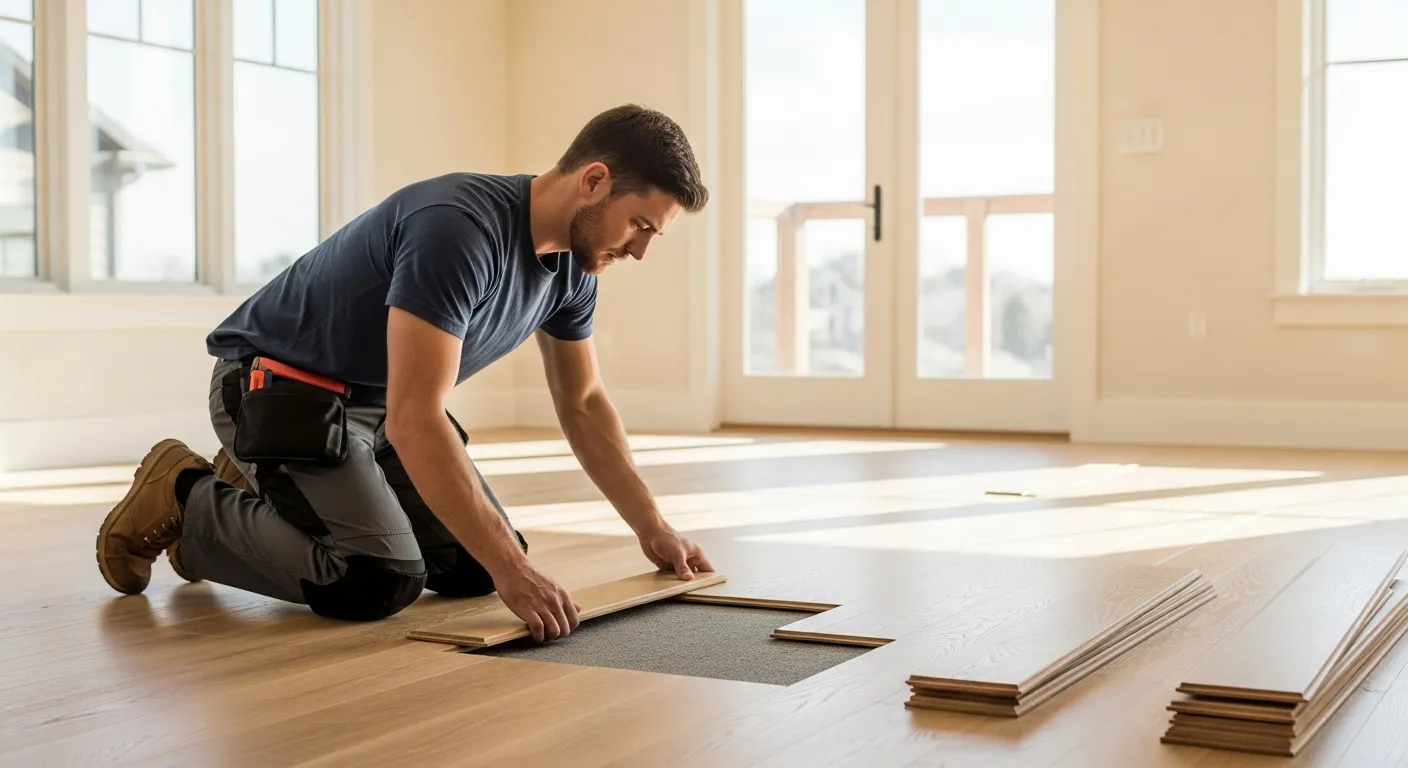
A professional flooring estimate does two things: it wins the job and it protects your profit. Skip either one and you have a problem.
Most flooring contractors know how to install floors. The bottleneck is putting together an accurate estimate fast enough to beat the competition. You finish the walkthrough, measure the rooms, note the subfloor condition, and then spend an hour or more back at the office building a quote in a spreadsheet. Meanwhile the homeowner is collecting bids from other contractors.
These three templates speed that up. Each one includes realistic line items, material costs, labor rates, and markup formulas you can adjust for your local market. Copy them, plug in your numbers, and start sending better estimates today.
📥 Get Your Free Estimate Templates
Download Projul’s free construction estimate templates, built by contractors, ready to customize. Create professional estimates in minutes and win more jobs.
How to Use These Templates
Each template is organized into sections: materials, labor, subfloor prep, and overhead/profit. Here is how to get the most out of them:
- Measure every room and calculate total square footage. Include closets, hallways, and transition areas.
- Inspect the subfloor. Note any leveling issues, moisture concerns, or damaged underlayment that will add cost.
- Adjust unit costs to match your local supplier pricing and current labor rates.
- Update quantities based on the specific job scope.
- Apply your overhead and profit percentages to the subtotal.
- Add notes explaining scope, timeline, material warranty, and what is not included.
The unit costs shown are mid-range estimates for the U.S. market in 2026. Your area may run higher or lower. Always verify pricing with your supplier before sending a live estimate.
Template 1: Residential Hardwood and Tile Estimate
This template covers a mid-size residential flooring job with hardwood in main living areas and tile in bathrooms and the kitchen. Total area: approximately 1,800 sq ft (1,200 sq ft hardwood, 600 sq ft tile).
Materials
| Line Item | Quantity | Unit | Unit Cost | Total |
|---|---|---|---|---|
| Engineered hardwood (5-inch oak, 3/4”) | 1,320 | sq ft | $5.75 | $7,590.00 |
| Porcelain tile (12x24, mid-grade) | 660 | sq ft | $4.50 | $2,970.00 |
| Hardwood underlayment (foam roll) | 1,320 | sq ft | $0.35 | $462.00 |
| Tile backer board (1/4”) | 660 | sq ft | $0.85 | $561.00 |
| Thin-set mortar | 12 | bags | $18.00 | $216.00 |
| Tile grout (sanded) | 4 | bags | $16.00 | $64.00 |
| Tile spacers and wedges | 2 | bags | $8.00 | $16.00 |
| Hardwood transition strips | 6 | each | $28.00 | $168.00 |
| Tile-to-hardwood transitions | 3 | each | $35.00 | $105.00 |
| Baseboard/shoe molding | 280 | lin ft | $1.75 | $490.00 |
| Construction adhesive and fasteners | 1 | lot | $85.00 | $85.00 |
| Materials Subtotal | $12,727.00 |
Subfloor Prep
| Task | Quantity | Unit | Unit Cost | Total |
|---|---|---|---|---|
| Remove existing flooring (carpet/vinyl) | 1,800 | sq ft | $1.00 | $1,800.00 |
| Floor leveling compound | 200 | sq ft | $1.50 | $300.00 |
| Moisture barrier (tile areas) | 660 | sq ft | $0.40 | $264.00 |
| Plywood underlayment repair | 80 | sq ft | $2.50 | $200.00 |
| Subfloor Prep Subtotal | $2,564.00 |
Labor
| Task | Quantity | Unit | Unit Cost | Total |
|---|---|---|---|---|
| Install engineered hardwood | 1,200 | sq ft | $3.50 | $4,200.00 |
| Install porcelain tile | 600 | sq ft | $6.00 | $3,600.00 |
| Install backer board | 600 | sq ft | $1.50 | $900.00 |
| Install transitions and trim | 1 | lot | $450.00 | $450.00 |
| Grout and seal tile | 600 | sq ft | $1.00 | $600.00 |
| Move furniture (allowance) | 1 | lot | $300.00 | $300.00 |
| Final cleanup | 1 | lot | $200.00 | $200.00 |
| Labor Subtotal | $10,250.00 |
Equipment and Other Costs
| Item | Quantity | Unit | Unit Cost | Total |
|---|---|---|---|---|
| Dumpster rental (10-yard) | 1 | each | $350.00 | $350.00 |
| Wet saw rental (tile) | 3 | days | $65.00 | $195.00 |
| Permit fee | 1 | each | $150.00 | $150.00 |
| Material delivery | 1 | each | $100.00 | $100.00 |
| Equipment Subtotal | $795.00 |
Summary
| Amount | |
|---|---|
| Materials | $12,727.00 |
| Subfloor Prep | $2,564.00 |
| Labor | $10,250.00 |
| Equipment and other | $795.00 |
| Direct Cost Subtotal | $26,336.00 |
| Overhead (15%) | $3,950.40 |
| Profit (12%) | $3,634.37 |
| Total Estimate | $33,920.77 |
Tips for This Template
- The 10% waste factor is already built into material quantities (1,320 sq ft ordered for 1,200 sq ft of hardwood). Bump to 15% for diagonal patterns or rooms with lots of angles.
- Always specify the exact hardwood species, width, and finish in your estimate. Homeowners compare bids, and specifics build trust.
- List subfloor prep as a separate section. If the subfloor is in great shape, the customer sees a lower number. If it needs work, they understand why the price is higher.
- Include a note about acclimation time for hardwood: “Hardwood material must acclimate on site for 3-5 days before installation.”
Template 2: Multi-Room LVP/Vinyl Plank Estimate
This template covers a whole-home LVP (luxury vinyl plank) installation. Total area: approximately 2,200 sq ft across multiple rooms, hallways, and closets. LVP is one of the most popular flooring choices in 2026 because of its durability, water resistance, and fast installation.
Materials
| Line Item | Quantity | Unit | Unit Cost | Total |
|---|---|---|---|---|
| Luxury vinyl plank (6mm with pad, click-lock) | 2,420 | sq ft | $3.25 | $7,865.00 |
| LVP underlayment (if no attached pad) | 0 | sq ft | $0.30 | $0.00 |
| T-molding transitions | 8 | each | $22.00 | $176.00 |
| Reducer strips (doorways) | 5 | each | $18.00 | $90.00 |
| Quarter-round/shoe molding | 350 | lin ft | $1.25 | $437.50 |
| Construction adhesive | 4 | tubes | $7.00 | $28.00 |
| Shims and spacers | 1 | lot | $25.00 | $25.00 |
| Materials Subtotal | $8,621.50 |
Subfloor Prep
| Task | Quantity | Unit | Unit Cost | Total |
|---|---|---|---|---|
| Remove existing flooring (carpet/vinyl/laminate) | 2,200 | sq ft | $0.85 | $1,870.00 |
| Remove and dispose of carpet pad | 2,200 | sq ft | $0.25 | $550.00 |
| Scrape adhesive residue | 400 | sq ft | $1.25 | $500.00 |
| Floor leveling compound | 300 | sq ft | $1.50 | $450.00 |
| Subfloor Prep Subtotal | $3,370.00 |
Labor
| Task | Quantity | Unit | Unit Cost | Total |
|---|---|---|---|---|
| Install LVP (click-lock) | 2,200 | sq ft | $2.25 | $4,950.00 |
| Install transitions and molding | 1 | lot | $400.00 | $400.00 |
| Undercut door casings | 25 | each | $12.00 | $300.00 |
| Move furniture (allowance) | 1 | lot | $350.00 | $350.00 |
| Final cleanup | 1 | lot | $200.00 | $200.00 |
| Labor Subtotal | $6,200.00 |
Equipment and Other Costs
| Item | Quantity | Unit | Unit Cost | Total |
|---|---|---|---|---|
| Dumpster rental (10-yard) | 1 | each | $350.00 | $350.00 |
| Material delivery | 1 | each | $75.00 | $75.00 |
| Equipment Subtotal | $425.00 |
Summary
| Amount | |
|---|---|
| Materials | $8,621.50 |
| Subfloor Prep | $3,370.00 |
| Labor | $6,200.00 |
| Equipment and other | $425.00 |
| Direct Cost Subtotal | $18,616.50 |
| Overhead (15%) | $2,792.48 |
| Profit (12%) | $2,569.08 |
| Total Estimate | $23,978.05 |
Tips for This Template
- LVP with an attached pad saves a step and a line item. If the product does not have a built-in pad, add underlayment at $0.30/sq ft.
- Click-lock LVP installs faster than glue-down, which is why labor is lower per square foot compared to hardwood or tile. Use this speed advantage to schedule more jobs per week.
- Always check the subfloor moisture level with a meter before starting. LVP is water resistant on top, but moisture coming up from the slab will cause problems. Note the test result on your estimate.
- Undercutting door casings is often missed on estimates. At $12 per casing for 25 doors, that is $300 in labor you do not want to absorb.
Template 3: Commercial Carpet and LVP Estimate
This template covers a commercial office space with carpet tile in office areas and LVP in hallways and break rooms. Total area: approximately 5,000 sq ft (3,500 sq ft carpet tile, 1,500 sq ft LVP).
Materials
| Line Item | Quantity | Unit | Unit Cost | Total |
|---|---|---|---|---|
| Commercial carpet tile (24x24, 28 oz) | 3,850 | sq ft | $2.75 | $10,587.50 |
| Commercial LVP (5mm, glue-down) | 1,650 | sq ft | $3.50 | $5,775.00 |
| Carpet tile adhesive | 15 | gallons | $28.00 | $420.00 |
| LVP adhesive (full spread) | 10 | gallons | $32.00 | $320.00 |
| Transition strips (carpet to LVP) | 10 | each | $25.00 | $250.00 |
| Wall base (4-inch vinyl) | 600 | lin ft | $1.10 | $660.00 |
| Wall base adhesive | 6 | tubes | $8.00 | $48.00 |
| Materials Subtotal | $18,060.50 |
Subfloor Prep
| Task | Quantity | Unit | Unit Cost | Total |
|---|---|---|---|---|
| Remove existing carpet and pad | 5,000 | sq ft | $0.75 | $3,750.00 |
| Scrape old adhesive | 1,500 | sq ft | $1.00 | $1,500.00 |
| Concrete grinding (high spots) | 200 | sq ft | $2.50 | $500.00 |
| Self-leveling compound | 400 | sq ft | $1.75 | $700.00 |
| Moisture testing (calcium chloride) | 6 | tests | $35.00 | $210.00 |
| Subfloor Prep Subtotal | $6,660.00 |
Labor
| Task | Quantity | Unit | Unit Cost | Total |
|---|---|---|---|---|
| Install carpet tile | 3,500 | sq ft | $1.75 | $6,125.00 |
| Install LVP (glue-down) | 1,500 | sq ft | $2.75 | $4,125.00 |
| Install wall base | 600 | lin ft | $1.25 | $750.00 |
| Install transitions | 10 | each | $30.00 | $300.00 |
| Move office furniture (with crew) | 1 | lot | $800.00 | $800.00 |
| Final cleanup and vacuum | 1 | lot | $400.00 | $400.00 |
| Labor Subtotal | $12,500.00 |
Equipment and Other Costs
| Item | Quantity | Unit | Unit Cost | Total |
|---|---|---|---|---|
| Dumpster rental (20-yard) | 1 | each | $450.00 | $450.00 |
| Floor grinder rental | 1 | day | $175.00 | $175.00 |
| Material delivery | 2 | trips | $100.00 | $200.00 |
| After-hours access premium | 1 | lot | $500.00 | $500.00 |
| Project supervision | 16 | hours | $55.00 | $880.00 |
| Equipment Subtotal | $2,205.00 |
Summary
| Amount | |
|---|---|
| Materials | $18,060.50 |
| Subfloor Prep | $6,660.00 |
| Labor | $12,500.00 |
| Equipment and other | $2,205.00 |
| Direct Cost Subtotal | $39,425.50 |
| Overhead (12%) | $4,731.06 |
| Profit (10%) | $4,415.66 |
| Total Estimate | $48,572.22 |
Tips for This Template
- Commercial jobs often require after-hours work. Include an access premium to cover evenings and weekends. Building managers expect this line item.
- Carpet tile has a lower installation cost than broadloom because damaged tiles can be swapped individually. Mention this to property managers as a long-term maintenance advantage.
- Moisture testing on concrete slabs is not optional for commercial work. Six tests across 5,000 sq ft is a good baseline. Document results in case of warranty claims later.
- Glue-down LVP is standard for commercial spaces because of the heavy foot traffic. Click-lock is faster to install but may shift under rolling chairs and heavy loads.
- Include phasing in your estimate if the office will stay occupied during installation. Break the work into zones so employees can keep working.
Adjusting These Templates for Your Business
These templates are a starting point. Here is how to make them fit your operation:
Set Your Overhead Rate
Overhead includes everything that keeps your business running but is not tied to a specific job. That covers your shop rent, insurance, vehicle payments, phone bills, office staff, and accounting costs. Most flooring companies run between 10% and 18% overhead depending on size and structure.
To find your real number, add up your annual overhead and divide by your annual revenue. If you spend $120,000 a year on overhead and do $800,000 in revenue, your overhead rate is 15%.
Set Your Profit Margin
Profit is separate from your salary (which should be in overhead). Target 10-15% net profit on most jobs. You can run a tighter margin on high-volume LVP installs and charge more on specialty tile work with complex patterns.
Update Material Costs Regularly
Check supplier pricing at least every quarter. Hardwood prices fluctuate with lumber markets. LVP pricing shifts with import costs. Tile varies by style and availability. A template with stale numbers will quietly drain your profit on every job you send out.
Track Your Actual Job Costs
The best way to improve your estimates over time is to compare what you estimated against what you actually spent. Projul’s job costing tools make this easy by tracking labor hours, material receipts, and expenses against each job in real time.
Common Mistakes That Cost Flooring Contractors Money
Watch for these errors in your own estimates:
Not inspecting the subfloor before pricing. A quick visual check during the walkthrough is not enough. Bring a moisture meter and a straight edge. Subfloor problems you miss during the estimate come out of your profit during the install.
Forgetting transitions and trim. Transition strips between rooms, reducer strips at doorways, and quarter-round along walls add up fast. On a 2,200 sq ft job, transitions and trim can run $500-$700 in materials and labor. Leave them off your estimate and you absorb that cost.
Underestimating furniture moving time. A whole-home flooring job means moving everything in every room. Price this as a real line item, not an afterthought. If the homeowner wants to handle it themselves, note that clearly on the estimate and adjust the price.
Using one template for all flooring types. Hardwood, tile, LVP, and carpet all have different material costs, labor rates, and prep requirements. Using a single generic template leads to inaccurate estimates. Keep separate templates for each type.
Skipping the acclimation note for hardwood. Hardwood needs 3-5 days to acclimate to the home’s humidity level. If you do not note this on the estimate, homeowners expect the job to start the day materials arrive. That leads to scheduling conflicts and unhappy customers.
Giving a price per square foot without showing the breakdown. Homeowners search “flooring cost per square foot” online and compare your number to national averages. If your estimate just says “$8.50/sq ft installed” without showing materials, labor, and prep separately, you will spend the entire sales call defending your price.
What Every Flooring Estimate Needs Beyond the Numbers
The line items and totals are the core of your estimate, but details around them matter just as much:
- Scope of work. “Remove existing carpet in all bedrooms and hallway. Install engineered oak hardwood with foam underlayment. Install new quarter-round molding throughout.”
- Material specifications. List the manufacturer, product name, color, and thickness. Homeowners appreciate the transparency.
- Timeline. “Materials delivered and acclimated by Day 1. Installation begins Day 5. Expected duration: 3-4 working days.”
- Payment terms. Spell out your deposit and final payment schedule.
- Warranty. List both the manufacturer’s material warranty and your installation warranty.
- Exclusions. “This estimate does not include asbestos testing, structural subfloor repairs, or HVAC vent relocation.”
- Expiration date. Material prices change. Put a 30-day expiration on every estimate.
Frequently Asked Questions
Check the FAQ section above for answers to common questions about flooring estimates, including markup percentages, subfloor prep charges, waste factors, profitability by flooring type, and how often to update pricing.
Start Sending Better Flooring Estimates Today
These templates give you a solid foundation for residential hardwood and tile, whole-home LVP, and commercial carpet projects. Customize them with your own pricing, add your company branding, and start sending professional estimates that win more jobs.
If you are ready to move beyond spreadsheets, Projul’s estimating features let you build, send, and track estimates from your phone or tablet. No per-user fees. Rated 9.8 out of 10 on G2. Schedule a live demo and see how it works for your crew.
📥 Get Your Free Estimate Templates
Download Projul’s free construction estimate templates, built by contractors, for contractors. Create professional estimates in minutes and win more jobs.
DISCLAIMER: We make no warranty of accuracy, timeliness, and completeness of the information presented on this website. Posts are subject to change without notice and cannot be considered financial advice.
Frequently Asked Questions
How much should I mark up a flooring estimate?
Should I charge separately for subfloor prep on a flooring estimate?
How do I estimate flooring waste factor?
What is the most profitable type of flooring to install?
How often should I update my flooring estimate template pricing?
Related Articles

Concrete Tilt-Up Construction: A Contractor's Complete Field Guide
Tilt-up construction accounts for roughly 15 percent of all industrial and commercial buildings in North America. This...
Read More →
How to Implement Construction Software Without Losing Your Mind
Most construction software rollouts fail. Not because the software is bad, but because the rollout was rushed. Here are...
Read More →
How Selections Can Pay for Themselves in Three Easy Steps
Most contractors lose thousands each year on wrong material orders, slow client decisions, and missed upsell chances....
Read More →