
3 Free Siding Estimate Templates (2026)
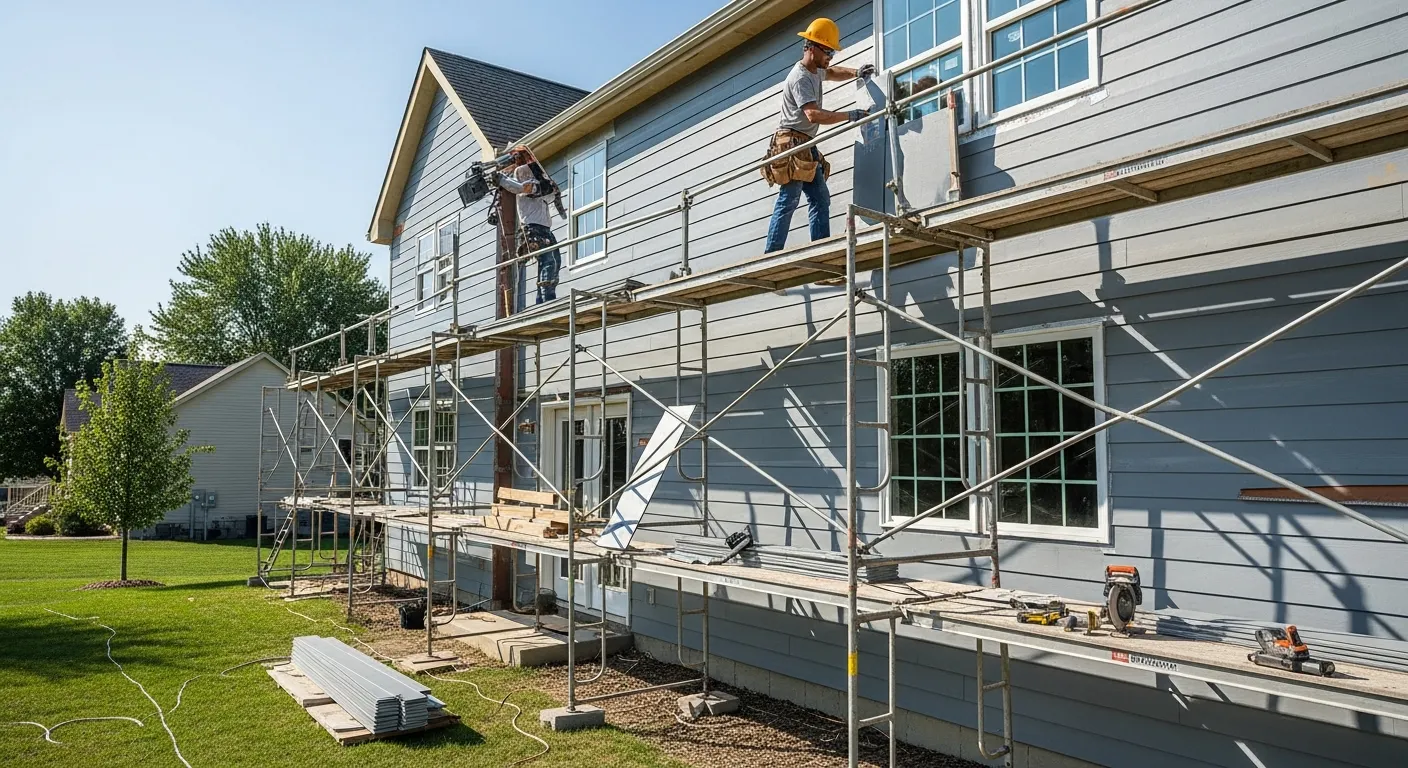
A strong siding estimate wins the job and protects your bottom line. A weak one invites scope creep, price disputes, and lost profit.
Most siding contractors are great at the installation work. The bottleneck is sitting down after the inspection to build a detailed, professional estimate. You measure the walls, note the window and door count, check the condition of the existing siding and sheathing, then spend an hour or two pricing it all out. By the time you email the estimate, the homeowner may already have a competing bid.
These three templates fix that problem. Each one covers a different siding material with realistic line items, tear-off costs, trim details, and markup formulas you can adjust for your local market. Copy them, plug in your numbers, and start closing more jobs.
📥 Get Your Free Estimate Templates
Download Projul’s free construction estimate templates, built by contractors, ready to customize. Create professional estimates in minutes and win more jobs.
How to Use These Templates
Each template is organized into sections: tear-off, materials, trim and accessories, labor, and overhead/profit. Here is how to get the most out of them:
- Measure the exterior walls. Calculate total square footage by multiplying wall height by perimeter length. Subtract window and door openings.
- Inspect the existing siding. Note the material, number of layers, and condition of the sheathing underneath.
- Count windows, doors, corners, and trim pieces. These drive accessory costs and labor time.
- Adjust unit costs to match your local supplier pricing and labor rates.
- Apply your overhead and profit percentages to the subtotal.
- Add notes explaining scope, timeline, material warranty, and exclusions.
The unit costs shown are mid-range estimates for the U.S. market in 2026. Your area may run higher or lower. Always verify pricing with your supplier before sending a live estimate.
Template 1: Vinyl Siding Estimate
This template covers a full vinyl siding job on a 2,000 sq ft home (approximately 1,500 sq ft of siding area after subtracting windows and doors). Includes tear-off of existing siding, new vinyl siding, trim, and soffit/fascia.
Tear-Off (Existing Siding Removal)
| Line Item | Quantity | Unit | Unit Cost | Total |
|---|---|---|---|---|
| Remove existing vinyl siding | 1,500 | sq ft | $0.75 | $1,125.00 |
| Remove old house wrap/felt | 1,500 | sq ft | $0.20 | $300.00 |
| Inspect and repair sheathing | 1 | lot | $350.00 | $350.00 |
| Dumpster rental (20-yard) | 1 | each | $450.00 | $450.00 |
| Tear-Off Subtotal | $2,225.00 |
Materials
| Line Item | Quantity | Unit | Unit Cost | Total |
|---|---|---|---|---|
| Vinyl siding (double 4”, mid-grade) | 1,650 | sq ft | $2.25 | $3,712.50 |
| House wrap (Tyvek or similar) | 1,650 | sq ft | $0.30 | $495.00 |
| Vinyl starter strip | 120 | lin ft | $0.85 | $102.00 |
| Vinyl J-channel | 350 | lin ft | $0.75 | $262.50 |
| Vinyl corner posts (outside) | 8 | each | $18.00 | $144.00 |
| Vinyl corner posts (inside) | 4 | each | $14.00 | $56.00 |
| Vinyl undersill trim | 100 | lin ft | $0.65 | $65.00 |
| Window/door trim (lineals) | 16 | sets | $22.00 | $352.00 |
| Vinyl soffit panels (vented) | 400 | sq ft | $2.50 | $1,000.00 |
| Aluminum fascia cover (6”) | 200 | lin ft | $3.25 | $650.00 |
| Aluminum drip cap | 16 | pieces | $4.00 | $64.00 |
| Galvanized siding nails | 3 | boxes | $28.00 | $84.00 |
| Caulk (paintable) | 12 | tubes | $6.00 | $72.00 |
| Materials Subtotal | $7,059.00 |
Labor
| Task | Quantity | Unit | Unit Cost | Total |
|---|---|---|---|---|
| Install house wrap | 1,500 | sq ft | $0.40 | $600.00 |
| Install vinyl siding | 1,500 | sq ft | $2.50 | $3,750.00 |
| Install trim (J-channel, corners, undersill) | 1 | lot | $600.00 | $600.00 |
| Install window/door trim | 16 | openings | $45.00 | $720.00 |
| Install soffit panels | 400 | sq ft | $2.00 | $800.00 |
| Install fascia cover | 200 | lin ft | $2.50 | $500.00 |
| Caulk and seal all penetrations | 1 | lot | $250.00 | $250.00 |
| Final cleanup | 1 | lot | $200.00 | $200.00 |
| Labor Subtotal | $7,420.00 |
Equipment and Other Costs
| Item | Quantity | Unit | Unit Cost | Total |
|---|---|---|---|---|
| Scaffolding rental | 1 | week | $350.00 | $350.00 |
| Brake/bender rental (fascia) | 2 | days | $55.00 | $110.00 |
| Permit fee | 1 | each | $175.00 | $175.00 |
| Material delivery | 1 | each | $100.00 | $100.00 |
| Equipment Subtotal | $735.00 |
Summary
| Amount | |
|---|---|
| Tear-Off | $2,225.00 |
| Materials | $7,059.00 |
| Labor | $7,420.00 |
| Equipment and other | $735.00 |
| Direct Cost Subtotal | $17,439.00 |
| Overhead (15%) | $2,615.85 |
| Profit (12%) | $2,406.58 |
| Total Estimate | $22,461.43 |
Tips for This Template
- The 10% waste factor is built into the material quantity (1,650 sq ft ordered for 1,500 sq ft of wall area). Add more for homes with complex gable ends and lots of window cutouts.
- Always specify the siding manufacturer, product line, and color. Homeowners who compare bids want to see that you are using real product names, not “mid-grade vinyl.”
- Soffit and fascia work is where many siding estimates fall short. If you skip it, the homeowner will have mismatched soffit next to brand-new siding. Address it in every estimate.
- Vinyl siding expands and contracts with temperature. Leave a 1/4-inch gap at all trim channels and do not nail tight. This is a quality detail worth mentioning in your scope of work.
Template 2: Fiber Cement Siding (James Hardie) Estimate
This template covers a fiber cement re-side on a 2,200 sq ft home (approximately 1,700 sq ft of siding area). James Hardie is the dominant brand in fiber cement, and homeowners often request it by name. This is a premium product with higher material and labor costs.
Tear-Off (Existing Siding Removal)
| Line Item | Quantity | Unit | Unit Cost | Total |
|---|---|---|---|---|
| Remove existing wood/vinyl siding | 1,700 | sq ft | $0.85 | $1,445.00 |
| Remove old house wrap | 1,700 | sq ft | $0.20 | $340.00 |
| Inspect and repair sheathing/OSB | 1 | lot | $500.00 | $500.00 |
| Lead paint test (pre-1978 homes) | 1 | each | $45.00 | $45.00 |
| Dumpster rental (20-yard) | 1 | each | $450.00 | $450.00 |
| Tear-Off Subtotal | $2,780.00 |
Materials
| Line Item | Quantity | Unit | Unit Cost | Total |
|---|---|---|---|---|
| HardiePlank lap siding (8.25”, primed) | 1,870 | sq ft | $4.50 | $8,415.00 |
| HardieWrap weather barrier | 1,870 | sq ft | $0.35 | $654.50 |
| HardieTrim boards (4/4 x 4”) | 300 | lin ft | $3.25 | $975.00 |
| HardieTrim boards (4/4 x 6”) | 200 | lin ft | $4.50 | $900.00 |
| HardieTrim corner boards (3/4 x 3.5”) | 16 | pieces | $28.00 | $448.00 |
| HardieSoffit panels (vented) | 400 | sq ft | $4.25 | $1,700.00 |
| Aluminum fascia (custom bent, 8”) | 200 | lin ft | $4.50 | $900.00 |
| Flashing (kick-out, step, head) | 1 | lot | $350.00 | $350.00 |
| Stainless steel siding nails | 4 | boxes | $38.00 | $152.00 |
| Caulk (Hardie-approved) | 16 | tubes | $8.00 | $128.00 |
| Touch-up paint (ColorPlus matching) | 2 | quarts | $35.00 | $70.00 |
| Materials Subtotal | $14,692.50 |
Labor
| Task | Quantity | Unit | Unit Cost | Total |
|---|---|---|---|---|
| Install weather barrier | 1,700 | sq ft | $0.45 | $765.00 |
| Install fiber cement siding | 1,700 | sq ft | $4.25 | $7,225.00 |
| Install HardieTrim (windows, doors, corners) | 1 | lot | $1,800.00 | $1,800.00 |
| Install soffit panels | 400 | sq ft | $2.75 | $1,100.00 |
| Install fascia | 200 | lin ft | $3.00 | $600.00 |
| Install flashing | 1 | lot | $450.00 | $450.00 |
| Caulk and seal | 1 | lot | $400.00 | $400.00 |
| Paint (if not ColorPlus prefinished) | 1,700 | sq ft | $1.50 | $2,550.00 |
| Final cleanup | 1 | lot | $250.00 | $250.00 |
| Labor Subtotal | $15,140.00 |
Equipment and Other Costs
| Item | Quantity | Unit | Unit Cost | Total |
|---|---|---|---|---|
| Scaffolding rental | 2 | weeks | $350.00 | $700.00 |
| Fiber cement saw (dust-reducing) | 1 | week | $125.00 | $125.00 |
| Brake/bender rental (fascia) | 3 | days | $55.00 | $165.00 |
| Permit fee | 1 | each | $200.00 | $200.00 |
| Material delivery (boom truck) | 1 | each | $200.00 | $200.00 |
| Equipment Subtotal | $1,390.00 |
Summary
| Amount | |
|---|---|
| Tear-Off | $2,780.00 |
| Materials | $14,692.50 |
| Labor | $15,140.00 |
| Equipment and other | $1,390.00 |
| Direct Cost Subtotal | $34,002.50 |
| Overhead (14%) | $4,760.35 |
| Profit (12%) | $4,651.54 |
| Total Estimate | $43,414.39 |
Tips for This Template
- James Hardie products require specific installation methods. Use only Hardie-approved fasteners (stainless steel or hot-dipped galvanized) and caulks. Using the wrong materials can void the warranty.
- Fiber cement is heavy and creates silica dust when cut. Budget for a dust-reducing saw and proper respirators. OSHA takes silica exposure seriously.
- ColorPlus (factory-prefinished) Hardie siding costs more per plank but eliminates the on-site painting line item. Run the numbers both ways for your customer. Factory finish often comes out cheaper when you factor in paint labor, material, and the extra time on scaffolding.
- The paint line item ($2,550) assumes field-primed siding that needs two coats on site. If you use ColorPlus, remove this line and add approximately $1.25/sq ft to the material cost instead.
- Fiber cement siding jobs take longer than vinyl. Plan for 7-10 working days on a full re-side vs. 4-5 days for vinyl. Your estimate should reflect the longer timeline.
Template 3: Wood Siding Estimate
This template covers a wood siding installation on a 1,400 sq ft cabin or craftsman-style home (approximately 1,100 sq ft of siding area). Wood siding is a premium product that appeals to homeowners who want a natural look. It requires more maintenance than vinyl or fiber cement, but many buyers are willing to pay for the appearance.
Tear-Off (Existing Siding Removal)
| Line Item | Quantity | Unit | Unit Cost | Total |
|---|---|---|---|---|
| Remove existing siding (wood/vinyl) | 1,100 | sq ft | $0.90 | $990.00 |
| Remove old building paper/wrap | 1,100 | sq ft | $0.20 | $220.00 |
| Inspect and repair sheathing | 1 | lot | $400.00 | $400.00 |
| Dumpster rental (15-yard) | 1 | each | $400.00 | $400.00 |
| Tear-Off Subtotal | $2,010.00 |
Materials
| Line Item | Quantity | Unit | Unit Cost | Total |
|---|---|---|---|---|
| Cedar lap siding (1x8, clear grade) | 1,210 | sq ft | $6.50 | $7,865.00 |
| House wrap (breathable) | 1,210 | sq ft | $0.30 | $363.00 |
| Cedar corner boards (1x4) | 100 | lin ft | $3.75 | $375.00 |
| Cedar trim boards (1x6) | 200 | lin ft | $4.50 | $900.00 |
| Cedar fascia boards (1x8) | 160 | lin ft | $5.25 | $840.00 |
| Cedar soffit (T&G, vented) | 300 | sq ft | $5.00 | $1,500.00 |
| Stainless steel siding nails | 3 | boxes | $42.00 | $126.00 |
| Exterior wood primer | 4 | gallons | $45.00 | $180.00 |
| Exterior paint/stain (2 coats) | 8 | gallons | $55.00 | $440.00 |
| Caulk (paintable exterior) | 12 | tubes | $7.00 | $84.00 |
| Flashing (step, head, kick-out) | 1 | lot | $275.00 | $275.00 |
| Materials Subtotal | $12,948.00 |
Labor
| Task | Quantity | Unit | Unit Cost | Total |
|---|---|---|---|---|
| Install house wrap | 1,100 | sq ft | $0.40 | $440.00 |
| Install cedar lap siding | 1,100 | sq ft | $4.50 | $4,950.00 |
| Install corner boards and trim | 1 | lot | $1,200.00 | $1,200.00 |
| Install fascia boards | 160 | lin ft | $3.50 | $560.00 |
| Install soffit | 300 | sq ft | $3.00 | $900.00 |
| Install flashing | 1 | lot | $350.00 | $350.00 |
| Prime all surfaces | 1,100 | sq ft | $0.75 | $825.00 |
| Paint/stain (2 coats) | 1,100 | sq ft | $1.75 | $1,925.00 |
| Caulk and seal | 1 | lot | $300.00 | $300.00 |
| Final cleanup | 1 | lot | $200.00 | $200.00 |
| Labor Subtotal | $11,650.00 |
Equipment and Other Costs
| Item | Quantity | Unit | Unit Cost | Total |
|---|---|---|---|---|
| Scaffolding rental | 2 | weeks | $350.00 | $700.00 |
| Miter saw (on site) | 0 | each | $0.00 | $0.00 |
| Permit fee | 1 | each | $175.00 | $175.00 |
| Material delivery | 1 | each | $125.00 | $125.00 |
| Equipment Subtotal | $1,000.00 |
Summary
| Amount | |
|---|---|
| Tear-Off | $2,010.00 |
| Materials | $12,948.00 |
| Labor | $11,650.00 |
| Equipment and other | $1,000.00 |
| Direct Cost Subtotal | $27,608.00 |
| Overhead (15%) | $4,141.20 |
| Profit (13%) | $4,127.40 |
| Total Estimate | $35,876.59 |
Tips for This Template
- Clear-grade cedar costs significantly more than knotty grades. Know what the homeowner wants before you price. The difference between clear and #2 knotty cedar can be $2-$3/sq ft in material alone.
- Wood siding must be primed on all six sides (front, back, edges, and ends) before installation. Many callbacks on wood siding come from skipping back-priming, which allows moisture to penetrate and causes warping. Include this in your scope of work notes.
- Stainless steel nails are more expensive than galvanized but will not leave rust streaks on cedar. The material premium is small compared to the cost of a callback for stained siding.
- Paint vs. stain is a homeowner preference, but it affects your labor line item. Semi-transparent stain is faster to apply but needs recoating every 3-5 years. Paint lasts 7-10 years but takes more prep. Discuss this during the estimate walkthrough.
- Wood siding on historic or custom homes can command premium pricing. These homeowners chose wood for a reason and are usually willing to pay for quality work.
Adjusting These Templates for Your Business
These templates are a starting point. Here is how to make them fit your specific operation:
Set Your Overhead Rate
Overhead covers insurance, vehicles, fuel, tools, office costs, marketing, and your own salary. Most siding companies run between 12% and 18% overhead. Calculate yours by dividing your total annual overhead costs by your annual revenue.
Set Your Profit Margin
Profit is what remains after all costs, including overhead. Target 10-15% net profit. Fiber cement and wood siding jobs can carry higher margins because they require more skill. Vinyl siding is more competitive on price, so margins tend to be tighter.
Account for Tear-Off Complexity
Not all tear-offs are equal. Removing one layer of vinyl over clean sheathing is simple. Removing two layers of wood clapboard with lead paint on a 1920s home is a completely different job. Always break tear-off into its own section and price based on what you actually see on the wall.
Track Job Costs After Completion
Compare your estimate to your actual costs on every job. This is the only way to calibrate your templates over time. Projul’s job costing tools track labor, materials, and expenses against each project so you can see exactly where your money went.
Common Mistakes That Cost Siding Contractors Money
Ignoring the condition behind the siding. You cannot see rotted sheathing, failed house wrap, or insect damage until the old siding comes off. Include a sheathing inspection and repair allowance on every estimate. Add a note: “Additional sheathing repair billed at $X per sheet if needed once tear-off is complete.”
Underestimating trim and accessory costs. J-channel, corner posts, undersill trim, starter strips, window casing, and fascia covers add up. On a vinyl job, accessories can run 25-30% of the siding material cost. On fiber cement, trim and flashing can be even higher. List every piece.
Skipping soffit and fascia. Homeowners who re-side their house expect the whole exterior to look new. If you bid siding only and the old aluminum soffit and peeling fascia are still showing, the homeowner will be disappointed. Address it in every estimate even if they decide not to include it.
Not accounting for two-story height. A two-story home requires scaffolding, more setup time, and slower production on the upper walls. If your template is based on single-story labor rates, you will lose money on every two-story job. Add a height premium or adjust your per-square-foot labor rate.
Forgetting flashing. Kick-out flashing, step flashing at roof-to-wall intersections, and head flashing above windows are required by code and prevent water damage. Missing these on your estimate means either eating the cost or skipping them on the install (which leads to water damage and liability).
Quoting field-primed fiber cement without including paint labor. Unfinished HardiePlank needs two coats of paint on site. That is $1.50-$2.25/sq ft in paint labor alone. If you quote material only and forget the paint line item, you just gave away thousands of dollars of labor.
What Every Siding Estimate Needs Beyond the Numbers
- Scope of work. “Remove existing vinyl siding on all four elevations. Install new James Hardie ColorPlus lap siding in Arctic White with matching HardieTrim at all windows, doors, and corners. Replace soffit with vented HardieSoffit and wrap fascia with custom-bent aluminum.”
- Material specifications. List the manufacturer, product name, color, and profile for every major material.
- Timeline. “Tear-off begins Day 1. Siding installation Days 3-8. Trim and detail work Days 9-10. Expected completion: 10 working days, weather permitting.”
- Payment terms. Your deposit, progress, and final payment schedule.
- Warranty. Manufacturer material warranty (Hardie offers 30 years on ColorPlus) and your workmanship warranty.
- Exclusions. “This estimate does not include interior insulation, window replacement, gutter installation, or structural framing repairs.”
- Expiration. 30 days is standard.
Frequently Asked Questions
Check the FAQ section above for answers to common questions about siding estimates, including markup percentages, tear-off pricing, waste factors, soffit and fascia decisions, and how often to update your template.
Start Sending Better Siding Estimates Today
These templates give you a solid foundation for vinyl, fiber cement, and wood siding projects. Customize them with your own pricing, add your company branding, and start sending professional estimates that close more jobs.
If you are ready to move beyond spreadsheets, Projul’s estimating features let you build, send, and track estimates from your phone or tablet. No per-user fees. Rated 9.8 out of 10 on G2. Schedule a live demo and see how it works for your crew.
Siding Material Cost Comparison by Type
Choosing the right siding material is not just about appearance. Each option carries a different price tag for materials, labor, and long-term maintenance. Understanding these differences helps you build more accurate estimates and have better conversations with homeowners about value versus upfront cost.
Vinyl Siding
Vinyl remains the most popular siding material in the United States. It is lightweight, easy to install, and requires almost no maintenance. Material costs typically range from $1.50 to $4.00 per square foot depending on thickness and profile. Labor runs $2.00 to $3.50 per square foot because vinyl is fast to install and does not require painting. A full vinyl re-side on a typical 1,500 sq ft wall area comes in between $15,000 and $25,000 installed.
The main drawback is perceived quality. Some homeowners view vinyl as a budget option, and it can crack in extreme cold or warp under direct heat from reflective windows. Insulated vinyl siding adds $1.00 to $2.00 per square foot to the material cost but improves energy performance and gives the panels a more solid feel.
Fiber Cement (James Hardie)
Fiber cement siding costs $3.50 to $6.00 per square foot for materials and $3.50 to $5.50 per square foot for labor. The higher labor cost reflects the heavier weight, specialized cutting tools, and longer installation time. A full re-side on 1,700 sq ft of wall area typically runs $35,000 to $50,000 installed.
Fiber cement is fire-resistant, termite-proof, and holds paint well. ColorPlus factory-finished planks come with a 15-year paint warranty on top of the 30-year substrate warranty. Many contractors find that fiber cement jobs carry higher margins because homeowners who choose Hardie are less likely to haggle on price. They are buying a premium product and they expect to pay for it.
Wood Siding
Wood siding is the premium option for homeowners who want a natural look. Cedar lap siding runs $5.00 to $9.00 per square foot for materials, and labor costs $4.00 to $6.00 per square foot. A full wood re-side on 1,100 sq ft of wall area can run $30,000 to $45,000 installed.
The ongoing maintenance cost is the biggest factor to discuss with homeowners. Wood siding needs repainting or restaining every 5 to 7 years, and it is vulnerable to rot, insects, and moisture if not properly maintained. That said, well-maintained cedar siding can last 40 years or more and adds significant curb appeal to craftsman and historic homes.
Engineered Wood (LP SmartSide)
Engineered wood siding is a composite product made from wood strands bonded with resin and treated with zinc borate for rot and termite resistance. Material costs run $2.50 to $4.50 per square foot, with labor at $2.50 to $4.00 per square foot. It offers a real wood look at a lower price point than natural cedar.
LP SmartSide comes with a 50-year substrate warranty. It is lighter than fiber cement but heavier than vinyl, and it requires painting on site unless you order prefinished panels. For contractors, engineered wood falls into a sweet spot between vinyl and fiber cement in terms of both price and quality perception.
Metal Siding (Steel and Aluminum)
Metal siding is less common on residential projects but gaining popularity in modern and industrial-style homes. Steel siding costs $4.00 to $8.00 per square foot for materials and $3.00 to $5.00 per square foot for labor. Aluminum is slightly cheaper at $3.00 to $6.00 per square foot for materials.
Metal siding is fireproof, pest-proof, and virtually maintenance-free. It dents more easily than fiber cement, and steel can rust if the coating is scratched. Installation requires specialized tools for cutting and forming. If you are expanding into metal siding work, make sure your crew has the right equipment before you price the job.
Cost Comparison Summary
Here is a side-by-side comparison of installed costs per square foot for each siding type:
| Siding Type | Material (per sq ft) | Labor (per sq ft) | Total Installed (per sq ft) | Lifespan |
|---|---|---|---|---|
| Vinyl | $1.50 - $4.00 | $2.00 - $3.50 | $3.50 - $7.50 | 20 - 40 years |
| Fiber Cement | $3.50 - $6.00 | $3.50 - $5.50 | $7.00 - $11.50 | 30 - 50 years |
| Wood (Cedar) | $5.00 - $9.00 | $4.00 - $6.00 | $9.00 - $15.00 | 30 - 40+ years |
| Engineered Wood | $2.50 - $4.50 | $2.50 - $4.00 | $5.00 - $8.50 | 30 - 50 years |
| Metal (Steel) | $4.00 - $8.00 | $3.00 - $5.00 | $7.00 - $13.00 | 40 - 60 years |
Use this table as a quick reference when discussing options with homeowners. Being able to walk through the tradeoffs in material cost, labor, and lifespan builds trust and positions you as the expert in the room.
Measuring and Takeoff for Siding Projects
An accurate takeoff is the foundation of a profitable siding estimate. If your measurements are off by even 5%, that error multiplies across every line item in your estimate. Here is a step-by-step process for measuring a siding project.
Step 1: Measure Each Wall
Start by measuring the width and height of each exterior wall. Multiply width by height to get the gross square footage of each wall face. For gable ends, measure the base width and the height from the eave to the peak, then use the triangle formula: (base x height) / 2. Add the gable area to the rectangular wall area below it.
Record each wall separately on your takeoff sheet. Labeling walls by compass direction (north, south, east, west) or by a reference point (front, back, left side, right side) keeps your notes organized and makes it easy to go back and verify.
Step 2: Subtract Openings
Measure every window and door opening, including the frame. Multiply width by height for each opening and subtract the total from your gross wall area. A standard 3-foot by 5-foot window opening is 15 square feet. A standard entry door is about 21 square feet (3 ft x 7 ft). A sliding glass door is around 40 square feet.
Do not skip small openings like basement windows, dryer vents, or electrical panels. They add up, and over-ordering material costs you money.
Step 3: Calculate Net Siding Area
Your net siding area is the gross wall area minus all openings. This is the number you use to price siding material. For example:
- Total gross wall area: 1,850 sq ft
- Total openings: 250 sq ft
- Net siding area: 1,600 sq ft
Step 4: Add Your Waste Factor
Multiply the net siding area by your waste factor to get the order quantity. For simple homes with mostly rectangular walls, use 10%. For complex homes with lots of gables, dormers, bay windows, and corners, use 15% or more.
- Net siding area: 1,600 sq ft
- Waste factor: 10%
- Order quantity: 1,760 sq ft
Step 5: Measure Trim, Soffit, and Fascia
Trim and accessory takeoffs require linear measurements, not square footage. Measure and record:
- Outside corners: Count the number and measure the height of each. Multiply count by height for total linear feet of outside corner trim.
- Inside corners: Same method as outside corners.
- Window and door trim: Measure the perimeter of each opening. A 3x5 window needs approximately 16 linear feet of trim (or buy pre-made trim sets).
- Starter strip: Measure the total perimeter of the house at the base where siding begins.
- J-channel: Measure where siding meets a different surface (around windows, under soffits, at roof lines).
- Soffit: Measure the width and length of each soffit area. Most soffits run 12 to 24 inches wide along the full eave length.
- Fascia: Measure the total linear footage of fascia boards around the roofline.
Step 6: Note Site Conditions
Your takeoff sheet should also capture details that affect pricing but are not part of the square footage calculation:
- Number of stories and wall heights
- Condition of existing siding and sheathing
- Presence of lead paint (homes built before 1978)
- Accessibility issues (steep slopes, landscaping, overhead power lines)
- Number and complexity of penetrations (light fixtures, hose bibs, vents, meters)
Digital Takeoff Tools
Many siding contractors still measure by hand with a tape measure and ladder. That works, but digital tools can speed up the process significantly. Satellite measurement apps let you calculate wall areas from aerial and street-view imagery. Laser distance meters reduce errors on tall walls. Some construction estimating software lets you attach takeoff measurements directly to your estimate line items so the numbers flow straight from measurement to proposal.
Whether you use a clipboard or a tablet, the principle is the same: measure twice, order once. An extra 30 minutes on the takeoff saves hours of headaches when material runs short or you realize mid-job that you forgot to count the garage gable.
Common Siding Estimate Mistakes and How to Avoid Them
Even experienced siding contractors lose money on estimates. The margins on siding work are tight enough that one or two missed items can turn a profitable job into a break-even project. Here are the most common mistakes and how to prevent them.
Mistake 1: Using Flat-Rate Pricing Instead of Measured Quantities
Some contractors price siding by the “job” instead of breaking it down by measured square footage, linear feet, and piece counts. This approach works when every house looks the same. It fails on homes with complex geometry, multiple gable ends, or unusual trim details.
The fix: Always build your estimate from measured quantities. Price every section (tear-off, materials, labor, trim, equipment) based on actual takeoff numbers. This takes more time upfront but protects your margin on every job.
Mistake 2: Forgetting to Escalate Material Prices
Siding material prices change. Vinyl has been relatively stable, but fiber cement, cedar, and engineered wood prices have moved 5 to 15% over the past two years. If your template still shows prices from 2024, you are underbidding every job.
The fix: Call your supplier at the start of every quarter and update unit costs in your template. If you are using estimating software, you can update your price book once and every new estimate automatically reflects current pricing.
Mistake 3: Underpricing Tear-Off on Multi-Layer Homes
Removing one layer of vinyl over clean OSB sheathing is a quick job. Removing two layers of wood clapboard over 100-year-old plank sheathing that crumbles when you pry a board off is a completely different situation. Many contractors use the same tear-off rate for both scenarios.
The fix: Inspect the existing siding carefully during the walkthrough. Ask the homeowner if they know how many layers are on the walls. Price single-layer and multi-layer tear-off at different rates. When in doubt, price higher and include a note explaining the allowance.
Mistake 4: Not Including a Sheathing Repair Allowance
You cannot see behind the existing siding during your estimate walkthrough. Rotted OSB, failed house wrap, carpenter ant damage, and moisture problems are only visible after tear-off. If you did not include a repair allowance or a clear change-order clause, you are stuck eating the cost or having an awkward conversation with the homeowner.
The fix: Include a sheathing inspection and repair line item on every estimate. A flat allowance of $300 to $500 covers minor repairs. For older homes, increase the allowance or add a per-sheet rate for OSB replacement (typically $75 to $100 per 4x8 sheet installed). Add clear language in your scope of work that explains how additional repairs will be handled and billed.
Mistake 5: Quoting Without Visiting the Site
Satellite images and homeowner descriptions are useful for a rough ballpark, but they are not a substitute for a physical inspection. You cannot see sheathing condition, existing siding layers, flashing details, or access issues from a computer screen.
The fix: Always visit the site before sending a final estimate. A quick 30-minute walkthrough with a tape measure and camera gives you the information you need to price accurately. Take photos of every wall, every detail, and any potential problem areas. These photos also help you when you are building the estimate later.
Mistake 6: Ignoring Payment Terms and Cash Flow
A siding job can tie up $15,000 to $30,000 in materials before the homeowner makes a final payment. If your estimate does not include clear payment terms, you are financing the homeowner’s project out of your own pocket.
The fix: Structure your payment terms to match your cash outflow. A common structure for siding jobs is 30% deposit at signing, 40% when materials are delivered and tear-off is complete, and 30% at final completion. Include these terms on your estimate and enforce them. Projul’s invoicing tools let you set up milestone-based billing that matches your payment schedule to each phase of the job.
Mistake 7: Sending Estimates Too Slowly
Speed matters. Homeowners who are getting three or four bids tend to go with the contractor who responds first with a professional, detailed estimate. If you are taking a week to send an estimate after the walkthrough, you are losing jobs to faster competitors.
The fix: Build your estimates from templates so you can plug in measured quantities and send within 24 to 48 hours of the site visit. The templates in this guide are designed to make that process faster. Digital estimating tools cut the turnaround time even further because you can build and send estimates from your truck.
Using Siding Estimate Templates with Construction Software
Spreadsheet templates are a solid starting point for siding estimates. They give you a structured format, consistent line items, and a professional look. But as your siding business grows, spreadsheets start to show their limits. Here is how estimate templates work alongside construction software and when it makes sense to upgrade your process.
Where Spreadsheets Work
Spreadsheet templates are ideal when you are doing fewer than 10 estimates per month, working solo or with a small crew, and managing most of your business from a truck and a phone. They are free, customizable, and easy to share by email or PDF. The templates in this guide cover the three most common siding materials with enough detail to win jobs.
For a small siding operation, a well-built spreadsheet template handles 80% of the estimating work. The remaining 20% is where construction software starts to add value.
Where Spreadsheets Fall Short
As your volume grows, spreadsheets create bottlenecks:
- Version control. When you update material prices, every copy of the spreadsheet floating around in your email drafts and Downloads folder still has the old prices. There is no single source of truth.
- No connection to the rest of the job. Your estimate lives in one spreadsheet, your schedule in another, your invoices in a third, and your job costs in your head. Nothing talks to each other.
- Hard to track from your phone. Editing a spreadsheet on a phone screen while standing in a homeowner’s driveway is possible but painful. Pinch, zoom, scroll, misclick, lose your place.
- No approval tracking. You email the estimate and then wait. Did the homeowner open it? Did they forward it to their spouse? You do not know until they call you back or ghost you.
How Construction Software Extends Your Templates
Construction estimating software does not replace your template structure. It digitizes it. The same sections you see in these templates (tear-off, materials, labor, trim, overhead, profit) become a reusable price book inside the software. When you build a new siding estimate, you pull from your price book instead of copying and editing a spreadsheet.
Here is what that looks like in practice:
- Centralized price book. Update your vinyl siding price once and every new estimate uses the current number. No more checking five spreadsheet versions to find which one has the right cost.
- Estimate to invoice. When the homeowner approves the estimate, convert it directly to a project with a billing schedule. No retyping line items into a separate invoice.
- Job costing. As materials are purchased and labor hours are logged, the software compares actual costs to your estimate. You can see whether you are on track or bleeding money before the job is finished.
- Mobile access. Build and send estimates from the job site. Open the app, select the customer, pull in your siding template, adjust quantities, and send. The homeowner gets a professional PDF or an interactive online estimate.
- Approval notifications. Get an alert when the homeowner views or signs the estimate. Follow up immediately while you are top of mind.
When to Make the Switch
There is no universal threshold, but most siding contractors find that construction software pays for itself when they are:
- Sending more than 15 estimates per month
- Running multiple crews or subcontractor teams
- Losing track of which estimates are pending, approved, or expired
- Spending more than an hour per estimate on data entry
- Struggling to compare estimated vs. actual costs after jobs are complete
If you recognize two or more of those situations, it is worth looking at a dedicated platform. The templates in this guide translate directly into a software price book, so you are not starting from scratch.
Keeping Templates as a Backup
Even after you adopt construction software, keep your spreadsheet templates as a reference. They are useful for training new estimators, for quick ballpark numbers during a phone call, and as a backup if your software has a hiccup on a busy day. A good siding contractor always has more than one way to get an estimate out the door.
📥 Get Your Free Estimate Templates
Download Projul’s free construction estimate templates, built by contractors, for contractors. Create professional estimates in minutes and win more jobs.
DISCLAIMER: We make no warranty of accuracy, timeliness, and completeness of the information presented on this website. Posts are subject to change without notice and cannot be considered financial advice.
Frequently Asked Questions
How much should I mark up a siding estimate?
Should I include tear-off as a separate line item on siding estimates?
How do I estimate siding waste factor?
Should I include soffit and fascia in my siding estimate?
How often should I update my siding estimate template pricing?
Related Articles

Concrete Tilt-Up Construction: A Contractor's Complete Field Guide
Tilt-up construction accounts for roughly 15 percent of all industrial and commercial buildings in North America. This...
Read More →
How to Implement Construction Software Without Losing Your Mind
Most construction software rollouts fail. Not because the software is bad, but because the rollout was rushed. Here are...
Read More →
How Selections Can Pay for Themselves in Three Easy Steps
Most contractors lose thousands each year on wrong material orders, slow client decisions, and missed upsell chances....
Read More →