
Grow Your Landscaping Business in 2026
How to Grow a Landscaping Business Beyond Mow-and-Blow
Every landscaping company starts roughly the same way. You buy a mower, a trimmer, and a blower. You knock on doors or post on Craigslist. You cut grass for $40 a yard. And you grind.
The problem is that a lot of landscaping companies never get past that stage. They grow the route, add a helper or two, buy a bigger trailer, and keep cutting grass. Five years in, the owner is still running a mower six days a week, making decent money but building nothing that could run without them.
Growing a landscaping business beyond mow-and-blow means fundamentally changing what you do, how you price it, and who you sell to. It means moving from selling your time with a mower to selling expertise, design, and project management.
This guide covers how to make that shift.
Hardscaping: Where the Real Money Is
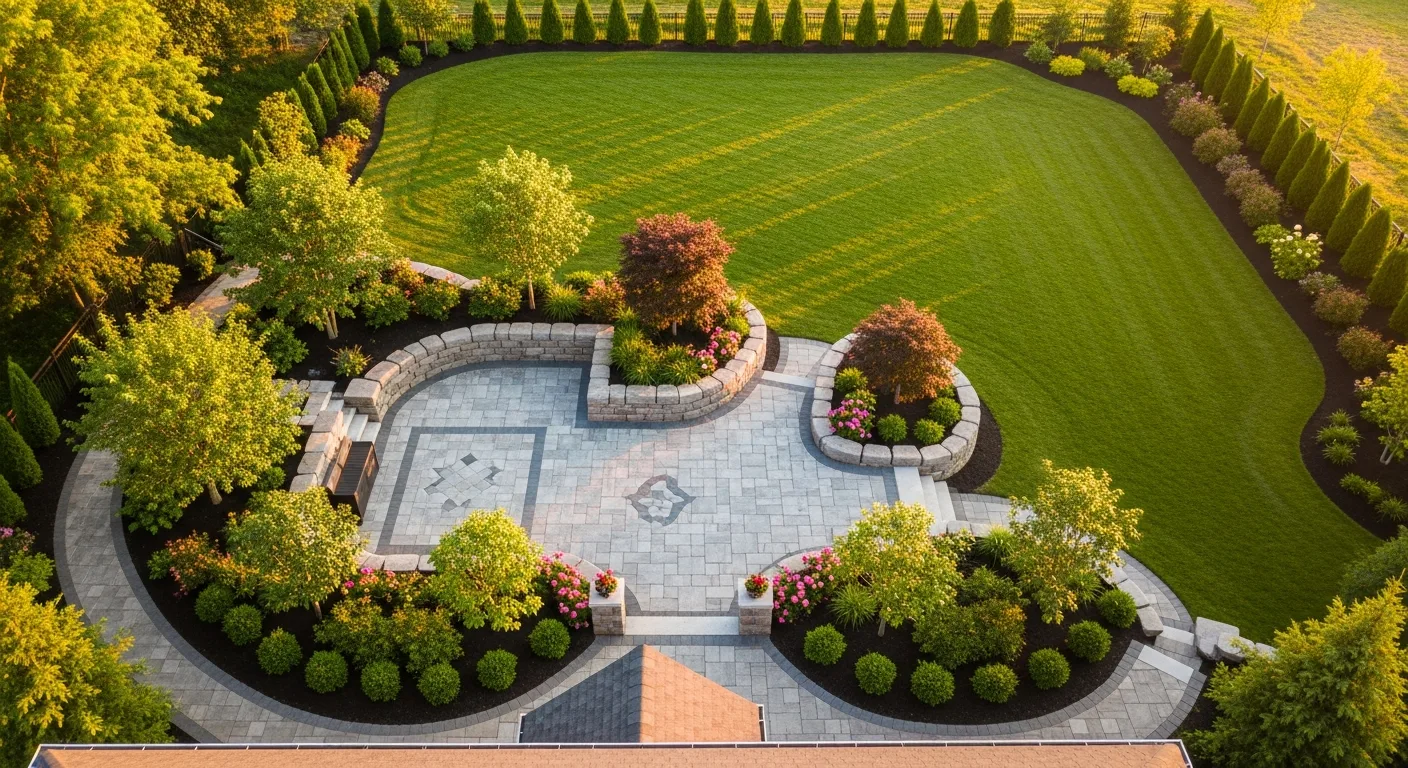
If maintenance is the bread and butter of a landscaping business, hardscaping is the steak dinner. Patios, retaining walls, fire pits, outdoor kitchens, driveways, walkways, and water features all carry significantly higher margins and ticket prices than weekly mowing.
The numbers tell the story:
- Average residential mowing client: $150 to $300 per month
- Average hardscaping project: $5,000 to $50,000 per project
- Gross margin on mowing: 30 to 45 percent
- Gross margin on hardscaping: 40 to 55 percent
One $25,000 patio project generates the same revenue as 100 to 150 mowing visits. And in many cases, the profit margin is higher.
How to start adding hardscaping:
Start small. You do not need to build an outdoor kitchen on day one. Begin with simple paver walkways, small patios, and basic retaining walls. Master the fundamentals before taking on complex projects.
Invest in training. Manufacturer certifications from companies like Belgard, Techo-Bloc, or Unilock are worth getting. They teach installation best practices and also make you an authorized installer, which can drive referrals from the manufacturers.
Build your portfolio. Photograph every hardscaping project from start to finish. Before, during, and after photos. These images are your most powerful sales tool. Post them on your website, social media, and show them during sales consultations.
Price properly. Hardscaping is not maintenance. You cannot estimate off the top of your head. Do a thorough site visit, calculate material quantities carefully, estimate labor hours based on your crew’s actual production rates, and include equipment costs. Underpricing hardscaping will kill you faster than any other mistake. Our free landscaping estimate template can help you structure your bids with the right line items from the start.
Upsell your existing clients. Your maintenance customers already trust you. You are on their property every week. When you see a tired concrete patio or an eroding hillside, that is an opportunity to suggest a hardscaping solution. A simple “Have you ever thought about replacing that old patio?” opens more doors than you would expect.
Maintenance Contracts: Building Your Revenue Floor
Weekly mowing is fine, but maintenance contracts are better. The difference is commitment, scope, and predictability.
A maintenance contract includes:
- Weekly or biweekly mowing and edging
- Seasonal fertilization and weed control
- Spring and fall cleanups
- Mulch or rock refreshing
- Shrub and hedge trimming
- Irrigation system startup, monitoring, and winterization
Why contracts beat one-off service:
- Predictable revenue. You know exactly how much money is coming in each month. This makes payroll, equipment purchases, and growth planning much easier.
- Annual billing option. Offer clients the option to pay a flat monthly fee year-round, even during the off-season. This smooths your cash flow through winter.
- Higher client lifetime value. A contract client stays with you for years. A one-off mowing customer disappears the moment someone cheaper shows up.
- Upsell opportunities. Every contract client visit is a chance to suggest additional work: new plantings, hardscaping, irrigation repairs, landscape lighting.
How to convert existing clients to contracts:
Present the contract as a benefit to them, because it is. “Instead of calling us every time something needs attention, this contract covers everything for a flat monthly rate. You do not have to think about it. Your property stays looking great year-round.”
Price your contracts to include a slight discount compared to buying each service separately. The lock-in value and upsell potential more than make up for the small per-service discount.
Seasonal Planning: Staying Busy Year-Round
The biggest financial challenge in landscaping is seasonality. In most markets, you have six to eight months of peak work and four to six months of reduced or zero outdoor work.
The companies that grow beyond basic mowing figure out how to generate revenue in every season.
Spring (March to May):
- Cleanups and mulching
- Planting and bed preparation
- Irrigation startup
- Hardscaping projects begin
- Annual contract renewals and new client acquisition
Summer (June to August):
- Peak mowing and maintenance
- Hardscaping installation
- Irrigation management
- Landscape lighting projects
Fall (September to November):
- Fall cleanups and leaf removal
- Aeration and overseeding
- Fall planting
- Irrigation winterization
- Hardscaping projects before the ground freezes
Winter (December to February):
- Snow removal and ice management
- Holiday lighting installation and removal
- Equipment maintenance and repair
- Business planning, marketing, and training
- Dormant pruning
Snow removal is the most common winter revenue strategy for landscapers. If you are in a market that gets snow, not offering snow services means leaving money on the table. Your mowing clients need their lots and driveways cleared, and you already have the trucks and the relationships.
Holiday lighting is a growing niche. Residential and commercial clients will pay $500 to $5,000 for professional installation and removal. The margins are excellent and the work fills a gap in an otherwise quiet season.
Crew Routing: Stop Wasting Hours on the Road
In landscaping, windshield time is wasted time. Every minute your crew spends driving between properties is a minute they are not producing revenue.
The cost of bad routing:
A crew that wastes 60 minutes per day on unnecessary driving loses about 250 hours per year. At a loaded crew cost of $100 per hour, that is $25,000 in lost productivity per crew. If you have three crews, that is $75,000 per year driving around for no good reason.
How to route efficiently:
Group properties geographically. Monday is the north side. Tuesday is the west neighborhoods. Wednesday is the commercial route. Every day should have a logical geographic cluster with minimal backtracking.
Map your routes. Use Google Maps or routing software to plan the sequence of stops. Even simple route planning can cut 15 to 30 minutes per day compared to random ordering.
Adjust routes seasonally. As you add and lose clients, update your routes quarterly. A route that was efficient in April might be a mess by July if you have added ten new clients in random locations.
Track drive time. If a crew is spending more than 20 percent of their day in the truck, your routing needs work. GPS tracking helps you see the actual drive patterns and identify waste.
Build route density. When marketing and selling, target neighborhoods where you already have clients. Yard signs, door hangers, and talking to neighbors at existing properties all help you build clusters of nearby clients.
Winning Commercial Accounts
Commercial landscaping contracts are larger, more predictable, and often multi-year compared to residential work. But winning them requires a different sales approach.
Types of commercial landscaping clients:
- Property management companies managing office parks, retail centers, and apartment complexes
- HOAs responsible for common areas, entrances, and community grounds
- Corporate campuses with significant landscaping needs
- Municipal and government properties (parks, medians, government buildings)
- Retail businesses that want curb appeal
How to win commercial work:
Build a professional proposal. Commercial clients expect a detailed scope of work, not a handshake quote. Include service frequency, specific tasks for each visit, seasonal work schedule, and pricing broken down by service area.
Get your insurance right. Commercial clients require higher liability limits, often $1 million to $2 million. Workers’ comp is mandatory. Some will require you to list them as an additional insured on your policy.
Start small. You do not need to land a 200-acre corporate campus as your first commercial client. Start with a small office building, a local bank branch, or a strip mall. Build your commercial portfolio and references.
Be responsive. Commercial property managers deal with dozens of vendors. The landscaper who responds quickly, shows up when they say they will, and handles problems without being asked twice wins the contract renewal every time.
Price for profit. Commercial clients sometimes push for the lowest price, especially on routine maintenance. Know your numbers and do not bid below your cost to “get your foot in the door.” Low-ball pricing on commercial work is a trap that is hard to escape.
Network intentionally. Join your local chapter of BOMA (Building Owners and Managers Association), attend commercial real estate events, and connect with property managers on LinkedIn. These relationships take time to build but they pay off.
Equipment Tracking and Management
As your landscaping business grows, equipment becomes one of your largest investments and one of your biggest operational challenges.
The common problems:
- Equipment breaks down mid-job because maintenance was skipped
- Nobody knows where the plate compactor is or which crew had it last
- You have three backpack blowers but somehow need to buy a fourth because two are “missing”
- Equipment repair costs are eating your margins and you do not know which machines are the problem
Equipment management best practices:
Inventory everything. Create a list of every piece of equipment, including serial numbers, purchase dates, and assigned location. Update it regularly.
Schedule maintenance. Every mower, every truck, every piece of power equipment should have a maintenance schedule. Oil changes, blade sharpening, filter replacement, belt inspection. Track these by hours of use, not by calendar date.
Track costs per machine. When a mower starts costing more in repairs than it would cost to finance a replacement, it is time to replace it. You cannot make this decision without data.
Assign accountability. Every piece of equipment should have a person responsible for it. If the Stihl blower comes back broken and nobody knows what happened, that is a management problem.
Budget for replacement. Equipment does not last forever. Set aside a percentage of revenue (3 to 5 percent is common) for equipment replacement so you are not scrambling to finance a new mower when your main unit dies in July.
Projul helps contractors track equipment and materials alongside their projects, so you always know what is where and what shape it is in.
Building Your Team
Growing past two or three crews requires building a team that can operate without you standing over them every day.
Key hires as you grow:
Crew leaders. Your first leadership hire is a crew leader who can manage a route independently. They handle on-site decisions, communicate with clients, and manage their crew’s output. Pay them well and treat them like the leaders they are.
Account manager or salesperson ($500K+ revenue). When you are spending more time selling and meeting with clients than you can handle alongside operations, you need someone dedicated to sales. This is often the owner at first, but eventually needs its own role.
Office manager ($300K to $500K+ revenue). Answering phones, scheduling, invoicing, and handling client questions takes more time than most owners realize. An office manager frees you up to focus on growth.
Operations manager ($1M+ revenue). This person oversees daily field operations: crew scheduling, route management, quality control, and equipment. They are the bridge between you and the crews.
Crew members. Finding reliable laborers is the perpetual challenge in landscaping. Pay competitively, provide good equipment, offer consistent hours, and treat people with respect. Word gets around, and landscaping companies with good reputations attract better workers.
Hiring tips specific to landscaping:
- Recruit in January and February before the spring rush
- Offer year-round employment if possible (snow removal in winter)
- Create a simple training program so new hires can contribute quickly
- Promote from within whenever possible, your best crew leaders are your current crew members who show initiative
Marketing for Landscaping Companies
Landscaping marketing does not need to be complicated. Consistency and visibility matter more than being clever.
Yard signs. Put a sign at every active jobsite, especially hardscaping projects. Your best marketing is work that people can see from the street.
Google Business Profile. This drives local searches. Post project photos regularly, respond to reviews, and keep your information accurate.
Before-and-after photos. Nothing sells landscaping like visual proof. Take photos of every notable project and post them on your website, social media, and Google profile.
Door hangers and flyers. In neighborhoods where you already work, leave materials at nearby houses. “We are already taking care of your neighbor’s property. Want a free quote?”
Referral program. Offer existing clients $50 off their next month’s service for every referral that signs a contract. Happy clients refer if you make it easy and worthwhile.
Vehicle branding. Wrap your trucks and trailers. Every day on the road is free advertising. Make sure your phone number is visible and easy to read.
Social media. Facebook and Instagram work well for landscaping because the work is visual. Post weekly. Time-lapse videos of hardscaping installs perform especially well.
Know Your Numbers
The landscaping companies that grow profitably are the ones that know their numbers cold.
Track weekly:
- Revenue per crew per day
- Properties completed vs. scheduled
- Drive time as a percentage of the workday
Track monthly:
- Revenue by service type (maintenance, hardscaping, snow removal, other)
- Gross margin by service type
- Labor cost as a percentage of revenue (target 30 to 40 percent for maintenance, 25 to 35 percent for hardscaping)
- Equipment costs as a percentage of revenue
- New clients added vs. clients lost
Track quarterly:
- Net profit
- Revenue per employee
- Client retention rate
- Average contract value
If your maintenance margins are below 35 percent, you are underpricing or your crews are not productive enough. If your hardscaping margins are below 40 percent, you are underestimating materials or labor.
Projul gives you real-time job costing so you can see exactly how every project is performing against your estimate. No more waiting until the end of the month to find out you lost money on that retaining wall.
The Bottom Line
Growing a landscaping business beyond basic mowing requires adding higher-margin services, building systems that scale, and shifting from doing the work yourself to managing the team that does the work.
Hardscaping and design-build projects bring in the big revenue. Maintenance contracts provide the stable base. Efficient routing and crew management keep your costs in line. And commercial accounts give you the volume and predictability that residential mowing cannot match.
Projul helps landscaping companies manage estimates, schedules, projects, and invoicing in one platform. Whether you are scheduling 50 weekly maintenance stops or managing a $40,000 paver project, everything stays organized and your team stays on the same page.
Ready to grow your landscaping business beyond mow-and-blow? Start your free trial today.
Frequently Asked Questions
How much can a landscaping business make?
How do I move from mowing to higher-margin landscaping work?
Are maintenance contracts worth it for landscaping companies?
How do I get commercial landscaping contracts?
What is the best way to route landscaping crews?
How do I handle seasonal slowdowns in landscaping?
Should I buy or lease landscaping equipment?
How do I price hardscaping projects?
Related Articles

Concrete Tilt-Up Construction: A Contractor's Complete Field Guide
Tilt-up construction accounts for roughly 15 percent of all industrial and commercial buildings in North America. This...
Read More →
How to Implement Construction Software Without Losing Your Mind
Most construction software rollouts fail. Not because the software is bad, but because the rollout was rushed. Here are...
Read More →
How Selections Can Pay for Themselves in Three Easy Steps
Most contractors lose thousands each year on wrong material orders, slow client decisions, and missed upsell chances....
Read More →