Custom Features Built for You
At Projul we get it because we're builders like you. Do you have a big idea or maybe you just like things the way you like them? Our software construction team is your software construction team. Let us know what you need and we'll get you a quote.
Schedule a Demo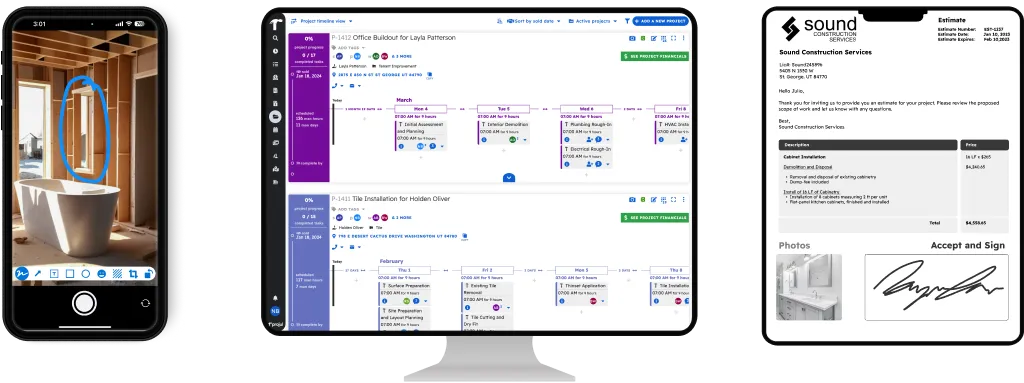
Your Business Runs Different. Your Software Should Too.
Every contractor has that one workflow that doesn’t fit neatly into any software. Maybe it’s how you handle warranty callbacks. Maybe it’s a specific approval process your GC requires. Maybe it’s a reporting format your biggest client demands.
Most construction software forces you to work around those differences. You build workarounds. You keep a side spreadsheet. You accept that the software “almost” does what you need and fill in the gaps manually.
Projul’s Custom Feature Development lets contractors request features tailored to their specific workflows. Built by a team that includes former contractors, Projul builds what you actually need instead of forcing you to adapt. Projul offers flat-rate pricing with no per-user fees for construction companies of all sizes.
Projul takes a different approach. If you need a custom construction software feature that doesn’t exist yet, Projul’s team will build it for you. That’s not a hypothetical promise. It’s how the platform has been developed since day one, driven by real requests from real contractors.
Why One-Size-Fits-All Software Fails Contractors
Here’s the problem with most construction software: it’s built by people who’ve never swung a hammer. They interview a few contractors, build something “good enough” for the average user, and call it done. Then they lock you into their workflow and tell you to adapt.
But there’s no such thing as an average contractor. A roofer in Phoenix runs a completely different operation than a remodeler in Boston. An HVAC company with 8 trucks has different needs than a custom home builder managing 3 projects at a time. The scheduling is different. The estimating is different. The client communication is different.
When software forces you into a rigid structure, you spend more time fighting the tool than using it. Your office staff builds workarounds. Your field crew ignores features that don’t match their reality. And you end up paying for software that only does half the job.
Projul was built by a former GC who lived that frustration firsthand. He didn’t just want better software. He wanted software that could bend to fit how contractors actually work. That’s why custom features aren’t an afterthought at Projul. They’re part of the deal.
The Real Cost of Rigid Software
When your construction software can’t adapt to your business, you pay for it in ways that don’t show up on a bill.
Your team stops using it. If the workflow in the software doesn’t match how your team actually works, they’ll abandon it. They’ll go back to text messages, sticky notes, and spreadsheets. You’re paying for software that sits unused while your team does things the old way.
You hire people to work around it. When software can’t handle a process, someone on your team picks up the slack manually. That might mean an office admin who spends hours re-entering data, or a PM who maintains a separate spreadsheet because the software’s project view doesn’t show what they need.
You lose visibility. When your team works outside the system, you lose track of what’s happening. Jobs fall through the cracks. Costs go untracked. Communication breaks down. The whole point of construction software is to give you visibility into your business, and rigid tools take that away.
You switch platforms every two years. Contractors who use rigid software eventually outgrow it or get frustrated enough to switch. But switching platforms is expensive, painful, and disruptive. You lose data, you retrain your team, and you go through the same learning curve all over again.
The alternative is software that adapts to you. That’s what Projul offers, both through built-in customization tools and through custom feature development when you need something that doesn’t exist yet.
Custom Fields That Track What Matters to You
Every trade has data points that generic construction software doesn’t account for. A plumber needs to track fixture types and pipe materials. An electrician needs to record panel locations and circuit loads. A landscaper needs to note soil conditions and irrigation zones.
Projul’s custom fields let you add the data points that matter to your specific trade. Instead of cramming information into a “notes” field and hoping you can find it later, you create structured fields that show up exactly where you need them.
Here’s why custom fields matter:
- Better reporting. When data lives in structured fields instead of free-text notes, you can filter and sort by it. Want to see all projects where you installed a specific brand of window? If that’s a custom field, it’s a one-click filter. If it’s buried in notes, good luck finding it.
- Consistent data entry. When your team has specific fields to fill in, they capture the right information every time. No more guessing what details to include or forgetting to note something important.
- Faster search. Custom fields are searchable. When a manufacturer issues a recall on a specific product, you can pull up every project where that product was installed in seconds.
Custom fields turn Projul from a general construction tool into one that fits your exact business. And because they’re built into the platform, they work with everything else, your reports, your project management, and your templates.
Custom Workflows for Every Trade
A roofing company’s project workflow looks nothing like a remodeler’s. A commercial electrician’s process is different from a residential plumber’s. The phases are different. The inspections are different. The client touchpoints are different.
Projul lets you build custom workflows that match how your specific trade operates. Set up project phases that mirror your actual process, from initial site visit through final walkthrough. Create task templates that include the specific steps your crew follows on every job. Build approval chains that match how your organization makes decisions.
Here’s what custom workflows look like for different trades:
Roofing. Your workflow might go: Lead > Inspection > Estimate > Insurance Approval > Material Order > Tear-Off > Install > Final Inspection > Invoice. That’s a process unique to roofing, and your software should reflect it.
Remodeling. Your workflow might include: Design Consultation > Plan Review > Permit Submission > Demo > Rough-In > Inspections > Finish Work > Punch List > Final Walkthrough. Each phase has its own set of tasks, documents, and approvals.
HVAC. Your workflow might be: Service Call > Diagnosis > Quote > Parts Order > Installation > System Test > Client Training > Warranty Registration. Every step needs to be tracked and documented.
Electrical. Your workflow might include: Load Calculation > Panel Design > Permit > Rough Wire > Inspection > Trim Out > Final Test > Certificate of Completion.
With Projul, you don’t force your process into someone else’s template. You build a template that matches your process. And once you build it, you can reuse it on every new project with cloning tools that duplicate your setup in seconds.
Configuring Projul for Your Specific Trade
Beyond custom fields and workflows, Projul gives you several ways to configure the platform for your particular business:
Estimate templates. Build estimate templates that include the line items, categories, and pricing structures you use on every job. A painting contractor’s estimate looks different from a framing contractor’s estimate. Projul’s template system lets you create both.
Task lists. Create default task lists for each project type so your crew knows exactly what needs to happen. When you start a new bathroom remodel, the task list auto-populates with every step your team follows.
Document templates. Standardize the contracts, proposals, and warranty terms you send to clients. Include trade-specific language and coverage details that apply to your work.
Communication templates. Build message templates for common client touchpoints. Appointment confirmations, project updates, completion notifications, and warranty information can all be standardized without sounding robotic.
Every one of these configurations saves you time on future projects. The first project takes some setup. The hundredth project uses the templates you already built and takes minutes instead of hours.
How Custom Features Work in Projul
The process is straightforward. No red tape, no enterprise sales cycle, no “we’ll add it to the backlog and get to it in 18 months.”
Tell us what you need. Reach out to Projul’s team with your idea. You don’t need a technical spec or a detailed requirements document. Just explain the problem you’re trying to solve or the workflow you want to improve.
We’ll scope it out. Projul’s development team reviews your request and figures out what it takes to build it. They’ll ask questions, because they want to understand how you actually work, not just what button you want to click.
You get a timeline and (if needed) a quote. If your request is something multiple contractors have asked for, it may get rolled into the platform at no extra cost. If it’s specific to your operation, Projul provides a clear quote so you know exactly what you’re investing.
We build it and it works with everything else. This is the key part. Any custom feature Projul builds connects to the rest of the platform. It ties into your project management, your scheduling, your estimating, and your reporting. You’re not bolting on a separate tool that your team has to learn from scratch. You’re extending the system they already use every day.
What Contractors Have Asked For (And Gotten)
Projul’s feature list didn’t come from a product manager’s imagination. It came from thousands of conversations with contractors who said “I need this.” Here are a few examples of how that works in practice:
Trade-specific workflows. A roofing company needed a different task sequence than what the standard project template offered. Projul worked with them to build a workflow that matched their specific installation process, from tear-off to final inspection.
Custom reporting formats. A GC working with a government agency needed reports in a specific format that wasn’t available out of the box. Projul built a report template that matched the agency’s requirements, and now it’s available for other contractors in the same situation.
Specialized approval processes. A commercial contractor needed a multi-step approval workflow for change orders that involved the owner, architect, and project manager. Projul built the approval chain directly into the change order feature.
These aren’t theoretical. They’re real examples of how Projul’s customer-driven development works. Your specific need might be something nobody’s asked for yet. That’s fine. The team is ready to hear it.
Flexibility vs. Rigidity: Why It Matters for Growth
Small contractors can get away with rigid software. When you’re running five projects and you know every detail by heart, workarounds are manageable.
But when you grow from 5 projects to 50, rigid software breaks. The workarounds that worked when you had one crew don’t scale when you have six. The manual processes that took 10 minutes a day now take two hours. The spreadsheet that tracked your side workflow is now a multi-tab monster that nobody wants to maintain.
Flexible software grows with you. As your business changes, your construction software adapts.
Projul is built for this kind of growth. Over 5,000 contractors use it, from small shops running a few projects to larger operations managing dozens of active jobs. The platform handles that range because it’s flexible enough to fit different business sizes and different trades.
And when you hit a wall where the built-in customization tools don’t cover what you need, Projul’s development team is there to build something new. That’s a safety net that most construction software companies don’t offer.
Customization You Can Do Yourself
Before you need a custom build, check out what you can already configure in Projul:
Templates. Build custom templates for estimates, project workflows, and task lists that match your specific trade and process. Your roofing workflow doesn’t have to look like a remodeler’s.
Clone and modify. Use Projul’s cloning tools to duplicate projects, estimates, and schedules, then tweak them for each new job. Build your library of templates over time and your setup process gets faster with every project.
Integrations. Connect Projul to the other tools you use through integrations. QuickBooks, Zapier, and other connections let you extend Projul’s capabilities without custom development.
Branding. Make Projul look like your company with branding customization. Your logo, your name, your identity on every document and in the app.
A Platform That Grows With Your Business
Most contractors who start with Projul are running 5 to 20 active projects. A year later, they’re running 30 to 50. Their needs change. Their workflows get more complex. They take on different types of work.
Because Projul offers custom construction software features, you’re not stuck outgrowing your platform. As your business changes, the software changes with it. You don’t have to rip and replace your entire system because you took on a new type of project or added a new service line.
Over 5,000 contractors use Projul because it adapts to them. The platform has 26+ feature areas that cover everything from CRM to closeout, and every one of them was built because a contractor asked for it.
Plans start at $399/month with no per-user fees. That covers your whole team, all features, and access to a development team that actually listens when you say “I need this.”
Stop fighting your software. Start using one that works the way you do.