Management Software for Deck Builders. Deliver professional projects that have your clients walking on sunshine! Built by construction pros with honest pricing.
Deck builders have a lot to manage without having to manually do everything themselves. Projul helps you send competitive bids, easily assign jobs, and maintain high profit margins, all from one convenient tool! Contractors report a 32% average profit increase with Projul.
- Impress clients with our customer portal
- Accurately estimate project costs with our easy-to-use assemblies calculator
- Send professional invoices and get paid quickly
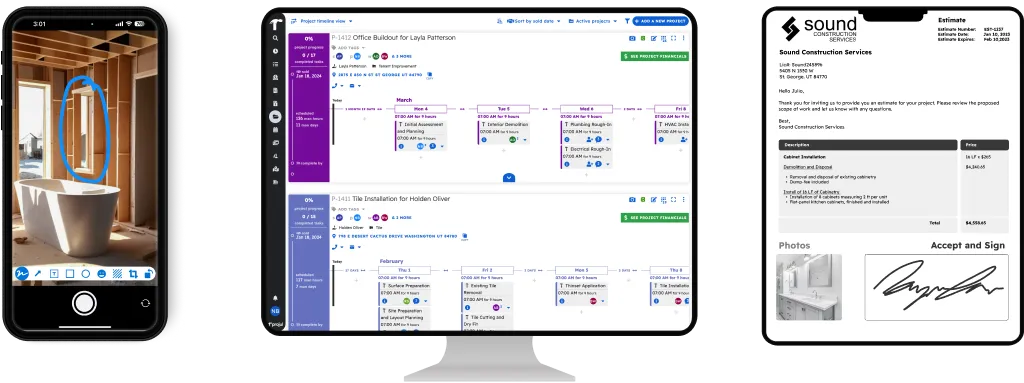
What Is Deck Building Software?
Deck building software is a project management platform that helps deck contractors estimate materials by the board, schedule builds around weather, manage permits and inspections, and invoice clients from deposit through final payment. Projul gives deck builders one place to run their business so they can build more decks per season.
Projul’s deck building software helps deck contractors estimate materials by the board, schedule builds around weather, and invoice clients from a single platform built by a real contractor. Projul offers flat-rate pricing with no per-user fees for construction companies of all sizes. If you build decks for a living, you know the work is seasonal and the margins are tight. You have a limited window of good weather to get as many projects done as possible. Every day lost to disorganization, ordering mistakes, or scheduling conflicts is a day of revenue you cannot get back.
Deck building software exists to tighten your operation so you can run more jobs per season, keep your crews productive, and actually make money on every build. Projul was built by a contractor who understood these problems firsthand, and over 5,000 contractors trust it to keep their businesses running.
Build More Decks With Less Paperwork
Deck projects look straightforward on paper until you are juggling material orders, weather delays, and permit timelines across multiple job sites. A simple 12x16 composite deck involves decking boards, framing lumber, concrete footings, fasteners, post bases, railings, stairs, and hardware. Get one quantity wrong and you either run short on install day or you are returning materials and eating the restocking fee.
Projul helps deck builders estimate accurately, schedule crews around weather windows, and keep homeowners informed through every phase of the build. Over 5,000 contractors trust Projul to keep their operation running tight.
Deck contractor software should eliminate the paperwork bottleneck that slows you down between jobs. When your estimate converts directly into a scheduled project with job costing built in, you skip the re-entry step that wastes time and introduces errors.
Material Estimating Down to the Board and Fastener
Your deck estimate needs to account for every board, every fastener, every footing, and every piece of hardware. Miss the joist hangers and your crew makes a hardware store run on install day. Forget the waste factor on composite decking and you are short two boards at 4 PM with no supplier open.
Projul’s assemblies calculator lets deck builders price out materials with built-in waste factors. Build a template for your standard deck sizes, then adjust dimensions and material choices for each new job.
Composite vs. Wood Material Tracking
Composite decking and pressure-treated lumber have completely different pricing structures, waste factors, and handling requirements. Composite materials cost more per board but require less maintenance labor. Pressure-treated lumber is cheaper upfront but needs staining and sealing, which means a maintenance visit down the road.
Projul tracks materials by type so you can compare costs across jobs. See how your composite deck margins compare to your wood deck margins. Track which material suppliers give you the best pricing. Over time, your deck building software gives you the data to make smarter bidding decisions.
Fasteners and Hidden Fastener Systems
Hidden fastener systems for composite decking add material cost and install time compared to traditional face-screwing. Your estimate needs to account for the clip count, the screws for the clips, and the additional labor time for installation. Projul lets you build these as separate line items in your estimate templates so nothing gets missed.
Footings and Post Bases
Every deck starts at the ground. Whether you are pouring concrete footings, using precast pier blocks, or installing helical piers, the foundation work needs to be in your estimate. Projul tracks footing quantities, concrete volume, post base hardware, and any excavation labor as part of your deck project. Deck contractor software that ignores the substructure leaves money on the table.
Design Complexity and Project Phasing
Not every deck is a simple rectangle off the back door. Multi-level decks, wraparound designs, built-in benches, pergola attachments, and integrated planters all add complexity. Each feature changes your material count, your labor estimate, and your timeline.
Projul lets you break complex deck projects into phases or sections. Estimate the lower level, upper level, stairways, and built-in features as separate line items. Schedule each phase with its own timeline and crew assignments. Track materials for each section independently so you know exactly where your costs land.
Multi-Level Decks
A two-level deck with a connecting stairway is really three projects in one. The lower level has its own footings, framing, and decking. The upper level has its own structural requirements, especially at the ledger board connection to the house. The stairs need stringers, treads, risers, and railing. Breaking these into separate sections in your deck building software keeps your estimates clean and your job costing accurate.
Built-In Features
Pergolas, benches, planters, fire pit surrounds, and outdoor kitchens all require additional materials, structural considerations, and labor. Build templates for your most popular add-ons so you can drop them into an estimate quickly. A pergola template might include posts, beams, rafters, hardware, and concrete footings. Add it to the base deck estimate with a few clicks instead of calculating from scratch.
Permit and Inspection Requirements
Most jurisdictions require a building permit for deck construction. The permit process involves submitting plans that show structural details, setback compliance, and ledger board attachment methods. Some areas require engineered drawings for decks above a certain height or size.
Projul tracks permit status as part of your project workflow. Note when the permit was applied for, when it was approved, and when each inspection is due. Your crew gets reminders before the footing inspection or the final structural inspection so nobody forgets to call the inspector.
Common Deck Inspections
Most deck builds require two to four inspections: footing/foundation, framing, and final. Some jurisdictions add a lateral load connection inspection. Projul lets you schedule each inspection as a task on the project timeline. Log pass or fail results and any corrections the inspector requires. Your deck building software creates a complete compliance record for every project.
Keep inspection results on the job record. When a homeowner sells the house and the buyer’s inspector asks about the deck, you can pull up the permit number, inspection dates, and results. That documentation protects your work and your reputation.
Structural Engineering and Load Calculations
Decks are structural projects. They carry live loads (people, furniture, snow) and dead loads (the weight of the materials). Getting the structural engineering wrong means a deck that bounces, sags, or fails. That is a liability nightmare.
While most deck contractors are not structural engineers, you need to work within the span tables and load requirements published by the IRC and your local code. Projul lets you store structural specs on the job record, including joist size, spacing, beam sizing, post spacing, and footing dimensions. When the inspector asks about your joist span, you pull up the specs instead of doing math in the field.
For complex projects that require a stamped engineering plan, attach the engineer’s drawings to the project in Projul. Your crew references the plan from their phone. Deck contractor software that keeps structural documents at your crew’s fingertips reduces mistakes and keeps the inspector happy.
Railing Systems
Railing selection impacts your material cost, labor time, and the overall look of the deck. Cable railing systems cost more than wood balusters. Aluminum panel systems install faster than individual balusters. Glass panels are the premium option and require the most precise installation.
Projul tracks railing materials as separate line items in your deck estimates. Whether you are installing cedar balusters, composite rail systems, aluminum panels, or cable railing, each system has its own material cost and labor rate. Build templates for each railing type so you can swap systems in an estimate quickly based on what the homeowner wants.
Code requirements for railing height, baluster spacing, and graspability affect your material choices. Log the code-required dimensions on the job record so your crew installs to spec the first time. Deck building software with detailed material tracking means you stop guessing and start knowing exactly what each railing option costs.
Scheduling Around Weather and Material Availability
Deck building is outdoor work, and weather controls your schedule. Rain delays are not a matter of if but when. A week of rain in June can push your entire summer schedule sideways if you do not manage it actively.
Projul’s drag-and-drop scheduler lets deck builders move jobs, reassign crews, and shift timelines without creating chaos. When Monday’s forecast shows rain, push the job to Wednesday and your crew sees the change instantly on their phone. No group texts. No morning confusion. Your deck contractor software handles the schedule change in seconds.
Material availability is the other scheduling factor. Composite decking can have lead times of two to four weeks during peak season. Specialty railings or custom colors take longer. Projul tracks material delivery dates alongside your install schedule so you never send a crew to a job site where the materials have not arrived.
Staining, Sealing, and Maintenance Contracts
If you build wood decks, the homeowner will need staining and sealing within the first year and every two to three years after that. This is recurring revenue that most deck builders leave on the table.
Projul lets you set up recurring maintenance projects. Schedule the return visit, send the client a reminder, and invoice for the maintenance work when it is done. This repeat revenue stream keeps your crews busy during slower months and builds long-term client relationships that generate referrals.
Track which clients are due for maintenance and reach out proactively. Deck building software that helps you build a maintenance book of business turns seasonal work into year-round income.
Client Communication That Builds Trust and Referrals
Deck projects are visible. The neighbors see your crew working every day. The homeowner watches from the kitchen window. This is both an opportunity and a pressure point. A client who feels informed and respected tells their neighbors. A client who feels ignored or surprised by costs tells the internet.
Projul’s customer portal shows your deck clients the project timeline, approved estimates, and invoices without a single phone call. When a rain delay pushes the install back two days, update the schedule and the client sees it immediately. This transparency builds trust and generates the referrals that keep your crew booked through summer.
Rated 4.9/5 on G2 by contractors in the field, Projul gives you the tools to deliver a client experience that stands out from every other deck builder in your market.
Job Costing That Keeps You Profitable
Every deck job has a target margin. Without tracking actual costs against your estimate in real time, you find out whether you hit that margin after the job is done. By then, you cannot fix anything.
Projul tracks estimated costs versus actual costs on every deck project. See where your labor hours are landing compared to your bid. Check whether material costs matched your estimate or whether that upcharge on composite boards blew your budget. Deck contractor software with live job costing lets you catch problems while there is still time to adjust.
Contractors using Projul report a 32% average increase in profitability. That comes from accurate estimates, real-time cost tracking, and catching overruns before they eat your entire margin.
Your Deck Crews Run the Job From Their Phone
Your deck crews are outside all day, not sitting near a computer. Projul’s native mobile app lets them check material lists, view the project schedule, upload progress photos, and log hours with geofencing. If a delivery shows up short, your crew documents it on the spot and notifies the office.
The app works in direct sunlight on a dusty phone with one bar of signal. Your crew starts using it by lunch on day one because it was designed for the job site, not for a conference room. That adoption rate is why deck building software from Projul actually gets used instead of sitting on the home screen untouched.
Estimating That Wins More Deck Jobs
Your estimate is the first real impression a homeowner gets from your company. A sloppy bid with vague line items does not inspire confidence for a $20,000 composite deck project. A clean, itemized estimate from Projul shows the client exactly what they are getting and positions you as the professional choice.
Build estimate templates for your most common projects. A standard 12x16 composite deck. A two-level cedar deck with stairs. A pergola add-on package. Each template carries line items for decking, framing, footings, fasteners, railings, and labor. Adjust quantities for each new job and send the estimate looking sharp. When the client approves, that estimate converts directly into a scheduled project.
Deck contractor software with strong estimating tools means more bids out the door and a higher close rate. Fewer hours spent building estimates means more hours available for building decks.
Running a Deck Business Through the Off-Season
Most deck builders make their money between April and October. When the weather turns, your crew sits idle unless you plan ahead. The off-season is when smart deck contractors set up next year’s pipeline and lock in early bookings.
Projul’s CRM and lead tracking keeps every inquiry organized so you can follow up with homeowners who called in September but wanted to wait until spring. Set reminders for January and February to reach out with early-bird pricing. By the time your competitors wake up in March, you already have your first six weeks booked.
Use the slower months to build out your estimate templates for the coming season. Update your material prices from suppliers. Add new product lines like aluminum railings or capped composite decking. When the first warm-weather lead comes in, you send a polished bid in 15 minutes instead of spending an hour building it from scratch.
The off-season is also the right time to review your job cost data from the past year. Projul’s job costing reports show you which deck types made money and which ones barely broke even. Maybe your 12x16 composite builds hit 35% margins while your custom multi-level projects only hit 18%. That data tells you where to focus your marketing dollars and which jobs to price more carefully.
Deck builders who treat winter as planning season come out swinging in the spring. They have leads in the pipeline, templates ready to go, and pricing dialed in from real job data. The guys who shut down in November and scramble in March are always playing catch-up.
Maintenance contracts also fill the gap. If you built 30 wood decks last year, that is 30 staining and sealing jobs waiting to be scheduled. Projul tracks which past clients are due for maintenance so you can send reminders and book the work before another contractor does. A full maintenance calendar keeps your best crew members employed year-round instead of losing them to other trades every winter.
Mistakes That Kill Deck Builder Profits
Building decks looks simple from the outside, but the contractors who stay profitable long-term are the ones who avoid these common pitfalls.
Quoting Before You Dig
The number one mistake deck builders make is pricing a job before checking soil conditions and utility locations. You quote footings based on standard depth, then your crew hits rock at 18 inches or discovers the yard is mostly fill dirt that requires deeper piers. Now your footing costs doubled and you are eating the difference.
Before you finalize any deck estimate, walk the site and check the grade, soil type, and drainage patterns. Call 811 for utility locates. If the yard has been graded or filled recently, plan for deeper footings and price accordingly. The 20 minutes you spend on site assessment saves you thousands in surprise costs on install day.
Not Accounting for Stair Complexity
Deck stairs are where most estimating errors happen. A simple four-step stairway is straightforward. But a long run down a slope with a landing, a turn, and code-compliant railings on both sides is a project within a project. Stringer material, tread count, riser calculations, post anchoring at the landing, and railing that transitions from the deck level to the stair angle all add cost.
Break stair estimates into their own line item with separate material and labor counts. Do not lump stairs into the general deck framing number. Your estimating templates should have a stair assembly that you adjust for rise, run, and width on each job.
Ignoring the Ledger Board Connection
The ledger board attachment to the house is the most critical structural connection on any deck, and it is where most deck failures start. A ledger that is not properly flashed and bolted will eventually pull away from the house. This is a safety issue and a liability issue.
Document your ledger board installation with photos that show the flashing, lag bolt pattern, and any rot repair on the band joist before you cover it up. These photos protect you during the inspection and years later if a warranty question comes up. If you also do fencing work or hardscaping, you already know how important it is to document the parts of a project that get buried or hidden after completion.
Skipping the Material Reconciliation
After every deck build, compare what you ordered against what you used. Count the leftover boards. Check how many fastener boxes are still sealed. Calculate your actual waste percentage. This takes 15 minutes at the end of a job and gives you real data to improve your next estimate.
Most deck builders skip this step because they are already packing up and heading to the next job. But if you consistently over-order by 15% when your actual waste is only 8%, you are tying up cash in materials that sit in your trailer. If you consistently under-order, your crew loses half a day on material runs. Track your actual costs against estimates on every project and your numbers get tighter over time.
Adding Outdoor Kitchens and Living Spaces
Deck builders are well-positioned to offer outdoor kitchen and living space construction as an add-on service. Our outdoor kitchen and living space guide covers everything from layout planning and material selection to utility rough-ins and weather protection, helping you expand your services and increase revenue per project.
Helping Clients Choose Between Composite, Wood, and PVC
One of the most common conversations you have with homeowners is the material question. Do they want composite, pressure-treated wood, cedar, or PVC? Each option has a different price point, a different look, a different lifespan, and a different maintenance requirement. The homeowner usually has a vague sense that composite costs more but lasts longer, and they want you to help them decide.
The problem is that most deck builders handle this conversation verbally and then hope the client remembers what was discussed when the estimate arrives. The homeowner talked to three contractors this week. They are mixing up who said what about which product. If your estimate just says “composite decking” without specifying the brand, product line, color, and warranty details, the client has no way to compare your bid against the other guys on an equal basis.
Projul’s estimating tools let you build side-by-side material comparisons right in the estimate. Create line items that show the client what their deck costs in Trex Transcend versus pressure-treated pine versus TimberTech PVC. Include the material cost per square foot, the expected lifespan, and the maintenance requirements for each option. The client sees real numbers and makes an informed decision instead of guessing.
For pressure-treated wood decks, track the lumber grade and treatment type. Not all pressure-treated lumber is the same. Ground-contact rated lumber is required for posts and any framing within 6 inches of the ground. Above-ground rated lumber works for joists and decking but costs less. Your estimate template should specify which grade goes where so your purchasing person orders correctly and your crew installs the right material in the right location.
Composite decking has its own tracking needs. Capped composites from Trex, TimberTech, and Fiberon each have different color options, texture profiles, and warranty terms. Some homeowners want the look of tropical hardwood. Others want a weathered gray. Track the specific product, color, and lot number on the project record so you can order matching material if you need extra boards during the build or for a future repair.
PVC decking is the premium tier. It resists moisture better than composite, does not stain from food or drink, and holds up well in coastal environments with salt air. But it costs more and expands and contracts with temperature changes more than composite, which affects your fastener spacing and end-gap requirements. Log these installation specs on the project so your crew follows the manufacturer’s guidelines and you maintain warranty coverage.
Tracking material choices across your completed projects also gives you valuable data over time. Projul’s job costing shows you the actual material cost and labor cost for composite versus wood versus PVC projects. After 20 or 30 builds, you know exactly what your margins look like on each material type. That data helps you steer clients toward the options that work best for their budget and best for your bottom line. Check our material tracking guide for more on keeping material costs tight across multiple active jobs.
Documenting Load Calculations and Structural Specs for Inspectors
Every deck you build is a structure that carries weight. People, furniture, grills, hot tubs, snow loads, and the dead weight of the materials themselves all factor into the structural requirements. The IRC publishes span tables for joists, beams, and posts, and your local building code may add requirements on top of those. Getting the numbers wrong means a deck that fails inspection, or worse, a deck that fails under load.
Most deck builders know their span tables well enough to frame a standard deck without much calculation. A 2x10 southern pine joist at 16 inches on center spans about 13 feet for a 40 PSF live load. But when the project involves a cantilever, a hot tub, a second level, or an unusual span, you need to do the math and document it.
Projul lets you store all structural specifications on the project record. Log your joist size, spacing, span, beam dimensions, post sizes, footing diameters, and depth for every deck you build. When the building inspector arrives for the framing inspection, your crew pulls up the specs on the mobile app and walks the inspector through the numbers. No paper plans blowing around the job site. No searching through the truck for a rolled-up drawing.
For projects that require a stamped engineering plan, attach the engineer’s drawings and calculations to the project in Projul. Multi-level decks, decks over 30 inches above grade with heavy loads, and any structure supporting a hot tub typically need engineering in most jurisdictions. Your crew references the stamped plans from their phone during the build, and the inspector sees them during the site visit.
Documenting your structural specs also protects you long-term. When a homeowner calls five years later because their deck feels bouncy, you pull up the original specs and check whether the structure was built to code. If it was, the issue is likely a maintenance problem, not a construction defect. If the homeowner added a 500-pound hot tub to a deck that was not engineered for that load, your documentation proves the original build was sound. That record is your defense against warranty claims and liability disputes.
Tracking structural data across projects also helps you identify patterns. If you keep seeing inspection corrections on beam sizes for a particular span configuration, you adjust your standard specs and avoid the correction on future jobs. Projul’s project history becomes your reference library for structural decisions, which is especially helpful when training new crew leads who do not have 15 years of framing experience yet. For a deeper look at the permit and inspection process, see our construction permit guide.
Navigating Permit Requirements Across Multiple Municipalities
If your deck building company works across several cities or counties, you already know that permit requirements are not the same everywhere. One municipality wants engineered drawings for any deck over 200 square feet. The next town over only requires them for decks above 30 inches. Some jurisdictions require a separate electrical permit if you are running power to the deck for outlets or lighting. Others fold it into the building permit. The fees, review timelines, and inspection schedules vary by jurisdiction, and getting it wrong means delays that throw off your whole schedule.
The permit process typically starts with a site plan showing the deck footprint, setbacks from property lines, and the relationship to the house. Most jurisdictions require construction drawings that show framing details, ledger board attachment, footing specifications, and railing details. Some require a plot survey. Others accept a hand-drawn site plan with dimensions. Knowing what each municipality requires before you start the application saves you from rejected submittals and wasted weeks.
Projul’s project management tools let you create permit checklists specific to each municipality you work in. Build a checklist template for each jurisdiction that covers what documents to submit, what fees to expect, and what the typical review timeline looks like. When you start a new project, assign the right checklist based on the job location. Your office staff follows the template and nothing gets missed.
Track your permit application dates, approval dates, and inspection schedules on the project timeline. Projul’s scheduling tools let you build inspection holds into your project plan so your crew does not frame past the point where the footing inspection is required. When the inspector is scheduled for Thursday morning, your crew knows not to pour concrete on the remaining footings until that inspection passes.
For deck builders who work in jurisdictions with online permit portals, log the portal login and application number on the project record. When you need to check the status or download the approved plans, everything is in one place instead of scattered across browser bookmarks and email confirmations.
The biggest risk with multi-jurisdiction work is assuming the rules are the same everywhere. A ledger board attachment method that passes in one county might fail inspection in the next county because they follow a different edition of the IRC or have local amendments. Keep notes on jurisdiction-specific requirements in your Projul templates so your crew knows what to expect before they show up. Our permit tracking software guide covers tools and practices that help contractors stay on top of permit requirements without losing time to rejected applications or missed inspections.
Building a Seasonal Maintenance Program That Sells Itself
Most deck builders walk away from a finished project and never talk to that homeowner again unless something goes wrong. That is a missed opportunity worth thousands of dollars per year in recurring revenue. Every wood deck you build needs staining or sealing within the first 6 to 12 months and every 2 to 3 years after that. Even composite decks benefit from annual cleaning to prevent mold, mildew, and staining. That maintenance work is easy, profitable, and keeps your crew busy during the months when new builds slow down.
The key to selling maintenance is timing. The best time to sell a maintenance contract is the day you finish building the deck. The homeowner is standing on their brand-new deck, thrilled with the result, and trusting your expertise completely. That is when you say: “This deck is going to look great for years, but the wood needs its first coat of stain in about 8 to 10 months. We offer a maintenance program where we come back, clean the deck, and apply stain so you do not have to worry about it. I will set a reminder and reach out when it is time.”
Projul makes this easy to execute. When you close out a deck project, create a follow-up task dated 8 to 10 months out for wood decks or 10 to 12 months for a composite cleaning visit. Projul’s CRM keeps track of the client, the project details, and the follow-up date. When that date approaches, your office reaches out with a maintenance proposal. The client already trusts you because you built their deck. The close rate on maintenance work from past clients is significantly higher than cold leads.
Price your maintenance program as a package. A standard maintenance visit for a 300-square-foot wood deck might include power washing, light sanding of rough spots, and two coats of stain. Build an estimate template for each deck size and material type so you can send a maintenance proposal in minutes. For clients who commit to a recurring schedule, offer a small discount as an incentive to stay on your calendar year after year.
The math adds up fast. If you built 25 wood decks last year and 60% of those homeowners sign up for biennial maintenance at $800 per visit, that is $12,000 in revenue every two years from work that takes your crew half a day per job. Over five years, those 25 clients generate $30,000 in maintenance revenue with almost no marketing cost because you already have the relationship.
Track your maintenance clients as a separate pipeline in Projul’s CRM. See who is due this season, who declined last year and might be ready now, and who has never been contacted about maintenance. Your seasonal marketing guide covers timing strategies for reaching out to past clients when they are most likely to say yes. Building a maintenance book of business turns your deck company from a seasonal operation into a year-round revenue machine.
Honest Pricing for Deck Contractors
Projul starts at $4,788 per year for your entire deck company. No per-user fees. Your estimators, crew leads, office staff, and subcontractors all get full access without inflating the bill.
Most deck building software charges per user. That pricing model punishes growth. Add a second crew? More seats to pay for. Hire an office manager? Another fee. Give your concrete sub access to the schedule? Even more money. Projul’s flat rate means growing your team does not grow your software bill.
Over 5,000 contractors use Projul to manage their operations, and deck contractors consistently report saving 2+ hours daily on admin work. G2 users rate Projul 4.9/5 for ease of use and 4.9/5 for quality of support.