
Construction Document Storage and Backup Guide
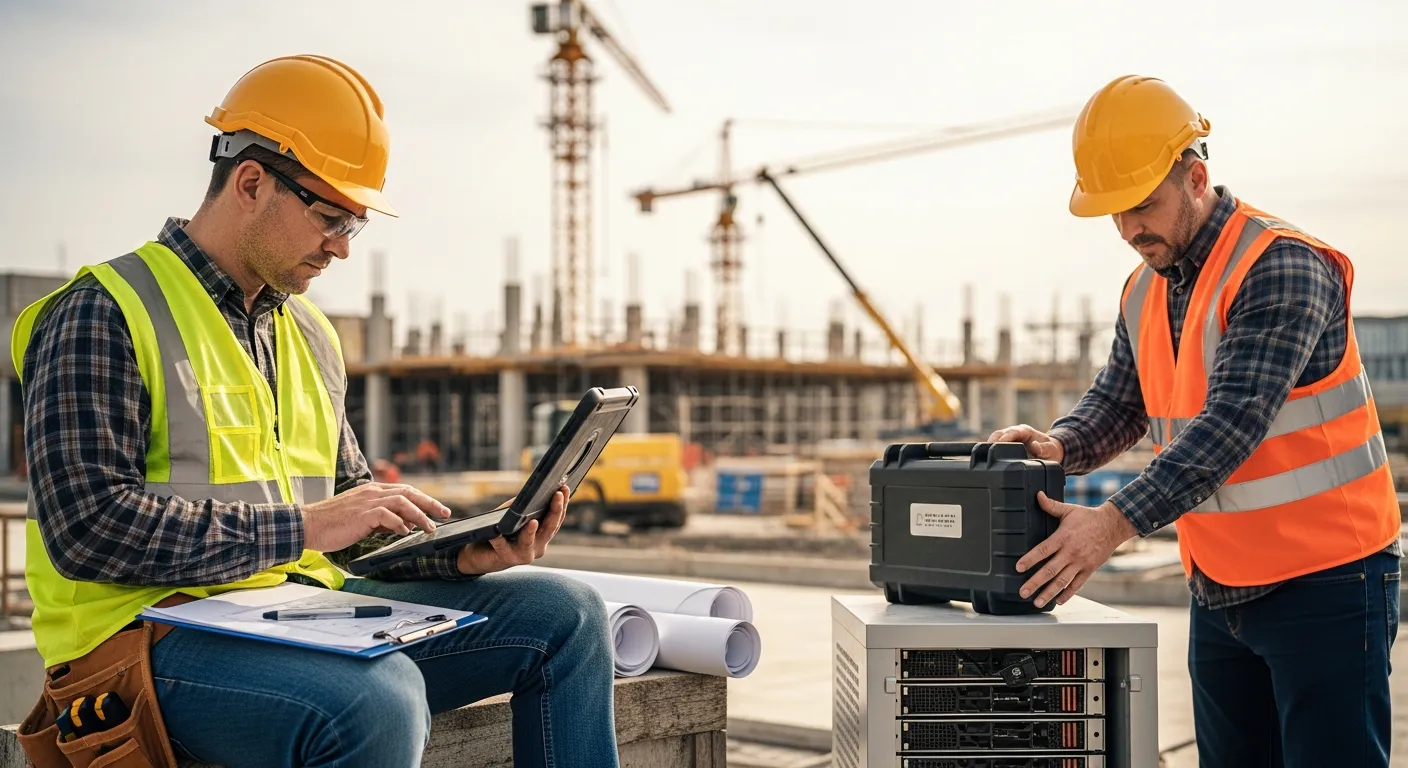
If you have ever lost a contract because someone saved it to their desktop and then their laptop died, you already know why digital document storage matters. Construction runs on paperwork. Estimates, contracts, change orders, permits, daily logs, safety records, photos, invoices. The list goes on. And when those files disappear or you cannot find them, it costs you time, money, and sometimes entire disputes.
This guide walks through how to set up a real document storage and backup system for your construction company. Not theory. Practical steps you can start using this week.
Cloud Storage vs. Local Storage: Which One Works for Construction?
The first decision most contractors face is whether to go cloud, local, or both. Each option has tradeoffs, and the right answer depends on your crew size, how many job sites you run, and your comfort level with technology.
Local storage means files live on hard drives, servers, or computers physically in your office. The upside is that you control everything. The downside is that you are also responsible for everything. If the server crashes, the building floods, or someone spills coffee on the wrong machine, those files could be gone for good. Local storage also makes it hard for field crews to access documents from the job site unless you set up a VPN or remote desktop, which adds complexity.
Cloud storage means files live on servers managed by a third party like Google, Microsoft, Dropbox, or a construction-specific platform like Projul. Your team can access documents from any device with an internet connection. Files sync automatically, and the provider handles backups, security patches, and hardware maintenance. The downside is that you need an internet connection (though most platforms offer offline access now), and you are trusting a third party with your data.
For most construction companies today, cloud storage is the better choice. Here is why:
- Field access. Your superintendent can pull up plans on a tablet at the job site instead of driving back to the office. Your project managers can review daily logs from anywhere. This alone saves hours every week.
- Automatic backups. Cloud platforms back up your data continuously. No more remembering to run a backup on Friday afternoon.
- Collaboration. Multiple people can work on the same document without emailing versions back and forth. No more “Final_v3_REAL_FINAL.pdf” floating around.
- Disaster protection. Your office could burn to the ground and your files would still be safe.
If you are still relying on filing cabinets and a shared drive in the back office, it is time to make the switch. A good construction document management system will handle most of this for you out of the box.
That said, some contractors keep a local backup as an extra safety net, and that is a smart move. We will cover that in the disaster recovery section below.
Building a Folder Structure That Actually Works
Having cloud storage is useless if nobody can find anything. The biggest mistake construction companies make is not establishing a consistent folder structure and then enforcing it across every project.
Here is a folder template that works for most general contractors and specialty trades:
📁 [Project Number] - [Client Name] - [Project Name]
   📁 01 - Pre-Construction
      📁 Estimates & Proposals
      📁 Contracts & Agreements
      📁 Permits & Approvals
      📁 Insurance Certificates
   📁 02 - Plans & Drawings
      📁 Original Plans
      📁 Revisions
      📁 As-Builts
      📁 Shop Drawings
   📁 03 - Project Management
      📁 Schedules
      📁 Meeting Minutes
      📁 RFIs
      📁 Submittals
   📁 04 - Field Documentation
      📁 Daily Logs
      📁 Photos (organized by date)
      📁 Inspection Reports
      📁 Safety Documents
   📁 05 - Financial
      📁 Change Orders
      📁 Invoices & Pay Apps
      📁 Lien Waivers
      📁 Budget Tracking
   📁 06 - Closeout
      📁 Punch Lists
      📁 Warranties
      📁 O&M Manuals
      📁 Final Documentation
A few rules that make this work in practice:
Number your top-level folders. The numbers (01, 02, 03) force a consistent sort order regardless of the operating system or platform. Without numbers, folders sort alphabetically and you end up hunting for what you need.
Use the same structure on every single project. It does not matter if the project is a $5,000 bathroom remodel or a $2 million commercial build. Same folders, same names, every time. When your estimator hands off to the project manager, they know exactly where to find the contract. When your super needs the plans, they go to 02. When accounting needs invoices, they go to 05. No guessing.
Name files consistently. Adopt a naming convention and stick to it. Something like [ProjectNumber]_[DocumentType]_[Date]_[Version] works well. For example: 2026-0142_ChangeOrder_2026-02-15_v2.pdf. It is not glamorous, but it means you can search for any file and find it in seconds.
Do not let people save files to random locations. This is the hardest part. You need to train your team and hold them accountable. If someone saves a document to their desktop or their personal Google Drive, it might as well not exist. Good construction project documentation practices start with everyone following the same system.
Don’t just take our word for it. See what contractors say about Projul.
If you are using construction management software, much of this structure is built in. Tools like Projul attach documents directly to the project they belong to, so your team does not have to think about folder structures at all. The software handles the organization.
Version Control: Stopping the “Which One Is the Latest?” Problem
Version control is one of those things that sounds boring until it saves your neck on a $200,000 change order dispute. In construction, documents get revised constantly. Plans get updated, contracts get amended, change orders go through multiple rounds of approval. If you cannot prove which version was current on a specific date, you have a problem.
Here is what version control looks like in practice for a construction company:
Never overwrite the original. When a document gets revised, save the new version as a separate file and keep the original. If you are using a platform with built-in versioning (like Google Workspace, SharePoint, or Projul), the system handles this automatically. Every save creates a version history you can scroll back through.
Track who changed what and when. This matters for contracts, change orders, and any document that could end up in a dispute. You need to know that the architect sent Revision 3 of the plans on March 15th, and your team downloaded them on March 16th. Timestamps and user attribution are not optional.
Use a clear naming convention for versioned files. If your platform does not handle versioning automatically, add version numbers to file names. Use v1, v2, v3, not final, final2, FINAL_REAL. And add the date. SitePlan_v3_2026-03-15.pdf tells you everything you need to know at a glance.
Lock documents that should not change. Once a contract is signed, that PDF should be locked or moved to a read-only location. Same with approved submittals, signed change orders, and final inspection reports. Locking prevents accidental edits and protects the integrity of your records.
Keep a revision log for critical documents. For plans and specifications, maintain a simple log that tracks each revision: date received, revision number, who distributed it, and who acknowledged receipt. This is standard practice on commercial jobs, but residential contractors should do it too. When the homeowner says “that wall was supposed to be 12 feet, not 10,” you want to be able to point to exactly which plan set you built from and when you received it.
Good version control is not just about avoiding confusion. It is about protecting your company legally. In a dispute, the contractor who can produce a clear document trail with timestamps and version history is in a much stronger position than the one digging through email threads trying to reconstruct what happened.
Disaster Recovery: What Happens When Everything Goes Wrong
Let us talk about the worst-case scenarios. Office fire. Ransomware attack. Flood. Theft. Server failure. Hard drive crash. These things happen to construction companies more often than you would think, and most small to mid-size contractors have zero plan for recovering their data.
A disaster recovery plan for your documents does not need to be complicated, but it does need to exist. Here is the framework:
Follow the 3-2-1 backup rule. Keep three copies of your data, on two different types of storage media, with one copy stored offsite. For a typical construction company, this might look like: (1) your primary files in cloud storage, (2) a local backup on an external hard drive or NAS device in the office, and (3) a second cloud backup or an offsite hard drive stored at the owner’s house or a bank safe deposit box.
Automate your backups. If backups depend on someone remembering to do them, they will not happen. Set up automatic daily backups at minimum. Most cloud platforms back up continuously, which is one more reason to move your primary storage to the cloud. For local files, use backup software that runs on a schedule without human intervention.
Test your backups regularly. A backup you have never tested is not a backup. It is a hope. Once a quarter, pick a random project folder and try to restore it from your backup. Make sure the files open, the photos are intact, and nothing is corrupted. This takes 15 minutes and could save your entire business.
Have a ransomware response plan. Ransomware attacks on construction companies have increased significantly in recent years. Criminals encrypt your files and demand payment to unlock them. If you have good backups, you can wipe the infected machines and restore from backup without paying. If you do not have backups, you are either paying the ransom or losing everything. Keep at least one backup disconnected from your network (an “air-gapped” backup) so ransomware cannot reach it.
Document your recovery steps. Write down, step by step, how to restore your files from backup. Who has access to the backup accounts? What are the login credentials? Where is the offsite drive stored? If you get hit by a bus tomorrow, could someone else in your company recover the data? If the answer is no, fix that today.
Building a solid construction business continuity plan that includes document recovery is not something you do after a disaster. It is something you do on a quiet Tuesday afternoon before anything goes wrong.
OSHA Record Retention: What You Must Keep and For How Long
OSHA does not mess around with record keeping, and “I lost the file” is not an acceptable excuse during an inspection. Here is what you need to know about document retention requirements for construction companies.
OSHA 300 Logs (Injury and Illness Records). You must keep these for five years following the end of the calendar year they cover. That means your 2026 logs need to be retained through the end of 2031. This includes the OSHA 300 Log, the 300A Summary, and the individual 301 Incident Report forms. If you are not already tracking these digitally, start now. Paper logs stored in a single filing cabinet are one water leak away from a compliance nightmare.
Employee exposure records. If your workers are exposed to toxic substances or harmful physical agents (think silica dust, asbestos, lead, excessive noise), you must retain exposure monitoring records for 30 years. Yes, thirty years. This includes air monitoring results, biological monitoring results, and material safety data sheets (SDS) that were in effect during the exposure period. Given the 30-year window, digital storage is really the only practical option here.
Medical records. Employee medical records related to workplace exposures must also be kept for the duration of employment plus 30 years. These records need extra protection due to privacy requirements, so store them in a separate, access-controlled folder with limited permissions.
Training records. OSHA requires documentation that employees received required safety training. While there is no single retention period that covers all training records, best practice is to keep them for at least five years or for the duration of employment plus five years. Training records should include the date, topic, trainer name, and attendees. Check out our guide on construction safety training for more on what training needs to be documented.
Safety Data Sheets (SDS). You must keep SDS for every hazardous chemical on your job sites, and they must be accessible to workers during their shifts. Retain SDS for 30 years for any chemical your workers were exposed to, even after you stop using that chemical.
Inspection and audit records. While OSHA does not mandate a specific retention period for all inspection records, keeping your safety inspection documentation for at least five years is standard practice. Many contractors keep them for the life of the project plus 10 years.
Here is a quick reference table:
| Document Type | Minimum Retention Period |
|---|---|
| OSHA 300 Logs & 301 Reports | 5 years |
| Employee Exposure Records | 30 years |
| Employee Medical Records | Employment + 30 years |
| Training Records | 5 years (best practice) |
| Safety Data Sheets (SDS) | 30 years |
| Safety Inspection Reports | 5+ years |
| Contracts & Agreements | 10+ years |
| Project Plans & Drawings | 10+ years |
| Daily Logs & Field Reports | 10+ years |
| Photos & Videos | 10+ years |
Beyond OSHA, your state may have additional requirements, and construction defect statutes of limitations vary by state (some go up to 10 or even 12 years). Talk to your attorney about your specific situation, but the general rule is: when in doubt, keep it. Digital storage is cheap. Lawsuits are not.
For a deeper dive on staying compliant, take a look at our OSHA compliance guide for contractors.
Putting It All Together: Your Action Plan
If you have read this far, you probably realize your current system needs work. That is okay. Most construction companies are in the same boat. Here is a step-by-step plan to get your document storage and backup where it needs to be:
Week 1: Audit what you have. Spend a few hours figuring out where your documents currently live. Desktop folders, email attachments, filing cabinets, random thumb drives, the glove box of your truck. Make a list. You cannot fix what you cannot see.
Week 2: Choose your platform. If you are not already on a cloud-based system, pick one. Construction-specific platforms like Projul are ideal because they tie documents directly to projects, but even a well-organized Google Drive or Dropbox setup is better than scattered local files. Look at our construction document control guide for help evaluating your options.
Week 3: Set up your folder structure. Create your template and build it out for your active projects. Migrate critical documents from wherever they currently live into the new structure. Start with your most active projects and work backward.
Week 4: Implement backup procedures. Set up your 3-2-1 backup system. Configure automatic backups. Test a restore. Document the process so it is not all in your head.
Ongoing: Train your team and enforce the system. The best document management system in the world is worthless if your crew does not use it. Train everyone on the folder structure, naming conventions, and where to save files. Make it part of your onboarding process for new hires. Check in monthly to make sure people are following the system, and correct course when they are not.
Quarterly: Review and maintain. Test your backups. Archive completed projects. Review your retention schedule and purge documents that have passed their required retention period (after confirming with your attorney). Update your disaster recovery plan as your systems change.
Digital document management is not the most exciting part of running a construction company. Nobody got into this business to organize folders. But the contractors who treat their documents like the business assets they are will spend less time searching for files, lose fewer disputes, pass OSHA inspections without breaking a sweat, and sleep better knowing a single hard drive failure will not take their business down with it.
Want to see this in action? Get a live demo of Projul and find out how it fits your workflow.
Your documents are the record of every dollar you have earned and every risk you have managed. Protect them accordingly.
Frequently Asked Questions
How long do construction companies need to keep project documents?
Is cloud storage safe enough for sensitive construction documents?
What is the best folder structure for construction project files?
How often should a construction company back up its digital files?
What happens if a construction company loses its OSHA records?
Related Articles

How Construction Teams Use AI to Cut Admin Time
Most contractors lose a full day every week to paperwork. AI now handles the repetitive admin work that used to eat...
Read More →
Concrete Tilt-Up Construction: A Contractor's Complete Field Guide
Tilt-up construction accounts for roughly 15 percent of all industrial and commercial buildings in North America. This...
Read More →
How to Implement Construction Software Without Losing Your Mind
Most construction software rollouts fail. Not because the software is bad, but because the rollout was rushed. Here are...
Read More →