
Energy Audits for Contractors: Add Revenue
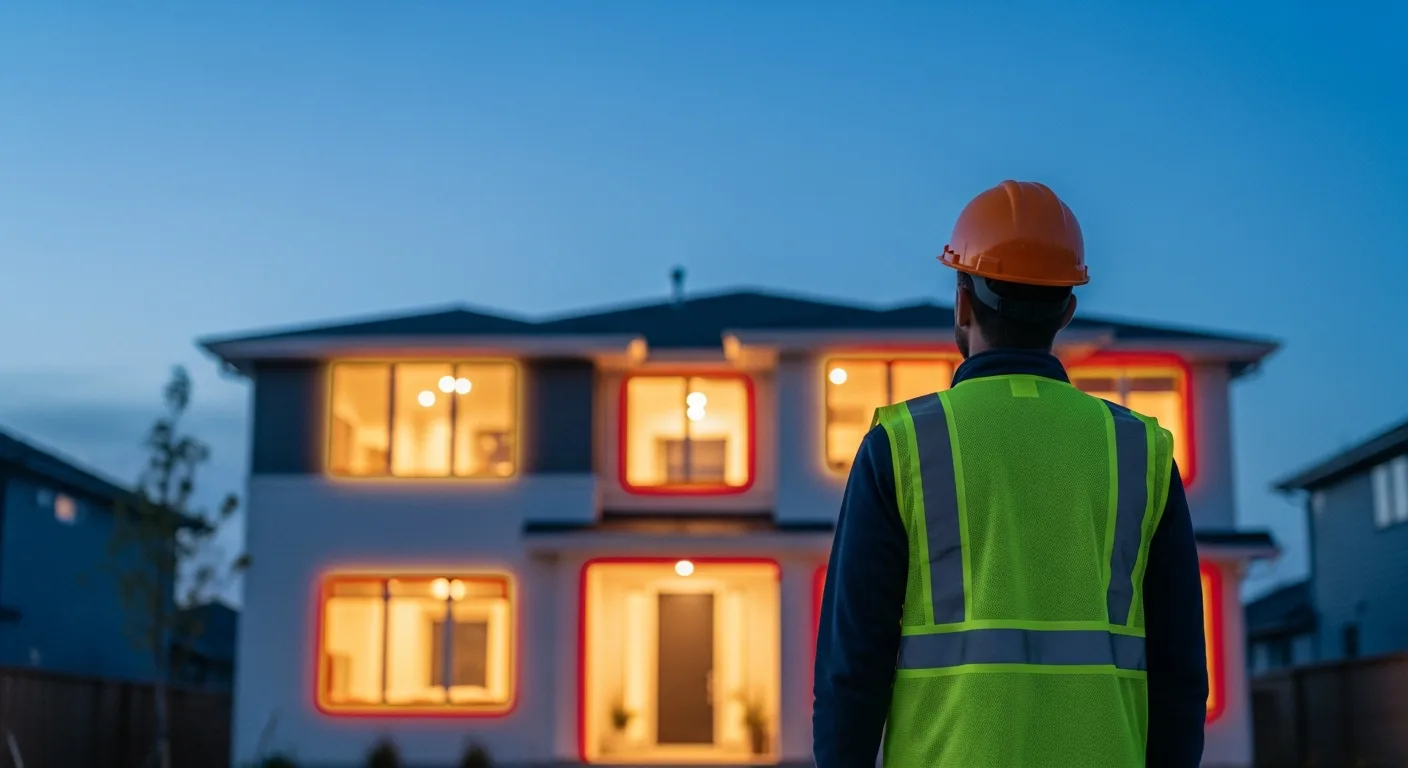
If you’ve been in construction for any amount of time, you’ve watched trends come and go. But energy efficiency isn’t a trend. It’s a permanent shift in how homeowners think about their houses, and it’s creating real opportunity for contractors who pay attention.
Home energy audits sit right at the intersection of what homeowners want (lower utility bills, better comfort) and what we’re already good at (understanding how buildings work). The best part? You don’t need to become a scientist or buy a lab coat. You need some training, a few pieces of equipment, and the willingness to add a service that most of your competitors haven’t figured out yet.
Let’s break down exactly how this works, what it takes to get started, and why energy audits might be the smartest business move you make this year.
What Is a Home Energy Audit (And Why Should You Care)?
A home energy audit is basically a diagnostic checkup for a house. You’re looking at how energy moves through the building, where it’s being wasted, and what fixes will make the biggest difference. Think of it like a home inspection, but focused specifically on energy performance.
The typical audit covers air leakage, insulation levels, HVAC efficiency, window and door performance, duct integrity, and lighting. You’re using tools like thermal imaging cameras and blower doors to find problems that are invisible to the naked eye. Then you put together a report with prioritized recommendations.
Here’s why you should care: homeowners are spending more on energy than ever. The average U.S. household drops over $2,000 a year on utilities, and that number keeps climbing. When you can walk into someone’s house and show them exactly where their money is going, with thermal images of heat pouring out of their walls, you become the most valuable person in the room.
And the market is growing fast. Federal and state incentive programs are pushing energy efficiency hard. The Inflation Reduction Act alone put billions into home energy rebates. Homeowners are actively looking for contractors who can help them take advantage of these programs. If that contractor isn’t you, it’s someone else.
For contractors already doing remodeling, additions, or general renovation work, energy audits are a natural fit. You already understand building science basics. You already have relationships with homeowners. You’re just adding a front-end service that feeds directly into the work you’re already doing.
The Business Case: Numbers That Make Sense
Let’s talk money, because that’s what matters. Energy audits aren’t just a nice add-on. They’re a legitimate profit center and a lead generation machine.
A standard residential energy audit runs $300 to $800, depending on your market and the scope of testing. More detailed audits with full blower door testing, duct leakage analysis, and combustion safety checks can command $800 to $1,500. The work itself takes 2 to 4 hours on-site plus report writing time. Even on the low end, that’s solid hourly revenue.
But the real money isn’t in the audit itself. It’s in what comes after.
When you hand a homeowner a detailed report showing that their attic insulation is half of what it should be, their windows are leaking like a sieve, and their HVAC ducts are losing 30% of conditioned air, what do you think happens next? They ask you to fix it. Industry numbers show that 60 to 70 percent of energy audits result in follow-up retrofit work. We’re talking insulation upgrades, air sealing, window replacements, HVAC improvements, soffit and fascia repairs, and sometimes full envelope renovations.
The average follow-up project from an energy audit runs $5,000 to $15,000. Some go much higher. And you’re not competing on price for that work because you’re the expert who diagnosed the problem. The homeowner already trusts you. You’ve already shown them the thermal images and explained the issues. Trying to get three more bids feels pointless when the guy who found the problem is standing right there.
If you run the numbers on even a modest volume, say 10 audits per month at $500 each, that’s $5,000 in audit revenue. If 6 of those convert to retrofit projects averaging $8,000, that’s another $48,000 in project revenue. Monthly. From a service line that didn’t exist in your business before.
When you’re putting together estimates for that follow-up work, having a solid estimating system makes a huge difference. You can turn around professional quotes fast while the homeowner is still excited about fixing the problems you found. For common follow-up trades, we have ready-to-use templates: HVAC, insulation, and window and door installation.
Getting Certified: What Training Do You Actually Need?
Don’t just take our word for it. See what contractors say about Projul.
You don’t need a PhD to do energy audits. But you do need proper training, and in many states, certification is required. Even where it’s not legally required, certification builds credibility and protects you from liability.
The two main certification bodies are BPI (Building Performance Institute) and RESNET (Residential Energy Services Network). Here’s the quick breakdown:
BPI Building Analyst is the most common starting point for contractors. The training runs about a week, covers building science fundamentals, diagnostic testing procedures, and health and safety. You’ll learn blower door testing, pressure diagnostics, combustion safety, and how to write audit reports. Cost runs $1,500 to $3,000 including the exam.
RESNET HERS Rater certification is more focused on rating homes on a standardized scale (the HERS Index). This is especially valuable if you’re working with new construction or homes going through energy code compliance. Training is longer and more expensive, typically $3,000 to $5,000.
BPI Envelope Professional and BPI Heating Professional are specialty add-ons if you want to go deeper into specific areas. These pair well with the Building Analyst cert.
My recommendation for most GCs: start with BPI Building Analyst. It’s the fastest path to performing audits, and it covers the core diagnostics you need. You can add RESNET later if the new construction side of your business warrants it.
Some practical tips from contractors who’ve been through it:
Send your best field supervisor or lead carpenter to the training. Pick someone who already thinks analytically about how buildings work. This isn’t grunt work. You need someone who can explain findings to homeowners in plain English.
Don’t skip the hands-on practice. The classroom theory matters, but the real learning happens when you’re running a blower door on an actual house and interpreting the results.
Budget for continuing education. Both BPI and RESNET require ongoing credits to maintain certification. Plan on one to two days per year for refresher courses.
Equipment and Tools: What You Need to Get Started
Good news: the equipment list for energy audits is manageable, and most of it will last for years. Here’s what you need and what it’ll cost.
Thermal imaging camera ($1,500 to $8,000). This is your most visible tool and probably the most important. A thermal camera shows temperature differences on surfaces, making it easy to spot missing insulation, air leaks, and moisture issues. You don’t need the most expensive model. A mid-range camera like the FLIR E8 or similar will handle residential work just fine. The images are also incredibly powerful in reports and presentations. Nothing convinces a homeowner faster than a bright yellow blob showing heat pouring through their wall.
Blower door ($3,000 to $5,000). This is a calibrated fan that fits in a doorway and pressurizes or depressurizes the house. It measures total air leakage and helps you find specific leak locations when combined with your thermal camera. The Minneapolis Blower Door and Retrotec are the two main brands. Both work well.
Duct leakage tester ($2,000 to $3,500). Similar concept to the blower door, but for the duct system. You pressurize the ducts and measure how much air is leaking. In most houses, duct leakage is one of the biggest energy wasters, and homeowners have no idea.
Combustion analyzer ($500 to $1,500). Measures efficiency and safety of gas appliances. Essential for the safety portion of the audit. If a furnace or water heater has combustion issues, you need to catch that.
Moisture meter ($100 to $300). Pin-type and pinless models both have their place. You’ll use this to verify moisture issues spotted with the thermal camera.
Digital manometer ($300 to $600). Measures pressure differences between rooms and zones. Useful for diagnosing pressure imbalances caused by HVAC systems or duct leakage.
Software for reports ($0 to $500/year). Several options exist for generating professional audit reports. Some auditors use purpose-built software like TREAT or Home Energy Score tools. Others build templates in their existing project management system. The key is producing a clean, professional report that homeowners can actually understand.
Total startup investment for equipment: roughly $7,000 to $18,000 depending on quality levels. Add training costs of $2,000 to $5,000 and you’re looking at $10,000 to $23,000 all-in to launch the service. That sounds like a lot until you remember that one good month of audits and follow-up work can cover the entire investment.
How Energy Audits Feed Your Existing Services
This is where energy audits get really interesting for a general contractor. The audit isn’t just a standalone service. It’s a front door to almost every other service you offer.
Insulation work. Nearly every energy audit reveals insulation deficiencies. Attics, walls, crawlspaces, basements. If you’re already doing insulation work, energy audits are the perfect way to generate those leads with built-in credibility. The audit data gives you specific R-value measurements and recommendations that justify the scope of work.
Window and door replacement. Thermal imaging makes window performance (or lack thereof) impossible to ignore. When a homeowner sees a thermal image of their single-pane windows glowing like a campfire compared to the insulated wall around them, the window and door conversation practically starts itself.
HVAC coordination. Duct leakage testing and pressure diagnostics often reveal HVAC issues that go way beyond what the homeowner called you about. Proper HVAC coordination between the audit findings and the mechanical contractor ensures the whole system works together after the retrofit.
Green building projects. Energy audits naturally lead into broader green building conversations. Homeowners who care about energy efficiency often care about indoor air quality, sustainable materials, and overall environmental impact. The audit opens the door to those bigger-scope projects.
General remodeling. Even a kitchen or bathroom remodel can benefit from audit findings. If you’re already opening up walls, why not address the insulation and air sealing issues your audit identified? It’s a natural upsell that adds value for the homeowner and revenue for you.
The key is building energy audit findings into your sales process. When you show up for a remodel estimate and you can also offer an energy audit, you’re immediately different from every other contractor bidding on that job. You’re not just a builder. You’re a building performance expert. That distinction wins jobs.
Track your audit leads and conversion rates in a CRM system so you can see exactly how well this service line performs. Knowing that your audits convert at 65% versus 40% tells you whether to invest more in marketing the audit service or refine your follow-up process.
Marketing Your Energy Audit Services
Having the capability to perform energy audits is one thing. Getting the phone to ring is another. Here are practical ways to market this new service without blowing your budget.
Lead with the pain point. Homeowners don’t wake up wanting an energy audit. They wake up wondering why their utility bill was $400 last month or why the upstairs bedroom is always cold. Your marketing should speak to those problems. “Find out why your energy bills are so high” works better than “Schedule an energy audit today.”
Use thermal images in everything. Those dramatic thermal images are marketing gold. Use them on your website, social media, flyers, and proposals. Before-and-after thermal images from completed retrofit projects are especially powerful. Nothing tells the story faster than a visual of a house bleeding heat versus the same house after your work.
Partner with utility companies. Many utilities offer rebate programs for energy audits and retrofits. Some even maintain referral lists of certified auditors. Get on those lists. The utility essentially sends you pre-qualified leads who are already motivated to take action.
Tap into government incentive programs. Federal tax credits, state rebates, and local incentive programs are constantly evolving. Stay current on what’s available in your market and make sure your marketing mentions these programs. “Your audit may qualify for a $150 rebate” is a strong call to action.
Real estate connections. Home buyers are increasingly interested in energy performance, especially as energy costs rise. Build relationships with real estate agents who can recommend audits as part of the buying process. Some agents are already asking for energy assessments alongside traditional home inspections.
Seasonal campaigns. Energy audit demand peaks before winter and summer, when people are bracing for high heating or cooling bills. Time your marketing pushes for early fall and late spring to capture that demand. Plan your marketing budget to allocate more toward these peak periods.
Referral incentives. Happy audit clients are great referral sources. Offer a simple referral bonus or discount on future work. Word-of-mouth from a neighbor who cut their energy bill by 30% is more convincing than any ad you’ll ever run.
Online content. Write blog posts, shoot short videos, and share tips about home energy performance. Position yourself as the local expert. When homeowners search for “why is my house so drafty” or “high energy bills,” your content should show up.
One more thing: make it easy for potential clients to take the next step. A clear call to action on your website, a simple booking process, and fast response times matter more than fancy marketing. If someone fills out your contact form on Monday and you don’t call back until Thursday, they’ve already booked with someone else.
If you’re looking to tighten up your whole sales and project workflow, from lead capture through job completion, check out a demo to see how the right project management system ties everything together.
Getting Started: Your First 90 Days
Here’s a realistic timeline for launching energy audit services in your contracting business.
Days 1 to 30: Training and certification. Enroll in BPI Building Analyst training. Most programs run 4 to 5 days of classroom and hands-on instruction followed by a field exam. While you’re waiting for the course date, start reading. “Residential Energy” by John Krigger is the gold standard reference book. Study your state’s energy code requirements and any licensing rules for auditors.
Days 15 to 45: Equipment acquisition. Order your thermal camera, blower door, and supporting tools. Don’t wait until after certification to buy equipment. You want it in hand so you can practice immediately after training. Buy a mid-range thermal camera to start. You can upgrade later once you know what features matter most for your work.
Days 30 to 60: Practice audits. Perform 5 to 10 practice audits on friends’ and family members’ houses. Do them for free or at a steep discount. This builds your skills, generates sample reports for your portfolio, and creates before-and-after case studies for marketing. Take lots of photos and thermal images. Document everything.
Days 30 to 60: Marketing setup. Add energy audit services to your website, update your Google Business Profile, and create a simple sell sheet or brochure. Draft a standard audit report template. Set up a process for scheduling and follow-up.
Days 45 to 60: Pricing and process. Finalize your pricing based on local market research. Call 5 to 10 competing auditors in your area and ask for quotes. This tells you where the market is and where you can position yourself. Build a standard operating procedure for the audit workflow, from initial call through report delivery and follow-up proposal.
Days 60 to 90: Launch and first paying clients. Start marketing actively. Reach out to your existing client base first. Past clients who trust you are the easiest first customers. Offer an introductory rate for the first month to build momentum and gather reviews. Aim for 3 to 5 paid audits in the first month.
Ongoing: Refine and grow. Track your numbers from day one. How many leads come in? How many convert to audits? How many audits convert to retrofit projects? What’s the average follow-up project size? These metrics tell you whether to double down on marketing or adjust your pricing and process.
The contractors who do this well treat energy audits as a core service, not a side hustle. They train their sales team to offer audits during every initial consultation. They include audit findings in every proposal. They build energy performance into their brand identity.
This isn’t about chasing a fad. Homeowners will care about energy costs for as long as they pay utility bills, which is forever. The contractors who build this capability now will have a significant head start over those who wait.
The construction industry has always rewarded people who solve real problems for their clients. High energy bills and uncomfortable homes are real problems. Energy audits are a real solution. And for contractors willing to invest in the training and tools, they’re a real business opportunity.
Ready to see how Projul can work for your crew? Schedule a free demo and we will walk you through it.
If energy audits lead your clients toward solar, our solar panel installation guide and solar panel roof mounting guide cover everything from permitting to racking hardware. For a broader look at sustainable services you can add to your business, check out our green building and sustainable construction guide.
Start with the certification. Buy the equipment. Do the practice audits. Then go make money solving a problem that isn’t going away.
Frequently Asked Questions
Do I need a special license to perform home energy audits?
How much does it cost to get started with energy audit services?
What can I charge for a residential energy audit?
How long does a typical home energy audit take?
Can energy audits really lead to bigger construction jobs?
Related Articles
Change Orders: Stop Giving Away All Your Profit
Change orders are where most contractors lose their profit. Not because the work is hard, but because the paperwork...
Read More →
Sell More Jobs With Photos in Your Estimates
Most contractors send plain text estimates with line items and dollar amounts. But adding photos to your estimates can...
Read More →
Building Your Own Contractor Shop or Yard: What Every GC Needs to Know
At some point, every growing contractor faces the same question: do we keep renting, or do we build our own shop? This...
Read More →