
Fireproofing and Intumescent Coating Guide
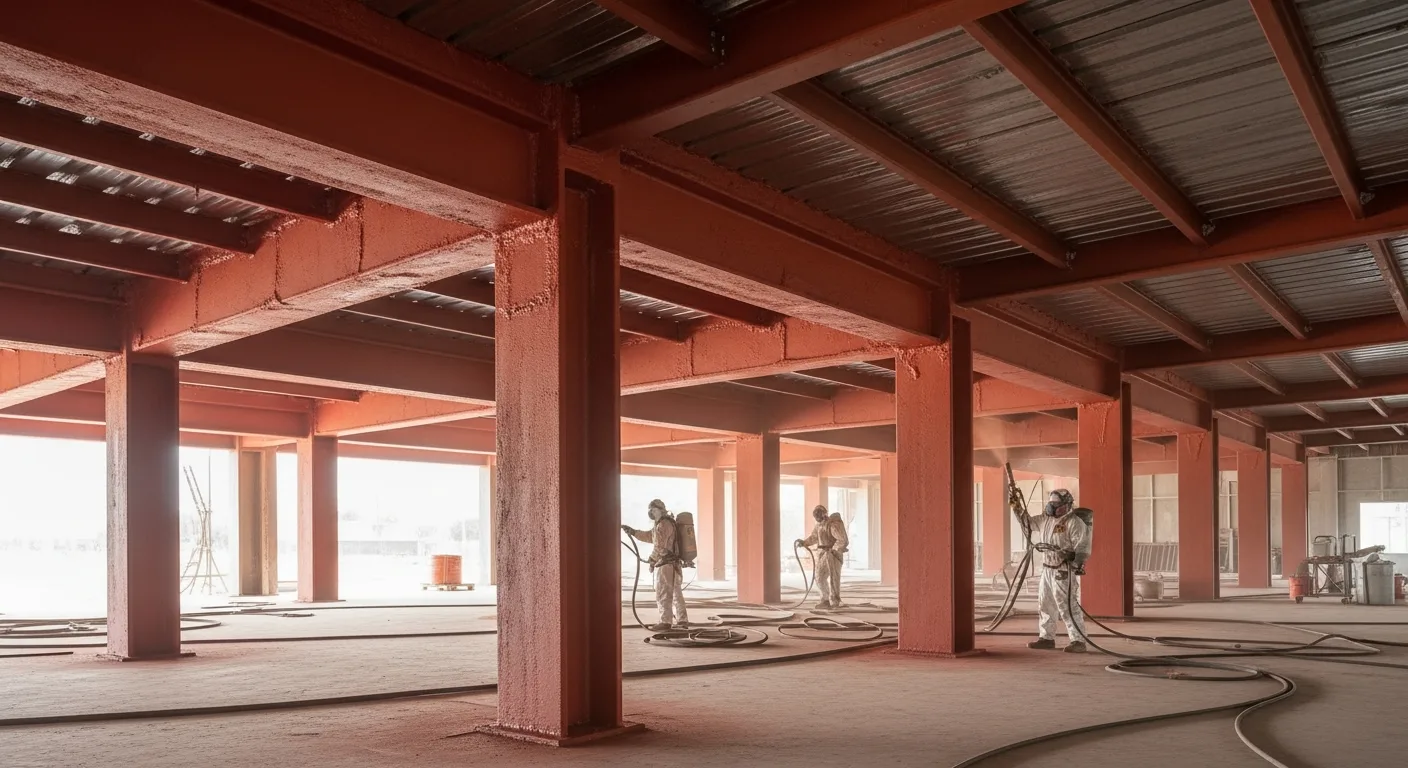
If you have spent any time on commercial construction sites, you know that fireproofing is one of those trades that either goes smoothly or turns into a scheduling nightmare. Structural steel needs fire protection to meet building code requirements, and the two main options are spray-applied fireproofing and intumescent coatings. Each has its place, and picking the wrong one for your project can cost you time, money, and a lot of headaches during inspections.
This guide breaks down everything you need to know about fireproofing and intumescent coatings from a contractor’s perspective. We will cover the different types, when to use each one, how to manage the application process, what inspectors look for, and how to keep costs under control. Whether you are a GC coordinating the fireproofing sub or a specialty contractor doing the work yourself, this is the practical information you need to get it done right.
Types of Fireproofing Used in Commercial Construction
There are three main categories of fireproofing you will encounter on commercial projects: spray-applied fire-resistive materials (SFRM), intumescent coatings, and board/blanket systems. Each one has different strengths, and the right choice depends on your project’s fire rating requirements, aesthetics, budget, and schedule.
Spray-Applied Fire-Resistive Materials (SFRM) are the workhorse of the industry. These are cementitious or gypsum-based products that get mixed with water on site and sprayed directly onto structural steel. SFRM is the most cost-effective option for concealed steel, like beams and columns hidden above a ceiling grid. You will see it on nearly every office building, hospital, and high-rise project. The downside is that it looks rough and cannot handle impact or moisture without damage, so it only works in protected locations.
Thin-film intumescent coatings look and apply like paint. In normal conditions they sit as a thin layer on the steel surface, but when temperatures hit around 250 degrees Celsius, the coating expands (or “intumesces”) to many times its original thickness. That expanded char layer insulates the steel and slows heat transfer. Thin-film products typically provide up to 2 hours of fire resistance. These coatings are the go-to choice when the architect wants exposed structural steel with a clean finish.
Thick-film (epoxy) intumescent coatings use an epoxy or solvent-based resin system and can achieve higher fire ratings, sometimes up to 4 hours. They are tougher than thin-film products and hold up better in harsh environments like petrochemical plants, parking garages, and exterior applications. The trade-off is higher material cost and a thicker final appearance compared to thin-film products.
Board and blanket systems use rigid boards (calcium silicate, mineral fiber) or flexible blankets mechanically fastened around steel members. These are less common in typical commercial work but show up on projects with specific acoustic or blast-resistance requirements. They are labor-intensive to install, especially around complex connections, and they add significant cost.
For most commercial contractors, the decision comes down to SFRM for concealed steel and intumescent coatings for exposed steel. Understanding that basic split will help you plan your fire protection scope from day one.
Code Requirements and Fire Rating Standards
Fireproofing is not optional. The International Building Code (IBC) dictates fire-resistance ratings for structural elements based on building type, occupancy, height, and area. As a contractor, you need to understand these requirements because they drive your material selection, thickness specs, and inspection criteria.
The IBC groups construction into Types I through V. Type I and Type II buildings require noncombustible construction with fire-rated structural frames, and that is where fireproofing becomes critical. A Type IA building, for example, requires a 3-hour rating on the structural frame and 2 hours on floor construction. Type IIB might not require any structural fire rating at all. Your project’s construction type is spelled out in the contract documents, and it directly determines how much fireproofing you need.
Fire ratings get verified through standardized testing. ASTM E119 (or UL 263) is the test standard for fire-resistance of building elements in the United States. Product manufacturers run these tests on specific assemblies and publish the results as “design listings” or “tested assemblies.” When you specify a fireproofing product, it must be listed for the assembly it is protecting, with the correct thickness for the required fire rating and the specific steel section size.
Here is what trips up many contractors: the required fireproofing thickness varies by the W/D ratio (weight-to-heated-perimeter ratio) of each steel member. A heavy wide-flange beam needs less fireproofing than a light one to achieve the same rating, because the heavier section absorbs more heat before reaching the critical temperature. The fireproofing manufacturer’s thickness tables account for this, and the special inspector will verify thickness against those tables during inspection.
The authority having jurisdiction (AHJ), typically the local fire marshal or building official, has the final say on compliance. They may require documentation beyond what the general code calls for, especially on high-profile or high-occupancy buildings. Keep your building code knowledge current and start the submittal process early so you are not waiting on approvals when the fireproofing sub is ready to mobilize.
One more thing to watch: if your project involves renovations or tenant improvements, existing fireproofing that gets damaged during construction must be repaired to match the original specification. This comes up constantly on tenant improvement projects and can become a significant cost if you do not plan for it.
Application Methods and Best Practices
Getting fireproofing applied correctly is all about preparation, environmental control, and coordination with other trades. Rework on fireproofing is expensive and time-consuming, so investing effort upfront pays off every time.
Surface preparation is the foundation of a good fireproofing application. For SFRM, the steel surface must be free of oil, grease, loose mill scale, dirt, and ice. Most SFRM products require a clean, bare steel surface or an approved primer. For intumescent coatings, surface prep is even more critical because you are dealing with a paint system. Expect to see specifications calling for SSPC-SP6 (commercial blast) or SSPC-SP10 (near-white blast) surface preparation, followed by a compatible primer before the intumescent topcoat goes on. Cutting corners on surface prep is the fastest way to fail adhesion testing during inspection.
Environmental conditions matter for both SFRM and intumescent coatings, but intumescents are more sensitive. Most thin-film intumescent products require application temperatures between 40 and 95 degrees Fahrenheit, with relative humidity below 85 percent. SFRM has similar temperature requirements but is more forgiving on humidity. On projects where steel is being erected in winter, you may need temporary heat to maintain application conditions. Factor that cost into your bid.
Application sequencing is where coordination with your project schedule becomes critical. SFRM typically goes on after the steel is erected, decking is installed, and overhead MEP rough-in is substantially complete. You do not want sprinkler fitters and electricians working above freshly applied SFRM because it will get knocked off and need repair. For intumescent coatings, shop application before erection is common, with field touch-up of connection points and damaged areas after the steel is in place.
Here are the practical steps for a smooth fireproofing operation:
-
Coordinate the submittal early. Get the fireproofing product submittal, thickness schedules, and tested assembly listings approved before the sub mobilizes. This avoids the nightmare scenario of having the wrong product on site.
-
Protect adjacent surfaces. SFRM overspray gets everywhere. Mask windows, finished walls, and any MEP equipment that is already installed. Intumescent coatings are cleaner but still require masking of adjacent surfaces.
-
Stage the work in sections. Break the building into zones and sequence fireproofing after each zone’s overhead work is complete. This keeps other trades productive while the fireproofing sub works through the building.
-
Plan for touch-up and repair. No matter how carefully you sequence the work, some fireproofing will get damaged by follow-on trades. Build repair time into the schedule and budget. A good rule of thumb is 10 to 15 percent of the original fireproofing cost for touch-up.
-
Document everything. Photograph the installed fireproofing before other trades cover it up. This documentation is valuable during inspection and protects you if damage occurs later.
Keeping a tight handle on this sequencing is easier when you are using construction project management software to coordinate across all your trades.
Inspection and Quality Control
Curious what other contractors think? Check out Projul reviews from real users.
Fireproofing inspection is one of the more rigorous special inspections on a commercial project, and it catches a lot of contractors off guard. Knowing what the inspector is looking for lets you prepare your sub and avoid costly rework cycles.
Special inspection of fireproofing is required by the IBC (Section 1705) and is performed by a qualified special inspector, typically from a third-party testing agency hired by the building owner. The inspector’s job is to verify that the installed fireproofing matches the approved submittal documents and meets the minimum thickness, density, and adhesion requirements.
For SFRM, the inspector checks three main things:
-
Thickness: Measured with a thickness gauge at multiple points per area. The average thickness must meet or exceed the specified minimum, and no individual reading can fall below a stated percentage of the minimum (usually 75 percent). The thickness varies by steel member size based on the W/D ratio tables.
-
Density: The inspector takes core samples and weighs them to verify the installed density meets the product specification. Low density means the material was mixed too wet or not applied correctly, and it will not provide the rated fire resistance.
-
Adhesion/bond: A bond strength test confirms the SFRM is properly adhered to the steel substrate. Poor adhesion means the fireproofing could fall off during a fire or even just from building vibration over time.
For intumescent coatings, the inspection focuses on:
-
Dry film thickness (DFT): Measured with a magnetic or eddy current gauge at multiple points. Each reading must fall within the manufacturer’s specified range for the required fire rating and steel section.
-
Surface condition: The inspector checks for defects like runs, sags, pinholes, bare spots, and delamination. Intumescent coatings need a continuous, defect-free film to work properly.
-
Compatibility verification: The inspector confirms that the primer, intumescent coat, and topcoat (if specified) are from the same manufacturer’s tested system. Mixing products from different manufacturers voids the fire-resistance listing.
When inspections reveal deficiencies, and they often do, the fix depends on the problem. Thin spots get additional material applied and re-inspected. Areas with poor adhesion or density must be completely removed and reapplied. For intumescent coatings, runs and sags typically need to be sanded smooth and recoated.
The best way to minimize inspection failures is to run your own pre-inspections. Have your fireproofing sub do spot-check thickness measurements before calling for official inspection. This is the same mindset you should bring to all your quality control inspections. Catching problems early saves everyone time and money.
Keep detailed inspection records organized by floor and zone. When the AHJ asks for documentation six months after the fireproofing was installed, you want to be able to pull those records quickly. Using a digital system to track inspections makes this significantly easier than digging through paper files.
Cost Factors and Budgeting Considerations
Fireproofing costs vary widely depending on the product type, required thickness, building complexity, and local labor market. Getting your budget right requires understanding the key cost drivers and building in appropriate contingencies.
Material costs are the most obvious variable. SFRM products cost roughly $0.50 to $1.50 per square foot for the raw material, while thin-film intumescent coatings can run $8 to $20 per square foot for material alone. That price difference is why architects specifying exposed steel throughout a building need to understand the budget impact early in design. If you are preparing estimates, make sure your estimating process accounts for the different unit costs by area.
Labor costs for SFRM application are moderate because spray equipment covers large areas quickly. A skilled crew can apply 3,000 to 5,000 square feet of SFRM per day depending on access and conditions. Intumescent coating labor is significantly higher because each coat needs controlled application, drying time between coats, and careful quality control. Expect intumescent labor rates to be 2 to 4 times higher than SFRM on a per-square-foot basis.
Access and logistics drive costs that many contractors underestimate. Fireproofing crews need scaffolding, lifts, or swing stages to reach raised steel. On multi-story buildings, material transport, staging space, and hoist time all add cost. Tight floor-to-floor heights and congested MEP conditions slow production and increase labor hours. Factor in the cost of protecting adjacent work from overspray and cleaning up after the fireproofing crew.
Touch-up and repair costs are real and unavoidable. Budget 10 to 15 percent of the original fireproofing cost for repairing damage caused by follow-on trades. On fast-track projects where multiple trades overlap, that number can climb to 20 percent. Some GCs back-charge the trades that cause damage, but chasing those back-charges takes time and creates friction with your subs.
Inspection and re-inspection fees from the third-party testing agency add up, especially if the fireproofing fails initial inspection and requires rework. First inspection is part of the base cost, but re-inspections are additional. Budget for at least one round of re-inspection per floor.
Here is a rough cost comparison for a typical commercial office building:
- SFRM (concealed steel): $2 to $6 per square foot installed, all in
- Thin-film intumescent (exposed steel): $15 to $40 per square foot installed, all in
- Thick-film intumescent (exterior/harsh environment): $20 to $50 per square foot installed, all in
These numbers shift based on your local market, the project’s complexity, and how well you manage the sequencing. Getting competitive bids from qualified fireproofing subs is essential. Check their references on similar project types and make sure they carry adequate insurance for the specialty work they are performing, just like you would verify on any insurance-related scope.
When you hit change orders related to fireproofing, and you will, document the impact thoroughly. Common change order triggers include design changes that alter steel sizes (which changes required fireproofing thickness), added steel members, upgrades from SFRM to intumescent for aesthetic reasons, and repairs to existing fireproofing damaged during renovation work.
Coordinating Fireproofing With Other Trades
Fireproofing does not happen in a vacuum. It sits at a critical junction in the construction schedule where structural steel, metal decking, MEP rough-in, and exterior enclosure all intersect. Poor coordination at this junction creates delays that ripple through the rest of the project.
The biggest coordination challenge is sequencing overhead MEP work with SFRM application. Sprinkler pipes, ductwork, conduit, and cable trays all need to be installed in the plenum space above ceilings. If you spray SFRM before the MEP trades finish their overhead rough-in, every pipe hanger, conduit support, and duct bracket that gets installed afterward damages the fireproofing. Then you are paying for touch-up and re-inspection.
The practical solution is to break the building into zones and establish a “fireproofing ready” milestone for each zone. A zone is fireproofing ready when:
- Structural steel erection is complete in that zone
- Metal decking and shear studs are installed
- Overhead MEP rough-in is at least 90 percent complete
- Sprinkler mains and branch lines are installed and pressure tested
- Major duct runs are hung
- Overhead electrical conduit and cable tray are in place
Once a zone hits this milestone, the fireproofing sub moves in and completes that area. Follow-on MEP trim work (connecting diffusers, installing light fixtures, pulling wire) happens after fireproofing and typically causes minimal damage.
For projects with exposed structural steel and intumescent coatings, the coordination shifts to the structural steel fabricator and erector. Shop-applied intumescent coatings need to be specified early enough for the fabricator to build the coating process into their production schedule. After erection, field touch-up of connections, bolt heads, and shipping damage must happen before the steel gets enclosed or covered by finishes.
Here are some coordination tips that will save you headaches:
-
Hold a fireproofing coordination meeting with all affected trades before the work starts. Walk through the sequence, clarify responsibilities for protection of installed work, and agree on damage repair protocols.
-
Use your scheduling software to create zone-by-zone fireproofing milestones linked to the MEP rough-in milestones. This makes the dependency visible to everyone and prevents the “we did not know fireproofing was this week” excuse.
-
Assign responsibility for protection. Make it clear in subcontract language that trades working around installed fireproofing are responsible for protecting it and paying for repairs if they damage it. Put teeth in it with back-charge provisions.
-
Consider a fireproofing protection allowance in your GC budget for the inevitable damage that happens regardless of how well you coordinate. This is realistic project management, not pessimism.
-
Coordinate with the structural steel erection team on connection details that affect fireproofing. Moment connections, bracing gussets, and stiffener plates all create complex geometry that is harder to fireproof. Knowing these details early lets the fireproofing sub plan their approach.
The bottom line is that fireproofing coordination rewards contractors who plan ahead and penalizes those who treat it as an afterthought. Build it into your project planning from the start, track it in your construction management software, and stay on top of the zone-by-zone sequencing. Your schedule and your budget will thank you.
Intumescent vs Cementitious vs Board Fireproofing: A Detailed Comparison
Choosing the right fireproofing system is not just a technical decision. It affects your project budget, schedule, final appearance, and long-term maintenance obligations. Here is a closer look at how the three primary systems stack up across the factors that matter most to contractors.
Cost per square foot is often the first thing owners and GCs look at. Cementitious SFRM is the clear winner on price, running $2 to $6 per square foot installed for most commercial applications. Thin-film intumescent coatings jump to $15 to $40 per square foot because the material itself is expensive and the labor is more intensive. Board systems (calcium silicate or mineral fiber) land in the $10 to $30 range depending on the product and complexity of the steel geometry. On a 200,000-square-foot office building with mostly concealed steel, the difference between SFRM and intumescent coatings can be hundreds of thousands of dollars.
Installed thickness affects how much usable space you lose around structural members. SFRM requires the most thickness, often 1 to 3 inches depending on the fire rating and steel size. That bulk matters less when steel is hidden above a ceiling but becomes a problem in tight plenum spaces where every inch counts for ductwork routing. Thin-film intumescent coatings are the thinnest option at 0.5 to 5 mm in their unexpanded state, making them ideal for tight clearances and exposed applications. Board systems typically add 1 to 2 inches per side and create a boxy appearance around the steel.
Aesthetics drive the decision on any project with exposed structural steel. Intumescent coatings are the only option that preserves the look of the steel. They can be topcoated in any color, and the finished surface looks like a standard paint job. SFRM has a rough, cottage-cheese texture that no one wants to see. Board systems create clean lines but hide the steel entirely behind panels. If the architect specified exposed steel in a lobby, restaurant, or open-plan office, intumescent coatings are the only realistic choice.
Application complexity varies significantly. SFRM is relatively simple: mix the material on site, spray it on with specialized equipment, and shape it to the required thickness. A trained crew picks it up quickly. Intumescent coatings demand more skill because you are working with a multi-coat paint system where each layer needs proper thickness, drying time, and surface preparation. Board systems are the most labor-intensive, especially around beam-to-column connections, bracing, and other complex geometry where boards need cutting and fitting.
Durability and environment suitability is where thick-film intumescents and board systems pull ahead. Standard SFRM is fragile and unsuitable for areas exposed to moisture, impact, or weather. If you need fireproofing in a parking garage, exterior colonnade, or industrial facility, you need either a thick-film epoxy intumescent or a board system rated for that environment. Thin-film intumescents with a proper topcoat can handle moderate exposure but are not rated for fully exterior or submerged conditions without specific manufacturer approvals.
Maintenance over the building’s life is a factor owners rarely think about during construction but always care about later. SFRM requires repair whenever it gets damaged during tenant improvements, ceiling work, or MEP modifications. Intumescent coatings are more durable but may need re-inspection and touch-up if the topcoat degrades. Board systems are the most robust for long-term durability but the most expensive to repair or modify.
The bottom line for contractors: know which system is specified, understand why it was chosen, and price accordingly. Suggesting value engineering from intumescent to SFRM in concealed areas can save the owner significant money, and that kind of proactive thinking wins repeat clients.
Fire Rating Requirements by Building Type and Structural Element
Understanding IBC fire rating requirements at a deeper level helps contractors anticipate fireproofing scope before the specs are even finalized. Here is how the code breaks down by construction type and structural element.
The IBC defines five main construction types, each with sub-categories:
- Type IA: 3-hour structural frame, 2-hour floor assemblies, 1.5-hour roof. This is the most demanding classification, used for high-rise buildings, hospitals, and other high-occupancy structures. Every piece of structural steel needs significant fireproofing.
- Type IB: 2-hour structural frame, 2-hour floors, 1-hour roof. Common for mid-rise commercial and institutional buildings.
- Type IIA: 1-hour structural frame, 1-hour floors, 1-hour roof. Used for many low-rise to mid-rise commercial and retail buildings.
- Type IIB: No fire rating required for the structural frame. This is where you see unprotected steel in warehouses, single-story retail, and other low-risk occupancies.
- Types III, IV, and V involve combustible construction elements and have their own rating tables, but structural steel fireproofing is primarily a Type I and Type II concern.
Occupancy classification interacts with construction type to determine the actual requirements. A Group I-2 occupancy (hospital) in a Type IA building has the strictest requirements. A Group S-1 occupancy (storage) in a Type IIB building may need no structural fire rating at all. The occupancy also affects whether automatic sprinklers can be used to reduce the required fire rating by one hour, a common code provision that can significantly reduce fireproofing costs.
Specific structural elements have different requirements within the same building:
- Primary structural frame (columns, girders, trusses that support more than one floor) gets the highest rating, typically matching the building’s construction type classification.
- Floor construction (beams supporting a single floor, metal deck, and concrete fill) often has a slightly lower requirement than the primary frame.
- Roof construction usually has the lowest requirement, and in many cases the roof structure can be left unprotected if the building has a sprinkler system and meets certain height and area limits.
- Bearing walls and exterior walls have their own rating tables based on fire separation distance from property lines.
IBC Table 601 is the master reference. Every contractor involved in fireproofing should be familiar with this table because it directly dictates the scope of work. When you look at Table 601 and cross-reference the building’s construction type with each structural element, you get the minimum fire rating in hours. From there, the fireproofing manufacturer’s thickness tables tell you exactly how much material is needed for each steel section.
Practical implications for contractors:
- On a Type IA high-rise, expect to fireproof everything: columns, beams, girders, and potentially the underside of metal deck assemblies. The budget for fireproofing on these projects is substantial.
- On a Type IIA low-rise, the 1-hour requirement is manageable with thinner SFRM or a single coat of intumescent. The cost per square foot drops significantly.
- On a Type IIB warehouse, you may have zero fireproofing scope, freeing up budget and schedule time.
- Sprinkler trade-offs can save your owner real money. If adding sprinklers to a Type IIA building reduces the structural frame requirement from 1 hour to 0 hours, the owner saves the entire fireproofing cost and only pays for the sprinkler upgrade. Run that analysis early in the project.
Understanding these code relationships lets you have smarter conversations with architects and owners during preconstruction, and that kind of value-added insight is what separates good contractors from great ones.
Inspection and Testing Requirements for Fireproofing
Beyond the general inspection overview covered earlier, there are specific ASTM standards and testing protocols that every contractor should understand in detail. Knowing these standards helps you prepare your fireproofing sub and avoid the most common inspection failures.
ASTM E605 covers the thickness and density testing of SFRM. This standard defines how the inspector takes thickness readings using a calibrated probe pushed through the material to the steel substrate. The inspector takes a set number of readings per defined area (typically 1 reading per 100 square feet, with a minimum number per structural member), and both the average and individual readings must meet specified thresholds. The average thickness must equal or exceed the design thickness, and no individual reading can fall below a stated minimum, usually 75 percent of the required thickness.
ASTM E736 addresses the cohesion and adhesion of SFRM. For adhesion testing, the inspector bonds a pull-off disk to the surface of the fireproofing, then uses a calibrated gauge to pull it off. The minimum bond strength depends on the product but is typically 150 psf for standard-density SFRM and higher for medium and high-density products. If the failure occurs within the SFRM itself (cohesive failure) rather than at the steel-to-SFRM interface (adhesive failure), that still counts as a pass as long as the force meets the minimum.
ASTM E759 covers density testing by extracting a core sample from the installed SFRM, measuring its volume, drying it, and weighing it. The installed density must meet the manufacturer’s specified minimum. Low density is usually caused by overly wet mixing, poor pump settings, or applying SFRM over a dirty surface.
For intumescent coatings, testing follows paint industry standards:
- Dry film thickness (DFT) is measured per ASTM D7091 using magnetic or eddy current gauges. The inspector takes readings at prescribed intervals across each structural member. Every reading must fall within the manufacturer’s specified tolerance band for the required fire rating and W/D ratio.
- Adhesion testing per ASTM D4541 (pull-off method) or ASTM D3359 (cross-cut tape test) verifies the coating system is properly bonded. The entire system, including primer, intumescent, and topcoat, must adhere to the substrate without delamination between layers.
- Visual inspection checks for continuity, uniform coverage, pinholes, runs, sags, cracking, and other defects that could compromise the fire-resistance rating.
Common inspection failure modes and how to avoid them:
- Thin spots at edges and corners. Steel flanges, web-to-flange transitions, and connection plates are hard to coat evenly. Train your applicators to pay extra attention to these areas and do pre-inspection thickness checks at known trouble spots.
- Low density from incorrect mixing. SFRM products have specific water-to-material ratios. Too much water makes the material easier to spray but drops the installed density below spec. Calibrate the mixing equipment daily and keep batch records.
- Adhesion failures from poor surface prep. Mill scale, oil, rust, and dust all prevent proper bonding. If the steel was not prepped correctly, no amount of re-spraying fixes the adhesion problem. You have to strip it and start over.
- Incompatible coating systems. Using a primer from one manufacturer and an intumescent from another voids the tested assembly listing, even if both products individually meet the spec. Always use a single manufacturer’s complete system.
- Environmental damage before inspection. Rain, freezing, and high humidity can compromise SFRM before it fully cures. Protect freshly applied material from weather exposure until it reaches the required cure time specified by the manufacturer.
Document every inspection with photographs, thickness reading maps, and signed inspection reports. Store these records digitally so they are accessible throughout the project and during the warranty period. Many AHJs now require digital submittal of special inspection records, making a good document management system essential.
Estimating Fireproofing Projects
Accurate fireproofing estimates require more detail than many contractors realize. Whether you are a GC carrying the fireproofing scope or a specialty sub bidding the work, here are the key factors to get right.
Quantity takeoff starts with the structural steel drawings. You need the total surface area of steel requiring fireproofing, broken down by fire rating and steel section size. Many estimators make the mistake of using a simple tons-of-steel multiplier to estimate fireproofing area. That shortcut can miss the mark by 20 percent or more because it does not account for the actual surface area of different section sizes. A W14x22 beam has a very different heated perimeter than a W36x150 girder, even though they might span similar distances. Take the time to calculate actual surface areas or use estimating software that pulls section properties from the steel model.
Material quantity depends on the required thickness at each W/D ratio. Pull the manufacturer’s thickness tables and map every steel member to its required fireproofing thickness based on the fire rating and section size. Then apply the manufacturer’s recommended waste factor, typically 15 to 25 percent for SFRM (accounting for overspray and falloff) and 10 to 15 percent for intumescent coatings (accounting for runs and touch-up). Underestimating waste is one of the most common bid mistakes in fireproofing work.
Production rates drive your labor estimate. Here are realistic production rates for experienced crews under normal conditions:
- SFRM (standard density): 2,500 to 5,000 square feet per crew per day, depending on access conditions and floor layout. Open floor plates with good lift access hit the high end. Congested mechanical rooms and tight plenums drop to the low end.
- SFRM (medium/high density): 1,500 to 3,000 square feet per crew per day. The denser material sprays slower and requires more passes.
- Thin-film intumescent: 500 to 1,500 square feet per crew per day, including primer and topcoat. Multiple coats with dry time between them slow the daily output significantly.
- Board systems: 200 to 600 square feet per crew per day. The cutting, fitting, and mechanical fastening process is inherently slow.
Common bid mistakes to avoid:
- Forgetting mobilization and demobilization costs. Fireproofing subs need to bring specialized equipment (spray rigs, compressors, mixing stations) and set up containment. On multi-phase projects, each mobilization is a separate cost event.
- Underestimating access equipment. Scaffold, scissor lifts, and boom lifts are not free. If the GC is not providing lifts, the fireproofing sub needs to include rental costs. Calculate the number of lifts needed to maintain production across your work zones.
- Ignoring the repair and touch-up phase. Always carry a line item for returning to repair damage from follow-on trades. This is not a contingency, it is a guaranteed cost. Budget 10 to 20 percent of the base installation cost.
- Missing steel added by change orders. Structural changes during construction often add steel members that need fireproofing. Track these changes carefully and submit change orders promptly. Waiting until the end of the job to reconcile added steel leads to disputes.
- Not verifying the specified product against actual availability. Some intumescent products have long lead times or limited applicator networks. Confirm product availability and applicator capacity before you lock in your bid price and schedule.
- Failing to account for seasonal conditions. Winter work requires temporary heat and enclosure, which adds cost. Summer work in hot, humid climates can slow intumescent coating application due to environmental limits. Adjust your production rates and costs for the anticipated application season.
Running your fireproofing estimates through construction estimating software helps catch errors and keeps your pricing consistent across projects. Compare your unit costs against historical data from previous jobs, and update your cost database after every project closeout.
Ready to see how Projul can work for your crew? Schedule a free demo and we will walk you through it.
Fireproofing and intumescent coatings are one of those construction specialties where knowledge and preparation make all the difference. The contractors who understand the products, respect the code requirements, prepare their steel surfaces properly, coordinate with other trades, and budget realistically are the ones who get through fireproofing without major problems. The ones who wing it end up with failed inspections, schedule delays, and cost overruns that eat into their margins. Put in the work upfront, and this trade will go as smoothly as any other on your project.
Frequently Asked Questions
What is the difference between intumescent coating and spray-applied fireproofing?
How thick does intumescent coating need to be?
Can you apply intumescent coating in the field or does it need to be done in a shop?
How much does fireproofing cost per square foot in commercial construction?
Who inspects fireproofing on a construction project?
Related Articles

Concrete Tilt-Up Construction: A Contractor's Complete Field Guide
Tilt-up construction accounts for roughly 15 percent of all industrial and commercial buildings in North America. This...
Read More →
How to Implement Construction Software Without Losing Your Mind
Most construction software rollouts fail. Not because the software is bad, but because the rollout was rushed. Here are...
Read More →
How Selections Can Pay for Themselves in Three Easy Steps
Most contractors lose thousands each year on wrong material orders, slow client decisions, and missed upsell chances....
Read More →