
Jobsite Wi-Fi & Internet Setup Guide
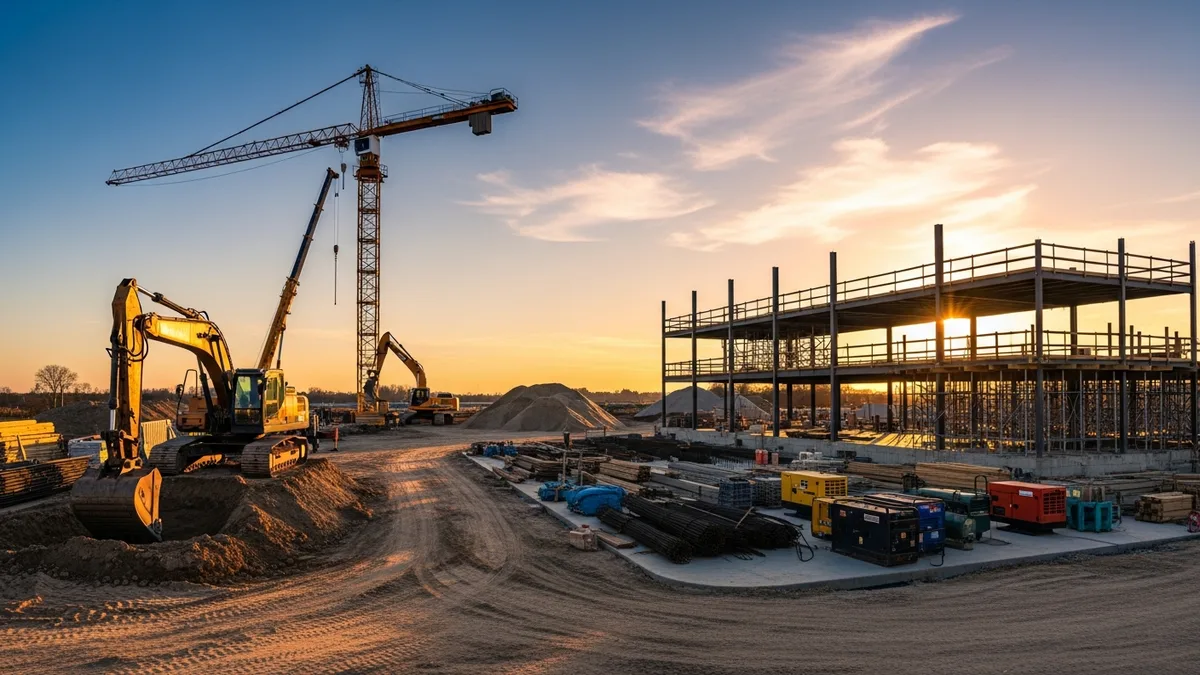
If you have ever stood in the middle of a half-framed house trying to upload progress photos while your phone shows one bar of signal, you know the pain. Construction sites are not exactly known for great cell service. Between remote locations, metal-heavy structures, and the sheer number of people trying to use data at the same time, getting reliable internet on a job site can feel like its own project.
But here is the thing: connectivity is not optional anymore. Between construction management apps, cloud-based scheduling, security cameras, and real-time communication with your office, your crew needs internet access just as much as they need power tools. And when the connection drops in the middle of submitting a change order or pulling up blueprints on a tablet, it costs you real time and real money.
This guide walks through everything you need to know about setting up reliable Wi-Fi and internet on your construction job sites, from quick-and-dirty hotspot setups to full mesh network deployments, with honest numbers on what it all costs.
Why Jobsite Connectivity Actually Matters Now
Five years ago, most contractors could get away with everyone using their own cell phones and maybe a shared Dropbox folder. That world is gone. Today, the average construction company is running half a dozen cloud-based tools on any given project, and every one of them needs a connection.
Think about what happens on a typical day on your job site. Your foreman pulls up the schedule on their phone. A sub checks their task list. Someone uploads photos for the daily log. Your project manager reviews RFIs from the trailer. A security camera records who is coming and going. Your time tracking app pings GPS data every few minutes.
All of that requires internet. And not just any internet. It needs to be reliable enough that people actually use the tools instead of falling back to phone calls, texts, and paper because “the Wi-Fi is down again.”
The contractors who figure this out gain a real edge. When your daily logs actually get filled out in the field because uploading photos is fast and painless, your documentation improves. When your crew can check the schedule on their phone without waiting 30 seconds for it to load, they actually check it. When your PM can video call the office from the job trailer without freezing every five seconds, decisions get made faster.
It is not about having fancy technology for the sake of it. It is about removing friction so your team can do their jobs without fighting their tools.
Understanding Your Connectivity Options
There are really four main ways to get internet on a construction site. Each one has trade-offs, and the right choice depends on your project size, location, duration, and budget.
Cellular Hotspots and Mobile Routers
This is where most contractors start, and for good reason. A cellular hotspot is basically a small device with a SIM card that creates a Wi-Fi network using the same cell towers your phone uses. You turn it on, connect your devices, and you are online.
Basic hotspot devices from carriers like Verizon, T-Mobile, or AT&T cost $100 to $300 for the hardware and $50 to $150 per month for a data plan. They support 10-20 simultaneous devices and work anywhere you have cell signal.
Mobile routers are the step up. These are larger units, often with external antenna ports, that pull in a stronger cellular signal and broadcast a more powerful Wi-Fi network. Brands like Cradlepoint, Peplink, and Sierra Wireless make units designed for exactly this kind of temporary deployment. Expect to pay $500 to $1,500 for the hardware and $75 to $200 per month for a business data plan.
The biggest limitation with cellular is data caps. Most plans throttle your speeds after you hit a certain amount of data, and on a busy job site with cameras and a dozen people uploading photos, you can burn through 100 GB in a week. Look for business plans with higher or unlimited data allotments, and read the fine print on what “unlimited” actually means.
Temporary Hardwired Internet
If your job site is in an area served by a cable or fiber ISP, you can sometimes get a temporary business internet line installed. This gives you a wired connection to a router in your job trailer, and from there you distribute Wi-Fi to the site.
The upside is speed and reliability. A hardwired connection gives you consistent bandwidth without worrying about cell signal strength or data caps. The downside is lead time and availability. Getting a temporary line installed can take 2-6 weeks, and it is not available on every site, especially in rural or undeveloped areas.
Cost is typically $100 to $300 per month for the service, plus a one-time installation fee of $100 to $500. For long-duration projects in urban or suburban areas, this is often the best bang for your buck.
Mesh Networks for Site-Wide Coverage
Here is where things get interesting for larger projects. A single router in the job trailer might cover the trailer and maybe 50 feet around it, but what about the rest of a multi-acre site? That is where mesh networking comes in.
A mesh network uses multiple access points that talk to each other wirelessly, creating a blanket of coverage across a large area. You put one node in the trailer connected to your internet source (cellular or hardwired), then place additional nodes around the site. Each node extends the network, and devices automatically connect to whichever node has the strongest signal.
For construction sites, you want outdoor-rated, weatherproof mesh units. Brands like Ubiquiti (UniFi), TP-Link Omada, and Aruba Instant On make units that can handle rain, dust, and temperature swings. A basic outdoor mesh setup runs $300 to $800 for the hardware (3-4 nodes), and you can expand from there.
The key to a good mesh deployment on a job site is placement. Mount nodes high, with clear line of sight between them. Avoid putting them behind metal walls or inside containers. And remember that the network changes as the building goes up. You may need to move nodes as floors get enclosed and new areas need coverage.
Satellite Internet
For truly remote job sites where cell signal is weak or nonexistent, satellite internet is the last resort. Starlink has changed the game here. Their portable kit costs around $600 for the hardware and $120 to $250 per month for service, and it delivers 50-200 Mbps in most locations with no data caps on most plans.
The older satellite providers like HughesNet and Viasat are cheaper but come with high latency (600ms+), low data caps, and slower speeds. Starlink, with its low-earth orbit satellites, has latency closer to 25-50ms, which makes it actually usable for video calls and real-time apps.
Read real contractor reviews and see why Projul carries a 9.8/10 on G2.
If you are building in a mountain valley, a rural subdivision, or anywhere more than a few miles from the nearest cell tower, Starlink is worth serious consideration.
Figuring Out Your Bandwidth Needs
Before you pick a solution, you need to understand how much bandwidth your site actually needs. Here is a rough breakdown of what common construction site activities consume:
Low bandwidth (under 5 Mbps):
- Construction management apps (Projul, scheduling, task lists)
- Email and messaging
- GPS time tracking
- Basic web browsing
Medium bandwidth (5-25 Mbps):
- Uploading progress photos and videos
- Cloud-based document access (plans, specs, submittals)
- Voice-over-IP phone calls
- Video calls (one at a time)
High bandwidth (25+ Mbps per device/stream):
- HD security camera live streams (5-10 Mbps each)
- BIM model viewing and collaboration
- Multiple simultaneous video calls
- Large file transfers (drone footage, 3D scans)
To estimate your total needs, add up what will be running at the same time during peak hours. A typical mid-size commercial site might have 2 security cameras (15 Mbps), 10 crew members on apps and uploading photos (20 Mbps), and the PM on a video call (10 Mbps). That is 45 Mbps of simultaneous demand. Add a 50% buffer for overhead and spikes, and you are looking at needing around 70 Mbps.
For a small residential crew of 3-5 people, a basic hotspot with 25-50 Mbps is usually plenty. For a large commercial project, you probably need 100+ Mbps and should be looking at hardwired internet or a high-end cellular router with antenna upgrades.
Do not forget about upload speed. Most internet connections are asymmetric, meaning download is much faster than upload. But on a construction site, uploading photos, videos, and documents is a huge part of the traffic. Look for plans with at least 10-20 Mbps upload, and more if you are running cameras that upload to the cloud.
Setting Up Your Jobsite Network Step by Step
Getting a network up and running does not have to be complicated. Here is a practical approach that works for most contractors.
Step 1: Assess the Site
Before you buy any equipment, visit the site and check cell signal strength. Use your phone’s built-in signal meter or download an app like OpenSignal to see which carriers have the best coverage. Check from multiple spots on the site, including inside any existing structures. Cell signal can vary dramatically across even a small area.
If you are going the cellular route, this step determines which carrier to use. If none of them have decent signal, you are looking at hardwired or satellite.
Step 2: Choose Your Internet Source
Based on your assessment:
- Good cell signal (3+ bars on at least one carrier): Cellular hotspot or mobile router
- Available ISP service nearby: Temporary hardwired line
- Poor cell signal, no ISP availability: Satellite (Starlink)
- Mix of good and bad signal across the site: Cellular with external antenna aimed at the nearest tower
Step 3: Set Up Your Primary Router
Place your router or hotspot in the job trailer or a central, protected location. If using a cellular router with external antenna ports, mount the antennas as high as possible, ideally on a mast or the roof of the trailer. Even 10 feet of extra height can double your signal strength.
Set up a password-protected network with a simple, memorable name. Create a separate guest network if you want to give subs internet access without letting them onto your main network. This is a basic but important cybersecurity step.
Step 4: Extend Coverage with Mesh or Access Points
If you need coverage beyond the trailer, deploy your mesh nodes. Start with one additional node at the farthest point where you need reliable coverage, then fill in gaps. Test signal strength by walking the site with your phone connected to the network.
For multi-story buildings under construction, plan for at least one node per floor. Concrete and steel floors kill Wi-Fi signals dead, so do not assume a node on the first floor will cover the third.
Step 5: Mount and Protect Your Equipment
Construction sites are rough on electronics. Mount access points and routers in weatherproof enclosures if they are not already rated for outdoor use. Use zip ties and heavy-duty mounting brackets, not tape. Run power cables through conduit where possible, and label everything so nobody accidentally unplugs the router thinking it is a phone charger.
If theft is a concern (and it should be), mount equipment high and out of easy reach. A mesh node on a pole at 12 feet is a lot less likely to walk off than one sitting on a sawhorse.
Step 6: Monitor and Adjust
Your network is not a set-it-and-forget-it thing. Check in weekly to make sure speeds are holding up, especially as the building progresses and physical conditions change. A wall that was not there last week might now be blocking signal between two mesh nodes.
Keep an eye on data usage too. If you are on a capped plan and burning through data faster than expected, you may need to upgrade your plan, restrict camera resolution, or limit non-work usage.
Cost Breakdown: What to Budget for Jobsite Connectivity
Let us get specific about money, because that is what matters when you are putting together a project budget.
Small Residential Project (3-5 crew, single house)
- Equipment: Basic cellular hotspot ($100-200)
- Monthly service: $50-100
- Total per month: $50-100
- Best for: Short-duration projects with good cell coverage
Mid-Size Residential or Small Commercial (10-15 crew)
- Equipment: Mobile router with external antenna ($500-800) + 2 mesh nodes ($200-400)
- Monthly service: $100-200 (business cellular plan)
- Total per month: $100-200 (after initial equipment purchase)
- Best for: 3-12 month projects where reliable app access matters
Large Commercial or Multi-Building Project (25+ crew)
- Equipment: Ruggedized cellular router ($1,000-1,500) + 4-6 mesh nodes ($500-1,200) + mounting hardware ($200-300)
- Monthly service: $200-400 (business cellular or hardwired)
- Total per month: $200-400 (after initial equipment purchase)
- Best for: Long-duration projects with high connectivity demands
The ROI Argument
Here is the question you should really be asking: what does bad connectivity cost you?
If your crew of 10 people each wastes 15 minutes a day fighting slow uploads, waiting for apps to load, or driving back to the office because they could not pull up a document on site, that is 2.5 hours of lost productivity per day. At a blended labor rate of $45/hour, that is over $112 per day, or about $2,500 per month.
A solid jobsite network that costs $200/month suddenly looks like a no-brainer.
And that is just direct labor. Factor in the value of having real-time communication with your office, up-to-date daily logs with photos, and security cameras keeping an eye on materials and equipment, and the return gets even bigger.
Common Mistakes and How to Avoid Them
After talking to hundreds of contractors about their tech setups, the same mistakes come up over and over.
Relying on personal phones for everything. Your crew’s personal cell plans are not your company’s internet infrastructure. When everyone is tethering off their phones, nobody has a reliable connection and your employees are eating through their personal data. Provide a dedicated network.
Ignoring upload speed. Contractors focus on download speed because that is what ISPs advertise. But your site generates data: photos, videos, time tracking pings, camera feeds. If your upload is crawling at 2 Mbps, your foreman is going to give up on uploading the daily log photos and start texting them to the office instead. And that is how your document management falls apart.
Not planning for the building to change. The site on day one is wide open. By month three, you have walls, floors, and a roof that all block Wi-Fi. Plan for this from the start and budget for moving or adding mesh nodes as construction progresses.
Skipping the password. An open Wi-Fi network on a construction site is an invitation for everyone in the neighborhood to hop on. It also creates security risks. Always use WPA3 encryption and a password, even if it is simple. Change it when subs rotate off the project.
Going cheap on the antenna. If you are using cellular internet, the single biggest improvement you can make is a better antenna. The little internal antenna in a hotspot device is trying to pick up signal from inside a metal job trailer. An external antenna mounted on a pole outside the trailer, even a basic $50 one, can dramatically improve speeds and reliability.
Not having a backup plan. What happens when your internet goes down? If your entire operation depends on connectivity (and it does if you are running construction software, time tracking, and communication through it), have a fallback. Keep a hotspot device charged in the trailer as a backup for your primary connection. It is cheap insurance.
Ready to see how Projul can work for your crew? Schedule a free demo and we will walk you through it.
Connectivity is one of those things that nobody thinks about until it does not work. But the contractors who treat it as part of their site setup, right alongside temporary power and portable toilets, are the ones whose teams actually use the digital tools that keep projects on track and on budget. A couple hundred bucks a month for reliable jobsite internet is one of the highest-return investments you will make on any project.
Frequently Asked Questions
How much internet bandwidth do I need on a construction job site?
What is the best portable Wi-Fi solution for a construction site?
How much does jobsite Wi-Fi cost per month?
Can I use my phone as a hotspot for the whole crew?
Do I need Wi-Fi on every job site?
Related Articles
How to Implement Construction Software Without Losing Your Mind
Most construction software rollouts fail. Not because the software is bad, but because the rollout was rushed. Here are...
Read More →
How Selections Can Pay for Themselves in Three Easy Steps
Most contractors lose thousands each year on wrong material orders, slow client decisions, and missed upsell chances....
Read More →
3 Free Concrete Estimate Templates for Every Pour Type (2026)
Three ready-to-use concrete estimate templates with realistic line items, material costs, labor rates, and markup...
Read More →