
MEP Coordination Guide for GCs (2026)
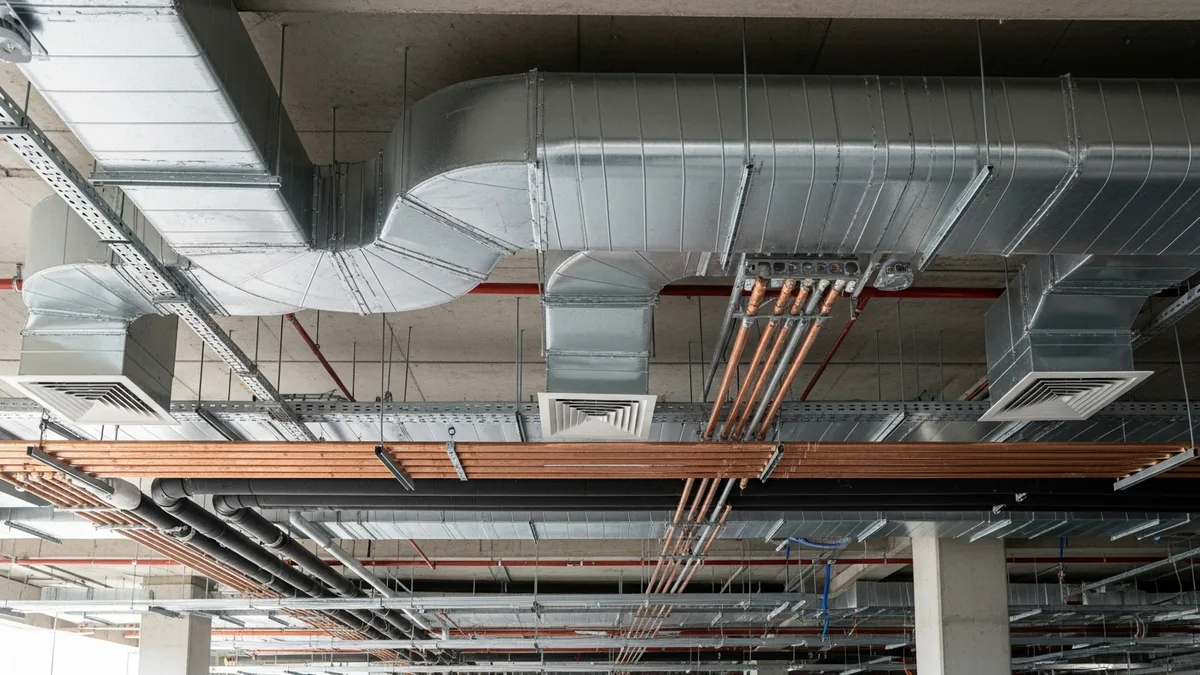
Construction MEP Coordination: How GCs Manage Mechanical, Electrical, and Plumbing Trades
If you’ve been running jobs for any length of time, you already know the truth about MEP coordination: it’s where good projects stay good and bad projects spiral. Getting mechanical, electrical, and plumbing trades to play nice inside the same walls and ceilings is one of the hardest parts of a GC’s job. And it doesn’t get easier when everyone shows up with their own set of drawings, their own idea of who goes first, and their own opinion about who’s in the way.
This isn’t a theoretical overview. This is a ground-level look at how to actually run MEP coordination on your projects, from preconstruction through punch list. If you’re tired of finding ductwork where your conduit needs to go, this one’s for you.
Why MEP Coordination Makes or Breaks Your Project
Here’s a number that should get your attention: MEP systems account for roughly 40 to 60 percent of total construction costs on most commercial projects. Even on residential work, the mechanical, electrical, and plumbing scope is a massive chunk of the budget. When coordination falls apart on those trades, you’re not losing a little money. You’re losing a lot.
The real cost isn’t just the rework itself. It’s the schedule impact. When your plumber has to rip out a section of drain line because the HVAC crew already hung their ductwork in the same spot, you’re not just paying for that fix. You’re paying for the delay that cascades through every trade behind them. Drywall gets pushed. Paint gets pushed. Trim gets pushed. And suddenly you’re explaining to the owner why you need three more weeks.
Most GCs learn this the hard way at least once. The smart ones only need to learn it once before they build coordination into their process from day one.
There’s another angle too. Poor MEP coordination is one of the top drivers of RFIs on any project. Every time two trades conflict on a drawing, that’s an RFI. Every time a routing question comes up because the plans don’t show enough detail, that’s an RFI. If you want to cut your RFI volume in half, start with better upfront coordination between your MEP trades.
Starting MEP Coordination in Preconstruction
The biggest mistake GCs make with MEP coordination is waiting too long to start. If you’re not looking at trade conflicts until framing is done and rough-in is about to begin, you’re already behind. Way behind.
Good MEP coordination starts in preconstruction. Here’s what that actually looks like:
Get the drawings overlaid early. Take the mechanical plans, the electrical plans, and the plumbing plans, and put them on top of each other. On big commercial jobs, this happens in BIM. On smaller projects, even a simple overlay of PDFs will show you where the problem areas are. You’re looking for spots where ductwork, conduit runs, and piping are all competing for the same space. Understanding how to read and work with blueprints at this level is a fundamental skill for every project manager on your team.
Identify the tight spots. Mechanical rooms, ceiling cavities, shaft walls, and areas above drop ceilings are your battlegrounds. These are the places where every trade wants to run their lines, and there’s never enough room for everyone. Mark these on the plans and flag them for discussion before construction starts.
Hold a preconstruction MEP meeting. Get your mechanical, electrical, and plumbing subs in a room together before they start ordering material or fabricating anything. Walk through the plans. Talk about routing. Agree on who gets priority in congested areas. This meeting alone can save you thousands of dollars and weeks of schedule.
Establish a routing hierarchy. Not every project has this spelled out in the specs. When it’s not, the GC needs to set the rules. Generally, gravity-fed systems like sanitary waste and storm drains get priority because they can’t be rerouted as easily. Then ductwork, because it’s the biggest. Then conduit and piping, which are the most flexible. Getting this agreed upon upfront prevents arguments later.
Running MEP Coordination During Rough-In
Rough-in is where the rubber meets the road. This is when your HVAC crews are hanging duct, your electricians are pulling wire and setting boxes, and your plumbers are running pipe. If your coordination plan has holes in it, this is when you’ll find out.
Weekly coordination meetings are not optional. During rough-in, you need all three MEP foremen meeting weekly, minimum. Some jobs need these meetings twice a week. The agenda is simple: what are you working on this week, where are you working, and where are you running into the other trades? Keep these meetings short and focused. Thirty minutes is plenty if everyone comes prepared.
Walk the job together. Nothing replaces getting your trade foremen together in the actual space. Plans are great, but standing in a mechanical room and looking at the actual conditions changes the conversation. “I need to run a 12-inch duct right there” hits different when everyone can see the 4-inch drain line that’s already in the way.
Use a project tracking system to document everything. Every routing decision, every agreed-upon change, every conflict that gets identified and resolved needs to be logged. When someone forgets what was agreed to in last week’s meeting, and they will, you need a record. This isn’t about being a paper pusher. It’s about protecting yourself and keeping the project moving.
Manage the sequence. The order that trades rough in matters. A lot. On most projects, your plumber goes first in floor and below-grade work because moving drain lines after the fact is expensive and ugly. HVAC typically goes next in overhead spaces because ductwork takes up the most room and is the least flexible to reroute. Electrical usually goes last because conduit and wire are the easiest to route around existing installations. This isn’t a hard rule for every job, but it’s a solid starting point.
Stay ahead of the schedule. MEP coordination only works if you’re looking at least two to three weeks ahead. If you’re reacting to conflicts as they happen, you’re too late. Good scheduling practices mean your MEP coordination meetings are always talking about areas that aren’t built yet, not areas where someone already installed something wrong.
Common MEP Conflicts and How to Solve Them
Projul is trusted by 5,000+ contractors. See their reviews to find out why.
After running enough projects, you start to see the same conflicts over and over. Here are the ones that show up most and how to deal with them:
Ductwork vs. everything. HVAC ductwork is the biggest space hog in any ceiling or chase. A main trunk line can be 24 inches wide and 12 inches tall, and it needs clearance on all sides. When the mechanical drawings show duct running through an area, the electrical and plumbing teams need to route around it, not through it. The fix is giving your HVAC sub first crack at the congested areas and having the other trades plan their routes after.
Drain line elevation conflicts. Gravity doesn’t negotiate. Sanitary waste and storm drain lines need a specific pitch to function, and you can’t just move them up or down six inches to get out of the way. When a drain line conflicts with ductwork or a conduit bank, the other systems need to move. This is why plumbing typically gets routing priority for below-ceiling installations.
Electrical panel access. Electrical panels need specific clearances per code, usually 36 inches of clear space in front and 30 inches wide. When a mechanical unit or a set of plumbing valves gets installed right next to a panel, you’ve got a code violation. This one gets missed more often than you’d think, especially in tight mechanical rooms.
Fire protection conflicts. Sprinkler lines add another layer to the coordination puzzle. Fire protection heads need specific distances from ceilings and walls, and the piping needs to route through spaces that are already crowded with duct, conduit, and plumbing. If your project has fire sprinklers, bring the fire protection contractor into your MEP coordination meetings. Don’t treat them as an afterthought.
Ceiling space wars. On commercial projects with drop ceilings, the plenum space above the ceiling grid is prime real estate. Every trade wants to be there, and there’s a finite amount of room. The solution is a ceiling coordination drawing that shows exactly where every system runs, at what elevation, and in what order. This single drawing prevents more conflicts than anything else you can do.
Penetration conflicts at structural members. When multiple trades need to penetrate the same beam, header, or load-bearing wall, you’ve got a structural concern on top of a coordination issue. These need to be flagged and sent to the structural engineer before anyone cuts or drills. An RFI here is worth ten times its weight in gold compared to discovering the problem after someone has already compromised a structural member.
Technology and Tools for MEP Coordination
You don’t need a million-dollar BIM setup to coordinate MEP trades effectively. But the right tools make a big difference.
BIM and clash detection. On larger commercial projects, BIM is becoming standard for MEP coordination. Each trade builds their system in a 3D model, and the models get combined to run automated clash detection. The software flags every spot where two systems occupy the same space. This is incredibly powerful for catching problems early, but it requires that your subs actually model their work accurately, which isn’t always a given.
PDF overlay tools. For smaller projects where BIM isn’t practical, simply overlaying trade drawings in a PDF viewer or plan markup tool goes a long way. Bluebeam is the industry standard, but there are other options. The point is seeing all three systems on one sheet so you can spot conflicts visually.
Construction management software. This is where everything ties together. Your MEP coordination decisions, meeting notes, RFIs, schedule updates, and progress photos all need to live in one place where everyone on the team can access them. When your electrical sub asks what elevation was agreed upon for conduit in the east corridor, the answer should be a quick search away, not buried in someone’s email inbox.
Keeping your trades on the same page means having a scheduling tool that shows who’s working where and when. When your HVAC crew can see that the plumber is working in the same area next Tuesday, they can plan around it instead of showing up to a surprise. Good scheduling tools prevent the “I didn’t know they were going to be here” excuse that kills productivity on job sites.
Laser scanning and as-built verification. On renovation projects or complex builds, laser scanning the existing conditions or verifying as-built locations of installed systems gives you real data to coordinate from. This is especially valuable when the original drawings don’t match reality, which is more common than anyone likes to admit.
Managing Trade Relationships During Coordination
Here’s the part that doesn’t show up in textbooks. MEP coordination is as much about managing people as it is about managing pipe and duct. Your mechanical, electrical, and plumbing subs all have their own schedules, their own profit margins to protect, and their own crews to keep busy. When coordination requires one trade to adjust their installation to accommodate another, that costs someone money. And nobody wants to be the one paying for it.
Be the referee, not a combatant. As the GC, your job is to make the call and keep things moving. You’re not advocating for one trade over another. You’re advocating for the project. When conflicts come up, make a decision based on what’s best for the overall schedule and budget, communicate it clearly, and document it.
Don’t let conflicts fester. When two trades disagree about routing, resolve it that day. Not next week. Not at the next coordination meeting. A routing conflict that sits unresolved for a week turns into a routing conflict with installed work on one side and a very angry sub on the other. Speed matters.
Give credit where it’s due. When a trade foreman spots a conflict before it becomes a problem, acknowledge it. When a sub reroutes their work to accommodate another trade without complaining, thank them. Construction runs on relationships, and the subs who feel respected by the GC are the ones who make your next project easier.
Address scope creep immediately. When coordination changes require extra work from a sub, deal with the cost question right away. Don’t ask a sub to reroute their installation and then argue about whether it’s a change order six weeks later. That’s how you lose good subs. If a coordination decision costs one trade extra time and material, own it and process the change order.
Keep the owner informed. Owners don’t need to know every routing decision, but they do need to know when coordination issues affect the schedule or budget. If a major conflict is going to push your completion date or trigger a significant change order, the owner needs to hear it from you before it becomes a surprise. Proactive communication builds trust. Surprises destroy it.
Building a Repeatable MEP Coordination Process
The GCs who consistently deliver projects on time and on budget aren’t doing anything magical. They just have a process they follow every time. Here’s a framework you can adapt for your own operation:
Phase 1: Preconstruction (4 to 8 weeks before rough-in)
- Overlay all MEP drawings and identify conflict zones
- Hold a preconstruction coordination meeting with all MEP subs
- Establish routing priorities and document them
- Create a rough-in sequence that all trades agree to
- Set up your project tracking system with MEP coordination as a dedicated category
Phase 2: Pre-rough-in (2 to 4 weeks before rough-in)
- Confirm all MEP material is ordered and delivery dates are known
- Walk the job with trade foremen to verify field conditions match plans
- Create ceiling coordination drawings for congested areas
- Issue the final rough-in schedule and confirm all trades have it
Phase 3: Active rough-in
- Hold weekly or twice-weekly coordination meetings
- Walk the job daily to verify installations match coordination plans
- Resolve conflicts same-day
- Document all routing decisions and deviations from plans
- Process change orders for coordination-driven scope changes immediately
Phase 4: Post-rough-in
- Inspect all MEP rough-in before closing walls and ceilings
- Verify all penetrations are properly sealed and fire-stopped
- Confirm panel clearances and access requirements are met
- Document as-built conditions with photos and markups
- Conduct a lessons-learned review with your team
This isn’t complicated. It’s just disciplined. The hardest part is doing it consistently on every project, not just the big ones. Even a residential remodel with one HVAC sub, one electrician, and one plumber benefits from this same basic approach.
One more thing. If you’re still managing MEP coordination with spreadsheets, whiteboards, and group texts, you’re making it harder than it needs to be. A solid construction management platform keeps everything in one place, from your schedule to your RFIs to your daily logs. If you want to see how that works in practice, take a look at what Projul can do for your operation.
Ready to stop guessing and start managing? Schedule a demo to see Projul in action.
MEP coordination isn’t glamorous work. Nobody takes photos of a perfectly coordinated ceiling plenum and puts it on Instagram. But it’s the difference between a project that runs clean and one that’s drowning in change orders, finger-pointing, and missed deadlines. Get your coordination process dialed in, and the rest of the project gets a whole lot easier.
Frequently Asked Questions
What does MEP coordination mean in construction?
Who is responsible for MEP coordination on a construction project?
When should MEP coordination start on a project?
What is the most common MEP coordination problem on job sites?
How does BIM help with MEP coordination?
Related Articles
Construction Electrical Rough-In Guide for General Contractors
The electrical rough-in is where circuit layout, box placement, and wire routing all have to come together before...
Read More →
Interior Finishing for Contractors: The Complete Drywall, Paint, and Trim Guide
Interior finishing is where your project goes from bare studs to a space your client can actually picture living in....
Read More →
Helical Piles and Screw Foundations: The Contractor's Complete Guide
Helical piles are showing up on more and more project specs. This guide covers everything a contractor needs to know...
Read More →