
Construction Parking and Traffic Management
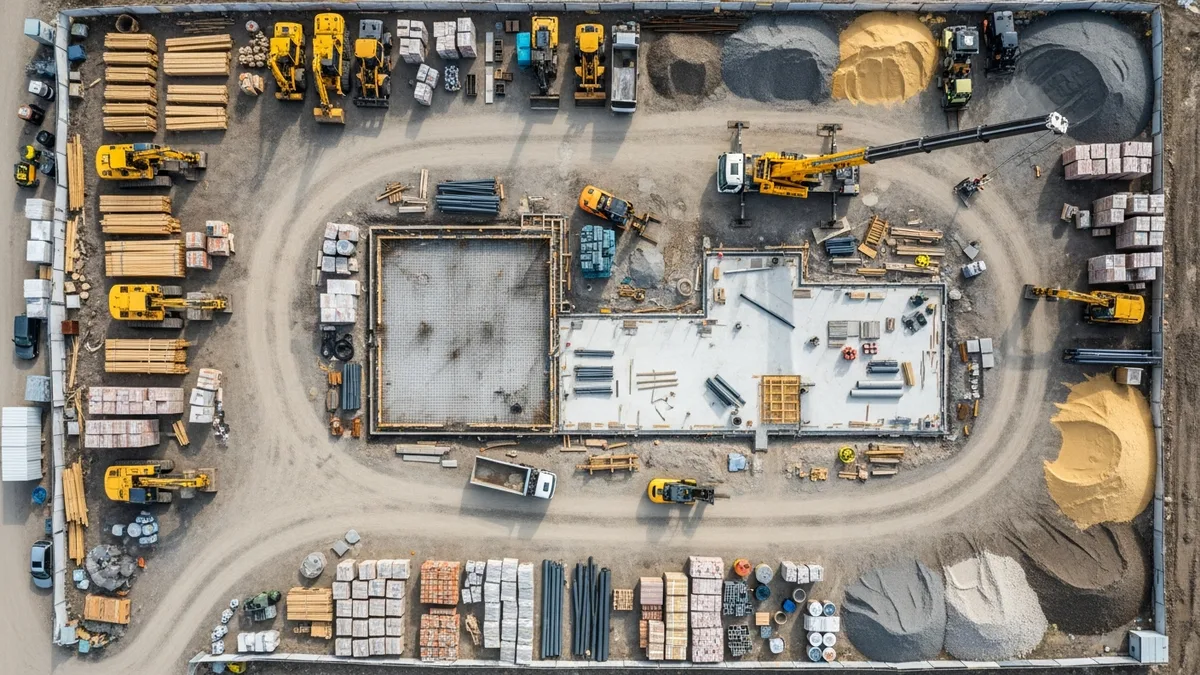
If you have ever watched a concrete truck circle a block three times because nobody planned where it should park, you already know why traffic management matters on a construction site. It is one of those things that feels like an afterthought until it blows up in your face. A blocked fire lane, an angry neighbor, a citation from the city, or a delivery driver who dumps materials in the wrong spot because your site entrance was clogged with crew trucks.
The truth is, parking and traffic management on job sites is a planning problem. And like most planning problems in construction, the earlier you deal with it, the cheaper and easier it is. Let’s walk through how to get it right.
1. Start With a Site Traffic Plan Before You Break Ground
A site traffic plan is not just a sketch on the back of a napkin. It is a real document that shows how vehicles, equipment, pedestrians, and deliveries will move through and around your site for the duration of the project.
Here is what a solid plan includes:
- Site entry and exit points. Ideally, you want separate entrances for crew vehicles and delivery trucks. If that is not possible, designate time windows for each.
- Internal traffic routes. Show the path vehicles follow once they are on site. One-way loops work well on larger projects and cut down on the “who backs up first” standoff.
- Parking zones. Mark where crew vehicles go, where subs park, and where visitors or inspectors should pull in.
- Delivery staging areas. Designate where trucks wait, unload, and turn around.
- Pedestrian paths. Separate foot traffic from vehicle routes. This matters even more when the public walks near your site.
- Emergency access. Fire lanes and ambulance access must stay clear at all times. Period.
Start this plan during preconstruction. Walk the site, look at the streets around it, and think about what happens when you have 30 people and 8 vehicles showing up at 6:45 AM on a Monday. If you are already using a construction site logistics plan, your traffic plan should plug right into it.
Update the plan as the project evolves. The traffic flow that works during excavation will not work during framing, and what works during framing will not work during finish work when half the site is enclosed.
2. Crew Parking: Set the Rules Early and Enforce Them
Crew parking is one of the most common sources of neighbor complaints, city violations, and general chaos on job sites. Left unchecked, your guys will park wherever is convenient, which usually means blocking driveways, filling up residential streets, or parking in fire lanes.
Here is how to get ahead of it:
Create a parking map. Before the first crew member shows up, put together a simple map showing exactly where personal vehicles go. Hand it out at the preconstruction meeting, post it at the site entrance, and include it in your onboarding packet for subs.
Limit vehicles on site. Not everyone needs to drive their truck onto the job. Limit site access to vehicles that carry tools or materials. Everyone else parks in the designated area. This is easier to enforce if you set the expectation on day one rather than trying to change behavior three weeks in.
Stagger start times. If parking is tight, stagger crew arrival by 15 to 30 minutes. The framing crew rolls in at 6:30, the electricians at 7:00, the plumbers at 7:15. It spreads out the parking load and reduces the morning traffic jam at the site entrance.
Use off-site parking when needed. On urban projects or tight residential lots, off-site parking may be your only option. Work out a deal with a nearby church, shopping center, or lot owner. Provide a shuttle van or have crew carpool from the remote lot. Yes, it costs time and money. But it costs less than daily citations or losing your permit because of neighbor complaints.
Talk to the neighbors. Before you start, knock on doors. Tell the neighbors where your crews will park, how long the project will last, and give them a phone number to call if there is a problem. A five-minute conversation up front can save you weeks of headaches. Good communication planning applies to neighbors just as much as it does to your crew. If you have not thought through your construction communication plan, now is the time.
3. Delivery Coordination: Get the Right Materials to the Right Spot at the Right Time
Bad delivery coordination creates a chain reaction of problems. The lumber truck shows up when the concrete pour is happening. The drywall gets dropped on the opposite end of the site from where it is needed. The HVAC equipment sits in the rain because nobody planned where to stage it.
Here is how to manage deliveries without losing your mind:
Build a delivery schedule. Create a calendar that shows every major delivery, including date, time window, vendor, what is being delivered, and where it goes on site. Share this with your superintendent, your subs, and your material suppliers. When everyone knows the plan, conflicts get caught early instead of on the morning of.
Good material management starts with knowing when things show up and where they go. Tie your delivery schedule into your overall project schedule so you can spot conflicts before they happen.
Designate staging areas. Mark specific zones for material drop-off, and make sure delivery drivers know where to go before they arrive. Send a site map with delivery confirmations. Include details like “enter from Oak Street, stage at the northeast corner of the lot, do not block the crane swing radius.”
Confirm timing. Call or email suppliers 48 hours before delivery to confirm the window. For critical deliveries like concrete, steel, or trusses, confirm again the morning of. A missed delivery window can cascade through your whole schedule.
Plan for the big stuff. Oversized loads, crane picks, and multi-truck deliveries need their own mini traffic plans. Think about how the truck gets in, where it parks, how long the unload takes, and how it gets out. If the delivery requires a road closure or lane restriction, you will need permits and possibly flaggers, which we will cover below.
Track what arrives. Use a material tracking system so you know what showed up, what is short, and what got damaged. This avoids the “I thought we had it” problem that kills schedules.
4. Public Road Impacts: Playing Nice With the City and the Public
The moment your project touches a public road, sidewalk, or right-of-way, you are playing in someone else’s sandbox. Cities take this seriously, and for good reason. A poorly managed construction zone on a public road creates real safety hazards for drivers, pedestrians, cyclists, and your own crew.
Know the rules before you bid. Every municipality has its own regulations for construction work in or near public roads. Some require detailed traffic control plans reviewed by a licensed engineer. Others have standard templates you can follow. Either way, figure this out during preconstruction, not after you have already mobilized. The costs for traffic control, flagging, and permits should be in your estimate. If you are still tightening up your estimating process, add a line item for traffic control so it does not get missed.
Common requirements include:
- Maintaining minimum lane widths (typically 10 to 11 feet)
- Providing advance warning signs (usually starting 500 feet or more before the work zone)
- Using approved traffic control devices (cones, barrels, barriers, arrow boards)
- Keeping sidewalks open or providing accessible detours
- Maintaining access to adjacent properties and businesses
- Providing flaggers for active work zones
Follow MUTCD standards. The Manual on Uniform Traffic Control Devices is the bible for work zone traffic control in the United States. It covers sign placement, taper lengths, buffer zones, flagger positions, and everything else you need to set up a legal work zone. Your traffic control plan should reference MUTCD standards, and your crew should know the basics. For a deeper look at planning and installing directional signs on active job sites, see our construction signage and wayfinding installation guide.
Keep it clean. Mud tracking, debris, and dust blowing onto public roads are common citations. Use truck wash stations, sweepers, or rumble pads at your site exit. If you are required to maintain the road surface, schedule regular sweeping and document it.
Document everything. Take photos of your traffic control setup daily. If there is an incident or a complaint, you want proof that your plan was in place and being followed. This ties into your broader safety management documentation.
5. Flagging Operations: When You Need Human Traffic Control
Not sure if Projul is the right fit? Hear from contractors who use it every day.
Flaggers are required any time construction work forces traffic into an unusual pattern, like a lane closure, a lane shift, or alternating one-way traffic. They are also common at site entrances where large trucks cross busy roads.
When do you need flaggers?
- Lane closures on public roads
- Trucks entering and exiting the site across traffic
- Oversized load deliveries
- Work near intersections where signals cannot handle the changed traffic pattern
- Any time the local permit requires them
Hiring and training.
Do not grab the nearest laborer and hand them a stop/slow paddle. Flaggers need training. Most states require a certified flagger course that covers MUTCD requirements, hand signals, proper positioning, and emergency procedures. Courses typically take half a day and certifications last one to three years depending on the state.
If you do not want to deal with training and scheduling your own flaggers, hire a traffic control subcontractor. They provide certified flaggers, all the required signage, and they handle the setup and teardown. It is not cheap, but it transfers a significant liability off your plate.
Flagger positioning matters.
A flagger standing in the wrong spot is worse than no flagger at all. They need to be visible to approaching traffic with enough stopping distance for drivers to react. MUTCD provides specific guidance on flagger stations based on road speed, sight distance, and work zone layout. Follow it.
Protect your flaggers.
Flaggers are the most exposed workers on your site. They are standing in or near active traffic for hours at a time. Provide high-visibility clothing (Class 3 minimum for highway work), adequate breaks (they lose focus fast in heat or cold), and a communication plan so they can alert the crew if something goes wrong. Flagger safety should be part of your safety inspections on any project with active traffic control.
6. Permits, Insurance, and Staying Out of Trouble
Traffic management on construction sites is one of those areas where cutting corners can get expensive fast. Citations, stop-work orders, accident liability, and neighbor lawsuits are all real risks.
Permits you may need:
- Road closure permits. Required for any full or partial closure of a public road. Lead time varies from a few days to several weeks.
- Lane use permits. For work that narrows but does not close a road.
- Sidewalk closure permits. Required when your work blocks pedestrian access.
- Oversized load permits. For deliveries that exceed standard vehicle dimensions or weight limits.
- Parking permits. Some cities require permits for construction worker parking on public streets.
- Driveway/curb cut permits. For temporary or permanent changes to site access from a public road.
Start the permit process early. Some permits take 30 days or more to process. Others require a review by a traffic engineer, which adds time and cost. Build permit timelines into your preconstruction schedule and treat them like any other critical path item.
Insurance considerations.
Make sure your general liability policy covers traffic control operations. If you are hiring a traffic control sub, verify their insurance and add yourself as an additional insured. For work on state highways or DOT projects, you may need specific endorsements or higher coverage limits.
If you self-perform traffic control, your workers comp policy needs to cover flagging operations. Flaggers working near high-speed traffic carry a different risk profile than your typical site worker, and your insurer should know about it.
Subcontractor coordination.
Your subs bring their own vehicles, their own deliveries, and their own schedules. If you do not coordinate their traffic with yours, your carefully planned site turns into chaos by week two. Include traffic and parking rules in every subcontract. Make it part of your preconstruction meetings. And enforce it. If a sub ignores your parking plan, deal with it immediately before it becomes the norm. Handling subcontractor relationships well means setting clear expectations from the start, parking and traffic included.
Keep records.
Maintain a log of your traffic control activities, permits, flagger certifications, and any incidents or near-misses related to traffic on your site. If OSHA shows up or a lawsuit lands on your desk, this documentation is your best defense. Strong record-keeping is part of a solid OSHA compliance strategy.
Wrapping It Up
Construction parking and traffic management is not glamorous work. Nobody gets into this business because they love drawing parking maps and filling out road closure permits. But the contractors who handle it well run smoother projects, avoid costly delays, and keep their reputation intact with the cities and communities they work in.
Curious how this looks in practice? Schedule a demo and we will show you.
Start planning early, communicate clearly, enforce your rules, and document everything. And when the concrete truck shows up and the driver knows exactly where to go because you sent them a site map three days ago, you will be glad you put in the work.
Frequently Asked Questions
Who is responsible for traffic control on a construction site?
Do I need a permit for construction traffic control?
How far in advance should I plan for construction deliveries?
What qualifications do construction flaggers need?
How do I handle parking on tight urban construction sites?
Related Articles

How to Implement Construction Software Without Losing Your Mind
Most construction software rollouts fail. Not because the software is bad, but because the rollout was rushed. Here are...
Read More →
How Selections Can Pay for Themselves in Three Easy Steps
Most contractors lose thousands each year on wrong material orders, slow client decisions, and missed upsell chances....
Read More →
3 Free Concrete Estimate Templates for Every Pour Type (2026)
Three ready-to-use concrete estimate templates with realistic line items, material costs, labor rates, and markup...
Read More →