
Construction Project Delays: Causes and Fixes

Every contractor has lived it. You start a project with a solid schedule, the crew is lined up, materials are ordered, and everything looks good on paper. Then one thing slips. A concrete pour gets pushed because of rain. The electrician can’t start until framing is done, but framing lost three days. Before you know it, the whole project is running two weeks behind and the owner is calling every morning asking when you’ll be done.
Construction project delays are not just frustrating. They cost real money. Every extra day on a jobsite means additional labor costs, equipment rental fees, and overhead that eats into your margin. Multiply that across several active projects and a few weeks of delays can turn a profitable year into a tight one.
The good news is that most construction project delays follow predictable patterns. Once you understand the common causes and have a system for responding, you can minimize the damage and keep projects moving. This guide breaks down the types of delays you’ll run into, why some common “solutions” actually make things worse, and what actually works when you need to get back on track.
The Most Common Causes of Construction Delays
If you’ve been in construction long enough, you’ve seen all of these. But it’s worth listing them out because the fix for each one is different, and lumping them all together as “delays” makes it harder to address the root cause.
Material delays are one of the biggest issues contractors deal with today. Supply chains have gotten less predictable over the past few years, and lead times on specialty items like custom windows, structural steel, or engineered lumber can stretch out weeks beyond what suppliers originally quoted. The contractors who handle this well are the ones placing orders early and tracking delivery dates like they track their schedule.
Labor shortages hit differently depending on your market, but nearly every region is dealing with some version of this. When you can’t get enough skilled workers on site, tasks take longer, quality can slip, and you end up making tough calls about which projects get priority.
Permit and inspection delays are the ones that drive contractors crazy because they’re mostly out of your control. You submit the paperwork, you call to schedule the inspection, and then you wait. Some jurisdictions are weeks behind, and a failed inspection can cost you days of rework plus the time to get back on the inspector’s calendar.
Scope changes and change orders are part of nearly every project, but they’re a major source of delays when they’re not managed well. The owner wants to move a wall, add an outlet, or upgrade the finish package. Each change ripples through the schedule, and if you don’t adjust your timeline immediately, you end up with a schedule that doesn’t reflect reality.
Subcontractor scheduling conflicts are especially common when your subs are busy (which is most of the time in a good market). Your plumber was supposed to start Monday but got held up on another job. Now your tile guy can’t start on time either. One sub’s delay becomes a chain reaction.
Design errors and incomplete drawings cause delays that often don’t show up until the crew is already on site. Missing details, conflicting dimensions, or specs that don’t match field conditions all lead to RFIs, waiting for answers, and rework.
The pattern here is clear: most construction project delays come from external dependencies and coordination failures, not from crews working too slowly. That distinction matters because it changes how you prevent and respond to them.
Weather Delays vs Excusable vs Non-Excusable Delays
Not all delays are created equal, and understanding the categories matters for both contract management and figuring out what you can actually control.
Weather delays are the most straightforward. Rain, snow, extreme heat, and wind all shut down certain types of work. You can’t pour concrete in a downpour. You can’t set trusses in 40 mph winds. These are generally considered excusable delays, meaning the contractor gets a time extension but typically not additional compensation. The contract language matters here, so read yours carefully.
Excusable delays go beyond weather. They include events that are outside the contractor’s control and that couldn’t have been reasonably anticipated. Think natural disasters, material shortages caused by market-wide supply issues, unexpected site conditions like hitting rock when the geotech report said sand, or government-imposed shutdowns. With excusable delays, the contractor usually gets more time and sometimes additional compensation, depending on the contract terms.
Non-excusable delays are the ones that fall squarely on the contractor. You didn’t order materials on time. You understaffed the project. Your superintendent was managing too many jobs and dropped the ball on coordination. These delays don’t earn you a time extension, and they can trigger liquidated damages if your contract includes them.
Here’s where this gets practical: you need to track and document every delay regardless of type. When a weather event pushes your schedule, log it with daily logs that include the date, the conditions, and what work was affected. Take photos of the conditions on site. This documentation is your evidence if there’s ever a dispute about whether the delay was excusable.
The contractors who get into trouble are the ones who don’t distinguish between delay types. They treat every delay the same way, which usually means absorbing costs they shouldn’t have to or failing to claim time extensions they’re entitled to.
How Schedule Padding Creates More Problems Than It Solves
When contractors get burned by delays, the instinct is to add buffer time to the schedule. If framing usually takes two weeks, schedule three. If the permit review is supposed to take ten days, assume twenty. It feels like the safe move.
The problem is that schedule padding rarely works the way you think it will. Here’s why.
Parkinson’s Law is real on jobsites. Work expands to fill the time available. If you tell a crew they have three weeks for a two-week task, they’ll take three weeks. Not because they’re lazy, but because the urgency disappears. They might start a day late, take longer breaks, or work on something else knowing they have extra time. The buffer you built in gets consumed without actually protecting you from anything.
Padded schedules hide the real problems. When every task has extra time baked in, it’s hard to tell the difference between a task that’s running on time and one that’s actually behind. You lose visibility into where the project really stands, which means you can’t intervene early when something starts slipping.
Owners and GCs can see it too. If you submit a schedule with three weeks for framing on a simple residential project, experienced owners or general contractors will question it. It can undermine your credibility before the project even starts. Some GCs will reject padded schedules outright and ask you to resubmit.
The real delays still happen. Padding doesn’t prevent material shortages, failed inspections, or weather events. Those delays still hit, and now they’re hitting a schedule that’s already longer than it needs to be. The result is a project that’s both padded and late.
A better approach is building a realistic schedule with accurate task durations and proper dependencies. When something does slip, you need a system that shows you the downstream impact immediately so you can make adjustments. That’s where construction scheduling software earns its keep. Instead of guessing how much buffer to add, you get real-time visibility into how a delay on one task affects everything else.
Communication Breakdowns: The Hidden Delay Nobody Tracks
Ask a contractor what caused their last delay and they’ll usually point to something concrete: the material showed up late, the inspector didn’t come, the weather was bad. Those are real causes, but dig a little deeper and you’ll often find a communication breakdown underneath.
The superintendent knew the material was going to be late but didn’t tell the project manager until the crew was standing around with nothing to do. The owner approved a change verbally on site but it never made it to the sub who needed to adjust their work. The daily log said “weather delay” but nobody communicated to the framing crew that they should prep interior work instead.
These communication gaps are delays that nobody tracks. They don’t show up on the schedule as a specific cause, but they add hours and days to projects that should have run smoother.
Projul is trusted by 5,000+ contractors. See their reviews to find out why.
The root issue is usually the gap between the field and the office. The people on site have the most current information about what’s actually happening, but that information doesn’t always make it back to the people making scheduling and coordination decisions. And when decisions get made in the office, they don’t always reach the field in time to matter.
Some specific patterns that cause problems:
Verbal-only communication. Important decisions get made in person or over the phone, but nothing gets written down. Two weeks later, nobody remembers exactly what was agreed to, and the work doesn’t match what the owner expected.
Delayed updates. The crew finishes a task on Thursday, but it doesn’t get marked complete in the schedule until Monday. Now you’ve lost three days of lead time for the next trade to mobilize.
Information silos. The PM has the updated drawings, but the field super is still working from the original set. The owner approved a substitution, but the sub doesn’t know about it until they’re mid-install.
The fix isn’t more meetings. It’s having a single source of truth that everyone can access and update in real time. When your daily logs, schedule, and project documents live in one place, the gap between field and office shrinks. Information moves faster, and the small miscommunications that quietly add days to your projects start to disappear.
Recovery Strategies When You’re Already Behind
Prevention is great, but let’s be honest: you’re going to fall behind on projects. It happens to every contractor. The question is what you do next.
Here are the recovery strategies that actually work, ranked roughly by how much they cost and how much disruption they cause.
Resequence the work. Before you throw more resources at the problem, look at whether you can rearrange the order of remaining tasks. Is there interior work that can happen while you’re waiting on an exterior material delivery? Can you pull a task forward that was scheduled later but has no dependencies blocking it? Resequencing is the cheapest recovery strategy because it uses the resources you already have.
Overlap sequential tasks. Sometimes called “fast-tracking,” this means starting the next task before the current one is fully complete. For example, starting rough-in plumbing on the first floor while framing is still happening on the second floor. This works when the tasks don’t conflict physically, but it requires more coordination and carries some risk of rework.
Add resources. More crew, overtime, or weekend work can compress the schedule, but it costs more and the returns diminish fast. Two crews working on top of each other in a tight space can actually slow things down. Use this strategy selectively, focused on the specific tasks that are on the critical path.
Negotiate scope adjustments. If the delay was caused by something outside your control, talk to the owner about the options. Can some finish work be simplified? Can a phase be deferred? Owners would rather know their options early than get surprised by a bigger delay later.
Extend the timeline. If the delay is excusable and well-documented, submit a formal time extension request with your documentation. This isn’t a failure. It’s a contractual right when the delay isn’t your fault.
The critical step in all of these strategies is knowing exactly where you stand. You need to see which tasks are delayed, which ones are on the critical path, and how a delay on one task affects downstream work. If you’re working from a spreadsheet or a whiteboard, this analysis takes hours. If you’re using scheduling software with task dependencies, you can see the impact in seconds and make decisions the same day.
How Scheduling Software Helps Prevent and Manage Delays
There’s a reason this section comes last. The strategies and awareness we’ve covered above are what actually prevent and manage delays. But the right software makes all of it faster, easier, and more consistent.
Here’s specifically how construction scheduling software helps with delays:
Dependency tracking shows the ripple effect. When you build a schedule with task dependencies, you can see immediately what happens when one task slips. If rough electrical is delayed by three days, you can see that drywall, taping, paint, and trim all shift too. Without this visibility, you’re guessing at the downstream impact or finding out too late.
Sliding schedules save hours of replanning. Projul’s sliding schedule automatically adjusts downstream dates when a task moves. Instead of manually updating every affected task (which takes forever on a complex project and is where mistakes happen), the software handles it. You make one change and the whole schedule updates.
Real-time updates close the field-office gap. When your crew can update task status from the field and your PM can see it immediately, the communication delays we talked about earlier shrink dramatically. No more waiting until Monday to find out what happened last week.
Daily logs create automatic documentation. Every daily log entry creates a record of what happened on site, including weather conditions, work performed, and issues encountered. When you need to support a time extension request or defend against a delay claim, that documentation is already there.
Photo and document management keeps everyone on the same page. When updated drawings, approved submittals, and site photos are all accessible from the field, the information silos that cause miscommunication delays break down.
You don’t need to be a tech company to use this. One of the biggest barriers to adopting scheduling software is the fear that it’s too complicated or too expensive. Projul is built specifically for contractors, not tech-savvy PMs at massive firms. The interface is straightforward, and pricing has no per-user fees so your whole team can access the schedule without per-seat charges eating into your budget.
Construction project delays will never go away entirely. Weather will always be unpredictable, supply chains will always have bumps, and owners will always change their minds. But the contractors who consistently deliver on time are the ones who understand the patterns, respond quickly, and have systems that give them real-time visibility into where every project stands.
Ready to see how Projul can work for your crew? Schedule a free demo and we will walk you through it.
The difference between a contractor who’s always putting out fires and one who handles delays in stride usually isn’t skill or experience. It’s information. When you know exactly where you stand, you can make better decisions faster. And that’s what keeps projects on track.
Frequently Asked Questions
What are the most common causes of construction project delays?
What is the difference between excusable and non-excusable delays?
How do you recover a construction project that is behind schedule?
Does adding extra time to a construction schedule prevent delays?
How does construction scheduling software help prevent delays?
Related Articles

Construction Team Meetings: A Practical Guide to Meetings That Actually Get Results
Most construction team meetings waste time. Here's how to run weekly check-ins, safety meetings, kickoffs, and...
Read More →
Project Management for Small Contractors: You Don't Need Enterprise Software
You don't need a 50-person company to benefit from project management. Even a 5-person crew loses money without a...
Read More →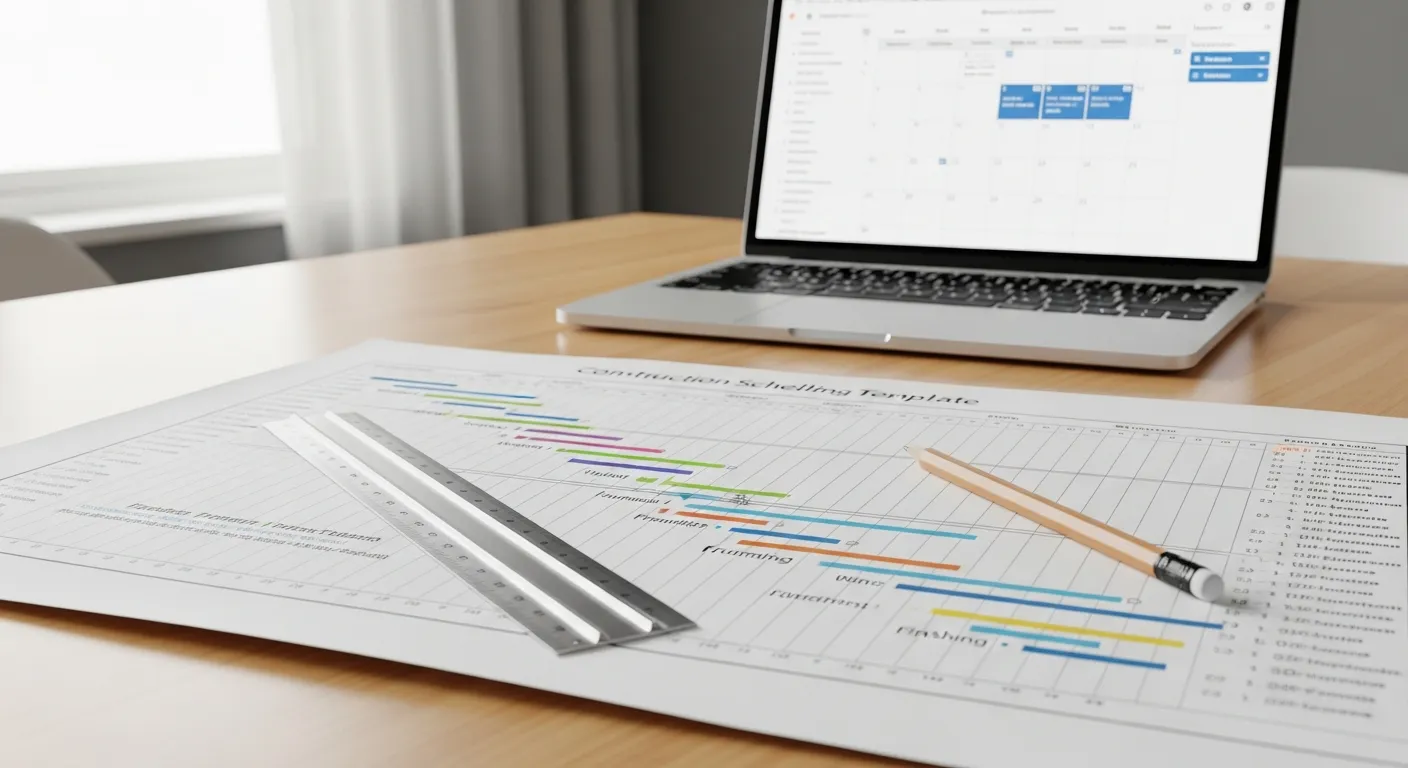
Free Construction Schedule Template
A solid construction schedule keeps your jobs on track, your crews busy, and your clients happy. Grab our free...
Read More →