
Construction Risk Management Guide for Contractors
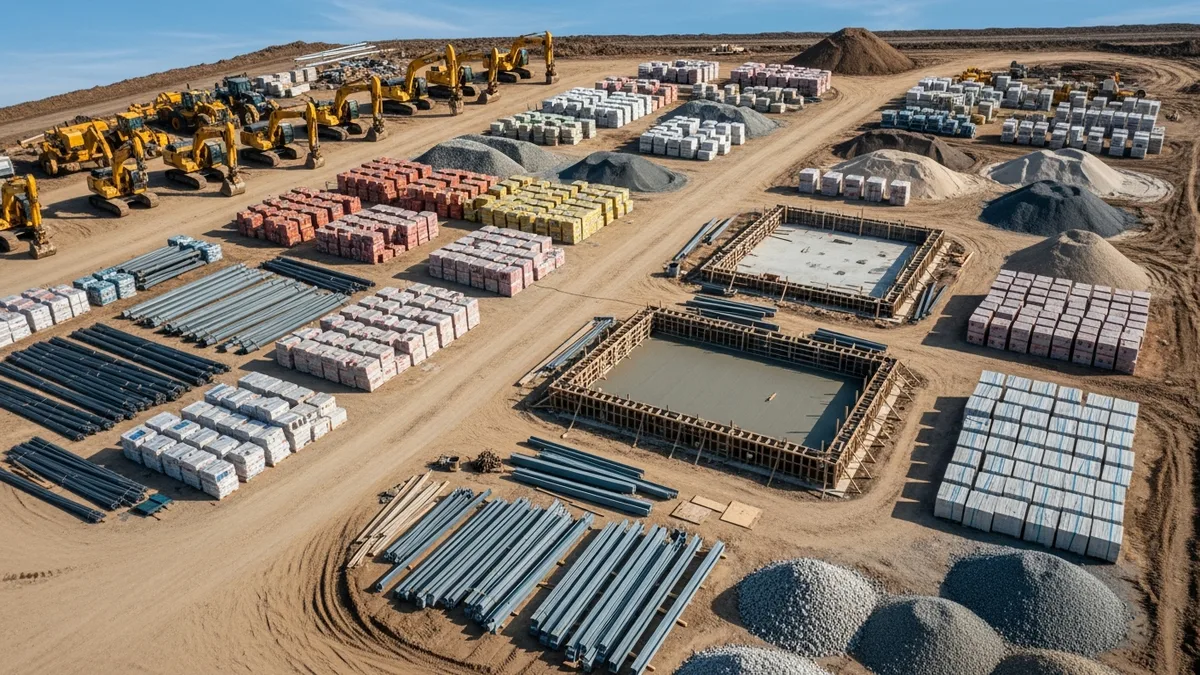
Every construction project carries risk. That is not news to anyone who has spent time on a job site. Materials show up late. Weather shuts you down. A subcontractor walks off the job. Costs creep up until your margins disappear.
The difference between contractors who survive long-term and those who don’t often comes down to one thing: how they handle risk. Not whether they avoid it, because you can’t, but whether they see it coming and have a plan.
This guide breaks down the types of risk you face on construction projects, how to assess them, and practical strategies to deal with each one.
The Seven Types of Construction Risk
Risk in construction is not one thing. It shows up in different forms, and each type needs a different response.
1. Financial Risk
Financial risk is anything that threatens your bottom line. Cost overruns are the most obvious example, but financial risk also includes:
- Clients who don’t pay on time (or at all)
- Estimates that miss the mark
- Unexpected material price increases
- Cash flow gaps between expenses and payments
- Bonding requirements you can’t meet
Financial risk kills more contractors than any other type. You can build a beautiful project and still go broke if the money side falls apart.
How to mitigate it: Build accurate estimates using historical data from past projects. Track job costs in real time so you catch overruns early, not after the project is done. Use job costing software that gives you a clear picture of where every dollar goes. Include contingency in your bids, typically 5-10% depending on project complexity.
2. Safety Risk
Construction is one of the most dangerous industries in the country. Falls, struck-by incidents, electrocution, and caught-between hazards account for the majority of fatalities. Beyond the human cost, safety incidents create massive financial and legal exposure.
A single serious injury can result in:
- OSHA fines (up to $156,259 per willful violation)
- Workers comp premium increases
- Lawsuits and legal fees
- Project delays
- Damage to your reputation
How to mitigate it: Safety starts with training and culture, not just paperwork. Run regular toolbox talks. Enforce PPE requirements without exception. Document everything. Conduct job hazard analyses before each phase of work. Make sure your safety program meets or exceeds OSHA standards, and actually follow it.
3. Schedule Risk
Schedule delays cost money. Every extra day on a project means more labor costs, more equipment rental, and potential liquidated damages. Common causes include:
- Permit delays
- Weather shutdowns
- Subcontractor no-shows
- Inspection failures
- Design changes mid-project
- Material delivery delays
How to mitigate it: Build realistic schedules with float time for high-risk activities. Use scheduling tools that show dependencies so you can see how a delay in one task affects everything downstream. Communicate schedule updates to the whole team regularly. When delays happen, document the cause immediately for potential claims.
4. Quality Risk
Quality problems mean rework, and rework is one of the biggest profit killers in construction. Industry studies estimate that rework accounts for 5-12% of total project costs. That comes straight out of your margin.
Quality risk includes:
- Work that doesn’t meet specs
- Failed inspections
- Material defects
- Miscommunication between trades
- Incomplete or unclear plans
How to mitigate it: Implement quality control checklists for each phase of work. Inspect work before it gets covered up. Hold pre-construction meetings with subs to review scope and expectations. Document everything with photos and notes. When you find a problem, fix it immediately instead of pushing it to the punch list.
5. Legal Risk
Legal risk covers contract disputes, liability claims, regulatory compliance, and anything that could land you in court or in front of a regulatory body.
Common legal risks include:
- Breach of contract claims
- Mechanic’s lien disputes
- ADA compliance issues
- Environmental violations
- Employment law violations
- Professional liability claims
How to mitigate it: Never start work without a signed contract. Have a construction attorney review your contracts, especially on larger projects. Maintain proper licensing and insurance. Document scope changes with signed change orders. Keep detailed project records because if it is not documented, it did not happen.
6. Weather Risk
You can’t control the weather, but you can plan for it. Weather risk varies by region and season, but every project faces it in some form.
Beyond obvious events like hurricanes and blizzards, weather risk includes:
- Rain delays on earthwork and concrete pours
- Extreme heat that limits crew productivity
- Freeze-thaw cycles that damage fresh concrete
- Wind that shuts down crane operations
- Flooding on low-lying sites
How to mitigate it: Check historical weather data for your area and build weather days into your schedule. Monitor forecasts and adjust work plans accordingly. Include force majeure clauses in your contracts. When weather delays happen, document them with photos, weather reports, and daily logs.
7. Supply Chain Risk
The last few years taught every contractor a hard lesson about supply chain risk. Material shortages, price volatility, and long lead times can wreck a project timeline and budget.
How to mitigate it: Order long-lead items as early as possible. Get material quotes with defined expiration dates and lock in pricing when you can. Identify backup suppliers for critical materials. Include escalation clauses in your contracts so you are not stuck eating a 30% price increase on steel. Track material deliveries as part of your project management process.
How to Assess Construction Risks
Identifying risks is step one. Step two is figuring out which ones deserve the most attention. Not all risks are equal, and you can’t spend the same energy on every possible problem.
The Probability-Impact Matrix
The simplest risk assessment tool is a probability-impact matrix. For each risk, you rate two things:
- Probability: How likely is this risk to happen? (High, Medium, Low)
- Impact: If it does happen, how bad is it? (High, Medium, Low)
Risks that are both high-probability and high-impact get the most attention. Low-probability, low-impact risks might just need monitoring.
Here is a simple way to think about it:
- High probability + High impact: Act now. Create a detailed mitigation plan.
- High probability + Low impact: Monitor closely. Have a response ready.
- Low probability + High impact: Transfer the risk (insurance) and have a contingency plan.
- Low probability + Low impact: Accept the risk and move on.
Lessons Learned from Past Projects
Your best risk assessment tool is your own experience. After every project, take 30 minutes with your team to review:
- What risks did we identify that actually happened?
- What risks surprised us?
- Did our mitigation plans work?
- What would we do differently?
Write these lessons down and use them on the next project. Over time, you build a library of real-world risk data that makes your assessments much more accurate.
Pre-Construction Risk Review
Before starting any project, sit down with your team and walk through the job from start to finish. Ask questions like:
- What about this project is different from what we normally do?
- Where have we had problems on similar projects?
- What are the site conditions, and do we have a geotech report?
- Are there long-lead materials?
- What is the client like to work with?
- Are the plans complete, or are we starting with incomplete design?
Document the answers. This becomes the foundation of your risk register for the project.
Insurance as Risk Transfer
Insurance is the primary tool for transferring financial risk. You pay a premium, and in return, the insurance company takes on the financial burden when certain events occur.
Essential Insurance Policies for Contractors
General Liability: Covers third-party bodily injury and property damage claims. This is the baseline policy every contractor needs.
Workers Compensation: Required by law in almost every state. Covers medical expenses and lost wages for employees injured on the job.
Builders Risk: Covers damage to the structure under construction from fire, weather, theft, and vandalism. Usually required by the project owner but sometimes the contractor carries it.
Commercial Auto: Covers your vehicles and drivers. Make sure it includes hired and non-owned auto coverage.
Professional Liability (E&O): Covers claims arising from design errors or professional advice. Important if you do any design-build work.
Umbrella/Excess Liability: Provides additional coverage above the limits of your other policies. Worth having for larger projects.
Insurance Tips
- Review your coverage annually with your agent
- Make sure your policy limits match your project sizes
- Require certificates of insurance from every subcontractor
- Report claims promptly because late reporting can void coverage
- Keep your Experience Modification Rate (EMR) low by maintaining a strong safety record
Contract Clauses That Protect You
Your contract is your first line of defense against many types of risk. Here are the clauses that matter most:
Change Order Procedures
Define exactly how changes get requested, approved, priced, and documented. Without a clear process, scope creep eats your margin and creates disputes.
Force Majeure
This clause covers events beyond your control: natural disasters, pandemics, government shutdowns, and similar situations. Make sure the definition is broad enough to actually protect you, and that it provides time extensions and cost relief.
Payment Terms
Specify when invoices are due, what happens if payment is late (interest charges, right to stop work), and retention terms. Include a pay-if-paid or pay-when-paid clause if you are a subcontractor, and understand the difference.
Indemnification
Limit your indemnification obligations to your own negligence. Avoid broad-form indemnity clauses that make you responsible for someone else’s mistakes.
Dispute Resolution
Specify whether disputes go to mediation, arbitration, or litigation. Mediation first is usually the most cost-effective approach.
Scope of Work
The more detailed your scope, the fewer disputes you will have. Include what is in your scope and what is not. Reference the specific plans, specs, and addenda that apply.
Building a Risk Register
A risk register is a living document that tracks every identified risk on a project. It is not complicated, but it needs to be maintained.
What to Include
For each risk, document:
- Description: What is the risk?
- Category: Financial, safety, schedule, quality, legal, weather, or supply chain
- Probability: High, medium, or low
- Impact: High, medium, or low
- Owner: Who is responsible for monitoring and responding to this risk?
- Mitigation plan: What are you doing to reduce the likelihood or impact?
- Contingency plan: What will you do if it happens anyway?
- Status: Open, mitigated, or closed
Keep It Accessible
Your risk register does no good sitting in a filing cabinet. Keep it in your project management software where the whole team can see it and update it. Review it at every weekly meeting. Add new risks as they come up. Close out risks that no longer apply.
Start Simple
If you have never used a risk register, start with your five biggest concerns on the current project. Write them down with a one-sentence mitigation plan for each. That alone puts you ahead of most contractors.
Making Risk Management Part of Your Culture
Risk management is not a one-time exercise at the start of a project. It needs to be baked into how your company operates every day.
Lead from the Top
If the owner and project managers take risk seriously, the rest of the team will follow. If leadership treats risk management as paperwork that gets in the way, nobody else will care either.
Talk About Risk Regularly
Bring up risks in your weekly project meetings. Ask your superintendents what keeps them up at night. Create a culture where people feel comfortable raising concerns without being labeled as negative.
Document Everything
Good documentation is the foundation of risk management. Daily logs, photos, meeting minutes, change orders, inspection reports, and correspondence all serve as your record of what happened and why.
Using a tool like Projul makes documentation easier because everything lives in one place. Your team can log daily reports, track schedule changes, and store photos from the field without juggling spreadsheets and email chains.
Review and Improve
After every project, conduct a lessons-learned session. What risks materialized? How well did your plans work? What would you change? Feed those lessons back into your process so each project gets better.
Train Your Team
Make sure your project managers, superintendents, and foremen understand basic risk management concepts. They are the ones closest to the work and most likely to spot problems early. Give them the tools and authority to flag risks and take action.
Building Better Estimates to Reduce Financial Risk
Accurate estimating is one of the most effective risk mitigation tools you have. When your estimates are based on solid data rather than gut feelings, you avoid the two biggest financial traps: bidding too low and winning money-losing projects, or bidding too high and losing work.
Track your actual costs against estimates on every project. Over time, this data makes your future estimates more accurate and your financial risk lower.
Putting It All Together
Risk management does not have to be complicated. Here is a simple framework you can start using today:
- Identify risks at the start of every project using your team’s experience and a pre-construction review
- Assess each risk using a simple probability-impact rating
- Plan your response by choosing to mitigate, transfer, accept, or avoid each risk
- Document everything in a risk register that lives in your project management system
- Review regularly at weekly meetings and after project completion
- Learn and improve by capturing lessons learned and applying them to future projects
The contractors who manage risk well do not eliminate it. That is impossible in construction. But they see problems coming, they have plans ready, and they protect their businesses from the hits that take other contractors down.
Start with the basics. Build from there. And make it part of how your company operates, not just something you do when a client requires it.
Frequently Asked Questions
What are the most common types of risk in construction?
How do you create a construction risk register?
What is the difference between risk mitigation and risk transfer?
How does insurance help manage construction risk?
What contract clauses help protect contractors from risk?
How often should you review your risk management plan?
Related Articles

Sell More Jobs With Photos in Your Estimates
Most contractors send plain text estimates with line items and dollar amounts. But adding photos to your estimates can...
Read More →
Building Your Own Contractor Shop or Yard: What Every GC Needs to Know
At some point, every growing contractor faces the same question: do we keep renting, or do we build our own shop? This...
Read More →
Construction Contract Negotiation: 25 Tips to Protect Your Business Before You Sign
Most contractors lose money not because they can't build, but because they signed a bad contract. Here are 25...
Read More →