
Construction Temporary Heating and Enclosures
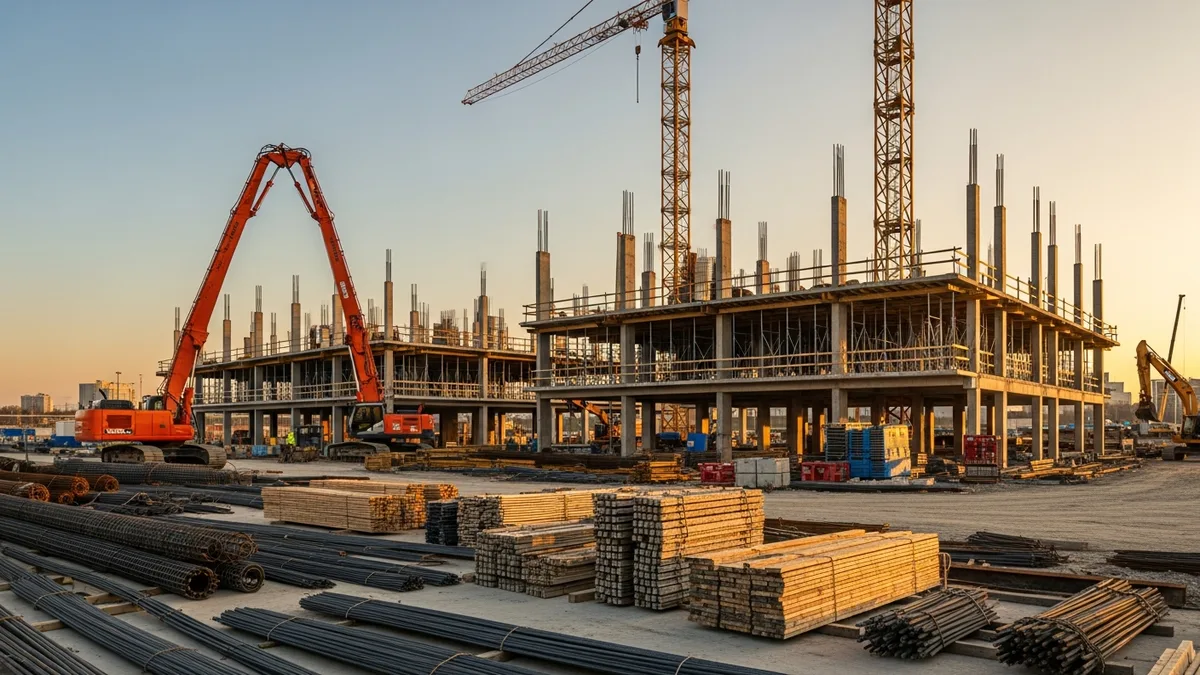
Cold weather kills schedules. If you have ever watched a project grind to a halt because temperatures dropped below freezing, you already know the pain. Lost days turn into lost weeks, subs start shuffling to other jobs, and your client is calling every morning asking why nothing is happening.
The good news is that you do not have to accept winter shutdowns as inevitable. Temporary heating and enclosure systems let you keep working through the coldest months, and contractors who plan for cold weather instead of reacting to it consistently finish on time and protect their margins.
This guide breaks down everything you need to know about temporary heating and enclosures on construction sites, from choosing the right equipment to budgeting fuel costs to keeping your crew safe and OSHA-compliant.
Why Temporary Heating and Enclosures Matter for Your Bottom Line
Every day a project sits idle costs you money. Between equipment rentals ticking away, overhead that does not stop, and the ripple effect on your next job, winter delays are one of the biggest margin killers in construction.
Temporary heating and enclosures are not just about comfort. They serve several critical functions:
- Concrete curing protection. Fresh concrete needs to stay above 50 degrees Fahrenheit for proper hydration. Without heat, you risk freeze damage that compromises structural integrity. If you are working with concrete in cold conditions, check out our concrete curing methods guide for detailed best practices.
- Drywall and paint work. Joint compound, paint, and primers all have minimum temperature requirements. Most products need at least 50 to 55 degrees to cure properly.
- Adhesive and sealant performance. Flooring adhesives, caulking, and waterproofing membranes fail when applied in cold conditions. Manufacturers void warranties if you ignore their temperature specs.
- Worker productivity and safety. Cold crews work slower and make more mistakes. OSHA has clear guidelines about cold stress hazards that you need to follow.
- Schedule preservation. Keeping interior trades working through winter means you hit your completion date. That is worth every dollar you spend on temporary heat.
The math usually works out in your favor. If your daily project overhead runs 2,000 to 5,000 dollars and temporary heating costs 500 to 1,500 dollars per day, you come out ahead every single time compared to shutting down. Factor in the schedule compression penalty on your next project, and it is not even close.
For a deeper look at how delays cascade through your project timeline, our construction project delay guide covers the full picture.
Types of Temporary Construction Heaters
Choosing the right heater depends on your space, your fuel access, and what work is happening inside the heated area. Here are the main categories:
Direct-Fired Heaters
These units burn fuel and blow the combustion air directly into the workspace. They are the most efficient option because 100 percent of the heat goes into the space. The downside is that they also pump moisture and combustion byproducts into the air.
Best for: Open structures, ventilated areas, exterior enclosures where air exchange is high. Great for keeping an open floor warm enough for concrete finishing.
Not ideal for: Enclosed spaces where crews are working for extended periods. The moisture output can also interfere with drywall finishing and paint curing.
Common fuels: Propane, natural gas, diesel, kerosene.
Output range: 50,000 to 1,000,000+ BTU per hour.
Indirect-Fired Heaters
These units have a heat exchanger that separates combustion gases from the heated air. Clean, dry air goes into the workspace while exhaust vents outside through a flue pipe.
Best for: Enclosed work areas, interior finishing, concrete curing in closed spaces, any situation where air quality matters.
Trade-off: They cost more to rent and burn roughly 20 percent more fuel than direct-fired units because of heat exchanger losses.
Output range: 100,000 to 1,000,000+ BTU per hour.
Electric Heaters
Electric units produce zero emissions and zero moisture. They are the cleanest option but usually the most expensive to operate and limited in output.
Best for: Small enclosed areas, finish work spaces, occupied buildings where combustion heaters are not allowed.
Limitations: You need adequate electrical service on site. A single 480V electric heater might pull 60 to 100 amps, so check your temporary power capacity before committing.
Hydronic Heaters
These units heat glycol fluid that circulates through hoses and radiators or under concrete blankets. They are the gold standard for concrete curing because they deliver consistent, even heat directly to the slab.
Best for: Concrete curing, radiant floor warming, large slab-on-grade pours, post-tensioned decks.
Cost: Higher rental cost but very efficient for the specific task of curing concrete. If you are working on post-tensioned slabs, our post-tensioned concrete guide covers the curing requirements in detail.
Ground Thaw Units
Before you can even pour foundations in frozen ground, you may need to thaw the soil. Ground thaw heaters use hydronic hoses laid on the ground surface under insulating blankets.
Best for: Foundation excavation, footing pours, utility work in frozen conditions.
Timeline: Plan for 24 to 72 hours of thaw time depending on frost depth and soil type.
Enclosure Methods and Materials
A heater without an enclosure is like running your furnace with the windows open. The enclosure is what makes temporary heating actually work. Here are your main options:
Polyethylene Sheeting (Poly)
The most common and cost-effective enclosure material. Standard construction poly comes in 4-mil to 10-mil thicknesses, with 6-mil being the most popular for temporary enclosures.
Pros: Cheap, fast to install, lets light through, readily available.
Cons: Tears easily, single-season use, limited insulation value.
Tips: Use reinforced poly or woven poly tarps for longer-duration enclosures. Overlap seams by at least 12 inches and tape them. Secure the bottom edge with sandbags or lumber, not just stakes.
Insulated Tarps and Blankets
These are multi-layer tarps with insulating fill, often rated by R-value. They cost more than poly but dramatically reduce your heating fuel consumption.
Pros: Better insulation means lower fuel costs, reusable across multiple projects, more durable in wind.
Cons: Heavier, harder to work with, higher upfront cost.
When to use them: Any enclosure you plan to maintain for more than two weeks. The fuel savings pay for the tarps quickly.
Scaffold Enclosures
For multi-story work or facade projects, wrapping scaffold with poly or mesh creates a heated work zone against the building exterior. This is standard practice for masonry, exterior insulation, and curtain wall installations in cold climates.
Key detail: Make sure your scaffold is engineered for wind loads with the enclosure in place. Wrapping a scaffold dramatically increases its wind sail area, and a scaffold collapse during a winter storm is a catastrophic failure. Our OSHA compliance guide covers scaffold safety requirements.
Temporary Structures
For ground-level work like slab pours or foundation work, you can build temporary wood-frame or metal-frame structures covered with poly or tarps. Think of them as giant tents over your work area.
Sizing rule: Allow at least 2 feet of clearance above the highest point of work. For concrete pours, make sure equipment like pump trucks can still access the area.
Air-Supported Structures
Inflatable dome structures are used for large-area coverage. They are expensive but provide column-free interior space. Most common on sports facility construction and large commercial slab pours.
Planning and Budgeting for Temporary Heat
This is where most contractors get it wrong. They treat temporary heating as a reactive expense instead of planning for it from the start. Here is how to do it right:
BTU Calculations
Projul is trusted by 5,000+ contractors. See their reviews to find out why.
The basic formula for heating a temporary enclosure is:
BTU/hr = Volume (cubic feet) x Temperature Rise (degrees F) x Heat Loss Factor
The heat loss factor depends on your enclosure material:
- Single-layer poly: 3.0 to 5.0
- Double-layer poly with air gap: 1.5 to 2.5
- Insulated tarps: 0.5 to 1.5
Example: A 50 x 100 x 12-foot enclosure (60,000 cubic feet) needing a 50-degree temperature rise with single poly: 60,000 x 50 x 4.0 = 12,000,000 BTU/hr. That is a big number. You would need multiple large heaters or better insulation.
Bump up to insulated tarps at a factor of 1.0: 60,000 x 50 x 1.0 = 3,000,000 BTU/hr. Much more manageable and cheaper to operate even though the tarps cost more upfront.
Fuel Cost Estimating
Propane runs roughly 93,000 BTU per gallon. At 2.50 to 3.50 dollars per gallon (prices vary by region and season), you can estimate daily fuel cost based on your BTU requirement and run hours.
Quick math: A 400,000 BTU/hr heater running 24 hours burns about 103 gallons of propane per day. At 3.00 dollars per gallon, that is 309 dollars per day in fuel alone. Add equipment rental at 100 to 200 dollars per day, and you are looking at 400 to 500 dollars per day for a single heater setup.
Work these numbers into your estimate from the beginning. Our construction budget management guide walks through how to build contingency line items for weather-related costs.
Contract Language
If you are bidding work that spans cold months, your contract needs to address temporary heating clearly:
- Who pays for temporary heat? On many commercial projects, the GC carries this cost. On some, it is a shared cost or passed to specific subs.
- Temperature maintenance specs. What temperature must be maintained and for how long? Get this in writing.
- Fuel price escalation. If the project runs long, who absorbs fuel price increases?
- Enclosure responsibility. Who builds, maintains, and removes temporary enclosures?
Vague contract language around winter work leads to disputes. Pin it down during preconstruction.
Safety and OSHA Compliance
Temporary heating introduces real hazards. Carbon monoxide poisoning, fire, and burns are all on the table if you cut corners. Here is what you need to have in place:
Carbon Monoxide (CO) Monitoring
This is non-negotiable. Any combustion heater in an enclosed space requires CO monitoring.
- Place CO detectors at breathing height (3 to 5 feet) in occupied work areas.
- OSHA permissible exposure limit (PEL) for CO is 50 ppm as an 8-hour time-weighted average.
- Set alarm thresholds at 35 ppm for warning and 100 ppm for evacuation.
- Check detectors daily and calibrate per manufacturer specs.
Fire Prevention
- Maintain minimum clearances between heaters and combustible materials. Most manufacturers specify 10 feet minimum.
- Keep fire extinguishers (minimum 10-lb ABC rated) within 25 feet of every heater.
- No fuel storage inside heated enclosures. Period.
- Assign fire watch during and after heating operations.
- Inspect fuel lines and connections daily for leaks.
Ventilation Requirements
Even with indirect-fired heaters, you need ventilation in enclosed spaces:
- Provide at least one air change per hour in occupied enclosures.
- Direct-fired heaters require significantly more ventilation, typically 1 square foot of free opening per 200,000 BTU of heater capacity.
- Never seal an enclosure completely. Leave controlled openings for air exchange.
Training and Communication
Every crew member working in or near heated enclosures needs to know:
- Signs and symptoms of CO exposure (headache, dizziness, nausea).
- Location of CO detectors and what the alarms mean.
- Emergency evacuation procedures.
- Who is responsible for heater operation and monitoring.
Document this training. If OSHA shows up, you want records. For a full breakdown of your compliance obligations, reference our OSHA compliance guide.
Cold Weather Scheduling and Workflow Strategies
Smart scheduling is just as important as the heating equipment itself. Here is how experienced cold-climate contractors approach winter work:
Sequence Work to Minimize Heating Duration
Plan your schedule so that weather-sensitive work happens in the shortest possible window. Get the building dried in (roof and walls) as fast as possible so you transition from temporary enclosures to the permanent building envelope.
- Prioritize structural framing and sheathing in fall before temperatures drop.
- Install roofing and weather barriers early. Check our exterior sheathing and weather barrier guide for sequencing details.
- Schedule concrete work during the mildest windows in your forecast when possible.
- Stack interior trades efficiently once the building is enclosed.
Use Weather Forecasting Actively
Do not just check the weather each morning. Build a 10-day forecast review into your weekly planning meetings. Identify windows for temperature-sensitive work and schedule accordingly.
Many contractors use weather monitoring services that provide site-specific forecasts and alerts. The small subscription cost pays for itself the first time you avoid pouring concrete the day before an unexpected cold snap.
Track and Document Everything
Keep daily logs of:
- Interior and exterior temperatures (minimum twice daily, morning and afternoon).
- Heater operation times and fuel consumption.
- Enclosure condition (any damage, repairs, modifications).
- Concrete pour temperatures and curing conditions.
This documentation protects you in warranty disputes and quality claims. It also helps you estimate winter work more accurately on future projects.
Put to work Project Management Software
Tracking weather delays, heating costs, and schedule adjustments across a winter project gets complicated fast. Spreadsheets fall apart when you have multiple heated zones, rotating sub crews, and daily fuel deliveries to manage.
Construction project management software like Projul keeps everything in one place. Your field team logs daily conditions from their phones, your PM tracks costs against the winter work budget in real time, and your schedule updates automatically when you shift tasks around weather windows. When spring comes and the client asks why the project ran three weeks longer than planned, you have the documentation to back up every decision.
Cold weather construction is not easy, but it is predictable if you plan for it. The contractors who win in cold climates are the ones who budget for temporary heating from day one, choose the right equipment for each situation, keep safety at the front of every decision, and track everything so they get better at it every year.
Want to see this in action? Get a live demo of Projul and find out how it fits your workflow.
Do not let winter shut you down. Build through it.
Frequently Asked Questions
What is the most common temporary heater used on construction sites?
How cold is too cold to pour concrete without temporary heating?
How much does temporary heating cost per day on a construction site?
Do I need a permit for temporary construction heaters?
Can you run temporary heaters overnight on a construction site?
Related Articles

How to Implement Construction Software Without Losing Your Mind
Most construction software rollouts fail. Not because the software is bad, but because the rollout was rushed. Here are...
Read More →
How Selections Can Pay for Themselves in Three Easy Steps
Most contractors lose thousands each year on wrong material orders, slow client decisions, and missed upsell chances....
Read More →
3 Free Concrete Estimate Templates for Every Pour Type (2026)
Three ready-to-use concrete estimate templates with realistic line items, material costs, labor rates, and markup...
Read More →