
Construction Yard & Laydown Area Management Guide | Projul
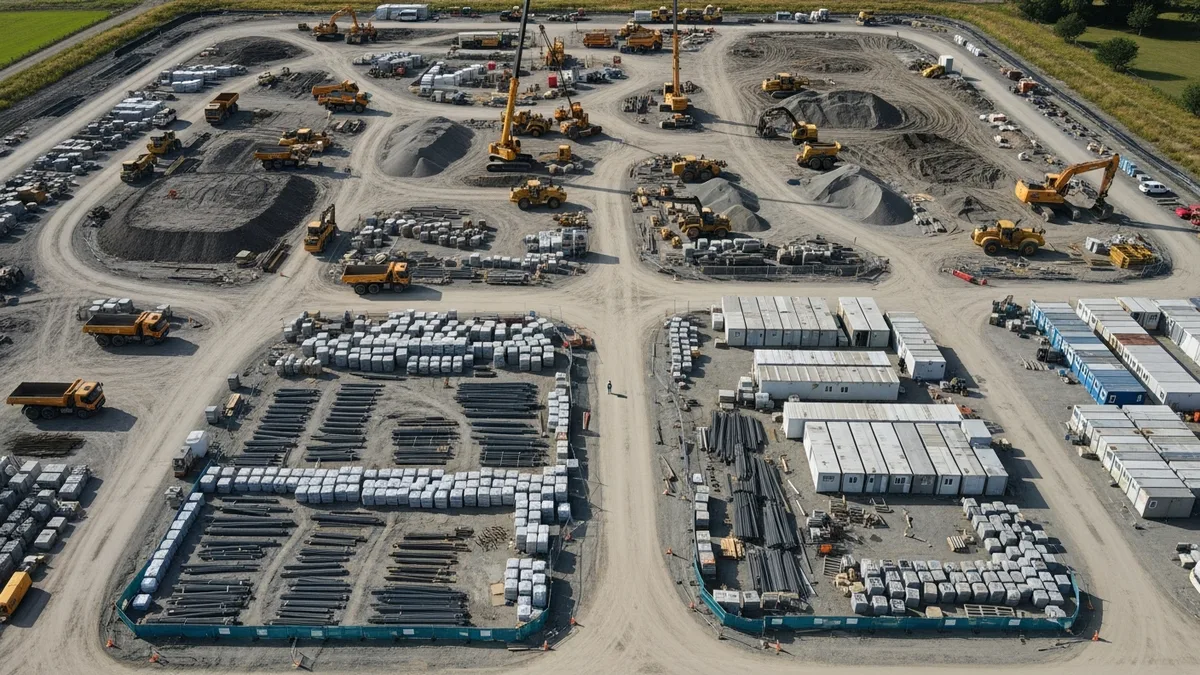
If you have ever watched a crew burn half the morning hunting for materials that were “somewhere in the yard,” you already know why laydown area management matters. Disorganized material storage does not just waste time. It damages materials, creates safety hazards, and quietly drains profit from every job.
Most contractors get pretty good at the actual building. Where things fall apart is the space between the delivery truck and the point of installation. That in-between zone, your laydown area or material yard, is where jobs speed up or slow down depending on how well you plan it.
This guide breaks down six areas of yard and laydown management that make a real difference on the ground. No theory, no fluff, just the stuff that works when you have trucks rolling in and a crew waiting to get after it.
Planning Your Yard Layout Before the First Delivery Shows Up
The biggest mistake contractors make with laydown areas is treating them as an afterthought. Materials show up, the forklift driver drops them wherever there is open ground, and within a week the yard looks like a tornado hit a lumber store. Sound familiar?
Good yard layout starts during pre-construction, right alongside your project schedule and site logistics plan. Here is what to think through before that first flatbed backs in:
Map your zones. Break the laydown area into specific zones based on trade, phase, or material type. Steel in one area, electrical in another, plumbing fittings somewhere else. Label each zone clearly with signs or spray-painted markings on the ground. When everyone knows where things belong, materials actually end up there.
Think about flow. Materials should move in one direction: from delivery point, through the laydown area, to the staging zone, and finally to the point of installation. If your crew has to move materials backward or sideways to get them where they need to go, your layout needs work. Draw it out on a simple site plan and walk the routes before you commit.
Account for access. Every zone needs to be reachable by whatever equipment you are using to move materials, whether that is a forklift, a telehandler, or just a crew with hand trucks. Dead-end storage zones that require moving three pallets of drywall to reach the one behind them will cost you hours every week.
Build in buffer space. Deliveries rarely arrive exactly when planned. Leave room for overlap, where materials for the next phase can land even if the current phase is not fully cleared out yet. A yard packed to 100 percent capacity is a yard that cannot absorb any surprises.
Plan for the weather. Some materials need cover, some need to stay off the ground, and some cannot sit in standing water. Factor in drainage, tarps or temporary shelters, and dunnage for keeping materials up off the dirt. Water-damaged lumber or rusted rebar is money thrown away.
Spending an hour on yard layout planning before mobilization will save you dozens of hours over the life of the project. That is not an exaggeration. Crews that know where everything goes from day one move faster, break less material, and spend more time actually building.
Tracking Inventory So Nothing Gets Lost, Double-Ordered, or Stolen
Once materials start flowing into your yard, you need a system for knowing what you have, where it is, and how much is left. Relying on memory or a walk-through does not scale past the smallest jobs.
The old-school approach is a clipboard and a spreadsheet. It works for a while, but it breaks down when multiple deliveries arrive in the same week, when different trades are pulling from the same stockpile, or when you have more than one laydown area across different jobsites.
A better approach ties your material tracking directly into your project management system. When a delivery arrives, someone logs it with a quantity, a storage location, and a photo. When materials get pulled for installation, someone updates the count. The running tally lives in one place that your project manager, superintendent, and purchasing team can all see.
Receiving matters more than you think. The moment materials hit the yard is when most tracking errors start. Delivery tickets get lost, quantities do not match the purchase order, and damaged items get stacked in with good ones. Set up a simple receiving protocol: check the packing slip against the PO, inspect for damage, log everything, and note any discrepancies before the driver leaves.
Use location codes. Assign a simple code to each zone or rack in your yard (A1, B3, etc.) and record where each delivery lands. This turns “the lumber is somewhere over by the fence” into “the 2x10s are in zone C2, row 3.” Your crew can find what they need without playing hide and seek.
Track consumption, not just deliveries. Knowing what arrived is only half the picture. You also need to know what has been used. This is especially important for controlling material waste and catching theft early. If you received 500 sheets of plywood and only 200 are accounted for in installed work, you have a problem worth investigating.
Regular counts keep you honest. Schedule a quick physical count of key materials at least weekly. Comparing your system numbers to what is actually in the yard catches errors early, before they turn into emergency reorders or budget overruns. This is also a good habit for staying on top of your job costing, since material costs that drift unnoticed can quietly wreck your margins.
The goal is not perfect, warehouse-grade inventory control. It is having enough visibility that your purchasing team knows what to order, your foremen know what is available, and your project manager knows where the money went.
Locking Down Security for Stored Materials and Equipment
Construction theft is not a minor nuisance. Industry estimates put annual losses from jobsite theft in the billions across the U.S. And it is not just the cost of the stolen materials. It is the downtime waiting for replacements, the schedule delays, and the insurance headaches that follow.
Your laydown area is a prime target because it is full of valuable materials sitting in the open, often on sites with limited after-hours presence. Here is how to make it a harder target:
Perimeter fencing is non-negotiable. Chain-link fencing with privacy slats or construction barrier panels should surround any laydown area holding significant material value. A fence does not stop a determined thief, but it forces them to work harder and makes casual opportunistic theft much less likely.
Control access with a single entry point. Multiple open gates mean you cannot track who comes and goes. Funnel all vehicle and foot traffic through one access point during operating hours. After hours, lock every gate. Log visitors, deliveries, and subcontractor access so you have a record if something goes missing.
Cameras and lighting work together. Security cameras are most useful when paired with good lighting. Motion-activated floodlights discourage after-hours trespassers, and cameras give you evidence if something does happen. Solar-powered camera systems work well for remote sites without reliable power. Position cameras to cover the entry gate and any high-value storage zones.
Lock up the expensive stuff. Copper wire, power tools, small equipment, and specialty fixtures should go inside lockable shipping containers or job boxes, not on open pallets. The five minutes it takes to lock a container at the end of each day can save you thousands.
Track who pulls what. When materials leave the laydown area, someone should sign for them or log the pull in your tracking system. This is not about distrusting your crew. It is about accountability. If 20 rolls of Romex walk off the job, you want to know when and narrow down who had access.
Report and respond quickly. If you notice materials missing, act fast. File a police report, notify your insurance carrier, review camera footage, and tighten whatever gap allowed the loss. Waiting or shrugging it off signals that theft is tolerated, and it will happen again.
Security does not have to be elaborate or expensive. Fencing, one locked gate, a few cameras, and a culture of accountability go a long way. The contractors who lose the most to theft are the ones who assume it will not happen to them.
Staging Equipment So It Is Ready When the Crew Needs It
Equipment staging is a different animal from material storage, but it shares the same laydown space on most jobsites. The challenge is keeping equipment accessible without blocking material flow or creating safety hazards.
Poor equipment staging looks like this: the excavator is parked behind the material racks, the skid steer is pinned in by a lumber delivery, and the aerial lift needs fuel but the fuel tank is across the yard behind a stack of pipe. Everyone spends the first hour of the day playing musical chairs with heavy iron just to get to work.
Dedicate equipment zones separate from material zones. Equipment and materials should not share the same real estate. Equipment needs room to maneuver in and out, while materials need stable, organized stacking. Mixing the two creates bottlenecks and damage risk.
Stage based on tomorrow’s work, not today’s. At the end of each day, position equipment for the next morning’s tasks. If the crane is needed on the north side at 7 AM, it should be parked there at 5 PM the night before, not on the south end of the site. This seems obvious, but it requires someone to actually look at the next day’s schedule and think ahead.
Keep fueling and maintenance access clear. Fuel tanks, air compressor stations, and equipment maintenance areas need their own dedicated space with clear access paths. If a piece of equipment needs service, the mechanic should be able to reach it without moving four other machines first.
Track equipment location across sites. If you run multiple jobsites, knowing which equipment is where matters a lot. A telehandler sitting idle at one site while another site is waiting for one is pure waste. Your equipment tracking system should give you a current picture of where every major piece of iron is sitting so you can make smart reallocation decisions.
Plan for equipment coming and going. Equipment mobilization and demobilization create some of the biggest traffic jams in a laydown area. When a lowboy is delivering a dozer, you need a clear path in, a clear spot to offload, and a clear path out. Plan these moves in advance and communicate them to the whole site so nobody parks a material delivery in the unloading zone.
Curious what other contractors think? Check out Projul reviews from real users.
Good equipment staging is mostly about thinking one step ahead. The contractors who do it well are the ones whose crews start swinging hammers at 7:01 instead of shuffling equipment until 8:30.
Reducing Material Handling Time on Every Job
Here is a number that should get your attention: on the average commercial construction project, materials get handled three to five times between delivery and final installation. Every time someone picks up, moves, sets down, and picks up a material again, you are paying for labor that adds zero value to the finished product.
Reducing material handling is one of the simplest ways to speed up a job and protect your margins. It does not require fancy technology or a logistics degree. It just requires thinking about the path materials take and eliminating unnecessary stops.
Deliver as close to the point of installation as possible. If drywall is going on the third floor, can the boom truck place it on the third-floor deck directly instead of dropping it in the laydown area first? If mechanical equipment is going on the roof, can it be crane-lifted straight to the roof during the steel erection phase while the crane is already on site? Every skip in the chain saves labor hours.
Schedule deliveries to match the work sequence. When materials arrive weeks before they are needed, they take up space, get moved multiple times, and risk damage from weather or other trades working around them. Just-in-time delivery is not always possible in construction, but getting closer to it means less material sitting in the yard. Coordinate your delivery schedule with your look-ahead schedule so materials arrive days before installation, not weeks.
Pre-kit materials for specific tasks. Instead of sending a crew member to the laydown area to gather bolts, hangers, connectors, and fasteners one item at a time, pre-kit everything needed for a specific task or area. Organize kits by room, floor, or assembly and stage them at the work area. This turns multiple trips into one trip.
Eliminate double handling in the yard itself. If materials arrive on pallets and your crew breaks them down to restack on racks, only to pull them from racks and repalletize for transport to the work area, that is three handling events for one material. Look at your yard operations and ask: can we skip a step? Can we store materials in the same configuration they will travel to the work area in?
Use the right equipment for the move. A crew of four carrying bundles of conduit across the yard by hand is slower and more injury-prone than one person with a material cart. Invest in the right material handling equipment for your typical loads: pallet jacks, pipe carts, drywall dollies, and material hoists. The payback is fast.
Measure it. If you really want to get serious, track how many times your most common materials get handled from delivery to installation. You will probably be surprised at the number. Then set a goal to reduce it by one handling event. Even that small improvement, multiplied across thousands of units of material over a project, adds up to real time and money saved. Keeping your project costs visible makes it easier to see the financial impact of these improvements.
The lean construction folks call this “reducing waste in material flow.” You do not need to adopt a whole lean program to benefit from the concept. Just pay attention to how materials move through your site and ask whether each step is truly necessary.
Getting Your Whole Team on the Same Page with the Right Tools
All of the strategies above fall apart if the information lives in one person’s head. The superintendent might know the yard layout. The foreman might know what materials arrived yesterday. The project manager might know the delivery schedule. But if those three people are not sharing that information in real time, gaps appear.
This is where your project management software earns its keep. A tool like Projul puts delivery schedules, material logs, equipment locations, and task assignments in one place that everyone on the team can access from the field or the office.
Daily logs capture what happened in the yard. When receiving crews log deliveries, note damage, and record storage locations through a mobile app, that information is immediately available to everyone who needs it. No more calling the yard to ask if the steel showed up.
Scheduling tools prevent traffic jams. When you can see that three deliveries are scheduled for the same Tuesday morning, you can stagger them or make sure you have enough unloading crew on site. Without visibility, you end up with trucks lined up and drivers charging wait time.
Photo documentation protects you. Taking photos of materials at delivery and in storage creates a record for damage claims, theft investigations, and dispute resolution. When photos are attached to the project record in your management software, they are easy to find months later when you need them.
Communication keeps everyone aligned. When the yard layout changes, when a zone gets reassigned, or when a delivery is delayed, the whole team needs to know immediately. Push notifications and team messaging through your project management platform beat phone trees and sticky notes on the job trailer door every time.
The contractors who run the tightest yards are not necessarily the ones with the biggest budgets or the most staff. They are the ones who have a plan, communicate that plan clearly, and use simple tools to keep everyone pulling in the same direction. Your laydown area is not glamorous, but it is the engine room of every jobsite. Treat it that way, and you will see the difference in your schedule, your safety record, and your bottom line.
Getting started does not have to be complicated. Pick one area from this guide, whether it is mapping your yard layout, tightening up your receiving process, or staging equipment the night before, and put it into practice on your next job. Small changes in how you manage your laydown area compound into big results over the life of a project.
Want to put this into practice? Book a demo with Projul and see the difference.
If you are ready to bring your material tracking, scheduling, and team communication into one place, take a look at what Projul can do for your operation. It was built by contractors, for contractors, and it handles the messy, real-world stuff that generic tools miss.
Frequently Asked Questions
What is a laydown area in construction?
How big should a construction laydown area be?
How do I prevent theft from a construction material yard?
What is the difference between a laydown area and a staging area?
How can construction software help with yard and laydown management?
Related Articles

BIM Clash Detection: How to Catch Conflicts Before They Cost You on the Jobsite
BIM Clash Detection: How to Catch Conflicts Before They Cost You on the Jobsite Every contractor has a story about the...
Read More →
Asphalt Paving and Compaction Guide: Mix Types, Laydown Temperatures, and Quality Testing
Asphalt paving looks straightforward from a distance. A truck dumps material, the paver lays it down, and rollers...
Read More →
Construction Jobsite Wi-Fi & Connectivity Guide: Setting Up Reliable Internet in the Field
A practical guide to getting reliable internet on construction job sites. Learn about cellular hotspots, mesh networks,...
Read More →