
3 Free Demolition Estimate Templates (2026)
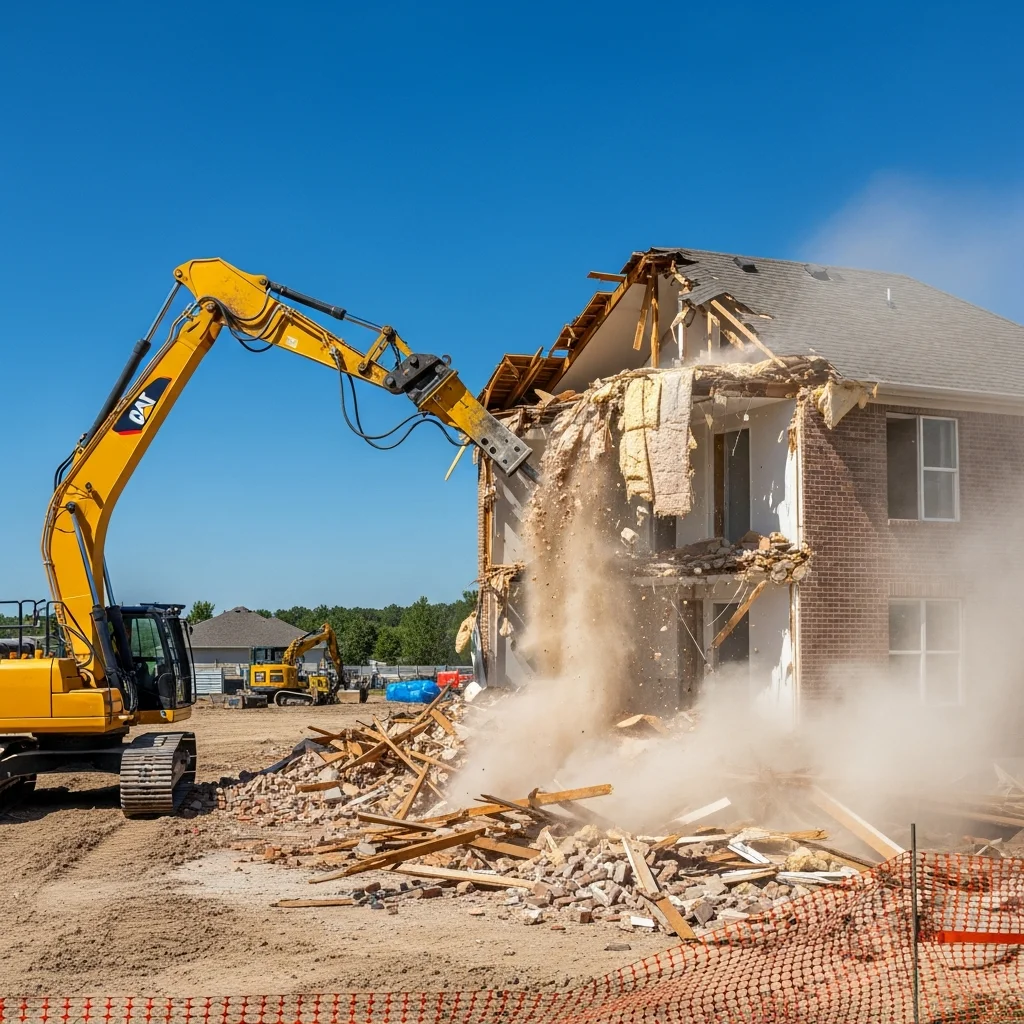
TL;DR: Three free demolition estimate templates (residential, commercial, interior selective) with real 2026 pricing. Plus a breakdown of demolition costs by project type ($4 to $15 per square foot depending on scope), hidden costs that blow up bids (asbestos, permits, disposal), how to bid selective demo vs full tear-down, and the disposal and recycling math you need to stay profitable. Download the templates, adjust for your market, and stop leaving money on the table.
Demolition looks simple from the outside. Bring in a machine, knock it down, haul it away. But anyone who has actually bid demolition work knows the estimate is where the real complexity lives. You need to account for hazardous materials, utility disconnects, permit requirements, disposal fees, and the thousand small things that can turn a profitable job into a money pit.
The margin on demolition work is tight to begin with. Miss a few line items and you can lose your entire profit on a single project. That is why having a solid estimate template matters. It forces you to walk through every cost category on every bid, so nothing falls through the cracks.
These three templates cover the most common demolition scenarios: residential structure demolition, commercial building demolition, and interior selective demolition. Each one includes realistic 2026 pricing for equipment, labor, disposal, and other costs. Adjust the numbers for your market, plug in the specifics for your job, and send a professional estimate that protects your margin.
Get Your Free Estimate Templates
Download Projul’s free construction estimate templates. Built by contractors, ready to customize. Create professional estimates in minutes and win more jobs.
What to Include in a Demolition Estimate
Before you start filling in line items, make sure your estimate covers all of these areas. Demolition has more regulatory requirements than most trades, and forgetting even one can be expensive.
Project Information
- Customer name, address, and contact information
- Project location and site access details
- Structure description (type, size, number of stories, construction type)
- Scope of demolition (full structure, partial, interior only)
- Known hazardous materials (asbestos, lead paint, underground storage tanks)
- Utility disconnect status and responsibilities
- Timeline and any phasing requirements
- Permit requirements and who pulls them
- Salvage or recycling requirements
Cost Categories
Break your demolition estimate into these sections:
- Pre-demolition work - Asbestos survey, abatement, utility disconnects, rodent baiting, tree protection
- Equipment - Excavators, skid steers, dump trucks, attachments (hammers, grapples, shears)
- Labor - Operators, laborers, flaggers, site supervision
- Disposal - Dumpster rentals, landfill tipping fees, recycling fees, hazmat disposal
- Site restoration - Backfill, grading, seeding, erosion control
- Permits and fees - Demo permit, utility disconnect permits, street use permit, air quality permit
- Overhead and profit - Insurance (GL rates for demo work are high), bonding, and profit margin
Terms and Exclusions
Demolition estimates should clearly state what is and what is not included:
- Whether the price includes utility disconnects or if the owner handles them
- Whether asbestos abatement is included or priced separately if the survey finds asbestos
- Responsibility for neighboring property protection
- What happens if unknown hazardous materials are discovered during demolition
- Payment schedule (typically a deposit, progress payment after structure is down, and final payment after site is graded)
- Any hours-of-operation restrictions from the municipality
How to Use These Templates
- Walk the site and document the structure, access points, neighboring properties, and any visible concerns.
- Get utility locate and disconnect information before pricing. Hidden utilities are a safety hazard and a cost surprise.
- Adjust unit costs for your local market. Equipment rates, disposal fees, and labor rates vary significantly by region.
- Add project-specific line items for anything unique to the job.
- Apply your overhead and profit based on the risk level of the project.
The prices shown are mid-range U.S. market rates for 2026. Always confirm disposal fees with your local landfill or transfer station and get current equipment rental rates from your supplier.
Template 1: Residential Structure Demolition
This template covers complete demolition of a 1,500 square foot single-story residential home on a concrete slab foundation, including debris removal and basic site grading. The home has no basement and no known hazardous materials (asbestos survey required to confirm).
Pre-Demolition
| Line Item | Quantity | Unit | Unit Cost | Total |
|---|---|---|---|---|
| Asbestos and hazmat survey | 1 | each | $800.00 | $800.00 |
| Utility disconnects (gas, electric, water, sewer) | 1 | lot | $1,200.00 | $1,200.00 |
| Rodent baiting (pre-demo, if required) | 1 | each | $350.00 | $350.00 |
| Neighbor notification and property protection | 1 | lot | $300.00 | $300.00 |
| Site fencing and signage | 1 | lot | $600.00 | $600.00 |
| Pre-Demolition Subtotal | $3,250.00 |
Equipment
| Line Item | Quantity | Unit | Unit Cost | Total |
|---|---|---|---|---|
| Excavator with thumb (30-ton) | 3 | days | $1,400.00 | $4,200.00 |
| Skid steer with grapple bucket | 3 | days | $450.00 | $1,350.00 |
| Water truck (dust control) | 3 | days | $350.00 | $1,050.00 |
| Dump truck (tri-axle) | 15 | loads | $350.00 | $5,250.00 |
| Equipment mobilization and demobilization | 1 | lot | $800.00 | $800.00 |
| Equipment Subtotal | $12,650.00 |
Labor
| Task | Quantity | Unit | Unit Cost | Total |
|---|---|---|---|---|
| Excavator operator | 24 | hours | $75.00 | $1,800.00 |
| Skid steer operator | 24 | hours | $55.00 | $1,320.00 |
| Laborers (2) | 48 | hours | $35.00 | $1,680.00 |
| Site supervisor | 24 | hours | $65.00 | $1,560.00 |
| Truck drivers (dump truck) | 15 | loads | $120.00 | $1,800.00 |
| Labor Subtotal | $8,160.00 |
Disposal
| Item | Quantity | Unit | Unit Cost | Total |
|---|---|---|---|---|
| Landfill tipping fees (C&D debris) | 180 | tons | $55.00 | $9,900.00 |
| Concrete recycling | 40 | tons | $25.00 | $1,000.00 |
| Metal recycling (credit) | 3 | tons | -$80.00 | -$240.00 |
| Disposal Subtotal | $10,660.00 |
Site Restoration
| Item | Quantity | Unit | Unit Cost | Total |
|---|---|---|---|---|
| Clean fill (backfill slab area and utilities) | 60 | cu yd | $22.00 | $1,320.00 |
| Rough grading | 4 | hours | $150.00 | $600.00 |
| Erosion control (silt fence) | 200 | lin ft | $3.50 | $700.00 |
| Seed and straw | 1 | lot | $400.00 | $400.00 |
| Restoration Subtotal | $3,020.00 |
Permits and Fees
| Item | Quantity | Unit | Unit Cost | Total |
|---|---|---|---|---|
| Demolition permit | 1 | each | $400.00 | $400.00 |
| Street use/lane closure permit (if needed) | 1 | each | $250.00 | $250.00 |
| Air quality notification (NESHAP) | 1 | each | $0.00 | $0.00 |
| Permits Subtotal | $650.00 |
Summary
| Amount | |
|---|---|
| Pre-demolition | $3,250.00 |
| Equipment | $12,650.00 |
| Labor | $8,160.00 |
| Disposal | $10,660.00 |
| Site restoration | $3,020.00 |
| Permits and fees | $650.00 |
| Direct Cost Subtotal | $38,390.00 |
| Overhead (15%) | $5,758.50 |
| Profit (10%) | $4,414.85 |
| Total Estimate | $48,563.35 |
Tips for This Template
- The asbestos survey is non-negotiable. Federal NESHAP regulations require it before demolition of most structures. If asbestos is found, add abatement costs as a separate line item. Abatement typically runs $5 to $20 per square foot for removal, depending on the material type and location.
- Disposal is often the biggest variable cost. Tipping fees at C&D landfills range from $35 to $90 per ton depending on your region. Get a current quote from your landfill before finalizing the estimate.
- Always include dust control in your estimate. Most municipalities require active dust suppression during demolition. A water truck or hose-equipped laborer is the standard approach.
- Metal recycling can offset some disposal costs. Pull out rebar, steel framing, copper pipe, and aluminum siding for recycling before mixing them with C&D debris.
- Site fencing and signage protect you from liability. Unsecured demolition sites attract curious people and scrappers, both of which create safety and legal problems.
- Never start demolition without written confirmation from all utilities that services have been disconnected. Hitting a live gas line is the worst-case scenario on any demo job.
Template 2: Commercial Building Demolition
This template covers mechanical demolition of a 15,000 square foot single-story commercial building (concrete block walls, steel roof structure, concrete slab on grade). The building is a former retail space with no known hazardous materials beyond suspected asbestos floor tiles.
Pre-Demolition
| Line Item | Quantity | Unit | Unit Cost | Total |
|---|---|---|---|---|
| Asbestos survey (commercial) | 1 | each | $1,500.00 | $1,500.00 |
| Asbestos abatement (floor tiles, 5,000 sq ft) | 5,000 | sq ft | $8.00 | $40,000.00 |
| Utility disconnects (gas, electric, water, sewer, telecom) | 1 | lot | $2,500.00 | $2,500.00 |
| Environmental site assessment (Phase I, if required) | 1 | each | $2,500.00 | $2,500.00 |
| Rodent baiting | 1 | each | $500.00 | $500.00 |
| Site security fencing (6-foot chain link) | 600 | lin ft | $8.00 | $4,800.00 |
| Neighbor and tenant notification | 1 | lot | $200.00 | $200.00 |
| Pre-Demolition Subtotal | $52,000.00 |
Equipment
| Line Item | Quantity | Unit | Unit Cost | Total |
|---|---|---|---|---|
| Excavator with shear (50-ton) | 6 | days | $2,200.00 | $13,200.00 |
| Excavator with hammer (for slab) | 3 | days | $2,000.00 | $6,000.00 |
| Skid steer with grapple | 6 | days | $450.00 | $2,700.00 |
| Wheel loader (for loading) | 6 | days | $650.00 | $3,900.00 |
| Water truck (dust control) | 8 | days | $350.00 | $2,800.00 |
| Dump trucks (tri-axle, multiple) | 50 | loads | $350.00 | $17,500.00 |
| Concrete crusher (on-site recycling) | 3 | days | $2,500.00 | $7,500.00 |
| Equipment mobilization/demobilization | 1 | lot | $2,500.00 | $2,500.00 |
| Equipment Subtotal | $56,100.00 |
Labor
| Task | Quantity | Unit | Unit Cost | Total |
|---|---|---|---|---|
| Excavator operators (2) | 96 | hours | $80.00 | $7,680.00 |
| Loader operator | 48 | hours | $65.00 | $3,120.00 |
| Laborers (4) | 192 | hours | $35.00 | $6,720.00 |
| Site superintendent | 48 | hours | $75.00 | $3,600.00 |
| Truck drivers | 50 | loads | $120.00 | $6,000.00 |
| Traffic flagger (if adjacent to roadway) | 48 | hours | $30.00 | $1,440.00 |
| Labor Subtotal | $28,560.00 |
Disposal
| Item | Quantity | Unit | Unit Cost | Total |
|---|---|---|---|---|
| C&D landfill tipping fees | 600 | tons | $55.00 | $33,000.00 |
| Concrete recycling (crushed on-site for backfill) | 300 | tons | $15.00 | $4,500.00 |
| Metal recycling (credit) | 15 | tons | -$80.00 | -$1,200.00 |
| Asbestos disposal (included in abatement above) | 0 | tons | $0.00 | $0.00 |
| Disposal Subtotal | $36,300.00 |
Site Restoration
| Item | Quantity | Unit | Unit Cost | Total |
|---|---|---|---|---|
| Import clean fill | 200 | cu yd | $22.00 | $4,400.00 |
| Crushed concrete base (from on-site recycling) | 300 | tons | $0.00 | $0.00 |
| Fine grading | 8 | hours | $150.00 | $1,200.00 |
| Erosion control (silt fence and inlet protection) | 1 | lot | $1,500.00 | $1,500.00 |
| Hydroseed | 15,000 | sq ft | $0.12 | $1,800.00 |
| Restoration Subtotal | $8,900.00 |
Permits and Fees
| Item | Quantity | Unit | Unit Cost | Total |
|---|---|---|---|---|
| Demolition permit | 1 | each | $1,200.00 | $1,200.00 |
| Air quality permit (NESHAP notification) | 1 | each | $250.00 | $250.00 |
| Stormwater pollution prevention plan (SWPPP) | 1 | each | $1,500.00 | $1,500.00 |
| Street use/lane closure permit | 1 | each | $500.00 | $500.00 |
| Permits Subtotal | $3,450.00 |
Summary
| Amount | |
|---|---|
| Pre-demolition | $52,000.00 |
| Equipment | $56,100.00 |
| Labor | $28,560.00 |
| Disposal | $36,300.00 |
| Site restoration | $8,900.00 |
| Permits and fees | $3,450.00 |
| Direct Cost Subtotal | $185,310.00 |
| Overhead (15%) | $27,796.50 |
| Profit (10%) | $21,310.65 |
| Total Estimate | $234,417.15 |
Tips for This Template
- Asbestos abatement is often the single biggest cost on a commercial demolition project. On this template, it accounts for over $40,000. Get the survey done early so you can price abatement accurately before committing to a bid.
- On-site concrete recycling with a portable crusher saves significant money on disposal and backfill. Instead of paying $55/ton to haul concrete to the landfill and $22/yard to import fill, you crush the concrete on site and reuse it. The math works out strongly in your favor on projects with more than 200 tons of concrete.
- A stormwater pollution prevention plan (SWPPP) is required on most commercial demolition sites over 1 acre of disturbance. Even if your site is smaller, the municipality may require one. Budget $1,500 to $3,000 for the plan and associated BMPs (silt fence, inlet protection, construction entrance).
- Commercial demolition insurance rates are significantly higher than general construction. Make sure your overhead percentage covers your actual GL premium. Many demo contractors carry GL policies costing $15,000 to $40,000 per year.
- Always walk the building with the owner or property manager and document existing conditions of neighboring properties before you start. Take photos and video. This protects you if a neighbor claims your work caused damage to their property.
Template 3: Interior Selective Demolition
This template covers selective interior demolition of a 3,000 square foot commercial tenant space for a build-out. The scope includes removing all non-structural interior walls, ceiling grid, flooring, MEP rough-ins to the shell, and preparing the space for new construction. The building structure (exterior walls, columns, roof) remains.
Pre-Demolition
| Line Item | Quantity | Unit | Unit Cost | Total |
|---|---|---|---|---|
| Hazmat survey (interior materials) | 1 | each | $600.00 | $600.00 |
| Utility isolation (cap gas, electric, plumbing at mains) | 1 | lot | $500.00 | $500.00 |
| Floor protection for common areas | 1 | lot | $400.00 | $400.00 |
| Dust barriers and negative air (occupied building) | 1 | lot | $800.00 | $800.00 |
| Pre-Demolition Subtotal | $2,300.00 |
Labor
| Task | Quantity | Unit | Unit Cost | Total |
|---|---|---|---|---|
| Remove ceiling grid and tiles (3,000 sq ft) | 20 | hours | $40.00 | $800.00 |
| Remove light fixtures and wiring | 8 | hours | $45.00 | $360.00 |
| Remove HVAC ductwork and diffusers | 12 | hours | $45.00 | $540.00 |
| Remove interior partition walls (framing and drywall) | 32 | hours | $40.00 | $1,280.00 |
| Remove doors, frames, and hardware | 6 | hours | $40.00 | $240.00 |
| Remove plumbing fixtures and rough-in | 8 | hours | $50.00 | $400.00 |
| Remove flooring (carpet, VCT, or tile) | 16 | hours | $40.00 | $640.00 |
| Remove cabinetry and millwork | 6 | hours | $40.00 | $240.00 |
| Cap utilities at main connections | 4 | hours | $55.00 | $220.00 |
| Cleanup, broom sweep, and final prep | 12 | hours | $35.00 | $420.00 |
| Site supervisor / foreman | 16 | hours | $65.00 | $1,040.00 |
| Labor Subtotal | $6,180.00 |
Equipment and Supplies
| Item | Quantity | Unit | Unit Cost | Total |
|---|---|---|---|---|
| Dumpster rental (20-yard) | 3 | each | $550.00 | $1,650.00 |
| Hand tools and saw blades | 1 | lot | $200.00 | $200.00 |
| Dust control (HEPA vacuums, negative air machine rental) | 1 | lot | $400.00 | $400.00 |
| Floor protection materials (masonite, poly) | 1 | lot | $300.00 | $300.00 |
| PPE (dust masks, gloves, safety glasses) | 1 | lot | $150.00 | $150.00 |
| Equipment Subtotal | $2,700.00 |
Disposal
| Item | Quantity | Unit | Unit Cost | Total |
|---|---|---|---|---|
| C&D disposal (included in dumpster rental) | 0 | tons | $0.00 | $0.00 |
| Additional dumpster hauls (if needed) | 1 | each | $550.00 | $550.00 |
| Metal recycling (credit) | 0.5 | tons | -$80.00 | -$40.00 |
| Disposal Subtotal | $510.00 |
Summary
| Amount | |
|---|---|
| Pre-demolition | $2,300.00 |
| Labor | $6,180.00 |
| Equipment and supplies | $2,700.00 |
| Disposal | $510.00 |
| Direct Cost Subtotal | $11,690.00 |
| Overhead (15%) | $1,753.50 |
| Profit (12%) | $1,613.22 |
| Total Estimate | $15,056.72 |
Tips for This Template
- Interior selective demo in an occupied building requires dust control and noise management. Budget for negative air machines, poly barriers, and work-hour restrictions. Many landlords limit demo work to evenings and weekends in occupied buildings, which increases labor costs.
- VCT (vinyl composition tile) floor tiles in buildings built before 1985 often contain asbestos. Do not remove them without a survey. If they test positive, abatement adds $3 to $8 per square foot to the project.
- Track your dumpster loads carefully. Interior demo generates less debris than structural demo, but it is easy to underestimate the volume of ceiling tiles, drywall, and carpet. A 3,000 square foot space typically fills 2 to 4 twenty-yard dumpsters.
- Separate recyclable metals (ductwork, copper pipe, steel studs) from general debris. The recycling credit is small, but keeping metals out of the dumpster frees up space and reduces disposal costs.
- Document everything with photos before, during, and after demo. This protects you from claims that you damaged structural elements, neighboring tenant spaces, or building systems that were supposed to remain.
- Always confirm which MEP systems are shared with adjacent tenants. Cutting a plumbing line that serves the unit next door creates an immediate emergency and an expensive fix.
Demolition Pricing by Project Type
Not all demo work prices the same way. The cost per square foot swings dramatically depending on whether you are doing careful hand work inside an occupied building or rolling in with a 50-ton excavator to flatten a warehouse. Here is what demolition contractors are charging across the most common project types in 2026.
Interior Selective Demolition
Interior selective demo runs $5 to $15 per square foot. The wide range comes down to how surgical the work needs to be. Pulling ceiling tiles and partition walls in a vacant space sits at the lower end. Removing a kitchen or bathroom in an occupied home while keeping adjacent finishes intact pushes toward the higher end.
The labor intensity is what drives these numbers up. You cannot swing a sledgehammer next to a load-bearing wall you need to keep. Hand tools, careful cuts, and constant cleanup mean more man-hours per square foot than any other type of demolition. If the building is occupied, add dust barriers, negative air machines, and restricted work hours to the equation.
When you are estimating interior selective demo, break the scope into individual rooms or zones. Price each zone separately based on what is coming out and what has to stay. A blanket per-square-foot number across the whole space almost always misses something.
Projul’s estimating tools let you build zone-by-zone estimates with separate line item groups for each area, so nothing gets lumped together and lost.
Full Structure Demolition
Complete teardown of a residential or commercial structure runs $4 to $10 per square foot. A simple wood-frame house on a slab comes in at the lower end. A multi-story concrete and steel commercial building with a basement pushes the upper range.
The big variables are structure type, foundation depth, and hazardous materials. A wood-frame house generates lighter debris that loads faster and costs less to dispose of. A concrete building produces heavier material that beats up equipment and fills trucks faster. Basements add excavation and backfill costs that can run $3,000 to $10,000 depending on depth and size.
Equipment selection matters here. A 30-ton excavator handles most residential teardowns. Commercial buildings with concrete and steel often require a 50-ton machine with a shear attachment, which costs $800 to $1,000 more per day. Match the machine to the structure and you will hit your timeline and budget. Undersize the equipment and you will burn extra days of rental and labor.
Concrete Removal
Concrete removal (driveways, sidewalks, slabs, foundations) runs $3 to $8 per square foot. Thin slabs like a 4-inch residential driveway are cheaper to break and remove. Thick reinforced foundations with rebar require a hammer attachment and take significantly longer.
The real cost question with concrete is whether to recycle on site or haul to the landfill. Hauling concrete to a C&D landfill at $55 per ton gets expensive fast. Crushing it on site with a portable crusher costs $2,000 to $3,000 per day for the crusher rental, but you can reuse the material as backfill and road base. On projects with more than 100 tons of concrete, on-site crushing almost always wins on cost.
Pool Demolition
Pool demolition runs $5,000 to $15,000 for a standard residential in-ground pool. The two approaches are full removal and partial removal (also called pool fill-in).
Full removal means digging out the entire pool shell, breaking it up, hauling it off, and backfilling with engineered fill. This is the more expensive option ($10,000 to $15,000) but leaves the property ready for any future use, including new construction on the pool footprint.
Partial removal means punching holes in the bottom of the pool for drainage, knocking the walls down to 18 to 24 inches below grade, and backfilling with clean fill and topsoil. This runs $5,000 to $8,000 but limits future use of that area. Some municipalities require full removal if the property owner plans to build on the site.
Always check local regulations. Some jurisdictions require a specific fill protocol, compaction testing, and a final inspection before signing off on a pool demolition.
Chimney Removal
Chimney removal runs $2,000 to $6,000 depending on whether you are taking it down to the roofline or all the way to the foundation. Roofline-down removal is simpler and cheaper ($2,000 to $3,500). Full removal from foundation to top requires opening up walls and floors on each level, which is slow, messy work that pushes costs to $4,000 to $6,000.
Brick chimneys built before 1970 may have asbestos in the flue liner or mortar. Test before you start tearing it apart. The roofing repair after chimney removal is often a separate line item. Either include it in your estimate or clearly exclude it so the customer knows they need a roofer for the patch.
Hidden Costs That Kill Demo Estimates
The line items that blow up demolition bids are rarely the obvious ones. Equipment and labor are easy to estimate because you can see them and count them. The hidden costs are the ones that show up after you have already committed to a price.
Asbestos Testing and Abatement
Asbestos testing costs $300 to $1,500 depending on building size and the number of samples. That is the easy part. If the survey comes back positive, abatement runs $2 to $10 per square foot depending on the material type and accessibility. A commercial building with asbestos floor tiles, pipe insulation, and transite siding can easily add $30,000 to $60,000 in abatement costs to a project.
The mistake most contractors make is not getting the survey done before they bid. They assume the building is clean, price the job without abatement, and then discover asbestos after the contract is signed. Now they are either eating the abatement cost or going back to the customer for a change order, neither of which is a good look.
Always include the asbestos survey as a line item in your estimate. If the survey has not been done yet, add a clear exclusion noting that abatement costs are additional if hazardous materials are found. Use Projul’s change order features to document and price abatement work when it comes up mid-project.
Lead Paint
Lead paint abatement runs $1 to $5 per square foot depending on the method (encapsulation vs. full removal). Any structure built before 1978 should be tested. Lead paint is less disruptive than asbestos abatement but still requires certified workers and proper disposal procedures.
On demolition projects, lead paint is often less of a concern than on renovation projects because the painted materials are being removed entirely rather than disturbed in place. However, some jurisdictions require lead paint notification and specific handling procedures even during full demolition. Check your local regulations.
Utility Disconnects
Utility disconnects cost $200 to $500 per service (gas, electric, water, sewer, telecom). On a residential project with four utilities, that is $800 to $2,000 just for disconnects. Commercial buildings with multiple electric services, fire suppression systems, and telecom feeds can run $2,000 to $5,000.
The cost is not the only issue. Scheduling is the bigger problem. Utility companies work on their own timeline, and it is common to wait 2 to 4 weeks for a disconnect appointment. If you do not start this process early, your entire demolition schedule gets pushed back. Build the lead time into your project schedule and start the disconnect process the day the contract is signed.
Dumpster Rentals
Dumpster rentals run $300 to $800 per load depending on the dumpster size, your location, and the type of debris. A 30-yard dumpster is the standard for demolition work. Tipping fees are usually included in the rental price up to a weight limit (typically 8 to 10 tons), with overage charges of $50 to $100 per additional ton.
The mistake is underestimating the number of loads. Contractors who have never tracked their dumpster usage tend to guess low. Start tracking actual dumpster counts on every demo job. After a few projects, you will have reliable data for estimating. Until then, add one extra dumpster load to whatever your gut tells you.
Permits
Demolition permits cost $100 to $1,000 depending on the project scope and jurisdiction. Some cities charge a flat fee. Others charge based on the value of the structure being demolished or the square footage. Additional permits for street use, lane closures, air quality notifications, and utility disconnects can add another $500 to $2,000.
The real hidden cost with permits is the time they take to obtain. Some municipalities process demo permits in a few days. Others take 4 to 6 weeks, especially if an environmental review is triggered. Factor permit lead time into your project timeline and make sure the customer understands that the clock does not start until permits are in hand.
How to Bid Selective Demo vs Full Tear-Down
Selective demolition and full tear-down are fundamentally different types of work that require different estimating approaches. Using the same bidding framework for both is one of the fastest ways to lose money in the demolition business.
Selective Demo Bidding
Selective demo is labor-intensive and precision-dependent. You are removing specific elements while preserving others. That means hand tools over machines, more workers per square foot, and slower production rates.
When bidding selective demo, walk the site with the plans and mark exactly what stays and what goes. Get this in writing before you price anything. Ambiguity on selective demo scope leads to disputes, change orders, and unhappy customers.
Price selective demo by the task, not by the square foot. “Remove all partition walls on the second floor” is a different scope than “remove partition walls except the three around the server room.” The per-square-foot approach does not capture this nuance.
Protection of adjacent structures and finishes is a real cost on selective demo. Poly barriers, floor protection, temporary bracing, and careful hand work all take time and materials. Budget 10 to 15 percent of your labor cost for protection and containment.
Full Tear-Down Bidding
Full tear-down is equipment-driven. The machine does most of the work, and production rates are measured in tons per hour rather than square feet per day. Your bid hinges on equipment selection, equipment days, and disposal costs.
When bidding full tear-down, focus on the structure type, the tonnage of debris, and the disposal plan. Calculate debris volume from the building dimensions and construction type. A wood-frame building produces roughly 4 to 5 pounds of debris per square foot. A concrete and steel building produces 30 to 50 pounds per square foot. Those numbers drive your truck counts and tipping fees.
Salvage Value Offsets
On both selective and full tear-down projects, look for salvage opportunities. Copper pipe, steel beams, aluminum siding, and architectural elements like hardwood flooring, brick, and vintage fixtures all have resale value.
Metal scrap credits are the most common offset. Steel and iron pay $100 to $200 per ton at current scrap prices. Copper pays $3 to $4 per pound. On a large commercial tear-down, metal salvage can offset $2,000 to $10,000 in disposal costs.
Architectural salvage is harder to value but can be significant on older buildings. Reclaimed brick sells for $0.50 to $1.50 per brick. Old-growth hardwood flooring sells for $5 to $12 per square foot. If the customer wants these materials saved, price the additional hand labor required to carefully remove and stage them.
Hand Demo vs Machine Demo Cost Differences
Hand demolition costs roughly 3 to 5 times more per square foot than machine demolition for the same material. Breaking a concrete slab with a jackhammer costs $6 to $10 per square foot. Breaking the same slab with an excavator-mounted hammer costs $2 to $4 per square foot.
The trade-off is control. Machine demo is fast but imprecise. Hand demo is slow but allows you to work around existing elements, protect adjacent structures, and salvage materials. Most projects use a combination of both. Use machines where you can and switch to hand work where precision matters.
Track your actual production rates on both hand and machine work using Projul’s time tracking. After a few projects, you will have real data to bid from instead of guessing.
Protecting Adjacent Structures
When demolishing a structure that shares a wall, foundation, or utility run with an adjacent building, the cost of protection goes up significantly. Temporary shoring, vibration monitoring, and careful machine work near party walls all add cost and slow production.
Budget $2,000 to $8,000 for adjacent structure protection on residential projects and $5,000 to $20,000 on commercial projects. Document the condition of all neighboring properties with photos and video before you start. This pre-condition survey is your insurance against damage claims.
Disposal and Recycling Math
Disposal costs can make or break a demolition bid. Getting the math wrong by even 20 percent on a large project can wipe out your entire profit margin. Here is how the numbers work.
Landfill Tipping Fees
C&D (construction and demolition) landfill tipping fees run $40 to $80 per ton in most markets. Some high-cost areas like the Northeast and Pacific Coast run $80 to $120 per ton. Rural areas with less demand and more landfill capacity can be as low as $25 to $40 per ton.
Tipping fees change regularly. Call your local landfill or transfer station and get a current quote before every bid. Do not assume last month’s rate is still valid. Some landfills also charge different rates for different materials. Clean concrete and wood may cost less per ton than mixed C&D debris.
To estimate tonnage, use these rules of thumb:
- Wood-frame residential: 4 to 5 pounds per square foot of building area
- Concrete block commercial: 25 to 35 pounds per square foot
- Concrete and steel commercial: 30 to 50 pounds per square foot
Multiply the building area by the weight factor, divide by 2,000 to get tons, and multiply by the tipping fee. Then add 15 percent for debris you did not account for (nails, fasteners, sealants, insulation, wiring, plumbing).
Concrete Recycling
Concrete recycling costs $20 to $40 per ton at a recycling facility, which is significantly less than landfill tipping fees. If you haul concrete separately from mixed debris, you save money on disposal and keep landfill capacity for the materials that cannot be recycled.
On-site crushing is even more cost-effective on larger projects. A portable crusher rental runs $2,000 to $3,000 per day and can process 200 to 400 tons per day. The crushed material becomes road base or backfill, eliminating both the disposal cost and the cost of importing clean fill.
The break-even point for on-site crushing is typically around 100 to 150 tons of concrete. Below that, hauling to a recycling facility is cheaper. Above that, bringing in a crusher saves money.
Metal Scrap Credits
Metal scrap credits offset disposal costs on most demolition projects. Current scrap prices fluctuate, but expect roughly:
- Steel and iron: $100 to $200 per ton
- Copper: $3 to $4 per pound
- Aluminum: $0.50 to $0.75 per pound
- Stainless steel: $0.30 to $0.50 per pound
On a residential teardown, metal salvage typically brings in $200 to $500. On a commercial project with steel structure, the credit can reach $5,000 to $15,000. The key is separating metals from general debris before it goes in the dumpster. Once metal is mixed with C&D debris, you lose the scrap value and pay tipping fees on the weight.
Use Projul’s job management tools to track scrap credits and disposal costs on every project. That data makes your future estimates more accurate and helps you spot which jobs are actually profitable.
C&D Recycling Requirements by State
Construction and demolition recycling requirements vary significantly by state. Some states have aggressive diversion mandates:
- California requires 65 percent diversion of C&D waste from landfills on most projects. Failure to meet the diversion target can result in fines.
- Massachusetts bans clean concrete, asphalt, brick, and metal from landfills entirely.
- Oregon requires recycling of concrete, metal, and wood on demolition projects in the Portland metro area.
- New Jersey requires C&D recycling on all projects generating more than 1 ton of debris.
Even in states without mandates, many municipalities have their own recycling requirements. Check local regulations before bidding. If the project requires a high diversion rate, factor in the additional labor for sorting materials on site and the cost of hauling different material streams to different facilities.
Tracking your diversion rates with Projul’s budgeting tools helps you document compliance and identify where you can reduce disposal costs across all your projects.
Common Mistakes on Demolition Estimates
Underestimating Disposal Costs
Disposal is usually the most underestimated cost category on demolition bids. Tipping fees vary wildly by region, and the volume of debris is hard to predict precisely. Always get current tipping fee quotes and add a 10 to 15 percent contingency on your disposal estimate.
Forgetting Pre-Demolition Requirements
Asbestos surveys, utility disconnects, rodent baiting, NESHAP notifications, and site security fencing all cost money and take time. Many estimators jump straight to the fun part (equipment and labor) and forget the regulatory and setup costs that happen before the first wall comes down.
Not Pricing for Weather Delays
Outdoor demolition is weather-dependent. Rain turns a demo site into a mud pit, and most landfills will not accept loads when roads are too wet for truck traffic. On larger projects, include a weather contingency or note in your terms that the schedule may shift due to weather without penalty.
Ignoring Neighbor Relations
Demolition is loud, dusty, and disruptive. Failing to notify neighbors, protect adjacent properties, and manage dust and noise complaints can result in stop-work orders, fines, and lawsuits. Budget time and money for being a good neighbor. It is cheaper than the alternative.
Skipping the Site Walk
Never bid a demolition job from a desk. You need to see the structure, check the access, look at neighboring properties, identify potential utility issues, and assess the overall scope in person. A 30-minute site walk can save you from a $10,000 mistake on the estimate.
How Projul Helps Demolition Contractors Build Better Estimates
Demolition estimates have more line items and more unknowns than most trades. Keeping track of pre-demo costs, equipment, labor, disposal, site restoration, and permits in a spreadsheet is a recipe for missed items and lost money.
Projul’s estimating tools give demolition contractors a better way to build bids:
Organized cost categories. Group line items by pre-demo, equipment, labor, disposal, restoration, and permits. Your estimate tells a clear story that makes sense to the customer and to your CRM contact record.
Saved item libraries. Build a library of your most common line items with current pricing. Pull them into any estimate with a few clicks. When tipping fees change, update the library once and every future estimate uses the new number.
Automatic calculations. Enter quantities and unit costs. Projul handles the math, including subtotals, overhead percentages, and profit margins. No more broken spreadsheet formulas.
Photo documentation. Attach site photos directly to the estimate. Show the customer exactly what you saw on the site walk and reference specific conditions that affect pricing.
Mobile estimating. Start the estimate on site from your phone or tablet while you are doing the walk-through. Add line items as you spot them. Finish and polish the estimate at the office. Everything syncs.
Electronic signatures. Send the estimate by email or text and get approval with a digital signature. No more chasing paper copies.
Stop Leaving Money on the Table
Every line item you forget on a demolition estimate comes straight out of your profit. These templates give you a solid framework, but managing bids in spreadsheets only works for so long. When you are juggling multiple demo projects with different scopes, different disposal requirements, and different regulatory hurdles, you need a tool built for the job.
If you are still managing demolition bids in spreadsheets, you are working harder than you need to. Projul connects your estimates to invoicing, budgeting, and time tracking so you can see exactly where every dollar goes on every demo job. No more guessing whether that pool demolition was actually profitable after the third dumpster load you did not plan for.
Need a solid scope of work or contract template to go with your demolition estimate? We have those too.
Projul starts at $399/month for small crews, $599/month for growing teams, and $1,199/month for established operations. Every plan includes estimating, scheduling, invoicing, and job management. No per-user fees.
Ready to see how Projul handles demolition estimating? Book a Free Demo and we will walk you through it.
Book a Free Demo | View Pricing | Learn About Estimating Features
Frequently Asked Questions
How much does it cost to demolish a house?
Do I need a permit for demolition work?
What is the difference between mechanical and manual demolition?
How do I estimate debris removal costs?
Should I include an asbestos survey in my demolition estimate?
How long does a residential demolition take?
What insurance do I need for demolition work?
When should I hire a specialty abatement contractor?
Related Articles

Construction Bidding Strategies: How to Win More Jobs at Better Margins
Most contractors lose bids not because their price is wrong, but because their process is. These bidding strategies...
Read More →
Construction Estimating for Beginners: A Plain-English Guide
Construction estimating does not have to be complicated. This guide breaks it down into plain English so you can create...
Read More →
Free Cabinet and Countertop Estimate Templates
Three ready-to-use cabinet and countertop estimate templates with realistic line items, material costs, labor rates,...
Read More →