
Construction Project Management Guide (2026)
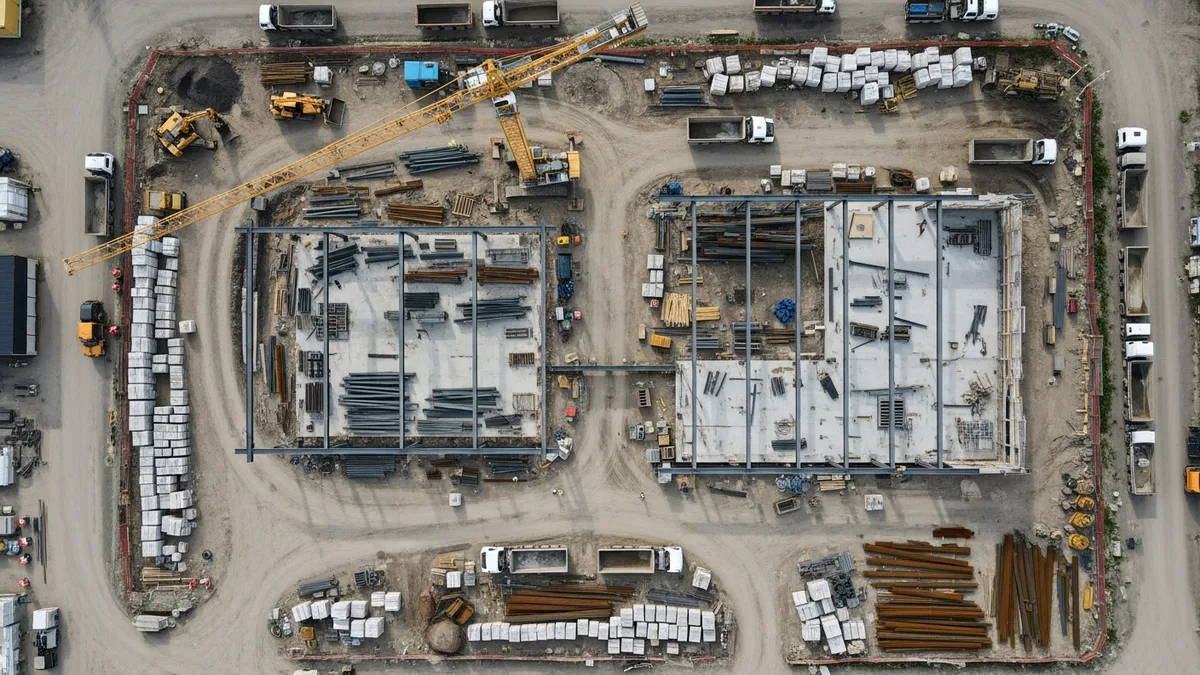
There are a lot of construction project management guides floating around the internet. Most of them read like they were written by someone who has never set foot on a jobsite. They talk about “stakeholder alignment” and “resource improvement” like those phrases mean anything to a contractor staring at a schedule that just blew up because a concrete pour got rained out.
This guide is different. It’s written for the people who actually run construction projects. The GCs, the project managers, the owners who wear six hats and still end up doing takeoffs at 10 PM. If you want a practical construction project management guide that reflects how this industry actually works in 2026, keep reading.
What Construction Project Management Actually Looks Like in Practice
Let’s start with what construction project management is not. It’s not a clean process with neat boxes and arrows. It’s not a textbook workflow where Phase A completes before Phase B begins. And it’s definitely not something you can manage from behind a desk.
In practice, construction project management is the job of keeping dozens of moving pieces from crashing into each other. On any given day, a PM might be reviewing submittals in the morning, resolving a material shortage by lunch, sitting in an owner meeting after lunch, and then driving to a second jobsite to figure out why the framing crew is a day behind.
The core of the job comes down to three things:
- Making sure the right people are in the right place at the right time. This sounds simple until you’re coordinating eight subcontractors, a material delivery, and an inspection all in the same week.
- Keeping the budget from quietly bleeding out. Cost overruns don’t happen in one dramatic moment. They happen in a hundred small decisions that nobody tracked. That extra day of equipment rental. The change order that never got documented. The material upgrade a client requested verbally.
- Managing information flow. The PM is the central hub. Everything runs through you. Plans, RFIs, change orders, schedules, punch lists, safety reports. If information gets stuck or lost, the project stalls.
Good construction project management isn’t glamorous. It’s the discipline of staying organized when everything around you is trying to fall apart. And in 2026, with rising material costs, tighter labor markets, and clients who expect real-time updates, that discipline matters more than ever.
The Five Phases of Every Construction Project
Every construction project, whether it’s a $50,000 kitchen remodel or a $5 million commercial build, follows the same basic arc. The scale changes, but the phases don’t. Understanding these phases helps you spot problems earlier and plan your resources more effectively.
Phase 1: Pre-Construction and Planning
This is where the project gets defined. Scope, budget, timeline, permits, and procurement planning all happen here. The biggest mistake contractors make is rushing through pre-construction to start generating revenue. But every dollar you spend planning saves you five in the field.
During pre-construction, you should be:
- Finalizing the scope with the client (in writing, not just verbal agreements)
- Building a detailed estimate and budget
- Identifying long-lead materials and ordering early
- Pulling permits and scheduling inspections
- Creating a preliminary project schedule with milestones
The handoff from pre-construction to the field is one of the most critical transitions in the entire project. If your field team doesn’t have the full picture, they’re building blind. We wrote a whole guide on how to get that transition right: Construction Project Handoff: Sales to Field.
Phase 2: Mobilization and Site Setup
Before any real work starts, you need the site ready. That means temporary utilities, site access, material staging areas, safety plans, and getting your crew oriented. On commercial jobs, this might include fencing, erosion control, and a construction trailer.
The PM’s job during mobilization is to make sure nothing was missed during planning. Walk the site. Confirm access routes. Verify that permits are posted. Double check that your first subs know exactly when they’re expected and what they need to bring.
Phase 3: Active Construction
This is the longest phase and where most of the PM’s daily energy goes. You’re managing the schedule, tracking costs, coordinating trades, handling change orders, communicating with the client, and solving problems as they come up.
The key to surviving active construction is having systems that give you visibility. You can’t manage what you can’t see. If your schedule lives in your head and your budget lives in a spreadsheet that’s three weeks out of date, you’re guessing. And guessing gets expensive.
This is where job costing becomes critical. Tracking actual costs against your estimate in real time lets you catch overruns while you still have time to adjust.
Phase 4: Closeout and Punch List
Read real contractor reviews and see why Projul carries a 4.9/5 on G2.
The last 5% of a project takes 50% of the effort. That’s not an exaggeration. Closeout involves final inspections, punch list completion, warranty documentation, as-built drawings, lien releases, and final billing.
The projects that drag on for weeks after “substantial completion” are the ones where nobody tracked the punch list or followed up on open items. A structured closeout process with clear ownership on every task is the difference between wrapping a job in a week and having it haunt you for two months.
Phase 5: Post-Project Review
Most contractors skip this, and it costs them. After every project, take 30 minutes to review what went well and what didn’t. Where did the budget slip? Which subs performed and which ones caused delays? What would you do differently?
These lessons compound over time. The contractors who grow successfully are the ones who treat every project as a learning opportunity, not just a revenue event.
Common PM Mistakes That Cost Contractors Money
After working with thousands of contractors, we’ve seen the same mistakes come up over and over. Most of them aren’t technical failures. They’re process failures.
Not documenting change orders in real time. A client asks for a change on site. You agree, adjust the work, and tell yourself you’ll write it up later. Later never comes. Now you’ve done extra work that you can’t bill for because there’s no paper trail. Every change, no matter how small, needs to be documented and approved before the work happens.
Underestimating the schedule. Optimism is great for sales. It’s terrible for scheduling. Build buffer into your timelines. Account for weather, inspection delays, and the reality that subs don’t always show up when they say they will. A realistic schedule that you can actually hit builds more client trust than an aggressive one that slips three times.
Ignoring costs until the end of the job. If you’re not tracking actual costs against your budget during the project, you’re flying blind. By the time you realize you’re 15% over budget at the end of the job, there’s nothing you can do about it. Real-time job costing is non-negotiable in 2026.
Trying to manage everything from memory. Your brain is not a project management tool. It doesn’t matter how experienced you are. The moment you’re running two or three projects simultaneously, details start falling through the cracks. You need a system outside your head, period.
Failing to set client expectations early. Clients who don’t know what to expect become difficult clients. If you explain your process, your communication cadence, and how you handle changes at the start of the project, you avoid 80% of the friction that derails client relationships.
Communication: The Skill Nobody Teaches Project Managers
Ask a failing project why it failed, and the answer is almost always some version of “miscommunication.” The sub didn’t know the schedule changed. The client didn’t understand what was included. The superintendent didn’t get the updated plans. The inspector wasn’t called on time.
Construction PMs learn to read plans, estimate jobs, and build schedules. But nobody teaches them how to communicate effectively across a dozen different relationships at once. And that’s the actual job.
Here’s what good PM communication looks like:
Over-communicate with your client, especially early. Weekly updates at minimum. More frequent during active construction. Don’t wait for them to ask what’s happening. Proactive communication builds trust and prevents the anxiety-driven phone calls that eat your day.
Use one channel, not five. If your team is getting updates via text, email, phone calls, and a shared drive, information is going to get lost. Pick one platform and make it the source of truth. When everything lives in one place, there’s no “I didn’t see that” excuse.
Write it down. Verbal agreements are worthless in construction. If it wasn’t documented, it didn’t happen. This applies to client conversations, sub agreements, schedule changes, and especially change orders. A two-minute follow-up email confirming what was discussed can save you thousands of dollars.
Be direct about problems. Hiding bad news from clients never works. If a delay is coming, tell them before they find out on their own. Clients can handle problems. What they can’t handle is surprises. The PM who calls a client to say “we’re going to be a week late because of the inspection delay, here’s our plan to make up time” keeps that client. The one who goes silent and hopes nobody notices loses them.
Close the loop. Every question deserves an answer. Every request deserves a response. Even if the answer is “I don’t know yet, I’ll have an update by Friday.” The fastest way to destroy trust is to leave people hanging.
Tools and Systems Every PM Needs in 2026
The construction industry has historically been slow to adopt technology. That’s changing fast. The contractors who are growing in 2026 aren’t necessarily better builders. They’re better organized. And their organization comes from having the right systems in place.
Here’s what a modern PM tech stack looks like:
Project management software. This is the backbone. You need a platform that handles project management, scheduling, and task tracking in one place. Not three separate tools that don’t talk to each other. One system where your entire team can see what’s happening across every project.
Job costing tools. If your accounting software is your only cost tracking method, you’re getting information too late. You need real-time cost tracking at the job level that your PMs can check daily. Projul’s job costing feature lets you compare actual costs against estimates as the project progresses, not after it’s done.
Scheduling tools with field access. Your schedule can’t live in a spreadsheet on someone’s desktop. It needs to be accessible to your field team, updateable in real time, and visible to everyone who needs it. A drag-and-drop scheduling tool that your supers can check from their phone is table stakes in 2026.
Document management. Plans, permits, submittals, RFIs, contracts, photos. Every project generates a mountain of documents. If those documents aren’t organized and accessible from the field, your team is making decisions without the information they need.
Communication platform. Internal team communication needs to be centralized. Not scattered across personal text threads that nobody else can see. A platform that keeps project communication tied to the project means nothing gets lost when someone goes on vacation or leaves the company.
The goal isn’t to have the most tools. It’s to have the fewest tools that cover the most ground. Consolidation is the trend in 2026, and it’s the right one. Every additional platform you add creates another place for information to hide.
If you’re evaluating software, take a look at Projul’s pricing to see what an all-in-one platform looks like for contractors.
How Software Turns Chaos Into Repeatable Processes
Here’s the thing about construction project management that nobody wants to admit: most contractors are winging it. They have experienced people who know how to build things, but they don’t have systems that work independently of any single person.
That’s a problem because people leave. People get sick. People forget. And when your entire project management process lives in the heads of your three best people, you have a fragile operation that can’t scale.
Software fixes this by turning tribal knowledge into documented processes. When every project follows the same workflow in the same system, a few things happen:
New hires ramp up faster. Instead of shadowing someone for six months to learn “how we do things,” a new PM can follow the process that’s built into the system. The steps are there. The templates are there. The checklists are there.
Nothing falls through the cracks. When your closeout process is a checklist in your project management software rather than a list in someone’s head, every item gets tracked. No more “I thought you were handling that” conversations.
You can see across all your projects at once. When each PM runs projects their own way, the owner has no visibility into the overall health of the business. When everyone uses the same system, you can pull up a dashboard and see which projects are on schedule, which are over budget, and which have open items that need attention.
You build institutional knowledge. Every project becomes a data point. Over time, you know how long framing actually takes, not how long you estimated it would take. You know which subs deliver on time and which ones don’t. You know your actual margins by project type. That data is worth more than any industry benchmark because it’s yours.
The contractors who will dominate the next decade aren’t the ones with the best carpenters or the lowest bids. They’re the ones who built systems that produce consistent results regardless of who’s running the project. That’s what construction project management looks like when it’s done right.
Try a live demo and see how Projul simplifies this for your team.
Construction Project Management Methodologies That Actually Work
You don’t need a PhD to pick a project management methodology. But you do need to understand the main approaches so you can choose what fits your projects and your team. Here’s a straightforward breakdown.
Critical Path Method (CPM)
The critical path method is the most widely used scheduling approach in construction. It maps out every task in the project, identifies the dependencies between them, and calculates the longest chain of dependent tasks. That chain is your critical path. Any delay on a critical path task delays the entire project.
CPM works well for projects with clear sequencing. A commercial build where foundation has to finish before framing, framing before MEP rough-in, and rough-in before drywall is a textbook CPM project. You know the sequence. You know the durations. You can calculate float and figure out where you have wiggle room.
The limitation of CPM is that it assumes you know the full scope upfront. For projects with lots of unknowns or a client who changes their mind frequently, a rigid CPM schedule can become a fiction within weeks. If you want a deeper look at scheduling approaches, check out our construction scheduling methods guide.
Lean Construction
Lean construction borrows principles from lean manufacturing. The core idea is eliminating waste. Waste in construction shows up as waiting (crews standing around because materials aren’t there), overproduction (building more than what was specified), transportation (moving materials multiple times), and defects (rework).
The Last Planner System is the most practical lean tool for contractors. Instead of the PM dictating the schedule from the top down, the people doing the work (superintendents, foremen, sub leads) collaboratively plan the upcoming weeks. They commit to what they can actually deliver, not what the master schedule says they should deliver. This bottom-up planning catches conflicts and resource problems before they hit the field.
Lean construction takes discipline and buy-in from your entire team. It’s not something you can implement overnight. But contractors who commit to it consistently see fewer delays and less rework.
Agile Adaptations for Construction
Agile was built for software development, not construction. You can’t “iterate” on a foundation pour. But some agile principles translate surprisingly well to how contractors manage the non-physical parts of their projects.
Short planning cycles (similar to sprints) work well for look-ahead scheduling. Instead of planning the entire project in detail upfront, you plan the next two to three weeks in detail and keep the rest at a higher level. This gives you enough structure to coordinate trades while staying flexible enough to adapt when things change.
Daily standups also translate well. A five-minute morning huddle with your superintendent and key subs to confirm the day’s plan, flag blockers, and adjust in real time beats a weekly meeting where half the issues are already three days old.
The point isn’t to pick one methodology and follow it rigidly. It’s to understand the tools available and use the pieces that fit your operation. Most successful contractors use a blend. CPM for the master schedule, lean principles for weekly planning, and short daily check-ins to keep the field aligned.
Construction Project Management for Different Project Types
Not every project gets managed the same way. The core principles don’t change, but the emphasis shifts depending on what you’re building and who you’re building it for.
Residential Construction
Residential projects are driven by homeowner relationships. Your client is emotionally invested in this project in a way that a commercial client rarely is. They’re spending their savings on their dream house or their kitchen renovation. That means communication frequency needs to be high, and you need to set expectations early about what the process looks like.
Residential scheduling is typically simpler than commercial work, but coordination is still critical. On a custom home, you might have 15 to 20 subcontractors cycling through the project. One missed inspection or one late material delivery can cascade through the schedule.
The biggest challenge in residential PM is scope creep. Homeowners see the work taking shape and start making changes. “Can we move that outlet?” turns into “Can we add a bathroom?” If you don’t have a clear change order process that the client understands from day one, you’ll end up doing free work.
If you’re a small contractor managing your own projects, residential work rewards having a tight system more than having a big team.
Commercial Construction
Commercial projects bring more stakeholders, more documentation, and more liability. You’re dealing with architects, engineers, owners, sometimes a separate construction manager, and a web of contractual relationships that residential work doesn’t have.
Documentation is king on commercial jobs. RFIs, submittals, daily reports, safety logs, and meeting minutes all need to be tracked and accessible. A missed RFI response can stall an entire floor of work. A submittal that wasn’t approved in time can push your schedule back by weeks.
The PM’s role on commercial work is more administrative and coordination-heavy. You’re managing process as much as you’re managing people. Having a project management platform that handles the documentation workflow is critical for commercial contractors.
Industrial and Specialty Projects
Industrial construction (plants, warehouses, infrastructure) adds layers of complexity around safety, compliance, and specialized trades. The margin for error is tighter, the equipment is more expensive, and the regulatory requirements are more demanding.
PMs on industrial projects spend significant time on safety planning, permitting, and quality control. The scheduling challenges often involve heavy equipment logistics and long-lead specialty materials that can have lead times measured in months, not weeks.
Renovation and Remodel
Renovation work has its own brand of chaos. You’re working in existing structures where surprises hide behind every wall. Hidden rot, outdated wiring, plumbing that doesn’t match the plans, and structural issues that nobody knew about until demo started.
Smart renovation PMs budget both time and money for unknowns. A 10 to 15 percent contingency on both the budget and the schedule isn’t pessimism. It’s experience. The best renovation PMs are the ones who can adapt quickly without losing control of costs or client expectations.
Building Your Construction Project Management Team
At some point, you can’t do everything yourself. Every contractor hits a point where the owner is stretched across too many projects, and quality starts to slip. Knowing when and how to build out your PM team is one of the most important decisions a growing construction company will make.
When to Hire Your First Project Manager
The signal is usually pretty clear: you’re dropping balls. Callbacks are increasing. Clients are harder to reach because you’re always on another site. Your estimates are rushed because you don’t have time to do them right. You’re working evenings and weekends just to keep up with paperwork.
A general rule of thumb is that most contractors need a dedicated PM (or at minimum a project coordinator) once they’re running three or more active projects simultaneously. Some can stretch further if they have great systems in place. Others hit the wall at two projects if the scope is complex enough.
Key Roles on a Construction PM Team
As your company grows, you’ll typically build out these roles:
Project Manager. Owns the project from pre-construction through closeout. Manages the budget, the schedule, client communication, and sub coordination. This is the person accountable for the project’s success.
Superintendent. Owns the field. Manages day-to-day construction activities, quality control, and safety. A good super runs the jobsite so the PM doesn’t have to be there every hour of every day.
Project Coordinator or Assistant PM. Handles the administrative load. Submittals, RFIs, document control, scheduling updates, and procurement tracking. This role frees up your PM to focus on decision-making instead of paperwork.
Estimator. On smaller teams, the PM estimates their own jobs. As you grow, a dedicated estimator means your PMs can focus on execution while the estimator focuses on winning the next job.
Project Executive or Director of Operations. This role emerges when you have multiple PMs. Someone needs to allocate resources across projects, manage PM workloads, and maintain standards across the organization.
Hire for Problem-Solving, Not Just Experience
The best PMs aren’t always the most experienced ones. They’re the ones who stay calm when things go sideways, communicate clearly, and solve problems without creating new ones. Technical knowledge matters, but you can teach someone how to read a schedule. You can’t teach them how to keep a client calm when a project hits a delay.
When interviewing PM candidates, ask them to walk you through a project that went wrong. How they handled it tells you more than any certification or resume line ever will.
KPIs Every Construction Project Manager Should Track
You can’t improve what you don’t measure. But most contractors either track nothing or track the wrong things. Here are the metrics that actually tell you whether your project management is working.
Schedule Variance
Schedule variance compares your planned progress against actual progress. Are you ahead, behind, or on track? Simple as that.
The key is measuring it consistently. Check schedule variance weekly on active projects. Don’t wait until the client asks why the project is late to figure out where you lost time. A project that’s slipping by two days each week will be a month behind before you know it.
Tracking schedule variance also helps you build better estimates over time. If framing consistently takes 20% longer than you estimate, you need to adjust your templates, not hope the next crew will be faster.
Cost Performance Index (CPI)
CPI measures cost efficiency. Take the budgeted cost of work you’ve completed and divide it by the actual cost. A CPI of 1.0 means you’re exactly on budget. Below 1.0 means you’re over budget. Above 1.0 means you’re under budget.
This is the most important financial metric a PM can track during a project. It turns a vague “I think we’re over budget” into a specific number that tells you exactly how far off you are and whether you need to make adjustments.
Real-time job costing tools make CPI tracking practical. Without them, you’re waiting until the job is done to find out whether you made money.
RFI Turnaround Time
RFIs (Requests for Information) are a leading indicator of project health. When RFI turnaround drags, it means decisions aren’t being made, which means the field team is working with incomplete information or, worse, guessing.
Track the average time from when an RFI is submitted to when the answer comes back. If your average is creeping beyond five to seven business days, you have a bottleneck that needs attention. Late RFI responses are one of the top causes of schedule delays on commercial projects.
Change Order Rate and Value
Track both the number of change orders per project and their total dollar value. A high change order rate could mean several things: unclear original scope, a client who can’t make decisions, or a design team that’s producing incomplete documents.
Change orders aren’t inherently bad. They’re part of construction. But if your change order rate is consistently high, something upstream needs fixing. Either your pre-construction process isn’t thorough enough, or your contracts aren’t clear enough about what’s included.
Rework Rate
How much work are you doing twice? Rework is pure waste. It costs money, delays the schedule, and frustrates your team. Track the labor hours and material costs associated with rework on each project.
Common causes include unclear plans, poor quality control, and miscommunication between trades. If one subcontractor is responsible for a disproportionate share of your rework, that’s a conversation worth having before the next project.
Client Satisfaction
This one’s harder to quantify, but it matters more than any other metric for long-term business health. After every project, ask the client how the experience was. A simple survey or a quick phone call works.
Track your scores over time. If satisfaction is trending down, something in your process needs attention. The best marketing in construction is still word of mouth, and word of mouth comes from clients who felt taken care of from start to finish.
How to Prevent the Most Common Construction Project Failures
Every contractor has a war story about a project that went off the rails. The details change, but the root causes are almost always the same. Here’s how to prevent the failures that sink the most projects.
Scope Creep
Scope creep is the slow expansion of project requirements without corresponding changes to the budget or schedule. It kills margins and creates friction with clients when the bill comes due.
Prevention: Define the scope in writing before work starts. Use detailed scopes of work in your contracts, not vague descriptions. When a client requests a change, document it immediately as a change order with a price and timeline impact. Get their signature before proceeding with the work. No exceptions.
Building a culture of documentation starts at the top. If the PM casually agrees to changes without paperwork, the entire team learns that the process doesn’t matter.
Budget Overruns
Most budget overruns aren’t caused by one big mistake. They’re caused by dozens of small costs that nobody tracked. An extra day of equipment rental here. Overtime there. A material substitution that cost more than the original spec.
Prevention: Track costs in real time at the job level. Compare actuals against your estimate weekly, not monthly. When you spot a line item trending over budget, address it immediately. Can you make it up somewhere else? Does the client need to approve the additional cost? The worst outcome is discovering a 15% overrun on the final invoice.
If you’re not sure what construction management software costs relative to the overruns it prevents, the math almost always favors the software.
Schedule Delays
Schedules slip for predictable reasons: weather, late material deliveries, inspection delays, sub no-shows, and change orders that weren’t factored into the timeline. The unpredictable part is how they compound. One two-day delay cascades into a two-week delay when three trades are stacked up behind it.
Prevention: Build buffer into your schedule. Not excessive padding, but realistic allowances for the things that always go wrong. Use look-ahead scheduling to review the next two to three weeks in detail every week. Confirm sub availability. Verify material deliveries. Schedule inspections early. The more proactive you are about the next two weeks, the fewer surprises you’ll face.
Communication Breakdowns
When the field doesn’t have the latest plans, when the client doesn’t know about a delay, when the sub shows up to an unprepared site, that’s a communication breakdown. And it’s usually the PM’s responsibility to prevent it.
Prevention: Centralize communication in one platform. Make it a rule that if it’s not in the system, it didn’t happen. Send weekly updates to clients without them having to ask. Hold brief daily coordination meetings in the field. Close every conversation with a clear next step and a responsible party.
The best construction software solves this by keeping all project communication, documents, and updates in one place that everyone can access from the field.
Subcontractor Performance Issues
Bad sub performance shows up as late starts, poor quality, incomplete work, and general unreliability. It’s one of the top frustrations for every GC and PM.
Prevention: Track sub performance across projects. Keep records of who showed up on time, who delivered quality work, and who caused problems. Over time, this data becomes your most valuable hiring tool. Pay your good subs on time and treat them well. The best subs have options, and they choose to work with the GCs who make their lives easier.
Build relationships with backup subs for every critical trade. When your go-to electrician is booked, you need a second option you trust. Having a bench matters.
Construction Project Management Certifications and Training: What’s Worth It?
The certification question comes up constantly. Do you need a PMP? What about the CMIT or CCM? Let’s cut through the noise.
PMP (Project Management Professional)
The PMP from PMI is the most recognized project management certification in the world. It covers general project management principles across all industries, not just construction. It will teach you earned value analysis, risk management frameworks, and formal scheduling techniques.
Is it worth it for contractors? It depends. If you’re working on large commercial or government projects where the owner or GC requires credentialed PMs, a PMP carries weight. If you’re a residential contractor managing your own jobs, the time and money spent on PMP prep (most people need 200+ hours of study) would probably be better spent building better internal systems.
CMIT (Construction Manager-in-Training) and CCM (Certified Construction Manager)
These are construction-specific certifications from the CMAA (Construction Management Association of America). The CCM in particular is respected in the commercial and institutional construction world. It validates that you understand construction-specific project delivery methods, contract structures, and field management.
For PMs on commercial or public works projects, the CCM is more relevant than a PMP because it’s tailored to how construction projects actually work.
The Real Answer: Systems Beat Certifications
Here’s the truth that no certification body wants to hear: the best construction PMs we’ve worked with built their skills on the job, not in a classroom. Certifications can fill knowledge gaps and look good on a resume. But no certification teaches you what to do when your concrete sub no-shows on pour day and you have 20 yards of mud on the way.
What actually makes a PM great is reps. Running projects, making mistakes, learning from them, and building systems so the same mistakes don’t happen twice. If you’re investing in professional development, consider spending that time documenting your processes, building templates, and training your team on the tools they already have.
That said, if your team is growing and you’re hiring PMs from outside construction, structured training programs help bridge the gap between general management skills and the realities of running a jobsite.
Putting It All Together: Your Construction PM Action Plan
If you’ve made it this far, you have a solid understanding of what construction project management looks like in 2026. But knowledge without action is just trivia. Here’s a practical action plan you can start on this week.
Step 1: Audit your current process. Walk through your last three completed projects. Where did things break down? Where did you lose money? Where did communication fail? Write it down. Be honest. This audit becomes your roadmap for improvement.
Step 2: Pick one methodology and commit. You don’t need to implement everything at once. Start with CPM scheduling if you don’t have a formal schedule process. Add weekly look-ahead planning if your field coordination is loose. Introduce daily huddles if your team communication needs work. One change at a time, implemented well, beats five changes implemented poorly.
Step 3: Get your tools right. If you’re running projects across spreadsheets, text messages, and sticky notes, consolidate into one platform. The cost of construction management software is a fraction of what you lose to disorganization every year. Pick a tool built for contractors, not a generic project management app designed for software teams.
Step 4: Define your KPIs. Choose three to five metrics from the KPIs section above and start tracking them on every project. You don’t need fancy dashboards to start. A simple spreadsheet updated weekly is better than nothing. The act of measuring creates awareness, and awareness drives improvement.
Step 5: Build your team intentionally. If you’re the bottleneck, hire. If your PMs are drowning in admin, get them coordinators. If you don’t have a superintendent in the field, your PMs are splitting their attention between the office and the site, and both suffer.
Step 6: Review and improve after every project. Thirty minutes. That’s all it takes. What went well? What went wrong? What will we do differently next time? Document it and share it with the team. These post-project reviews are the single highest-ROI activity in construction project management, and almost nobody does them consistently.
Construction project management isn’t a destination. It’s a discipline you practice on every project, with every team member, every single day. The contractors who get this right don’t just build better projects. They build better businesses.
And it starts with getting the right tools in place. If you’re still running your operation on spreadsheets, texts, and memory, take a look at what Projul’s project management features can do for your team.
Frequently Asked Questions
What does a construction project manager actually do?
What is the hardest part of managing a construction project?
Do I need a PMP certification to manage construction projects?
What software do construction project managers use in 2026?
How can I reduce cost overruns on my construction projects?
Related Articles
Construction Team Meetings: A Practical Guide to Meetings That Actually Get Results
Most construction team meetings waste time. Here's how to run weekly check-ins, safety meetings, kickoffs, and...
Read More →
Project Management for Small Contractors: You Don't Need Enterprise Software
You don't need a 50-person company to benefit from project management. Even a 5-person crew loses money without a...
Read More →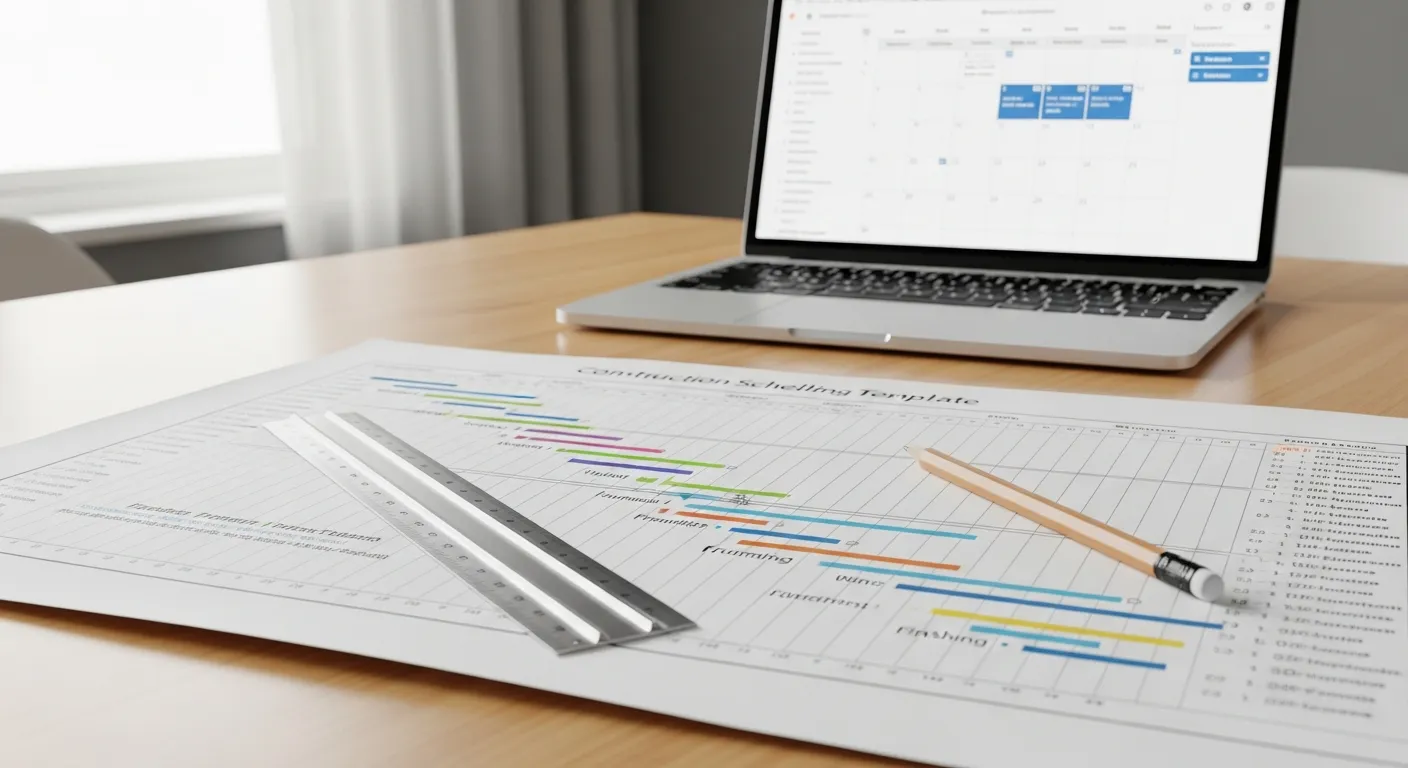
Free Construction Schedule Template
A solid construction schedule keeps your jobs on track, your crews busy, and your clients happy. Grab our free...
Read More →