
Building Envelope Testing Guide for Contractors
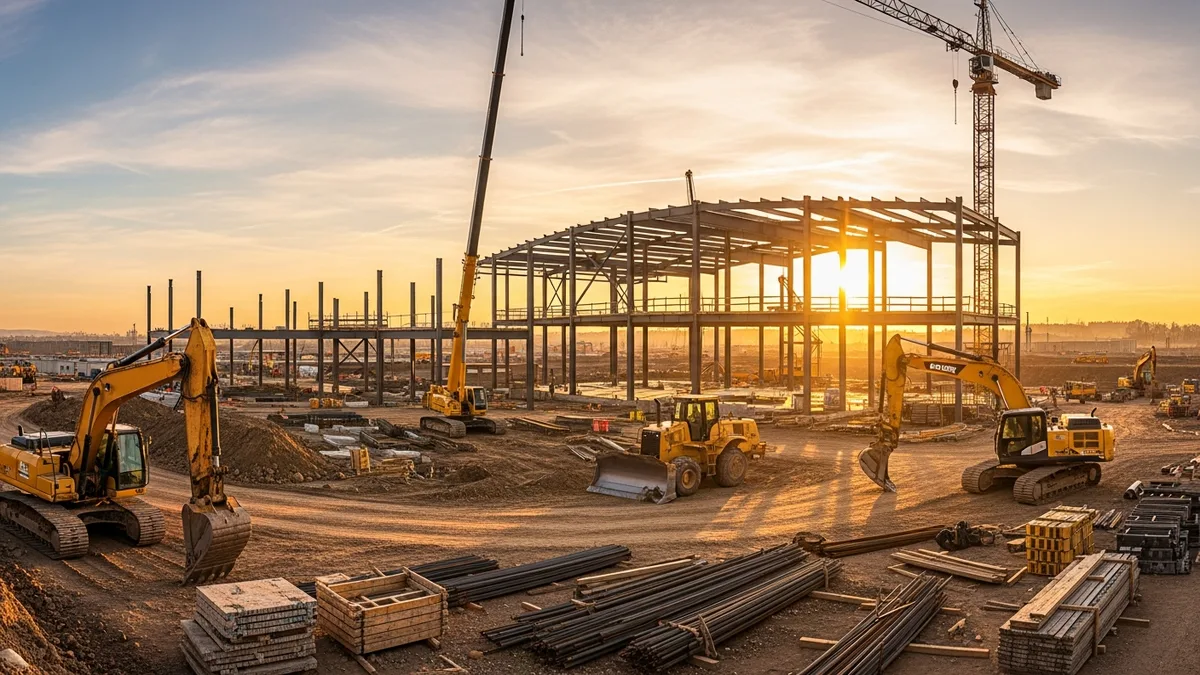
If you have ever gotten a call from an owner about water staining on a brand-new ceiling or an HVAC system that cannot keep up despite being sized correctly, you already know how expensive building envelope failures get. The building envelope is the single most important system separating the inside from the outside, and when it does not work right, everything else suffers.
This guide walks through the testing methods, commissioning process, and practical steps that contractors need to verify building envelope performance before handing over the keys. Whether you are running a commercial project with a curtain wall system or a residential build with standard sheathing and house wrap, these principles apply.
What the Building Envelope Actually Includes (And Why Each Layer Matters)
The building envelope is not just the exterior cladding you see from the street. It is a system of interconnected layers that each serve a specific purpose. Miss one layer or install it wrong, and the whole system underperforms.
Here is what makes up a complete building envelope:
- Air barrier: Controls air movement through the assembly. This could be a self-adhered membrane, fluid-applied coating, or even the sheathing itself if joints are properly sealed. The air barrier must be continuous around the entire building with no gaps at transitions.
- Water-resistive barrier (WRB): Sheds bulk water that gets past the cladding. House wrap, fluid-applied membranes, or self-adhered sheets all serve this function. The WRB must integrate with window and door flashings to create a complete drainage plane.
- Thermal insulation: Controls heat flow through the assembly. Whether it is cavity insulation, continuous exterior insulation, or spray foam, it needs to be installed without gaps, voids, or compression that reduces its rated R-value.
- Vapor retarder: Manages moisture diffusion through the assembly. Placement depends on climate zone. Put it on the wrong side of the wall and you trap moisture inside the assembly where it causes mold and rot.
- Cladding and roofing: The outermost layer that takes the direct hit from weather. Brick, metal panels, stucco, siding, single-ply membranes, and built-up roofing all need proper attachment and detailing.
- Below-grade waterproofing: Foundation walls and slabs that contact soil need waterproofing or damp-proofing depending on conditions. Drainage boards and perimeter drains complete the system.
For a deeper look at sheathing and weather barriers specifically, check out our exterior sheathing and weather barrier guide. Understanding how these layers work together is the first step toward testing them effectively.
The critical takeaway here is that every layer must be continuous, and every transition between layers must be detailed correctly. Most envelope failures happen at transitions, not in the field of a wall or roof.
Air Leakage Testing Methods for Every Project Type
Air leakage is the biggest performance killer in most buildings. A building can have R-30 walls and triple-pane windows, but if air blows through gaps in the envelope, all that insulation is working at a fraction of its potential. Testing for air leakage verifies that your air barrier is actually doing its job.
Blower door testing is the standard for most projects. A calibrated fan mounts in an exterior door opening, depressurizes the building to a standard pressure (typically 75 Pascals for commercial, 50 Pascals for residential), and measures the airflow required to maintain that pressure. The result tells you how leaky the building is.
For residential work, ASTM E779 is the go-to standard. You will get a result in CFM50 (cubic feet per minute at 50 Pascals) or ACH50 (air changes per hour at 50 Pascals). Most energy codes now require 3 to 5 ACH50 for new homes. Passive House targets hit 0.6 ACH50, which is extremely tight.
For commercial buildings, ASTM E3158 covers whole-building testing. Results are expressed as CFM per square foot of envelope area at 75 Pascals. The Army Corps of Engineers standard of 0.25 CFM/sq ft is a common target. Some projects specify even tighter numbers.
Compartmentalized testing works when you cannot depressurize the entire building at once. You seal off a section, test it, then move to the next. This is common on high-rises and large commercial projects where one fan cannot handle the volume.
Smoke testing is a visual method that supplements pressure testing. With the building under negative pressure from a blower door, you use a smoke pencil or smoke generator on the exterior to watch where smoke gets pulled through the envelope. This pinpoints exact leak locations so your crew can fix them.
When to test matters as much as how you test. Run your first air leakage test before interior finishes go up. If you find problems after drywall, trim, and paint are done, the cost to fix them triples. A mid-construction test gives you a chance to seal gaps while the air barrier is still accessible.
Our construction inspection checklist guide covers how to build air barrier verification into your standard inspection workflow so nothing gets buried behind finishes before it is checked.
Water Infiltration Testing That Actually Finds Problems
Water is the number one enemy of buildings. It causes more damage, more callbacks, and more litigation than any other single factor. Testing for water infiltration before the building is occupied is not optional if you want to protect your reputation and your client’s investment.
ASTM E1105 field water spray testing is the gold standard for windows, curtain walls, and storefronts. A calibrated spray rack applies water at a specified rate (typically 5 gallons per square foot per hour) while the interior side is under negative pressure from a fan. You watch the interior for any water penetration over a 15-minute test period.
For window testing specifically, here is the practical process:
- Set up the spray rack on the exterior, covering the entire window and surrounding wall interface.
- Install a calibrated fan on the interior side to create negative pressure (differential depends on the spec, but 6.24 PSF is common for standard wind-driven rain simulation).
- Run the spray for 15 minutes while an observer on the interior watches for any water appearance.
- Document everything with photos, noting the exact time and location of any leaks.
AAMA 502 and 503 testing are specifically designed for installed window and curtain wall assemblies. AAMA 502 covers lab testing of window installations, while AAMA 503 covers field testing of installed storefronts and curtain walls. If your spec calls for AAMA testing, make sure your testing agency has the right equipment and calibration records.
Hose stream testing per ASTM E1105 is a simpler method sometimes used for wall cladding systems. A nozzle applies water at a controlled pressure while you observe the interior. It is less precise than spray rack testing but useful for spot-checking suspect areas.
Flood testing applies to low-slope roofs and plaza decks. You plug the drains, flood the roof with 2 to 4 inches of water, and let it sit for 24 to 72 hours. Any leaks show up on the interior. This is a straightforward pass-fail test that catches membrane defects and flashing failures before they cause interior damage.
For contractors working on roofing systems, our built-up roofing and single-ply membrane guide covers installation details that directly affect waterproofing test results.
The key with water testing is doing it early enough that repairs are still straightforward. Test each floor or section as it is completed rather than waiting until the entire building is enclosed. If you find a leak on the 15th floor after the interior is finished on floors 1 through 14, you are in much better shape than finding it after all 20 floors are done.
Thermal Performance Verification and Infrared Scanning
Thermal imaging (infrared thermography) is one of the most useful diagnostic tools in a contractor’s testing toolkit. It shows you what you cannot see with your eyes: missing insulation, air leaks, thermal bridges, and moisture trapped inside assemblies.
How infrared scanning works: An IR camera detects surface temperature differences. When insulation is missing or compressed, that spot shows up as a different temperature than the surrounding area. Air leaks create temperature streaks as conditioned air escapes or outside air infiltrates. Moisture shows up because wet materials conduct heat differently than dry ones.
Conditions matter for accurate results. You need at least a 15 to 20 degree Fahrenheit temperature difference between inside and outside for clear imaging. Overcast skies or nighttime scans produce better results because direct sunlight heats exterior surfaces unevenly and masks real defects. Wind also affects results by cooling exterior surfaces.
ASTM C1060 covers the standard practice for thermographic inspection of insulation in envelope assemblies. Follow this standard for defensible results that hold up if there is ever a dispute.
Not sure if Projul is the right fit? Hear from contractors who use it every day.
Here is what a practical thermal scan sequence looks like on a commercial project:
- Pre-scan the building from the exterior during early morning hours before the sun hits the facade. Document the full elevation of each side.
- Scan from the interior with the HVAC system running to pressurize or depressurize the building slightly. Air leaks show up more clearly with a pressure differential.
- Document anomalies with both the IR image and a standard photo of the same area. An IR image alone is hard to locate on a building without the visible reference.
- Create a deficiency map that marks every anomaly on the building elevation drawings. Include the specific location, suspected cause, and recommended repair.
Thermal scanning pairs well with blower door testing. Run the blower door to depressurize the building, then scan with the IR camera. Air leaks that might not show up under normal conditions become obvious under pressure because infiltrating air creates clear temperature trails on interior surfaces.
Our construction insulation guide covers proper installation techniques that prevent the thermal defects IR scanning is designed to catch. Getting insulation right the first time is always cheaper than finding problems during testing and tearing things apart to fix them.
For projects targeting green building certification, thermal performance verification is typically required. Our green building certifications guide explains what documentation and testing results different programs require.
The Commissioning Process from Start to Finish
Building envelope commissioning is a structured quality assurance process that runs parallel to your construction schedule. It is not just testing at the end. It starts during design and continues through occupancy. Here is how the process works on a well-run project.
Phase 1: Design Review
The commissioning agent (CxA) reviews the envelope design documents and specifications before construction starts. They look for:
- Completeness of air barrier and WRB details at all transitions
- Compatibility between specified products
- Adequacy of flashing details at windows, doors, roof-to-wall connections, and penetrations
- Appropriate vapor retarder placement for the climate zone
- Code compliance for air leakage and thermal performance requirements
Design review catches problems when they cost nothing to fix. A missing flashing detail on a drawing costs zero to add. That same missing flashing in the field costs thousands in water damage repairs down the road.
Phase 2: Pre-Construction Planning
Before work starts, the CxA develops a commissioning plan that includes:
- A testing schedule tied to the construction schedule
- Required submittals and mock-up testing
- Hold points where work cannot proceed until testing is complete
- Roles and responsibilities for the contractor, testing agency, and CxA
Mock-up testing deserves special attention. On commercial projects, a full-size mock-up of the typical wall and window assembly gets built and tested for air and water infiltration before the production installation begins. This is your chance to work out installation procedures, train your crew, and verify that the designed details actually work in practice. Do not skip mock-ups. They pay for themselves every time.
Phase 3: Construction Observation and Testing
During construction, the CxA conducts regular site visits to observe critical installations:
- Air barrier application and continuity at transitions
- WRB installation and integration with flashings
- Window and door installation sequence
- Sealant joint preparation and application
- Insulation installation quality
- Roof membrane application and flashing details
Testing happens at predetermined hold points. The contractor schedules the work, notifies the CxA when a section is ready for testing, and does not cover it up until the test passes. If a test fails, the contractor repairs the deficiency and retests.
Phase 4: Final Verification and Documentation
At project completion, the CxA conducts final whole-building testing (typically air leakage and thermal imaging) and compiles a commissioning report that includes:
- All test results with pass/fail status
- Documentation of deficiencies found and corrective actions taken
- As-built conditions versus design intent
- Maintenance recommendations for the owner
This report becomes part of the project record and protects everyone involved. The owner has documentation of what was tested and verified. The contractor has proof that the work was checked and performed correctly. And if a problem shows up later, the report helps identify whether it is a construction defect or a maintenance issue.
Tracking all these phases, hold points, and testing schedules gets complicated fast. Using construction management software like Projul to manage your schedule, track inspections, and document test results keeps the commissioning process organized and on track. Our quality assurance vs. quality control guide explains how commissioning fits into your broader QA/QC program.
Common Failures and How to Prevent Them
After years of building envelope testing across hundreds of projects, certain failure patterns show up again and again. Knowing what to watch for helps you prevent these issues before they become test failures or, worse, warranty callbacks.
Failure #1: Discontinuous air barriers at floor lines and partition intersections. The air barrier membrane or coating stops at a floor slab edge or where an interior partition meets an exterior wall. The fix is simple in concept: the air barrier must be continuous past these intersections. In practice, it requires coordination between trades because the framer, insulator, and air barrier installer all need to understand the sequence.
Failure #2: Improper window flashing integration. The sill flashing does not extend past the jambs, the jamb flashing does not lap over the sill flashing in the correct sequence, or the head flashing does not integrate with the WRB above. Window flashing is all about shingling: upper layers lap over lower layers so water drains out, not in. Every crew member installing windows needs to understand this sequence.
Failure #3: Sealant applied to dirty or wet surfaces. Sealant does not stick to dust, dirt, frost, or standing water. It seems obvious, but it is one of the most common causes of water test failures on commercial projects. Joint surfaces must be clean, dry, and primed (if the sealant manufacturer requires primer for that substrate). Verify adhesion with field pull tests per ASTM C1521.
Failure #4: Compressed or missing insulation behind utilities. Electrical boxes, plumbing pipes, and HVAC ducts running through exterior walls create spots where insulation gets compressed, displaced, or left out entirely. These gaps show up clearly on thermal imaging. The solution is coordinating mechanical, electrical, and plumbing rough-ins with insulation installation. Our HVAC coordination guide covers the coordination process that prevents these conflicts.
Failure #5: Penetration sealing that does not account for movement. Pipes, conduits, and structural members that penetrate the envelope move due to thermal expansion, building settlement, and vibration. Rigid sealants crack and separate. Use flexible sealants or mechanical seals rated for the expected movement range at each penetration.
Failure #6: Roof-to-wall transition details that do not carry the waterproofing high enough. Base flashings that are too short or counter-flashings that are not properly embedded into the wall assembly let water behind the roofing system. The standard minimum base flashing height is 8 inches above the finished roof surface, but specific conditions may require more.
The best way to prevent all of these failures is a combination of detailed submittals, trained crews, and in-progress inspection before critical areas get covered up. Waiting until the final test to find out about these problems means expensive rework and schedule delays.
Building envelope testing and commissioning is not glamorous work. It does not get the attention that structural steel or architectural finishes get. But it is the work that determines whether a building performs for 30 years without problems or starts leaking and bleeding energy within the first winter. Invest the time and money upfront in proper testing and commissioning, and you will build a reputation as a contractor who delivers buildings that actually work.
Want to see this in action? Get a live demo of Projul and find out how it fits your workflow.
If you are looking for a better way to manage the documentation, scheduling, and coordination that envelope commissioning demands, Projul gives you the tools to keep everything organized from pre-construction through closeout. Track your testing schedule, document results, and coordinate with your commissioning agent all in one platform.
Frequently Asked Questions
What is building envelope commissioning?
How much does building envelope testing cost?
When should building envelope testing happen during construction?
What is the most common building envelope failure?
Do all buildings need envelope commissioning?
Related Articles

How to Implement Construction Software Without Losing Your Mind
Most construction software rollouts fail. Not because the software is bad, but because the rollout was rushed. Here are...
Read More →
How Selections Can Pay for Themselves in Three Easy Steps
Most contractors lose thousands each year on wrong material orders, slow client decisions, and missed upsell chances....
Read More →
3 Free Concrete Estimate Templates for Every Pour Type (2026)
Three ready-to-use concrete estimate templates with realistic line items, material costs, labor rates, and markup...
Read More →