Construction First Aid & Emergency Preparedness Guide | Projul
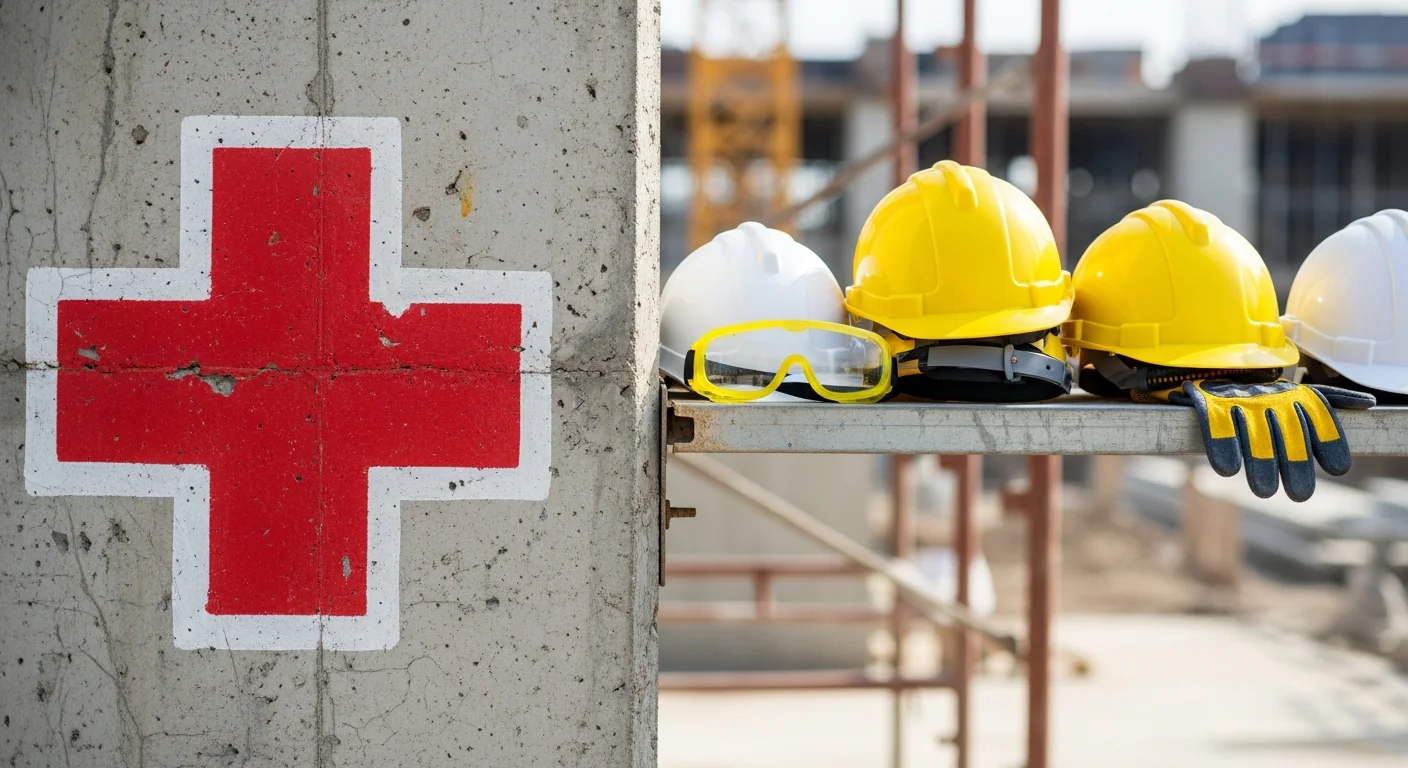
Nobody starts a construction project expecting someone to get hurt. But the reality is that job sites are full of hazards, and injuries happen even on well-run crews. What separates a minor incident from a life-threatening situation often comes down to one thing: how prepared your team is to respond in those first few minutes.
This guide walks through the practical side of first aid and emergency preparedness on construction sites. We will cover what OSHA actually requires, what should go in your first aid kits, how to put together an emergency action plan that works, where to place AEDs, how to prevent heat illness, and how to train your crew so they are ready when something goes wrong.
OSHA First Aid Requirements for Construction Sites
OSHA does not leave first aid up to guesswork. The standards are spelled out in 29 CFR 1926.50, and they apply to every construction employer regardless of crew size.
Here is what the regulation boils down to:
- Trained personnel on site. If your job site is not within reasonable proximity of a hospital, infirmary, or clinic, you must have at least one person on site with a valid first aid certification. “Reasonable proximity” is not defined by a specific mile radius. OSHA looks at travel time and whether someone with a serious injury could get professional medical care quickly enough.
- First aid supplies. You need approved first aid supplies that are readily available to all workers. “Readily available” means workers should not have to cross the entire site or go through locked doors to reach them.
- Emergency phone numbers. Post the phone numbers for physicians, hospitals, and ambulance services where every worker can see them. On a construction site, that might mean posting them in the job trailer, near the tool crib, and at every first aid station.
- Weekly inspections. First aid kits must be checked at least once per week to make sure nothing is missing, expired, or damaged.
If you are running a crew, this is baseline. Not a suggestion, not a best practice, but a legal requirement. Falling short on any of these items can lead to OSHA citations, and more importantly, it puts your workers at risk.
For a deeper look at staying on the right side of OSHA regulations, check out our construction OSHA compliance guide.
Who Needs First Aid Training?
OSHA says at least one person per site needs valid certification when medical facilities are not nearby. But one person is a bare minimum. Think about what happens when that one trained person calls in sick, goes on vacation, or is working on the other side of the site when an injury happens.
A smarter approach is to have multiple trained crew members spread across shifts and work zones. Many contractors aim for one certified responder per 25 workers or per major work area. The cost of a Red Cross or equivalent first aid and CPR course is small compared to the liability of having nobody available when a worker goes down.
Building First Aid Kits for Construction Job Sites
A first aid kit sitting on a shelf in the job trailer is better than nothing, but it is not enough for most construction sites. You need kits that are stocked for the specific hazards your crew faces, positioned where workers can reach them fast, and maintained so everything inside is usable.
What Goes in a Construction First Aid Kit
OSHA references ANSI/ISEA Z308.1 as the baseline standard for first aid kit contents. A kit meeting that standard includes:
- Adhesive bandages (assorted sizes)
- Gauze pads and roller bandages
- Adhesive tape
- Triangular bandages for slings
- Antiseptic wipes and antibiotic ointment
- Burn treatment (gel or cream)
- CPR breathing barrier
- Cold packs
- Eye wash solution (at least 1 oz)
- Scissors and tweezers
- Exam gloves (multiple pairs)
- A first aid guide
That covers general injuries, but construction sites bring specific hazards. Depending on your work, consider adding:
- Eye wash stations or larger bottles if your crew does grinding, cutting, or works around chemicals
- Tourniquets for sites where power tools, heavy equipment, or sharp materials create amputation or severe laceration risks
- Splints for falls from height or heavy material handling
- Extra burn supplies if you have welding, torch cutting, or hot work
- Blood clotting agents for sites with high laceration risk
- Sunscreen and electrolyte packets for outdoor work in warm climates
Kit Placement and Quantity
Place kits based on how your site is laid out, not based on a single number. The goal is that any worker on site can reach a stocked kit within a few minutes. For large commercial jobs, that might mean a kit on every floor, in every major work zone, and on equipment like cranes or in excavation areas.
Label each kit clearly and make sure every worker knows where they are during orientation. If your site layout changes as the project progresses (and it will), move the kits accordingly.
If you want to stay organized as your project evolves, a solid construction safety management system helps track kit locations alongside other safety gear.
Creating an Emergency Action Plan That Actually Works
An emergency action plan (EAP) is required by OSHA under 29 CFR 1926.35, and it needs to be more than a document buried in a binder. A plan that works is one your crew has read, practiced, and can follow under pressure.
What Your EAP Should Cover
At minimum, your plan needs to address:
- Evacuation procedures. Map out primary and secondary evacuation routes for each area of the site. Mark them clearly and keep routes clear of materials and equipment.
- Assembly points. Designate a muster area away from the building and away from emergency vehicle access routes. Everyone should know exactly where to go.
- Alarm systems. Define how workers will be alerted. Air horns, PA systems, or radio calls all work, but every worker needs to know what the signal sounds like and what it means.
- Roles and responsibilities. Assign specific people to call 911, direct emergency vehicles, perform headcounts, and shut down equipment. Do not assume someone will step up in the moment. Name names.
- Emergency contacts. List the nearest hospital with trauma capability, the fire department, poison control, and your company’s emergency contact. Include GPS coordinates or a clear address for dispatch.
- Communication protocol. How will you notify workers in remote areas of the site? How will you communicate with dispatch? Radio channels, phone trees, and backup methods should all be documented.
- Accounting for personnel. After an evacuation, you need to know who is accounted for and who is missing. A daily sign-in sheet or digital check-in system makes this possible.
Making the Plan Real
Write the plan in plain language. Skip the legal jargon. If a laborer on their first week cannot read your EAP and understand what to do, rewrite it.
Run drills at least once per quarter and at the start of every major project phase. Drills do not have to be elaborate. A five-minute walkthrough of evacuation routes during a toolbox talk counts. The point is repetition so that when something actually happens, your crew moves on instinct instead of freezing up.
Contractors across the country trust Projul to run their businesses. Read their reviews.
Keep your EAP visible. Post the evacuation map in the job trailer, at entry points, and near first aid stations. If your site uses digital tools, store the plan where field crews can pull it up on their phones.
Our construction safety plan guide covers how to build out a full site-specific safety plan that ties your EAP into the broader safety program.
AED Placement and Use on Construction Sites
Automated External Defibrillators (AEDs) are not currently required by federal OSHA on construction sites, but that does not mean you should skip them. Sudden cardiac arrest can strike anyone, and the survival rate drops roughly 10% for every minute without defibrillation. On a construction site where EMS response times can be 10 minutes or more, having an AED on hand can be the difference between life and death.
Where to Place AEDs
The American Heart Association recommends that an AED be reachable within 3 minutes of any location. For a construction site, that means:
- One AED per major work zone on large sites
- Ground-level placement in a visible, weather-protected case near the main first aid station
- Additional units on upper floors of multi-story projects where elevator access may be slow or unavailable
- Near high-risk areas like confined spaces, electrical work zones, and areas where heavy physical exertion is common
Mount AEDs in bright, clearly marked cabinets. Use signage that is visible from a distance. If your site has multiple trades and subcontractors, make sure everyone knows where the AEDs are during their orientation.
Training for AED Use
Modern AEDs are designed to be used by anyone. They provide voice prompts and will not deliver a shock unless the device detects a shockable rhythm. But training still matters because panic and hesitation are real. Workers who have practiced using an AED in training are far more likely to grab one and use it quickly when a real emergency happens.
Include AED training as part of your first aid and CPR courses. Most Red Cross and American Heart Association programs cover AED use as a standard module. Refresher training during toolbox talks keeps it top of mind.
Heat Illness Prevention on Construction Sites
Heat-related illness kills more construction workers than any other weather event. OSHA has been increasing enforcement around heat illness prevention, and in many states, specific heat illness regulations are already on the books.
The three main heat-related conditions you need to watch for:
- Heat cramps are painful muscle spasms caused by heavy sweating and electrolyte loss. They are a warning sign that the body is struggling to cool itself.
- Heat exhaustion shows up as heavy sweating, weakness, nausea, dizziness, and cool or clammy skin. Without intervention, it can progress to heat stroke.
- Heat stroke is a medical emergency. The body’s cooling system fails, core temperature spikes above 104 degrees F, and the worker may become confused, lose consciousness, or stop sweating. Call 911 immediately and cool the person down by any means available.
Building a Heat Illness Prevention Program
A practical prevention program includes:
Water. Provide cool drinking water within easy reach of every work area. OSHA’s guidance is one quart per worker per hour in hot conditions. Do not rely on workers to bring their own. Supply it and make it accessible.
Rest. Schedule regular rest breaks in shaded or air-conditioned areas. During heat waves, increase break frequency. Adjust work schedules so the heaviest tasks happen during the coolest parts of the day.
Shade. Provide shade structures where workers can cool down during breaks. Pop-up canopies, tarps, or designated indoor areas all work.
Acclimatization. New workers and those returning from time off are at the highest risk. OSHA recommends a gradual increase in workload over 7 to 14 days to let the body adjust to hot conditions.
Monitoring. Use a buddy system so workers watch each other for signs of heat illness. Supervisors should check in frequently and have the authority to pull workers off the job if they show symptoms.
Training. Every worker on site should know the signs and symptoms of heat illness, what to do if they or a coworker are affected, and that they will never face retaliation for reporting symptoms or taking a break.
For more on keeping your crew safe through seasonal hazards and ongoing training, take a look at our construction safety training guide.
Training Your Crew on Emergency Response
Having plans, kits, and equipment is only half the equation. If your crew does not know how to use them, they are just expensive decorations. Emergency response training turns preparation into capability.
Formal Certifications
At minimum, your designated first aid responders need:
- First Aid certification (American Red Cross, National Safety Council, or equivalent)
- CPR/AED certification (typically bundled with first aid courses)
- Bloodborne pathogen training (required by OSHA whenever workers could be exposed to blood)
These certifications typically require renewal every two years. Track expiration dates and schedule renewals well in advance. If certifications lapse, you are out of compliance.
Toolbox Talks and Regular Practice
Formal certification is the foundation, but regular reinforcement is what makes training stick. Work emergency response topics into your toolbox talk rotation:
- Monthly: Rotate through topics like first aid kit locations, evacuation routes, heat illness signs, and AED locations
- Project kickoff: Walk new crews through the site-specific EAP, point out first aid stations, and introduce the designated responders
- Seasonal: Cover heat illness prevention before summer, hypothermia and frostbite before winter, and severe weather procedures during storm season
- After incidents: If there is a near-miss or an actual injury, hold a debrief. Talk about what went right, what went wrong, and what changes need to happen
Scenario-Based Drills
The best training puts people in realistic situations. Run scenario drills where someone “discovers” an injured coworker and has to respond. Time the drill. See how long it takes to get first aid supplies, call for help, and account for all workers. Then talk about it.
Scenarios worth practicing include:
- A worker collapses from heat stroke in a remote area of the site
- A fall from height with a potential spinal injury
- An electrical contact injury
- A fire or explosion requiring full site evacuation
- A trench collapse with a trapped worker
These drills do not need Hollywood production value. Five minutes during a morning huddle, walking through the steps, builds more muscle memory than a 50-page manual nobody reads.
If you are building out a broader training program for your crew, our guide on construction training programs covers how to structure ongoing learning that actually gets results.
Documentation
Document every training session, drill, and certification. Record the date, topic, attendees, and instructor. If OSHA shows up, this paperwork is your proof that you take emergency preparedness seriously. It also protects you in workers’ comp claims and liability disputes.
Keep digital copies backed up and organized. If you are using construction management software like Projul, you can store training records alongside project documents so everything stays in one place and is accessible from the field.
For more on keeping your safety documentation tight and inspection-ready, see our construction safety inspections guide.
Wrapping It Up
First aid and emergency preparedness are not glamorous parts of running a construction business. They do not show up in your bid numbers, and they will not win you new contracts. But they are the reason your crew goes home at the end of the day.
Get your first aid kits stocked and placed where workers can reach them. Write an emergency action plan in plain English and practice it until it is second nature. Put AEDs on site and train people to use them. Take heat illness seriously before the temperature spikes. And invest the time to train your crew so they can act fast and act right when something goes wrong.
Want to put this into practice? Book a demo with Projul and see the difference.
The best emergency is the one that never happens. The second best is the one your team was ready for.