
Lean Construction Management Guide (2026)
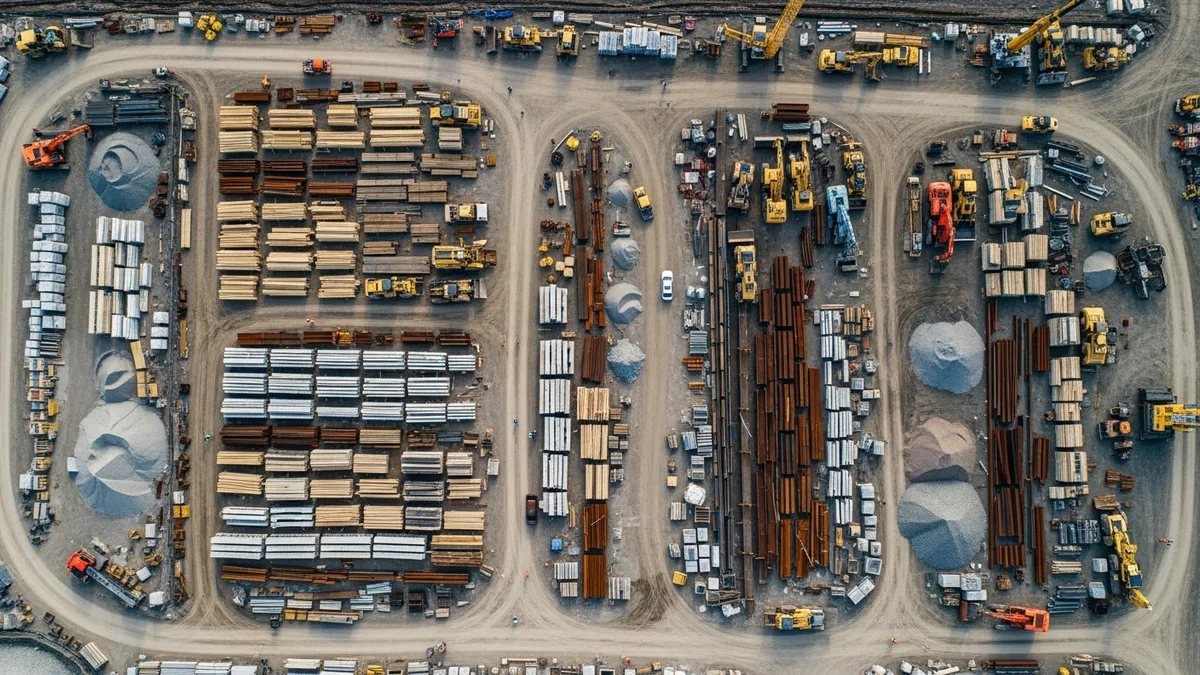
If you have been in construction long enough, you have seen it: a crew standing around waiting for materials that were supposed to arrive at 7 AM. A framer ripping out work because someone read the plans wrong. A superintendent driving across town to grab a tool that should have been on the truck. None of this is unusual. Most contractors just accept it as part of the job.
But here is the thing. Every one of those moments is waste. And waste is the single biggest drain on your profit margins, your schedule, and your crew’s energy.
Lean construction management gives you a framework to find that waste and get rid of it. Not with some corporate training program or a wall full of sticky notes, but with practical changes to how you plan, communicate, and run your jobs every day.
This guide breaks down what lean actually means for contractors, how to spot the waste hiding in your operations, and how to start making changes that show up on your bottom line.
What Lean Construction Management Actually Means
Lean started in manufacturing. Toyota built a production system in the 1950s that focused on one thing: eliminating anything that did not add value to the finished product. Every extra step, every delay, every defect was treated as a problem to solve, not just the cost of doing business.
Construction adopted these ideas starting in the 1990s, and the results have been consistent. Contractors who apply lean principles report fewer delays, less rework, lower material costs, and better crew morale.
But lean is not about working faster or pushing your people harder. It is about working smarter. The goal is to remove the obstacles that slow your crew down so they can spend more of their day on productive work.
Think about a typical eight-hour day on one of your jobs. How many of those hours does your crew spend actually building? Studies from the Construction Industry Institute found that productive work accounts for only about 40% of a typical construction worker’s day. The rest is spent waiting, moving materials, looking for information, fixing mistakes, or doing tasks that could have been avoided with better planning.
That is not a people problem. That is a process problem. And lean gives you a way to fix it.
The 8 Wastes in Construction (and Where They Hide)
Lean identifies eight categories of waste. In manufacturing, they are easy to see on an assembly line. In construction, they are harder to spot because every job is different and the work happens across multiple locations. But once you know what to look for, you will start seeing waste everywhere.
1. Overproduction: Doing work before it is needed or doing more than what is required. A concrete crew pouring a foundation before the surveyor confirms the layout is overproduction. So is a painter applying a third coat when specs call for two.
2. Waiting: This is the big one in construction. Crews waiting for materials, waiting for inspections, waiting for answers from the architect, waiting for the previous trade to finish. Every hour of waiting is an hour you are paying for with zero output.
3. Transportation: Moving materials more than necessary. If lumber gets delivered to the street, moved to the staging area, then carried to the work zone, that is three touches when one would do. Every extra move costs time and increases the chance of damage.
4. Over-processing: Doing more work than the job actually requires. This includes excessive documentation, redundant quality checks on non-critical items, or finishing surfaces that will be covered by other trades.
5. Excess inventory: Ordering materials too early or in quantities larger than needed. Materials sitting on a jobsite for weeks tie up cash, take up space, and are at risk for theft, weather damage, or becoming someone else’s trip hazard. Managing material waste on your jobs is one of the fastest ways to protect your margins.
6. Unnecessary motion: Workers walking back and forth to get tools, climbing ladders to check plans posted in the trailer, or searching for information that should be at their fingertips. Poor site layout and scattered information are the usual causes.
7. Defects: Rework. The most expensive waste in construction. Whether it comes from miscommunication, bad drawings, or rushed work, tearing something out and redoing it costs double: once for the original work and again for the fix.
8. Unused talent: Your crew knows things you do not. They see problems before you do. If you are not asking for their input on how to do the work better, you are leaving good ideas on the table.
How to Spot Waste on Your Jobs
You cannot fix what you cannot see. And on a busy jobsite, waste blends into the background. Here are practical ways to find it.
Track your time honestly. Not just clock-in and clock-out, but what your crew actually does during the day. Use time tracking tools that let workers log their hours against specific tasks. After a couple of weeks, you will have real data showing where time goes. Most contractors are surprised by how much of the day disappears into non-productive activities.
Walk the site with fresh eyes. Once a week, walk your jobsite and just observe. Do not solve problems. Just watch. Where are people standing around? Where are materials piled up that should not be? Where are workers making extra trips? Write it all down.
Read your daily logs. If your crew is filling out daily logs with real detail, those logs are a gold mine for spotting recurring problems. Look for patterns: the same subcontractor always running late, the same type of rework showing up, the same materials consistently short. Patterns point to system problems, not one-off mistakes.
Ask your crew. Seriously. At the end of the week, ask your foremen and lead workers one question: “What slowed you down this week?” They will tell you things you never would have noticed from the trailer.
Review your job costs. Compare estimated labor hours to actual hours on completed tasks. If framing was estimated at 200 hours and it took 280, dig into why. Job costing data tells you exactly where your estimates break down, and that breakdown almost always traces back to one of the eight wastes.
5 Lean Principles You Can Apply This Week
You do not need to become a lean expert to start seeing results. These five principles are practical enough to put into action on your next job.
Pull Planning
Traditional scheduling works top-down: the project manager builds a schedule, hands it to the supers, and expects everyone to follow it. Pull planning flips this. You start with the end date and work backward, with input from every trade involved.
The idea is that the people doing the work know best how long it takes and what they need from other trades to start. A pull planning session gets everyone in the same room (or on the same call) to map out the sequence together. The result is a schedule that is realistic because the people who have to execute it helped build it.
This fits naturally into a solid scheduling system where you can adjust timelines based on actual field conditions instead of best guesses made months ago. For a deeper look at different approaches, check out our guide on construction scheduling methods.
Last Planner System
The Last Planner System (LPS) is one of the most widely used lean tools in construction. It works on a simple idea: the “last planner,” meaning the foreman or trade lead closest to the work, makes the weekly commitment for what will get done.
Each week, last planners commit to specific tasks they are confident they can complete. At the end of the week, you measure what was actually completed versus what was promised. This metric, called Percent Plan Complete (PPC), gives you a clear number to track reliability.
When PPC drops, you investigate why. Was it a material delay? A design question that never got answered? An inspection that got pushed? Every miss is a learning opportunity, not a blame session.
The 5S System for Jobsites
5S comes straight from manufacturing floors, but it works on jobsites too. The five S’s are: Sort, Set in order, Shine, Standardize, and Sustain.
In plain terms: get rid of stuff you do not need on site, organize what remains so everyone can find it, keep the site clean, create standard practices for how things are stored and maintained, and make it a habit rather than a one-time cleanup.
Don’t just take our word for it. See what contractors say about Projul.
A clean, organized site is not just about looking professional. It reduces time spent searching for tools and materials, cuts down on safety incidents, and makes it easier to spot problems early.
Batch Size Reduction
Instead of trying to complete large chunks of work all at once, break the work into smaller batches. A drywall crew does not need to hang every sheet on a floor before the tapers start. If the hangers finish one section and the tapers start behind them, the work flows continuously and you catch defects while they are small.
Smaller batches mean faster feedback, less rework, and smoother coordination between trades.
Daily Huddles
A 10-minute standup meeting at the start of every day. Three questions for each lead: What did you finish yesterday? What are you working on today? What is in your way?
That last question is where the value is. If a plumber says he cannot start rough-in because the electrician has not finished in that area, you know immediately. You can reroute the plumber to another area or push the electrician to finish up. Without the huddle, that plumber might stand around for two hours before anyone notices.
Building a Culture That Fights Waste
Lean is not a checklist. It is a way of thinking about work. And it only sticks if your crew buys in.
The biggest mistake contractors make with lean is treating it as a top-down mandate. If your workers feel like lean is just another corporate initiative designed to squeeze more work out of them, they will resist it. And they would be right to.
Instead, frame lean around what your crew already wants: less frustration, fewer wasted trips, materials where they need them, clear direction on what to do next. Nobody likes standing around. Nobody likes rework. When you position lean as “let us figure out what is slowing you down and fix it,” people get on board.
Start with a pilot project. Pick one job and apply lean principles there. Track the results. When the crew on that job sees shorter days with the same output, or fewer headaches with better quality, word spreads. If you want to take lean further with statistical process controls and structured problem solving, our construction Lean Six Sigma guide walks through those methods.
Celebrate small wins. If a crew reduces material waste by 15% or cuts rework hours in half on a task, recognize it. Not with pizza parties, but with genuine acknowledgment that their input made a difference.
Make it visible. Post weekly PPC scores where everyone can see them. Share project tracking data that shows progress against plan. When people can see the numbers improving, it reinforces the effort.
Remove blame. Lean depends on honest reporting. If a foreman is afraid to admit a task did not get completed because he will get chewed out, your data is useless. Problems are system problems, not people problems. Fix the system.
Measuring the Impact of Lean on Your Projects
If you cannot measure it, you cannot manage it. Lean construction gives you several practical metrics to track progress.
Percent Plan Complete (PPC): The percentage of weekly commitments that were actually finished. Industry benchmarks suggest that teams new to lean start around 50-60% PPC and improve to 75-85% within a few months. Higher PPC means more predictable schedules and fewer surprises.
Rework rate: Track the hours spent on rework as a percentage of total labor hours. The Construction Industry Institute reports that rework accounts for roughly 5-9% of total project costs on average. Lean teams consistently bring this below 3%.
Labor productivity: Compare productive hours (time spent installing, building, finishing) against total hours on site. Track this weekly and you will see the trend line move as lean practices take hold.
Material waste percentage: Measure the cost of wasted materials against total material cost. Even a 2-3% reduction on a large project adds up to significant savings. Our guide on crew scheduling covers how better coordination between trades reduces both labor waste and material waste.
Schedule variance: Track the difference between planned completion dates and actual completion dates for key milestones. Lean teams see this gap shrink over time because planning becomes more reliable.
The key with all these metrics is consistency. Measure the same things the same way every week. Do not chase perfection. Chase improvement. A crew that goes from 55% PPC to 70% PPC in three months is making real progress, even if 70% does not sound impressive on paper.
Lean construction management is not complicated. It is just disciplined attention to how work actually gets done, combined with the willingness to change what is not working. You do not need to overhaul your entire operation overnight. Pick one waste, fix it, measure the result, and move on to the next one. Over time, those small improvements compound into a business that runs tighter, finishes faster, and keeps more of what it earns.
Ready to stop guessing and start managing? Schedule a demo to see Projul in action.
Your crew already knows where the problems are. Give them a framework to talk about it, tools to track it, and permission to fix it. That is lean construction in a nutshell.
Frequently Asked Questions
What is lean construction management?
What are the 8 wastes in construction?
How do I start implementing lean on my jobs?
Does lean construction work for small contractors?
What tools help with lean construction management?
Related Articles

Construction Team Meetings: A Practical Guide to Meetings That Actually Get Results
Most construction team meetings waste time. Here's how to run weekly check-ins, safety meetings, kickoffs, and...
Read More →
Project Management for Small Contractors: You Don't Need Enterprise Software
You don't need a 50-person company to benefit from project management. Even a 5-person crew loses money without a...
Read More →
Free Construction Schedule Template
A solid construction schedule keeps your jobs on track, your crews busy, and your clients happy. Grab our free...
Read More →