
How to Build a Construction Site Staging Plan
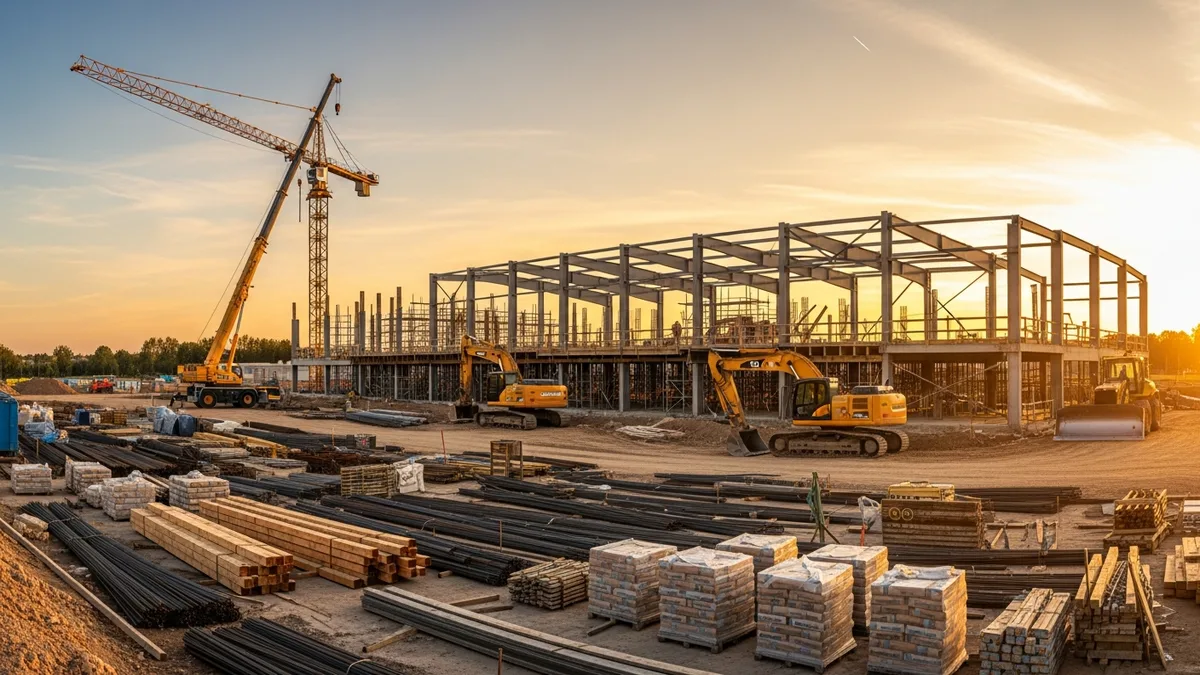
If you’ve ever watched a delivery truck block the only site entrance for two hours while three crews stood around waiting, you already know why site logistics matter. Or maybe you’ve seen a pallet of drywall staged right where the electricians needed to pull wire the next morning. These aren’t freak accidents. They’re the predictable result of skipping the logistics plan.
A construction site logistics and staging plan is the document that tells everyone where things go, when they arrive, and how they move through the jobsite. It’s the difference between a site that runs like a well-organized warehouse and one that feels like a parking lot after a concert.
The bigger the project, the more critical this plan becomes. But even on residential work, having a basic logistics plan saves you time, money, and a lot of headaches. This guide covers everything you need to build a logistics plan that actually holds up once boots hit the ground.
Site Layout Drawings: Mapping the Jobsite
The foundation of any logistics plan is the site layout drawing. This is the bird’s-eye view of your jobsite that shows where everything lives: staging areas, equipment locations, access roads, temporary facilities, dumpsters, safety zones, and no-go areas.
A good site layout drawing answers questions before anyone has to ask them. Where does the concrete truck park? Where do the framers stack their lumber? Where’s the dumpster relative to the demo crew? Where do workers park so they’re not blocking deliveries?
Here’s what should be on every site layout drawing:
- Material staging areas broken out by trade or phase
- Equipment placement including cranes, hoists, lifts, and generators
- Delivery access points and truck turning paths
- Pedestrian walkways separated from vehicle traffic
- Temporary facilities like trailers, porta-johns, and wash stations
- Dumpster and waste staging locations
- Fire access lanes and emergency vehicle routes
- Utility connection points for temporary power, water, and communications
The layout drawing isn’t a one-and-done document. It changes as the project progresses. During foundation work, your staging areas might be wide open. By the time you’re doing interior finishes, that same space might be occupied by the building itself. Smart contractors create phased layout drawings that show how the site evolves over time.
If you’re working on a project where the preconstruction planning is done right, the logistics layout should be one of the first deliverables the team produces.
Material Staging Areas: Putting Things Where They Belong
Staging is one of those things that sounds simple until you get it wrong. The concept is straightforward: store materials close to where they’ll be installed, keep them protected from weather and theft, and make sure they’re accessible without blocking other work.
In practice, staging gets complicated fast. You’re juggling multiple trades, limited space, and a site that’s constantly changing shape. Here are the principles that keep staging areas functional:
Stage by phase, not by delivery date. Just because the tile showed up early doesn’t mean it should sit in the middle of the site for six weeks. If it’s not getting installed soon, find a secondary staging area or coordinate with your supplier on delivery timing.
Give every trade a home. Each subcontractor should know exactly where their materials go when they arrive. Mark staging areas clearly with signs, paint, or cones. When a plumbing delivery shows up and the driver asks “where do you want this?”, your answer should never be “just put it anywhere.”
Keep staging areas off the critical path. Don’t stage materials in areas where other work needs to happen. This sounds obvious, but it’s one of the most common logistics failures on jobsites. The HVAC ductwork gets stacked right where the drywall crew needs scaffold access, and now you’re moving two tons of sheet metal before anyone can hang a single board.
Protect stored materials. Tarps, covered staging areas, and raised pallets keep materials from getting damaged by weather or ground moisture. Damaged materials mean reorders, delays, and wasted money. On jobsites where organization matters, material protection is non-negotiable.
Plan for double-handling. On tight sites, materials sometimes need to be staged in a temporary location first, then moved to the final staging area when space opens up. Account for this in your schedule and budget. Double-handling costs labor hours, and pretending it won’t happen doesn’t make it go away.
Delivery Scheduling: Getting the Right Stuff at the Right Time
Delivery scheduling is where the logistics plan meets the project schedule. Every material delivery needs a time window, an access route, an unloading plan, and a staging destination. Miss any one of those, and you’ve got a truck idling on the street while your foreman figures out what to do.
The key principles of good delivery scheduling:
Coordinate delivery windows. On busy jobsites, you can’t have three trucks showing up at the same time when there’s only one access point. Build a delivery calendar that spaces out arrivals and gives each truck enough time to unload and leave before the next one arrives.
Match deliveries to installation schedules. The goal is just-in-time delivery, where materials show up shortly before they’re needed. This reduces the amount of material sitting on site, which reduces theft risk, damage risk, and the amount of space you need for staging. Work closely with your construction scheduling process to line up deliveries with the work plan.
Communicate with suppliers early. Don’t wait until the week before to tell your lumber yard you need a delivery at 7 AM on Tuesday. Give suppliers as much lead time as possible, confirm delivery dates a week out, and reconfirm the day before. Suppliers who know your schedule are more likely to hit your windows.
Have a backup plan for missed deliveries. Trucks break down. Suppliers run out of stock. Weather shuts down roads. Your schedule should have enough float that a missed delivery doesn’t cascade into a two-day delay. Identify which deliveries are on the critical path and build contingency plans for those.
Track deliveries in your daily logs. Every delivery should be documented: what arrived, when it arrived, what condition it was in, and where it was staged. This creates a paper trail for daily log management that protects you if there’s a dispute about material quality or timing.
Designate an unloading crew or contact. Someone on site needs to be responsible for receiving deliveries. They check the packing slip against the order, inspect for damage, direct the driver to the right staging area, and sign off. Without a designated receiver, materials end up in the wrong place or damage goes unnoticed until it’s too late.
Crane Placement and Heavy Equipment Positioning
On projects that require cranes, hoists, or other large equipment, placement is a logistics puzzle that affects everything else on the site. A tower crane’s location determines its reach radius, which determines where materials can be lifted, which determines where staging areas need to be. Get the crane placement wrong, and you’ll spend the entire project working around a bad decision.
Crane placement considerations:
- Reach radius: The crane needs to cover all areas where heavy lifts will happen. Map out every major lift in the project and make sure the crane’s radius covers them all from its planned position.
- Ground conditions: Cranes need solid footing. Geotechnical reports should inform where cranes can and can’t be placed. Soft ground, underground utilities, or underground structures can all rule out otherwise ideal locations.
- Swing radius: The crane boom swings over neighboring properties, streets, and potentially occupied buildings. Check local regulations about crane swing over public right-of-way and neighboring parcels. You may need swing agreements or restricted operation zones.
- Assembly and disassembly access: You need to get the crane in and out. Plan the delivery route for the crane components and make sure there’s enough room to assemble and eventually disassemble the crane without shutting down the entire site.
- Proximity to power lines: OSHA requires minimum clearance distances between cranes and electrical lines. This is both a safety issue and a planning constraint that can eliminate potential crane locations.
For smaller equipment like boom lifts, forklifts, and skid steers, the same principles apply at a smaller scale. Each piece of equipment needs a designated parking location, a charging or fueling station, and clear paths to move between work areas. Equipment left wherever the last operator parked it creates a messy, unsafe site.
Reference your crane safety protocols alongside the logistics plan. Safety and logistics go hand in hand when heavy equipment is involved.
Traffic Flow and Access Management
Thousands of contractors have made the switch. See what they have to say.
Traffic management covers how vehicles, equipment, and people move through and around the jobsite. On urban projects, this extends to public sidewalks, streets, and neighboring properties. On rural or suburban sites, it might be as simple as defining a one-way loop for trucks.
Vehicle traffic flow:
Create a defined path for delivery trucks, concrete mixers, and other vehicles. Ideally, trucks should be able to enter, unload, and exit without backing up or making tight turns. One-way circulation patterns are safer and more efficient than two-way traffic on narrow site roads.
Mark vehicle routes clearly. Use traffic cones, jersey barriers, signage, and flaggers as needed. On public roads, you may need a traffic control plan approved by the local jurisdiction. This is especially true on road work, utility projects, or any job that affects traffic lanes.
Pedestrian separation:
Workers on foot should never share travel paths with trucks and heavy equipment. Create dedicated pedestrian walkways with physical barriers where possible. At crossing points where pedestrians and vehicles intersect, use flaggers or stop signs to control movement.
This isn’t just good practice. It’s an OSHA requirement on many types of jobsites. The signage requirements for your site should include clear markings for pedestrian-only zones and vehicle-only routes.
Public access and neighbor coordination:
If your site borders a sidewalk, parking lot, or public space, you need a plan for protecting the public. This might include covered walkways, temporary fencing, flaggers at driveway crossings, or coordination with local traffic authorities.
Don’t forget about your neighbors. Construction traffic, noise, dust, and blocked parking affect the people around you. Proactive communication with adjacent property owners and tenants goes a long way toward preventing complaints and stop-work orders. If your project is in a residential area, understanding local noise ordinances and neighbor relations can save you from costly shutdowns.
Phasing Plans for Occupied Sites and GC Coordination
Working in or around occupied buildings adds a whole layer of complexity to site logistics. Whether it’s a tenant improvement in an active office building, a hospital renovation, or a remodel where the homeowner is still living in the house, you need a phasing plan that keeps the work moving while minimizing disruption.
Phasing fundamentals:
Break the project into phases that isolate construction activity from occupied areas. Each phase should have its own staging area, access route, and work zone. Barriers, dust walls, and temporary partitions separate the construction zone from occupied spaces.
The phasing plan needs buy-in from the building owner or property manager. They need to know which areas will be affected, when, and for how long. Surprises create conflicts, and conflicts create delays.
Noise and dust control:
Occupied site work often comes with restrictions on when you can make noise. Hospitals might limit noisy work to nighttime hours. Office buildings might require that demolition happens before 7 AM or after 6 PM. Residential neighbors might have local noise ordinances you need to follow.
Dust control is equally important. Negative air pressure in the work zone, sealed barriers, and HEPA filtration keep dust from migrating into occupied areas. On projects involving hazardous materials, your asbestos and lead paint management protocols dictate even stricter containment requirements.
Coordinating with the GC:
If you’re a subcontractor on a GC-managed project, the logistics plan is the GC’s responsibility, but your cooperation makes it work. Here’s how to coordinate effectively:
- Attend logistics meetings. GCs typically hold regular coordination meetings where delivery schedules, staging assignments, and access windows are discussed. Show up. Pay attention. Ask questions.
- Submit your logistics needs early. If you need a crane pick on Thursday morning or a delivery window for oversized equipment, tell the GC during preconstruction, not the week of. Late requests get denied or create conflicts.
- Respect the plan. If the logistics plan says your staging area is in the northeast corner, don’t stage materials in the southwest corner because it’s more convenient. Every contractor going rogue on the plan creates chaos for everyone else.
- Report problems immediately. If a delivery route is blocked, a staging area is compromised, or another trade is encroaching on your space, tell the GC right away. Problems that simmer become problems that blow up.
Using construction management software makes this coordination dramatically easier. When the GC, subs, and suppliers can all see the same schedule, delivery calendar, and site documents in one place, miscommunication drops and accountability goes up.
Key Components of a Site Logistics Plan
Every logistics plan covers the same core components, but how deeply you develop each one depends on the size and complexity of the project. A backyard addition doesn’t need the same level of detail as a 200-unit mixed-use building. That said, skipping any of these components entirely is how projects end up disorganized.
Material Staging Zones
Material staging zones are the designated areas on your site where specific materials live until they’re installed. This isn’t “wherever there’s room.” Each zone should be assigned to a trade or a phase, clearly marked, and sized appropriately for the volume of material that will pass through it.
Think about it like a warehouse layout. You wouldn’t stack plumbing fittings on top of electrical panels in a supply house, and you shouldn’t do it on a jobsite either. Separate zones for framing lumber, mechanical equipment, finish materials, and hazardous goods keep things organized and reduce the risk of damage or contamination.
Good staging zones share a few characteristics. They’re accessible to the crews that need them without crossing through other active work areas. They’re close to the installation point so workers aren’t hauling materials across the entire site. They have adequate ground protection, whether that’s gravel pads, plywood, or concrete, so materials don’t sink into mud after the first rain. And they’re positioned so forklift or crane access is straightforward.
On projects with long durations, staging zones shift as the building progresses. What starts as an open laydown yard during site work becomes part of the building footprint by the time you’re pouring the second floor. Plan for this from day one by mapping staging zones for each major phase of the project.
Equipment Laydown Areas
Equipment laydown is the designated space for tools, small equipment, prefabricated assemblies, and anything else that isn’t raw material but isn’t permanently installed yet. This includes things like ductwork sections waiting for installation, prefab electrical panels, mechanical units staged for crane picks, and scaffolding components.
The laydown area needs to be secure, level, and accessible. On projects with expensive prefabricated components, you may need fencing, lighting, and even camera coverage to prevent theft. The laydown area should also be close enough to the work zone that moving components into place doesn’t eat up half the morning.
One thing that trips up a lot of contractors is underestimating the laydown space they’ll need during peak activity. When the mechanical, electrical, and plumbing trades are all mobilized at the same time, the volume of equipment and prefab components on site can double or triple seemingly overnight. Build extra capacity into your laydown plan, because you’ll use it.
Traffic Flow Patterns
Traffic flow covers every type of movement on the site: delivery trucks, concrete mixers, worker vehicles, forklifts, pedestrians, and even inspectors. The goal is to create predictable, separated flow paths so that people and vehicles don’t end up in the same place at the same time.
The simplest approach is a one-way loop for vehicles. Trucks enter from one access point, follow a defined route to the unloading area, and exit from a different point (or loop back around without needing to reverse). Backing up is one of the most dangerous maneuvers on a jobsite, and a one-way loop eliminates most of it.
Pedestrian routes should be physically separated from vehicle routes wherever possible. Jersey barriers, chain-link panels, or even simple delineator posts with flagging tape create a visual and physical boundary. At crossing points, use stop signs, flaggers, or designated crossing windows during breaks in vehicle traffic.
Don’t forget about emergency access. Fire lanes need to remain clear at all times. Ambulance access routes should be identified and communicated to every crew on site. If your staging area creeps into a fire lane because someone needed extra space, you’re creating a life-safety hazard and a code violation at the same time.
Temporary Facilities
Temporary facilities include everything your team needs to operate on site that isn’t part of the permanent building: job trailers, portable restrooms, handwash stations, break areas, tool cribs, temporary power distribution, water connections, and waste management stations.
Placement of temporary facilities matters more than most people think. Job trailers should have a clear sightline to the main work area and the primary access point so the superintendent can see what’s happening. Portable restrooms should be reasonably close to work areas but not right next to the break area or material staging zones. Dumpsters and waste bins should be accessible to the disposal truck without requiring it to drive through active work zones.
Temporary power distribution is its own logistics exercise. Spider boxes and temp panels need to be positioned so that extension cord runs are manageable and don’t create trip hazards. On larger projects, you may need multiple temp power drops at different locations as the building progresses vertically or spreads across a large footprint.
Phased Staging for Occupied Buildings and Tight Urban Sites
Urban projects and occupied building renovations present logistics challenges that don’t exist on open greenfield sites. Space is limited, neighbors are close, and the people living or working in the building expect their daily routine to continue with minimal disruption. You can’t just dump materials in the parking lot and figure it out later.
Working in Occupied Buildings
When the building is occupied during construction, every aspect of logistics gets more complicated. You need separate access routes for construction workers and building occupants. Materials can’t be staged in hallways, lobbies, or shared corridors. Elevators may need to be shared or scheduled between construction use and tenant use. Noise and dust restrictions limit when and how certain work can happen.
The phasing plan for an occupied building breaks the project into zones, and each zone gets its own mini logistics plan. Zone A might be under active construction while Zone B remains fully occupied. When Zone A finishes, the occupants move back in and Zone B opens up for construction. This leapfrog approach requires tight coordination and a logistics plan that accounts for the transition between phases.
Material deliveries to occupied buildings often need to happen during off-hours. A hospital renovation might only allow deliveries between 10 PM and 5 AM. A school project might restrict deliveries to weekends and holidays. These constraints need to be baked into the delivery schedule from the start, not discovered when a truck shows up at 8 AM and gets turned away.
Tight Urban Sites
Urban sites with zero lot lines, narrow streets, and no laydown space require creative logistics solutions. When there’s literally nowhere to stage materials on site, you have two options: just-in-time delivery where materials go directly from the truck to the installation point, or off-site staging at a nearby warehouse or yard with shuttle deliveries to the jobsite.
Just-in-time delivery sounds efficient, but it demands precision. The material has to arrive at exactly the right time, the crew has to be ready to install it immediately, and the truck can’t sit on the street waiting. Any delay in the installation sequence means the truck is blocking traffic and burning delivery fees.
Off-site staging adds a layer of cost and complexity, but it gives you a buffer. Materials can be received, inspected, and organized at the off-site location, then delivered to the jobsite in small batches as needed. This works well on high-rise projects where a ground-level staging area disappears once the podium is poured.
Street closures, sidewalk permits, and crane permits are part of the logistics plan on urban projects. These permits have lead times, sometimes weeks or months, and conditions that affect your schedule. A street closure that’s only approved for weekends changes your crane pick schedule entirely. Start the permitting process early and build the permit conditions into your logistics plan.
Common Site Logistics Failures and How They Blow Budgets
Most logistics failures aren’t dramatic. They’re small, repeated inefficiencies that compound over weeks and months until the project is behind schedule and over budget. Here are the failures that cost contractors the most money.
No designated staging areas. When materials don’t have assigned locations, they end up wherever the delivery driver feels like dropping them. Crews waste time looking for materials, moving materials that are in the way, and dealing with damage from improper storage. On a large project, unplanned material handling can waste 30 minutes per crew per day. Multiply that by a dozen crews over six months and you’ve burned thousands of labor hours on nothing.
Deliveries without coordination. Two concrete trucks, a lumber delivery, and a mechanical equipment shipment all showing up at the same time creates gridlock. Trucks idle while waiting to unload. Crews stand around while waiting for their materials. The site entrance gets blocked and nobody can get in or out. A simple delivery calendar with assigned time windows prevents this entirely, but it requires someone to own the schedule and enforce it.
Ignoring the phasing transitions. The logistics plan that worked during foundation work doesn’t work during framing. The staging area that was perfect during rough-in is now inside the building envelope. Contractors who don’t update their logistics plan as the project progresses find themselves constantly improvising, and improvisation costs money.
Failing to plan for waste removal. Dumpsters that are full, inaccessible, or in the wrong location create a mess that spreads across the site. Debris piles up in work areas, creating safety hazards and slowing down production. Waste removal is not glamorous, but it’s a logistics function that needs the same level of planning as material delivery.
Skipping the pre-delivery site walk. Before the first major delivery, walk the delivery route from the street to the staging area. Check for overhead obstructions, tight turns, soft ground, and anything else that could stop a truck in its tracks. A 15-minute walk can prevent a delivery failure that costs you an entire day.
Not accounting for weather. Rain turns unpaved staging areas into mud pits. Snow blocks access roads. Wind shuts down crane operations. Your logistics plan should include wet weather contingencies: alternate staging locations, ground protection for soft areas, and schedule float for weather-related delivery delays. Refer to your weather delay management plan for more detail on building weather resilience into your schedule.
Digital Site Logistics: Using Software to Plan and Communicate Staging
Paper logistics plans and whiteboard delivery schedules worked for decades, but they have a fundamental problem: the information lives in one place, and the people who need it are spread across the jobsite, the office, and a dozen subcontractor shops.
Construction management software solves this by putting the logistics plan, delivery schedule, and site documents in a single platform that everyone can access from their phone or laptop. Here’s how digital tools change the logistics game.
Scheduling Deliveries and Coordinating Access
With project scheduling software, delivery windows become part of the master schedule. When a phase shifts by two days, the delivery schedule shifts with it. Subcontractors can see their delivery windows in the same tool they use to track their tasks. Suppliers can receive automated notifications about upcoming deliveries, reducing the back-and-forth phone calls and emails that eat up your project manager’s day.
The visibility alone is worth it. When every trade can see the delivery calendar, conflicts surface before they happen. The mechanical sub can see that their equipment delivery overlaps with the concrete pour and request an adjustment before trucks are dispatched, not after they’re lined up on the street.
Documenting Site Conditions with Photos
Photo documentation is one of the most underused logistics tools in construction. A photo of the staging area at the start of each week creates a record of how the site is organized, what materials are on hand, and what condition they’re in. When someone claims their materials were damaged on site, you’ve got timestamped photos that tell the real story.
Photos also help with remote coordination. If the project manager is in the office and the superintendent is on site, a quick photo of a staging conflict communicates the problem faster than a five-minute phone call. Attach photos to daily logs, delivery records, and logistics updates so the entire team has visual context, not just text descriptions.
Sharing Plans and Updates in Real Time
The worst logistics plans are the ones nobody reads. When the plan lives as a PDF on someone’s desktop, it doesn’t get updated and it doesn’t get distributed. Digital platforms let you share the logistics plan with your entire team, push updates when things change, and confirm that key stakeholders have reviewed the latest version.
Real-time updates matter most during phasing transitions. When the site layout changes, every trade needs to know about the new staging locations, access routes, and equipment positions. Pushing an updated plan through your project management platform, with a notification that flags the changes, makes sure nobody is working off outdated information.
Tracking Issues and Resolving Conflicts
Logistics conflicts are inevitable. Two trades claiming the same staging area. A delivery that arrived at the wrong location. An access road that’s blocked by a concrete pump. Digital tools let you log these issues, assign them to the responsible party, and track resolution. That beats the alternative, which is yelling across the jobsite and hoping someone remembers to fix it.
Over time, tracking logistics issues creates a dataset that helps you improve. If you notice that delivery conflicts spike every time the project hits the rough-in phase, you can build more buffer into the delivery schedule for future projects. Continuous improvement doesn’t happen without data, and digital tools give you the data.
Putting Your Logistics Plan Together
Building a logistics plan isn’t something you knock out in an afternoon. It’s an iterative process that starts in preconstruction and evolves throughout the project. Here’s a practical workflow for putting yours together:
Step 1: Walk the site. Before you draw anything, spend time on the actual site. Note access points, neighboring structures, overhead obstructions, ground conditions, and anything else that affects how you’ll move materials and equipment. Take photos and measurements.
Step 2: Draft the initial site layout. Using your site walk notes and the project plans, create the first version of your layout drawing. Place staging areas, equipment, temporary facilities, and traffic routes. Get input from your superintendent, project manager, and key subcontractors.
Step 3: Build the delivery schedule. Working from your project schedule, map out every major material delivery. Assign each delivery a date, time window, access route, unloading method, and staging destination. Identify conflicts and resolve them before the first truck shows up.
Step 4: Create phased versions. If the project has distinct phases, create a layout drawing for each phase. Show how staging areas shift, equipment moves, and access routes change as the project progresses.
Step 5: Review with the team. Share the logistics plan with your entire project team, including subcontractors. Walk through it at the preconstruction meeting and make sure everyone understands their responsibilities.
Step 6: Update throughout the project. The logistics plan is a living document. Update it when conditions change, when phases shift, or when you discover something that doesn’t work in the field. A plan that sits in a drawer collecting dust isn’t a plan at all.
The contractors who consistently run smooth, productive jobsites aren’t lucky. They’re organized. A solid site logistics and staging plan is one of the biggest reasons their projects come in on time and on budget while others struggle with constant firefighting.
Ready to stop guessing and start managing? Schedule a demo to see Projul in action.
Whether you’re running a small remodel or a multi-phase commercial build, taking the time to plan your logistics up front pays for itself many times over. The materials arrive when you need them, the crews have space to work, the equipment is where it should be, and the site stays safe. That’s not magic. That’s planning.
Frequently Asked Questions
What is a construction site logistics plan?
Who is responsible for the site logistics plan?
When should you create a site logistics plan?
What is the difference between a logistics plan and a site layout drawing?
How can construction software help with site logistics?
Related Articles

Construction Team Meetings: A Practical Guide to Meetings That Actually Get Results
Most construction team meetings waste time. Here's how to run weekly check-ins, safety meetings, kickoffs, and...
Read More →
Project Management for Small Contractors: You Don't Need Enterprise Software
You don't need a 50-person company to benefit from project management. Even a 5-person crew loses money without a...
Read More →
Free Construction Schedule Template
A solid construction schedule keeps your jobs on track, your crews busy, and your clients happy. Grab our free...
Read More →