
Construction Time Management Tips That Work
You did not get into construction to sit at a desk. But somehow, that is where a lot of your week ends up. Answering calls. Fixing schedules. Tracking down change orders. Sending the same photo to three different people.
The work itself is not the problem. The problem is everything around the work that eats your hours without producing anything billable.
This guide breaks down exactly where construction contractors lose the most time each week, and what to do about it. No theory. No fluff. Just the stuff that actually works when you have crews in the field and projects that need to move.
Where Your Hours Actually Go (and Why It Matters)
Most contractors think they know where their time goes. They are usually wrong.
When you actually track it, the picture looks something like this for a typical GC or specialty contractor running two to five active projects:
- 15 to 20 hours per week on direct project work (site visits, inspections, hands-on management)
- 8 to 12 hours per week on communication (calls, texts, emails, repeating yourself)
- 5 to 8 hours per week on scheduling and coordination
- 3 to 5 hours per week on paperwork and documentation
- 2 to 4 hours per week on rework caused by miscommunication
Add it up and you are looking at a 40 to 50 hour week where less than half is spent on the work that actually moves projects forward. The rest is overhead, and most of it is fixable.
The first step is figuring out your own numbers. Spend two weeks tracking your time honestly. Every phone call, every trip to the supply house, every time you pull out your phone to answer a question someone should already have the answer to. Write it all down.
You cannot fix what you have not measured. And once you see the numbers in black and white, you will be motivated to change them.
The Five Biggest Time Killers in Construction
Not all wasted time is created equal. Some problems cost you 30 minutes a week. Others cost you 30 minutes a day. Here are the five that do the most damage.
1. Scheduling Chaos
Every time a schedule changes and someone does not get the message, you lose time. The electrician shows up on Tuesday when the drywall is not done until Wednesday. Your concrete crew sits idle because the inspector pushed back. A sub cancels and you spend an hour reshuffling the week.
Bad scheduling does not just waste your time. It wastes everyone else’s time too, and that cost shows up on your bottom line.
The fix is not better guessing. It is construction schedule software that everyone can see and that updates in real time. If you are shopping for a platform, our best construction scheduling software guide compares the top tools for contractors. When the plumber finishes early, the next trade knows immediately. When an inspection gets delayed, the whole downstream sequence adjusts without six phone calls.
2. Repeat Communication
How many times this week did you answer the same question from different people? “What time do we start tomorrow?” “Where are the plans for the second floor?” “Did we get that permit yet?”
Repeat communication is a sign that information lives in your head instead of somewhere everyone can access it. Every question you answer twice is time you will never get back.
3. Paper Chasing
Change orders on napkins. Timesheets in a shoebox. Photos scattered across four different phones. Daily logs that exist only in someone’s memory.
Every minute you spend hunting for a document is a minute you could have spent on something productive. And when you cannot find what you need, the cost goes beyond time. You eat change orders you should have billed for. You lose disputes because you have no documentation. You pay crews for hours they did not work because no one kept clean records.
4. Rework From Bad Handoffs
When a crew starts work based on outdated plans, verbal instructions that got garbled, or assumptions about scope that were never confirmed, rework follows. According to industry data, rework accounts for roughly 5% of total project costs in construction. On a $500,000 project, that is $25,000 walking out the door.
Most rework is not a skills problem. It is a communication problem. The info existed, but it did not get to the right person at the right time.
5. Context Switching
This one is invisible but brutal. You are reviewing a bid when a sub calls about tomorrow’s delivery. You handle that, then check your email and see a client complaint. You deal with that, then try to get back to the bid, but now you have lost your train of thought and need ten minutes to get back up to speed.
Research shows that every time you switch tasks, it takes an average of 23 minutes to fully refocus. If you switch tasks 10 times a day, which is conservative for most contractors, that is nearly four hours of lost productivity. Every single day.
Building a Daily System That Actually Works
Knowing the problems is one thing. Fixing them takes a system. Not a complicated one. Just a consistent one.
Here is a daily framework that works for contractors running multiple jobs:
Morning block (first 30 minutes of your day):
- Review today’s schedule across all active projects
- Check for overnight messages or issues that need immediate attention
- Identify the one or two things that will move the needle most today
- Send any updates your crews need before they hit the jobsite
Midday check (15 minutes around lunch):
- Review progress against the morning plan
- Handle any urgent items that came in
- Update daily logs while details are fresh
End of day (20 minutes before you stop):
- Log completed work and any issues
- Confirm tomorrow’s schedule and material needs
- Send end-of-day updates to clients who need them
That is roughly an hour of structured admin time. It sounds like more work, but it actually saves two to three hours of reactive scrambling throughout the day. You are ahead of problems instead of behind them.
The key is protecting those blocks. Do not answer calls during your morning block unless something is on fire. Tell your team that you will be available after 7:30 or whatever your window is. Batch your communication instead of responding to every text the second it comes in.
Not sure if Projul is the right fit? Hear from contractors who use it every day.
If you are running multiple projects at once, this kind of structure is not optional. It is the only way to stay on top of everything without working 70-hour weeks.
Communication Systems That Kill the Phone Tag
The average contractor makes or receives 30 to 50 calls per day. Half of those are avoidable with better systems.
Here is what actually works:
Make information self-serve. If your crew lead can pull up today’s schedule, the latest plans, and the material list without calling you, that is three calls that never happen. Store plans, photos, and documents in a central location that your team can access from the field.
Use async communication for non-urgent items. Not everything needs a phone call. If a sub needs to know the paint color for next week’s job, a message or note in your project management system works fine. Save calls for things that are actually time-sensitive.
Set communication windows. Let your subs and suppliers know when you are available for calls and when you are not. Most will respect it. The ones who do not will call regardless, but you can let those go to voicemail and batch them.
Create standard updates. Instead of waiting for clients to ask “how’s the project going?” send a weekly update every Friday. Include photos, a progress summary, and what is coming next week. This kills 80% of client check-in calls before they happen. It also makes you look professional and organized, which helps with referrals.
Document decisions immediately. When you make a verbal agreement with a sub or client, follow it up with a written note. “Per our conversation, we agreed to X.” Takes 30 seconds. Saves hours of dispute resolution later.
Scheduling Methods That Prevent Fires Instead of Fighting Them
Most contractors schedule reactively. Something breaks, they fix it. A delay happens, they reshuffle. It is exhausting and it does not have to be that way.
Proactive scheduling means building your schedule with buffers, dependencies, and contingencies baked in from the start. Here is how that looks in practice:
Map your dependencies. Before the project starts, identify which tasks depend on which. Framing cannot start until the foundation is cured. Electrical rough-in cannot happen until framing is complete. When you map these out, you can see where delays will cascade and plan accordingly. If you want a deeper look at this, our scheduling methods guide breaks down several approaches.
Build in buffer days. Not every task, but at key milestones. If your drywall is scheduled for Monday through Wednesday, do not schedule painting for Thursday. Give yourself a day of float. Yes, you might “waste” a day if everything goes perfectly. But everything never goes perfectly, and that buffer day will save you a week of cascading delays at least once per project.
Front-load decisions. Most delays come from waiting on decisions. Material selections, change order approvals, permit reviews. Push these as early in the project as possible. Get the client to pick their tile before framing starts, not the week before the tile setter shows up.
Review weekly, adjust daily. Look at your full schedule every Monday morning. Identify potential issues for the week. Then make small adjustments each day as conditions change. This is much less stressful than discovering on Thursday that Friday’s inspection is not going to happen because Tuesday’s work did not get done.
The goal is not a perfect schedule. Perfect schedules do not exist in construction. The goal is a schedule that absorbs problems without blowing up the whole timeline.
Turning Saved Hours Into Real Results
Getting time back is only valuable if you do something with it. Here is where smart contractors put their reclaimed hours:
Business development. The number one thing that separates growing contractors from stuck ones is consistent business development. If you reclaim five hours a week, putting even two of those into following up with leads, visiting past clients, or building referral relationships will grow your pipeline faster than anything else.
Estimating accuracy. Rushed bids lose money. Either you bid too low and eat the cost, or you bid too high and lose the job. With more time, you can tighten your estimates, check your numbers, and submit bids you are confident in. That alone can add several percentage points to your margins.
Training and team development. Taking time to walk a new crew member through your expectations, review quality standards, or debrief after a project pays dividends for months. Most contractors skip this because they “do not have time.” Now you do.
Planning ahead. When you are not constantly reacting, you can think about next month, next quarter, next year. Where do you want to take the business? What types of projects do you want to pursue? Which clients are worth keeping and which ones are costing you money? Strategic thinking requires breathing room, and better time management creates that room.
Rest. This is not soft. Burned-out contractors make bad decisions, lose their temper with clients, and miss details that cost money. If reclaiming five hours a week means you leave at 5 PM on Fridays instead of 7 PM, that is a win. You will show up Monday sharper and more focused.
If you want more ideas on getting more done without burning out, our construction productivity guide covers additional strategies that pair well with the time management systems in this post.
Start This Week, Not Next Month
The biggest mistake contractors make with time management is treating it like a someday project. “I’ll get organized after this job wraps up.” “I’ll set up systems once things slow down.” Things never slow down. There is always another job, another fire, another reason to keep doing things the way you have always done them.
Pick one thing from this guide and do it this week. Just one.
Maybe it is tracking your time for five days to see where the hours go. Maybe it is setting up a morning planning block. Maybe it is moving your documents and photos into a single system so you stop digging through text threads to find that one picture from three weeks ago.
One small change, done consistently, will save you more time than a complete overhaul you never get around to starting.
And if you are ready for more than one change, start with the tools. A good construction management platform handles time tracking, scheduling, daily logs, and document storage in one place. That alone eliminates most of the admin overhead we talked about in this guide.
Take a look at what Projul offers and see if it fits how you work. No pressure, no 45-minute sales demo. Just the information you need to make a decision.
Try a live demo and see how Projul simplifies this for your team.
Your time is the one resource you cannot buy more of. Stop giving it away to problems that have simple solutions.
Frequently Asked Questions
How many hours per week do contractors typically waste on admin work?
What is the biggest time waster in construction?
How do I track where my time actually goes each week?
Can construction management software really save time?
How do I get my crew to stop wasting time on the jobsite?
Related Articles

Construction Team Meetings: A Practical Guide to Meetings That Actually Get Results
Most construction team meetings waste time. Here's how to run weekly check-ins, safety meetings, kickoffs, and...
Read More →
Project Management for Small Contractors: You Don't Need Enterprise Software
You don't need a 50-person company to benefit from project management. Even a 5-person crew loses money without a...
Read More →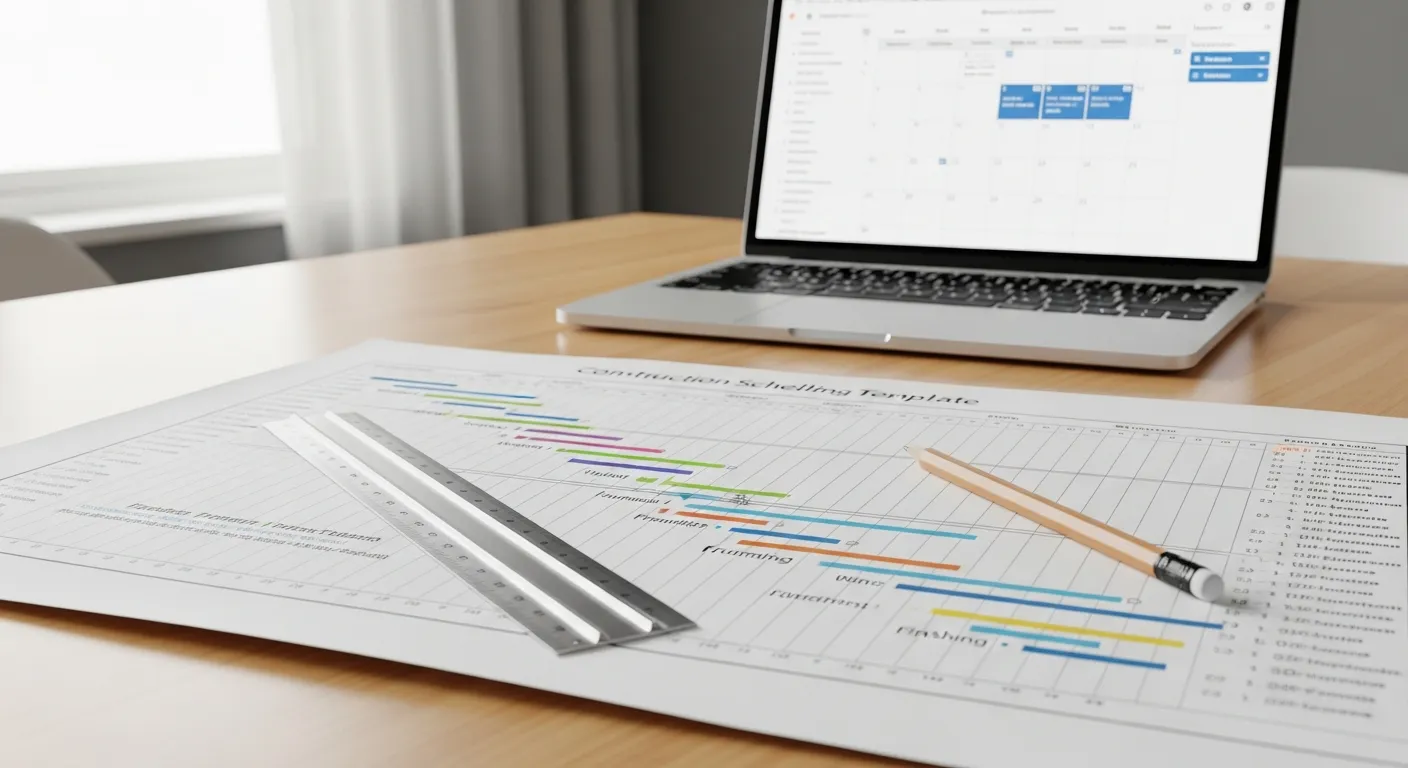
Free Construction Schedule Template
A solid construction schedule keeps your jobs on track, your crews busy, and your clients happy. Grab our free...
Read More →