
Wastewater Treatment Plant Construction Guide
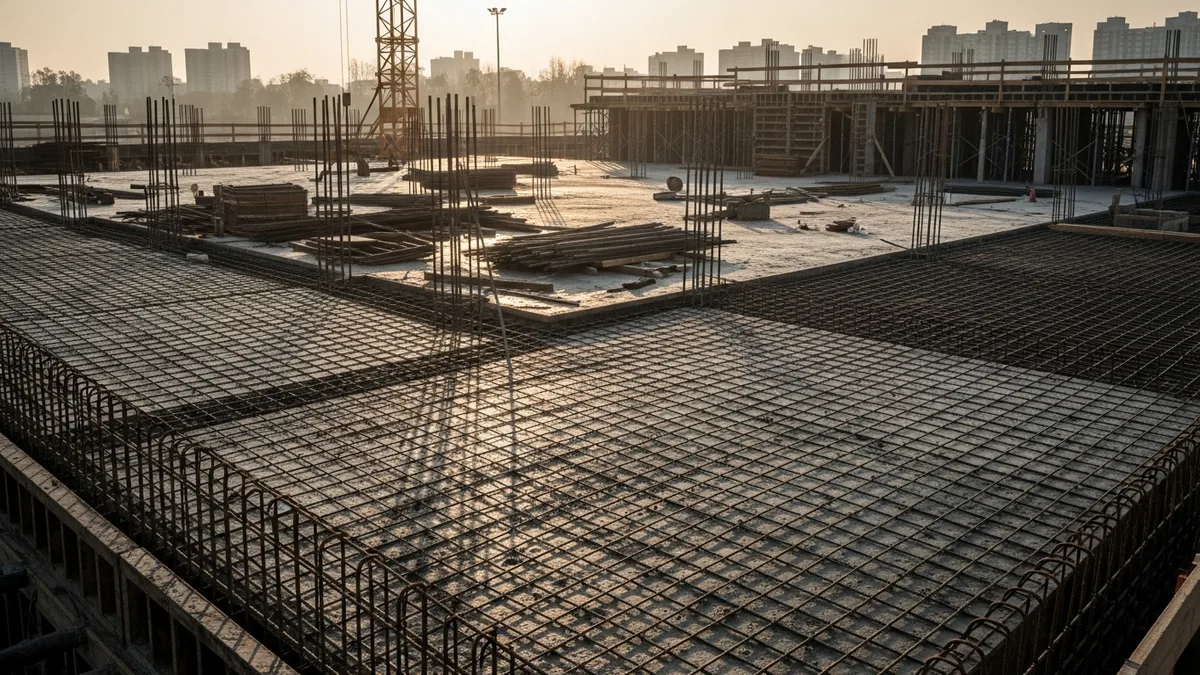
Building a wastewater treatment plant is one of those jobs that separates the generalists from the specialists. You are not just pouring concrete and hanging pipe. You are constructing a living, breathing industrial facility that has to treat millions of gallons of sewage every single day, meet discharge permits down to parts per billion, and keep running for 50 years with minimal downtime. The tolerances are tight, the coordination is relentless, and the consequences of getting it wrong include regulatory fines, environmental damage, and public health risks.
Whether you are a general contractor looking at your first water and wastewater bid, or a seasoned civil builder who wants a refresher on the moving parts, this guide covers what actually goes into building one of these plants from the ground up.
Concrete Tankage: The Bones of the Plant
The concrete work on a wastewater treatment plant is unlike anything you will see in commercial building construction. We are talking about massive reinforced concrete structures designed to hold water permanently, resist chemical attack, and last half a century without leaking. Aeration basins, clarifiers, equalization tanks, digesters, and chlorine contact chambers all demand specific concrete mix designs, placement techniques, and curing protocols.
Most treatment plant specs call for concrete with compressive strengths between 4,000 and 6,000 PSI, with water-to-cement ratios below 0.40 to keep permeability low. You will almost always see requirements for sulfate-resistant cement because hydrogen sulfide in wastewater breaks down standard Portland cement over time. Fly ash, silica fume, and slag cement are common supplementary materials that reduce porosity and improve chemical resistance.
Wall pours on large rectangular tanks might be 30 to 40 feet tall and several hundred feet long. Monolithic pours are preferred to minimize cold joints, which means you could be placing 500 to 1,000 cubic yards in a single pour that runs through the night. Concrete pumps, multiple batch plants, and detailed pour sequencing are not optional. They are survival tools.
Waterstops at every construction joint are non-negotiable. PVC or rubber waterstops get embedded in the concrete at every horizontal and vertical joint to prevent water migration. If a waterstop gets displaced during a pour, you have a leak path that is extremely expensive to fix after the fact. Good formwork crews know this and treat waterstop placement like sacred ground.
Post-pour, thermal control matters. Thick walls and slabs generate heat during hydration, and if the temperature differential between the core and surface exceeds about 35 degrees Fahrenheit, you get thermal cracking. Insulating blankets, temperature monitoring with embedded thermocouples, and sometimes cooling pipes within the concrete are all part of the thermal management plan.
Leak testing is the moment of truth. After curing, every tank gets filled with water and monitored for a set period, typically 24 to 72 hours. Any measurable drop in water level means you have a leak, and you are not moving forward until it is fixed. Injection grouting, crystalline waterproofing coatings, and in some cases, cutting out and replacing sections of concrete are all on the table when leaks show up. Getting concrete right the first time is always cheaper. For more on getting concrete work dialed in, check out our concrete basics guide and our concrete formwork best practices.
Process Piping: The Circulatory System
If concrete is the skeleton of a treatment plant, process piping is the circulatory system. Wastewater, return activated sludge, waste sludge, chemical feeds, disinfection lines, plant water, air headers, and effluent discharge lines all run through a web of piping that connects every process unit in the facility.
Pipe materials vary by service. Ductile iron and HDPE handle raw wastewater and sludge. PVC and FRP (fiberglass reinforced plastic) work for chemical feed lines and non-pressure drainage. Stainless steel shows up in chemical rooms and where corrosion resistance is critical. Large diameter piping, think 36 to 72 inches for main influent and effluent lines, is usually ductile iron or prestressed concrete cylinder pipe (PCCP) for buried runs.
The tricky part is that wastewater piping is not like plumbing in a building. You are dealing with abrasive solids, corrosive gases in the headspace above the water, wide temperature swings in chemical feed areas, and pressures that range from gravity flow to 150 PSI on force mains. Every joint, fitting, and valve has to be right for the specific service it sees.
Valve coordination alone can eat weeks of schedule time. A large treatment plant might have 500 to 1,000 valves, including butterfly valves, plug valves, check valves, gate valves, knife gate valves, and pressure-reducing valves. Each one has a specific function in the process, and the operations team will want to confirm that every valve is accessible, properly oriented, and operable before they accept the plant.
Pipe supports, thrust blocks, and expansion joints need careful engineering. Buried piping runs through soil that moves seasonally. Above-grade piping in pipe galleries and equipment rooms deals with thermal expansion. Large diameter pipes create massive thrust loads at bends and tees that need concrete thrust blocks or restrained joints to keep everything in place.
Hydrostatic testing of process piping is another checkpoint that can make or break your schedule. Every pressure pipe run gets tested to 1.5 times its working pressure and held for a specified duration. Leaks mean cutting out joints, replacing gaskets, and retesting. Plan time for this and do not treat it as an afterthought. Our mechanical piping guide goes deeper on the specifics of process piping coordination.
Electrical and SCADA: The Nervous System
A modern wastewater treatment plant is essentially an industrial facility running on electricity and data. The electrical scope on a mid-size plant can easily be 25 to 30 percent of the total project cost. We are talking about medium-voltage switchgear, motor control centers, variable frequency drives, transformers, emergency generators, uninterruptible power supplies, and thousands of feet of conduit and cable tray.
Power distribution starts at the utility service entrance, typically 12.47kV or 4.16kV for larger plants, stepping down through transformers to 480V for motors and further down to 208/120V for lighting and controls. Redundancy is baked into the design. Most plants have dual utility feeds or an on-site generator sized to run the entire facility during a power outage. Wastewater does not stop flowing when the lights go out, so the plant cannot stop treating it.
Variable frequency drives (VFDs) are everywhere in modern treatment plants. Blowers, pumps, mixers, and chemical feed systems all run on VFDs that allow operators to adjust speeds based on flow conditions. Installing VFDs means dealing with harmonic distortion, proper cable shielding, and heat dissipation in electrical rooms. The VFD vendor’s installation requirements are gospel, and ignoring them leads to premature failures and warranty disputes.
SCADA is where the plant comes to life electronically. Programmable logic controllers (PLCs) in local panels throughout the plant collect data from instruments and control equipment based on programmed logic. Flow meters, level sensors, dissolved oxygen probes, pH analyzers, turbidity meters, and pressure transmitters all feed data back to the PLCs, which relay it to the central SCADA system in the control room.
The SCADA scope includes the hardware (PLCs, network switches, fiber optic cabling, operator workstations, large-screen displays) and the software (the human-machine interface or HMI that operators use daily). SCADA integration is almost always a specialty subcontractor, and they need access to every other trade’s equipment to wire up instruments, calibrate sensors, and test control loops.
Commissioning the electrical and SCADA systems is a multi-week process that involves point-to-point wiring checks, instrument calibration, loop testing (verifying every sensor reads correctly on the SCADA screen), motor bump tests, and functional performance testing of automated sequences. This work has to happen in a logical order because you cannot test a pump control sequence until the pump is installed, wired, and the suction and discharge piping is complete. For more on managing electrical scope on construction projects, take a look at our electrical rough-in guide.
Odor Control: Keeping the Neighbors Happy
Wastewater smells. That is not a surprise to anyone, but what might surprise you is how much engineering and construction effort goes into containing and treating odorous air at a treatment plant. Hydrogen sulfide is the primary culprit, and it is not just unpleasant. It is toxic at higher concentrations and corrodes concrete and metals.
Odor control starts with covering or enclosing the process units that generate the worst smells: headworks (where raw sewage enters the plant), primary clarifiers, sludge handling areas, and sometimes aeration basins. Covers can be flat aluminum or FRP panels, or they can be domed structures over circular tanks. Each covered area has ductwork that pulls foul air out under slight negative pressure and routes it to an odor control system.
The three main treatment technologies are chemical scrubbers, biological scrubbers (biofilters), and activated carbon adsorption. Chemical scrubbers use caustic soda and sodium hypochlorite to neutralize hydrogen sulfide in a packed tower. Biofilters pass foul air through a bed of organic media where bacteria consume the odorous compounds. Carbon systems adsorb odors onto granular activated carbon in a vessel.
From a construction standpoint, odor control systems involve FRP ductwork, FRP scrubber vessels, chemical storage tanks with secondary containment, chemical metering pumps, blowers, and a lot of specialty coatings on concrete and metal surfaces that contact corrosive gases. The ductwork runs can be extensive, sometimes spanning the entire length of the plant, and they need to maintain negative pressure to keep odors from escaping.
Sealing is everything. A cover that leaks air means odor escapes untreated. Access hatches, pipe penetrations through covers, and joints in ductwork all need gasketing and careful fitup. During construction, temporary sealing measures might be needed if you are building adjacent to an active plant.
Testing the odor control system involves air sampling at the property boundary and at specific points within the plant. Many projects have odor emission limits written into the permit, and failing to meet them means the plant cannot pass its operational readiness review. This is not a system where “close enough” works.
Managing the Complexity: Scheduling, Coordination, and Phasing
Wastewater treatment plant construction is project management at its most demanding. You are juggling civil, structural, mechanical, electrical, instrumentation, HVAC, and specialty trades across a site that often has an existing plant running right next to your construction zone. The existing plant cannot shut down, period. Sewage flows 24 hours a day, 365 days a year, and the community depends on continuous treatment.
Thousands of contractors have made the switch. See what they have to say.
Phased construction is the standard approach. You build new facilities while the old ones keep running, then cut over flows from old to new in carefully planned switchovers that might happen during low-flow periods at 2:00 AM on a Sunday. Each phase has its own set of tie-in points where new piping connects to existing systems, and every tie-in is a potential disruption to plant operations if it goes sideways.
Long-lead equipment procurement is a scheduling reality that can make or break the project. Large pumps, blowers, generators, SCADA panels, and specialty items like membrane bioreactor systems or UV disinfection units can have lead times of 6 to 12 months or longer. If you do not get purchase orders placed early in the project, you will be staring at empty equipment pads while the rest of the plant sits finished around them.
Coordination meetings are not a luxury. Weekly meetings with all major trades present are the bare minimum. On larger projects, daily pull planning sessions using lean construction principles keep work moving and conflicts visible before they become problems. Our pre-construction planning guide covers how to set up coordination protocols that actually work on complex jobs.
Document control is another area where treatment plant projects separate the organized from the overwhelmed. Submittals, RFIs, shop drawings, O&M manuals, as-built drawings, and commissioning records add up to thousands of documents over the life of the project. Missing a submittal deadline on a long-lead item can cascade through the schedule for months. A solid document control system is not optional on these projects.
Quality control requires full-time attention. Concrete testing, welding inspection, pipe joint testing, electrical testing, and coating inspection all need qualified inspectors and a paper trail that satisfies the owner, the engineer, and the regulatory agency. Third-party testing labs, certified welding inspectors, and specialty coating inspectors are standard members of the project team.
The budget exposure on wastewater projects is significant. Change orders from differing site conditions (high groundwater, contaminated soil, unexpected existing utilities) are common. Having solid change order management processes protects your margins and keeps the project on track financially.
Commissioning and Startup: Bringing the Plant to Life
Commissioning a wastewater treatment plant is not like punching out a commercial building. You are testing an integrated industrial system where every component depends on others to function correctly. The commissioning process typically spans several months and follows a structured sequence from individual component testing through full system performance.
The sequence generally goes like this: pre-functional checks (verifying installation completeness), individual equipment testing (running each pump, blower, or mixer independently), system-level testing (running connected groups of equipment together), and finally, performance testing with actual wastewater flowing through the system.
During startup, process engineers work alongside operators to establish the biological treatment process. Activated sludge systems need time to grow the right population of microorganisms that break down organic matter. Seeding the system with sludge from another plant speeds this up, but it still takes weeks to months to develop a stable, well-settling biomass. During this period, effluent quality may not meet permit limits, and the regulatory agency usually grants a startup period where temporary discharge limits apply.
Training plant operators is a contractual requirement on most wastewater projects. The contractor and equipment vendors provide hands-on training covering every system in the facility. Operations and maintenance manuals fill shelves of binders, and the SCADA system needs to be fully documented with control narratives that explain every automated sequence.
Substantial completion on a wastewater project is not just about finishing construction. It means the plant is treating wastewater to permit standards, operators are trained, all documentation is submitted, and the facility is ready for continuous operation. The warranty period typically starts at substantial completion, and the contractor remains on the hook for warranty callbacks on every piece of equipment and every system for at least one year.
Closeout documentation on treatment plant projects is extensive. As-built drawings, O&M manuals, spare parts lists, warranty certificates, training records, commissioning reports, and regulatory compliance documentation all need to be compiled and delivered. Our closeout documentation guide covers how to stay ahead of the paperwork instead of drowning in it at the end.
Site Work, Earthwork, and Dewatering Challenges
Before you ever pour a yard of concrete on a wastewater treatment plant, you have to deal with the ground itself. And the ground on these projects is almost always working against you. Treatment plants are, by definition, located at low points in the collection system. That means low-lying terrain, high water tables, and often soft or saturated soils. The site work phase sets the tone for everything that follows, and cutting corners here will haunt you for the rest of the project.
Geotechnical reports on wastewater plant sites usually tell a story that nobody wants to hear. Organic soils, high plasticity clays, shallow rock, or groundwater sitting two feet below grade are common findings. If the geotech report calls for deep foundations, soil stabilization, or extensive dewatering, budget and schedule need to reflect that reality from day one. Pretending the problem will be smaller than the report says is a losing bet every time.
Dewatering is often the single biggest headache on treatment plant construction. When you are excavating 20 feet below grade for a clarifier foundation and the water table is at 8 feet, you need a dewatering system that can pull groundwater down and keep it down for weeks or months at a time. Wellpoint systems, deep wells, and eductor systems all have their place depending on soil permeability and the depth of the excavation.
The dewatering discharge itself creates additional problems. You cannot just pump groundwater into the nearest ditch. Most jurisdictions require a dewatering permit that limits turbidity, pH, and flow rate of the discharge. Settling basins, filter bags, or even temporary treatment systems might be needed before dewatered water can leave the site. Factor these costs into your estimate because they add up fast.
Sheet pile or secant pile shoring is common for deep excavations adjacent to existing plant structures. You cannot open-cut a 25-foot-deep excavation next to a tank that is holding millions of gallons of wastewater. The shoring design has to account for hydrostatic pressure, surcharge loads from adjacent structures and equipment, and vibration limits to protect existing infrastructure. Vibration monitoring during pile driving is standard practice on active plant sites.
Backfill around completed structures needs the same attention as the structural concrete itself. Poorly compacted backfill settles over time, breaking pipe connections, cracking slabs on grade, and creating low spots where water collects. Granular backfill placed in controlled lifts with nuclear density testing at every lift is the standard. Flowable fill is sometimes specified for tight areas around pipes and structures where mechanical compaction cannot reach.
Paving, grading, and site drainage come at the tail end of the project but need to be planned from the start. Treatment plants have extensive networks of yard piping, electrical duct banks, and utility corridors running beneath the paved areas. Coordinating the elevation of all these underground utilities with the finish grade is a three-dimensional puzzle that requires good survey control and constant communication between trades. A thorough approach to construction budget management helps you track the real costs of site work as conditions evolve, rather than hoping the original estimate holds up.
Safety on Active Wastewater Plant Sites
Working on a wastewater treatment plant construction site comes with a set of hazards you will not find on a typical commercial job. Beyond the standard construction risks of falls, struck-by incidents, and heavy equipment, you are dealing with confined spaces, toxic gases, biological hazards, and active industrial processes running right next to your work area. Safety planning on these projects is not just about checking OSHA boxes. It is about keeping people alive.
Confined space entry is probably the most serious and frequent hazard on treatment plant construction. Tanks, manholes, wet wells, pipe galleries, and valve vaults all qualify as permit-required confined spaces under OSHA 29 CFR 1910.146. Before anyone enters, you need atmospheric testing for oxygen deficiency, hydrogen sulfide, methane, and other toxic or combustible gases. A trained attendant stays at the opening, rescue equipment is staged, and the entry permit is filled out and posted. No shortcuts, ever.
Hydrogen sulfide deserves its own paragraph because it kills people on wastewater sites. H2S is heavier than air, so it collects in low spots, tanks, and excavations. At low concentrations it smells like rotten eggs, but at higher concentrations it deadens your sense of smell, so you cannot detect it right before it knocks you out. Personal H2S monitors are mandatory for anyone working near active wastewater processes or in areas where sewer gas could accumulate. Four-gas monitors that also detect oxygen levels, carbon monoxide, and lower explosive limits are standard issue on most treatment plant projects.
Biological hazards from contact with raw sewage are a constant concern. Workers who handle piping, valves, or equipment that has been in contact with wastewater need proper PPE, including gloves, face shields, and sometimes Tyvek suits. Handwashing stations and eyewash stations should be readily accessible throughout the site. Hepatitis A and tetanus vaccinations are recommended for workers on wastewater projects, and some owners require them as a condition of site access.
Working adjacent to an operating plant adds layers of complexity. Live flows, operating equipment, chemical storage areas, and electrical systems that are energized create hazards that your crews need to understand. Lockout/tagout procedures for tie-in work on existing systems must be coordinated with plant operations staff. You do not just shut a valve and start cutting pipe. The plant operator has to confirm the isolation, and there is usually a formal process involving the owner’s safety team, the contractor’s safety team, and the operations group.
Traffic management on treatment plant sites matters more than people expect. You have construction equipment, delivery trucks, plant operations vehicles, and sometimes public vehicles sharing roads and access points. On larger projects, a dedicated traffic management plan with flaggers, temporary signage, and designated haul routes keeps things from turning into a dangerous mess. For a deeper look at construction safety systems, see our construction safety guide which covers hazard planning principles that apply across heavy civil work.
Fall protection is another area that needs project-specific planning. Treatment plant construction involves a lot of work on top of walls, on scaffolding inside tanks, and on elevated platforms around equipment. Guardrail systems, personal fall arrest systems, and scaffold safety are all standard, but the wet and sometimes slippery conditions on these sites mean extra attention to walking surfaces, toe boards, and secure anchor points.
Estimating and Bidding Wastewater Treatment Plant Projects
Bidding a wastewater treatment plant is a different animal than bidding a commercial building or even a highway project. The specs are thick, the drawings are dense, and the scope crosses so many disciplines that missing a single line item in Division 40 (Process Integration) or Division 46 (Water and Wastewater Equipment) can blow a hole in your estimate that you will not recover from.
Start with the spec book. On a typical municipal treatment plant project, the specifications can run 2,000 to 4,000 pages across CSI Divisions 01 through 46. Every division matters, but the ones that catch contractors off guard are the process equipment specifications in Divisions 43 through 46. These sections define the performance requirements for pumps, blowers, clarifier mechanisms, chemical feed systems, and other specialty equipment that you will be buying from vendors and installing. The spec will tell you who is responsible for startup, training, and warranty service, and getting those responsibilities wrong in your estimate leads to ugly surprises later.
Quantity takeoff on treatment plant projects requires more than measuring concrete and counting fixtures. You need to account for embedded items in concrete (anchor bolts, sleeves, waterstops, embedded plates), which are often furnished by equipment vendors but installed by the concrete contractor. Coordination between the concrete takeoff and the equipment submittals is critical. If the equipment vendor changes an anchor bolt pattern after you have already poured the pad, you are looking at core drilling, epoxy anchors, and a change order that nobody wants to write.
Subcontractor coverage is essential on these bids. Most general contractors self-perform the concrete and sitework but sub out mechanical piping, electrical, HVAC, painting and coatings, and SCADA integration. Getting at least two or three bids on each major sub-trade package is important because pricing on specialty wastewater work can vary wildly. A mechanical sub who has done ten treatment plants will price the work differently than one who is figuring it out as they go.
Contingency on wastewater bids needs to be realistic. These projects have a higher rate of change orders than most other construction types because of existing conditions, regulatory changes, and the inherent complexity of integrating dozens of systems. A 5 to 10 percent contingency on the hard costs is not unusual for the contractor’s internal budget, even if the bid form does not have a line for it. Understanding how to set appropriate contingency levels is covered in our construction contingency budget guide.
Bonding capacity is often a gate that determines who can even bid these projects. Municipal wastewater plants routinely cost $50 million to $200 million or more, and the bid bond, performance bond, and payment bond requirements lock out contractors who do not have the financial backing. If you are growing into this market, start with smaller package plant projects or joint ventures with established water and wastewater contractors to build your bonding history and resume.
Schedule analysis during the bid phase is something many contractors skip, and it costs them. Building a rough CPM schedule during bidding helps you understand the sequencing, identify long-lead procurement items, and estimate general conditions costs accurately. A two-year project with a peak workforce of 200 tradespeople has very different general conditions costs than a three-year project with a peak of 120. Getting the duration and staffing curve right during bidding protects your margin.
Environmental Compliance and Regulatory Requirements
Wastewater treatment plant construction operates inside a regulatory framework that touches every phase of the project, from groundbreaking through final commissioning. Understanding these requirements is not just the engineer’s job. Contractors who ignore regulatory context end up creating problems that delay the project and generate costs that come out of someone’s pocket, often theirs.
The National Pollutant Discharge Elimination System (NPDES) permit is the governing document for what the plant can discharge. Every design decision and construction milestone ultimately ties back to meeting the effluent limits in that permit. During construction, a separate NPDES construction stormwater permit (or state equivalent) governs erosion and sediment control on the site. Silt fencing, stabilized construction entrances, sediment basins, and regular inspections by a qualified person are all mandatory. Violations come with fines, and on a publicly funded project, those fines create political problems that nobody on the project team wants to deal with.
Many wastewater plant projects are driven by consent decrees or administrative orders from the EPA or state environmental agencies. These legal agreements set hard deadlines for construction milestones and plant performance benchmarks. Missing a consent decree deadline can trigger daily fines that run into the tens of thousands of dollars. As the contractor, you may not be directly liable for those fines, but you can bet that the owner’s legal team will look for ways to pass that cost along if the delay is your fault.
Air quality permits sometimes apply to treatment plant construction, especially if the facility includes thermal processes like sludge incineration or biogas-fired engines. Even the odor control systems themselves may need air permits. The construction contractor needs to understand which equipment installations trigger permit requirements and make sure the systems are installed and tested in compliance with those permits before startup.
Wetland mitigation, endangered species surveys, and cultural resource assessments can all affect the construction approach and schedule. If the site is near wetlands, there may be buffer zones that restrict where you can stage equipment or stockpile materials. If an archaeological survey turns up artifacts, work in that area stops until the finds are assessed. These are not hypothetical scenarios. They happen on water and wastewater projects regularly.
During commissioning, the regulatory agency typically requires a period of performance testing where the plant demonstrates it can consistently meet permit limits under various flow and loading conditions. The contractor’s role during this period depends on the contract, but at minimum, you need to have your startup technicians, equipment vendors, and SCADA integrator available to address issues that come up during testing. Process upsets during commissioning are normal, but having the right people on call to respond quickly keeps minor problems from turning into permit violations.
Noise ordinances and construction hour restrictions also come into play, particularly on treatment plant projects in residential areas. Pile driving, heavy equipment operation, and concrete pumping generate noise levels that can trigger complaints and regulatory action if not managed. Pre-construction noise assessments, community notification programs, and construction hour limitations written into the contract are all common on these projects. Some owners require noise monitoring at the property boundary during construction, and exceeding the limits can result in work stoppages until mitigation measures are in place.
Recordkeeping throughout construction needs to satisfy multiple audiences: the owner, the engineer, the funding agency (if federal or state grants or loans are involved), and the regulatory agencies. Davis-Bacon wage requirements, disadvantaged business enterprise (DBE) participation tracking, American Iron and Steel (AIS) compliance documentation, and environmental monitoring records all need to be maintained and available for audit. Staying on top of this paperwork from day one, rather than scrambling at closeout, is the only approach that works. For contractors looking for better ways to handle the documentation load on projects like these, our crew scheduling tools and project tracking features are built for exactly this kind of multi-layered coordination.
Wrapping Up
Wastewater treatment plant construction sits at the intersection of civil, mechanical, electrical, and process engineering. It demands precision in concrete work, expertise in process piping, deep knowledge of electrical and controls systems, and careful attention to odor control and environmental compliance. The projects are long, complex, and unforgiving of mistakes.
But they are also some of the most rewarding work in construction. When you build a treatment plant, you are building infrastructure that protects public health and the environment for generations. Every gallon of clean effluent that flows out of your plant is proof that the concrete held, the pipes sealed, the controls worked, and the team delivered.
Ready to see how Projul can work for your crew? Schedule a free demo and we will walk you through it.
For contractors managing these kinds of complex projects, having the right project management tools makes a real difference. Tracking schedules, coordinating trades, managing documents, and keeping budgets in line across an 18 to 36 month build requires more than spreadsheets and sticky notes. That is exactly the kind of work Projul was built to support.
Frequently Asked Questions
How long does it take to build a wastewater treatment plant?
What types of concrete are used in wastewater treatment plant construction?
What is SCADA and why is it important for wastewater treatment plants?
How do contractors manage odor control during wastewater plant construction?
What are the biggest risks in wastewater treatment plant construction?
Related Articles
Construction Bridge Building and Repair: A Contractor's Field Guide
Bridge construction and repair demand a different level of coordination than most commercial or residential projects....
Read More →
Soil Nail Walls vs. MSE Retaining Structures: A Contractor's Field Guide
Soil nail walls and MSE retaining structures both hold back earth, but they work in completely different ways. This...
Read More →
Construction Data Center & Server Room Build-Out Guide
Data center build-outs are some of the most demanding projects in commercial construction. Every system has to work...
Read More →