
Cold Storage Warehouse Construction Guide
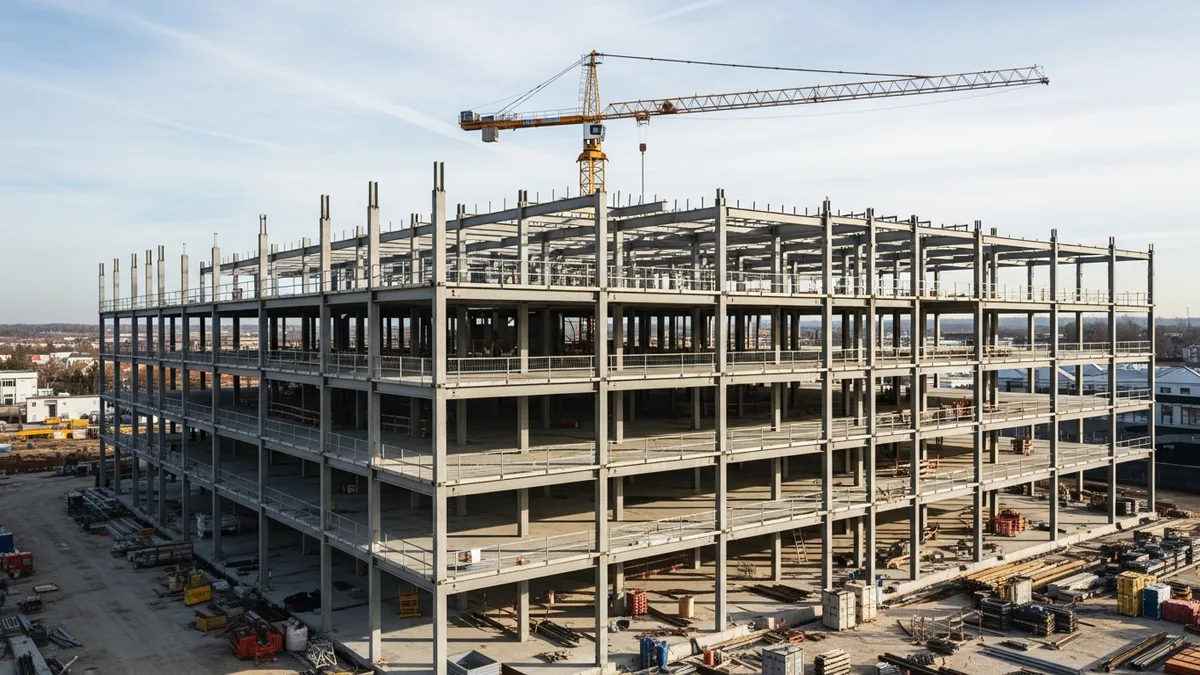
Building a cold storage warehouse is nothing like putting up a standard commercial building. Every decision you make, from the foundation up, has to account for extreme temperature differentials, moisture migration, and the relentless physics of keeping a building at sub-zero temperatures while the outside air sits at 90°F and humid. Get one detail wrong and you are looking at ice buildup in your wall cavities, frost heave cracking your slab, or energy costs that eat your client’s profit margins alive.
I have seen crews walk onto cold storage projects thinking it is just “a warehouse with big coolers.” That mindset leads to callbacks, warranty claims, and failed inspections. This guide breaks down exactly what you need to know to build cold storage and refrigerated warehouse facilities that actually perform. We will cover insulation systems, vapor barrier installation, refrigeration rough-in coordination, concrete floor protection, and how to manage these complex projects without losing your shirt.
Understanding Cold Storage Construction Requirements
Before you price a cold storage job, you need to understand what separates these buildings from conventional warehouse construction. The temperature difference between inside and outside creates a constant driving force for moisture to migrate through every wall, ceiling, and floor assembly. That moisture will condense wherever it hits its dew point, and in a freezer building, that means ice formation inside your building envelope.
Cold storage facilities generally fall into three categories based on operating temperature:
Cooler rooms (32°F to 40°F): These are the simplest. Think produce storage, dairy holding, or floral coolers. You still need proper insulation and vapor barriers, but the temperature differential is manageable. Wall assemblies typically need R-25 to R-30.
Freezer rooms (0°F to -10°F): This is where construction gets serious. You need R-40 to R-50 wall and ceiling assemblies, heated floor slabs, and continuous vapor barriers with zero penetrations. Meat processing plants, ice cream distribution centers, and frozen food warehouses fall into this category.
Blast freezer and deep cold (-20°F to -40°F): These spaces require R-50 or higher, multiple insulation layers, redundant vapor barriers, and structural engineering that accounts for thermal contraction of steel members. Pharmaceutical cold chain storage and specialty food processing sometimes require these extreme temperatures. The environmental control requirements at this level overlap with clean room and controlled environment construction, where air quality and contamination prevention are just as critical as temperature.
The key thing to understand is that every component interacts. Your insulation system affects your vapor barrier placement. Your vapor barrier affects your structural connections. Your structural connections create thermal bridges that affect your insulation performance. You cannot design or build these systems in isolation.
If you are new to specialty commercial work, you will find that cold storage projects share some complexity with multi-family project management in terms of coordinating multiple trades working in tight sequences.
Insulation Systems for Cold Storage Buildings
Insulation is the backbone of any cold storage facility. You have three main options, and choosing the right one depends on the application, temperature requirements, and budget.
Insulated Metal Panels (IMPs)
Insulated metal panels are the most common wall and ceiling system for cold storage construction. These are factory-built sandwich panels with metal skins on both sides and a foam core, usually polyurethane or polyisocyanurate. They come in thicknesses from 2 inches up to 8 inches.
The advantages are speed of installation and consistent quality. A crew of four can hang 2,000 to 3,000 square feet of wall panels per day. The joints use cam-lock or tongue-and-groove connections with gaskets, and you seal every joint with compatible sealant.
Key installation details that matter:
- Panel joints must be staggered between wall and ceiling planes. Never line up a wall joint with a ceiling joint directly above it.
- Every penetration (pipes, conduit, structural supports) needs a factory or field-fabricated boot with vapor-sealed flanges.
- Panels expand and contract with temperature changes. Leave the manufacturer’s recommended gap at structural connections and use sliding clips, not fixed connections, at panel-to-structure attachments.
- Store panels flat, off the ground, and covered. A panel that absorbs moisture before installation will never perform to spec.
Rigid Board Insulation
Extruded polystyrene (XPS) and polyisocyanurate boards are used for floor assemblies, below-grade walls, and as supplemental insulation layers. XPS is the go-to for any application where the insulation contacts moisture or soil. It maintains its R-value even when wet, which polyiso does not.
For floor assemblies in freezer buildings, you will typically see two or three layers of XPS board totaling 4 to 6 inches, with staggered joints between layers. Each layer gets a slip sheet between it and the next to allow for minor movement.
If you are working on a project that also involves insulation work on conventional buildings, note that cold storage insulation tolerances are much tighter. Gaps that would be acceptable in a residential wall will cause ice formation and energy loss in a freezer building.
Spray Polyurethane Foam (SPF)
Closed-cell spray foam gets used for sealing irregular areas, coating existing structures during retrofit work, and creating continuous insulation at transitions between different building assemblies. It is excellent for eliminating thermal bridges at structural steel connections.
The downside is cost and the need for specialized applicators. You also cannot easily inspect or repair SPF once it is in place. For new construction, IMPs are almost always more cost-effective for large flat surfaces. SPF fills the gaps that panels cannot reach.
Understanding thermal bridging and continuous insulation principles is critical here. A single uninsulated steel column penetrating your wall assembly can create a condensation point that drips water into your insulation for years.
Vapor Barrier Installation and Moisture Control
If insulation is the backbone of cold storage construction, the vapor barrier is the immune system. Get it wrong and moisture destroys everything from the inside out. I cannot overstate this: more cold storage building failures trace back to vapor barrier problems than any other single cause.
The Basic Rule
The vapor barrier always goes on the warm side of the insulation. In a cold storage building, that means the outside face of the insulation assembly. Moisture in warm air always wants to migrate toward cold air, and the vapor barrier stops it before it can reach a surface cold enough to cause condensation.
Materials and Methods
For wall and ceiling assemblies using IMPs, the outer metal skin of the panel acts as the primary vapor barrier. Your critical task is sealing every joint and penetration so that continuous barrier has no breaks. Use the panel manufacturer’s recommended sealant. Do not substitute. Different sealants have different adhesion characteristics on coated metal surfaces, and the wrong product will fail within two years.
For floor assemblies, heavy polyethylene sheeting (10 mil minimum, 15 mil preferred) serves as the vapor barrier. It goes on top of the insulation, below the concrete slab. Lap joints by at least 6 inches and seal with compatible tape rated for the application temperature. Some specs call for a welded membrane instead of taped poly. Welded membranes cost more but eliminate the most common failure point in floor vapor barriers.
Common Vapor Barrier Mistakes
Penetrations without boots: Every pipe, conduit, drain, or structural member that passes through the vapor barrier needs a sealed boot or flange. A 1-inch unsealed hole in a freezer wall vapor barrier can allow enough moisture infiltration to form a basketball-sized ice ball inside the wall cavity in a single heating season.
Wrong side of insulation: I have seen crews install the vapor barrier on the cold side of the insulation because “that is how we do it on houses.” In residential construction, the vapor barrier goes on the warm side too, which in a heated house is the interior. In a cold storage building, the warm side is the exterior. If this concept confuses your crew, stop work and train them before proceeding.
Incompatible sealants: Silicone sealant on polyethylene sheeting will peel off within months. Butyl-based tapes on certain coated metal panels will dissolve the coating. Always use manufacturer-specified products.
Mechanical damage during concrete placement: Floor vapor barriers take abuse during rebar installation and concrete pouring. Protect them with a sand layer or protection board, and have someone on barrier repair duty during the pour. Patch every puncture before concrete covers it.
Refrigeration System Rough-In and Coordination
The refrigeration system is your client’s reason for building this structure. Everything else exists to support it. As the general contractor, your job is not to design the refrigeration system; that is the mechanical engineer’s and refrigeration contractor’s domain. Your job is to coordinate the rough-in so it does not destroy the building envelope you just spent weeks making airtight.
Pipe and Conduit Penetrations
Every refrigerant line, drain line, electrical conduit, and control wire that passes through an insulated wall or ceiling is a potential failure point. Plan these penetrations in advance, during the coordination phase, not during installation.
Work with the refrigeration contractor to consolidate penetrations. Instead of running six individual lines through six separate holes, use a single penetration sleeve sized for all six lines with a manufactured boot assembly. Fewer holes means fewer potential moisture paths.
Penetration sleeves should be:
- Oversized to allow for pipe insulation
- Sloped to the warm side for condensate drainage
- Sealed with multi-component boot assemblies, not just caulk
- Accessible for future maintenance and re-sealing
Structural Supports for Evaporators and Piping
Not sure if Projul is the right fit? Hear from contractors who use it every day.
Evaporator units in freezer rooms can weigh 500 to 2,000 pounds. Piping runs for ammonia or glycol systems need support at regular intervals. All of these supports create thermal bridges through your insulated envelope.
Use thermally broken support brackets specifically designed for cold storage applications. Standard steel angles bolted through your IMP wall will create a condensation point on the warm side and an ice point on the cold side. Purpose-built cold storage brackets use a fiberglass or composite spacer between the steel attachment point and the panel to break the thermal path.
This is the kind of specialty coordination that benefits from solid construction scheduling practices. The refrigeration contractor, the insulation crew, and the structural steel crew all need to be sequenced precisely. If the structural supports go in before panels, you have to work insulation around them. If panels go in first, you need to cut them for supports and reseal.
Drain Lines
Evaporator defrost cycles produce water that needs to drain out of the freezer space. These drain lines need heat trace tape and insulation to prevent them from freezing solid. Route them with gravity fall to the warm side of the building envelope. Avoid routing drain lines through floor insulation assemblies if at all possible; the penetration and the heat trace create long-term maintenance headaches.
Concrete Floor Protection and Heated Slab Systems
The floor is where cold storage construction gets most expensive and most technically demanding. In any space held below 32°F, the ground under the slab will eventually freeze if you do not prevent it. Frozen soil expands. Expanding soil lifts your slab. Lifted slabs crack, buckle, and destroy racking systems and forklift traffic surfaces. This is frost heave, and it will wreck a cold storage building.
Under-Slab Heating Systems
The standard solution is a heated slab system. You install heating elements, either glycol tubing or electric resistance cables, in or below the concrete slab to keep the subgrade above 32°F.
Glycol systems circulate a warm glycol-water mixture through PEX or polyethylene tubing embedded in a sand bed below the insulation. A small boiler or heat recovery unit supplies the warm glycol. These systems are reliable and energy-efficient because you can recover waste heat from the refrigeration system’s condenser to warm the glycol. That recovered heat is essentially free.
Electric resistance systems use heating cables in a similar sand bed. They are simpler to install but more expensive to operate. Use these for smaller freezer rooms or where glycol supply is impractical.
Layout details that matter:
- Tubing or cable spacing is typically 12 to 18 inches on center, tighter near edges and doors where heat loss is greatest
- The heating layer sits below the insulation but above the compacted subgrade
- Temperature sensors embedded in the subgrade monitor soil temperature and modulate the heating system
- Always install redundant temperature sensors. If one fails and you lose monitoring, you will not know about frost heave until the floor cracks
Floor Assembly Sequence (Bottom to Top)
- Compacted subgrade, proofrolled and tested
- Gravel drainage layer (4 to 6 inches)
- Under-slab heating tubes or cables in sand bed
- First layer of XPS insulation
- Slip sheet
- Second layer of XPS insulation (joints staggered from first layer)
- Vapor barrier (polyethylene or welded membrane)
- Protection layer (sand or protection board)
- Reinforced concrete slab (typically 6 to 8 inches with welded wire or rebar)
This is a lot of layers, and every one matters. Skip the drainage layer and groundwater will saturate your insulation. Skip the slip sheets and insulation boards will bind together and crack under thermal movement. Skip the protection layer and your rebar crew will puncture the vapor barrier during placement.
For anyone who has worked on concrete projects before, the slab pour itself is straightforward. The complexity is in everything below it.
Concrete Mix and Finishing
Cold storage slabs need air-entrained concrete for freeze-thaw resistance, even though the slab is technically on the warm side of the insulation. During construction, before the refrigeration system is running, the slab will experience temperature cycling. After commissioning, any maintenance shutdown exposes the slab to freeze-thaw cycles.
Specify a minimum 4,000 PSI mix with 5 to 7 percent air entrainment. Fiber reinforcement helps control plastic shrinkage cracking. For forklift traffic areas, a hardened surface treatment (dry shake or liquid densifier) prevents dusting and abrasion damage.
Floor flatness matters more in cold storage than in conventional warehouses. Racking systems in freezer rooms have tighter tolerances because thermal contraction of the steel racking amplifies any floor deviation. Specify FF50/FL30 minimum for racked areas.
Managing Cold Storage Construction Projects
Cold storage projects are specialty work, and they need to be managed accordingly. The coordination demands are higher, the inspection requirements are stricter, and the consequences of rework are more expensive than in conventional construction.
Estimating and Budgeting
Cold storage work runs two to four times the cost per square foot of conventional warehouse construction. If your estimating team is not experienced with this building type, bring in a specialty consultant for the estimate review. I have seen GCs lose six figures on cold storage bids because they priced insulation labor based on conventional wall assembly rates.
Track your costs carefully using a proper job costing system. Break out insulation, vapor barrier, and refrigeration rough-in as separate cost codes from general structural work. These specialty scopes have different labor productivity rates and different risk profiles.
Your budget management approach needs to account for the long commissioning period at the end of the project. Refrigeration system startup, testing, and temperature validation can take 4 to 8 weeks. Your crews are mostly demobilized but you still have project overhead running.
Subcontractor Coordination
A cold storage project typically involves these specialty subcontractors beyond your normal warehouse team:
- Insulated metal panel installer
- Refrigeration contractor (mechanical and controls)
- Under-slab heating installer
- Vapor barrier specialist (sometimes a separate sub from the insulation crew)
- Refrigeration piping insulator (separate from building insulation)
- Temperature monitoring and controls contractor
That is a lot of specialty trades working in overlapping spaces with tight sequencing requirements. Your subcontractor management skills will be tested. Hold weekly coordination meetings during the envelope and rough-in phases. Daily huddles during critical sequencing periods like floor assembly and panel installation are not overkill.
Quality Control and Inspections
Cold storage construction requires quality control steps that do not exist on conventional projects:
Vapor barrier testing: Before covering the floor vapor barrier with concrete, perform a visual inspection of every lap joint, penetration, and patch. Some specs require a smoke test or vacuum test of wall vapor barrier assemblies.
Insulation thickness verification: Spot-check insulation thickness at multiple points on every wall, ceiling, and floor section. Document with photos. Insulation that is 1/2 inch thin across a 10,000-square-foot ceiling represents a significant thermal performance loss.
Penetration seal inspection: Every single penetration through the building envelope gets inspected and documented before it is covered or concealed. No exceptions.
Commissioning verification: After the refrigeration system starts up, monitor building temperature and energy consumption for a minimum of two weeks before turning the building over. Look for unexpected hot spots, ice formation at penetrations, and condensation on exterior surfaces (which indicates thermal bridging).
Using Technology to Stay on Top of It
Projects this complex benefit from construction management software that lets you track schedules, costs, and documentation in one place. When you have six specialty subs working in sequence and every phase depends on the one before it passing inspection, you cannot manage it with spreadsheets and phone calls.
Digital tools let your project manager track inspection results, photo-document vapor barrier installations before they are concealed, and keep the schedule visible to every trade on site. The commissioning phase alone generates hundreds of temperature readings and test results that need to be organized and accessible.
Want to put this into practice? Book a demo with Projul and see the difference.
Safety Considerations Specific to Cold Storage Job Sites
Cold storage construction introduces hazards that your crew will not encounter on a typical commercial build. The combination of confined insulated spaces, chemical refrigerants, and extreme temperature differentials during commissioning creates risks that require specific training and planning.
Refrigerant Exposure
Ammonia is still the most common industrial refrigerant for large cold storage facilities. It is efficient and cost-effective, but it is also toxic at relatively low concentrations. During refrigeration system charging and testing, your crew needs to be clear of the mechanical room and any areas where refrigerant lines run.
Even before the system is charged, residual ammonia can be present in piping that was pre-tested at the fabrication shop. Make sure your refrigeration subcontractor communicates their testing and charging schedule clearly. Post warning signage at every entry point to the mechanical room, and keep ammonia detection monitors active on site during the commissioning phase.
For projects using CO2 or glycol-based systems, the acute toxicity risk is lower, but CO2 can displace oxygen in enclosed spaces. Treat any area where CO2 refrigerant is present as a potential confined space and follow your construction safety protocols accordingly.
Confined Space and Enclosed Work Areas
Once insulated metal panels are installed and sealed, the interior of a cold storage building becomes a confined space from a ventilation standpoint. Before the HVAC and refrigeration systems are operational, there is no air exchange. Crews working inside during finishing, electrical trim-out, or refrigeration piping installation are breathing recirculated air that can accumulate fumes from sealants, adhesives, and welding.
Run temporary ventilation fans any time crews are working inside a sealed cold storage envelope. Monitor air quality if crews are applying spray foam, solvent-based sealants, or performing any hot work. This is not optional and it is not overkill. I have seen a crew of four get light-headed within 90 minutes of applying polyurethane sealant inside a sealed freezer room with no ventilation running.
Slip, Trip, and Fall Hazards During Commissioning
During the commissioning phase, parts of the building are at operating temperature while other areas are still at ambient. The transition zones between cold and warm areas are condensation factories. Floors get wet, metal surfaces get slick, and ice forms on any uninsulated surface in the cold zone.
Require anti-slip footwear for all personnel during commissioning. Lay down temporary anti-slip mats at every transition between temperature zones. Keep towels and a mop at the main entry doors. It sounds basic, but a slip-and-fall injury during the final two weeks of a project is a terrible way to end a build.
Thermal Shock on Materials and Workers
Workers moving between a 95°F exterior and a -20°F blast freezer room experience a 115-degree temperature swing. That is hard on the body and hard on tools. Limit exposure time in deep-cold zones to 20 to 30 minutes with warming breaks. Cold metal tools can cause contact frostbite to bare skin in seconds at those temperatures.
Materials brought into the cold zone from outside will develop condensation instantly. Electrical components, control panels, and sensor equipment should be acclimated in the cooler (32°F) zone before being moved into the freezer zone. Condensation inside an electrical enclosure that then freezes will destroy the components.
Loading Dock and Door Design for Temperature-Controlled Facilities
The loading dock is where your carefully built thermal envelope meets the real world, and it is one of the most failure-prone areas of any cold storage building. Every time a dock door opens, warm humid air floods in and immediately starts condensing and freezing on every cold surface it touches. Designing and building docks that minimize this thermal intrusion is critical to the long-term performance of the facility.
Dock Door Types
Vertical lift insulated doors are the standard for cold storage loading docks. These are 4 to 6 inch thick insulated panels that lift vertically on tracks. They open and close quickly (important for minimizing air infiltration) and provide a tight seal when closed. Specify doors with heated frames to prevent ice buildup on the gaskets and tracks.
High-speed roll-up doors are used for interior transitions between temperature zones, such as between a cooler staging area and the main freezer. These doors open and close in seconds, and some facilities use them in pairs to create an airlock effect. The staging area between the two doors acts as a temperature buffer.
Strip curtains are the simplest barrier and are used at personnel doors and forklift traffic openings within the facility. They reduce air exchange by about 70 to 80 percent compared to an open doorway. They are cheap and easy to install, but they need regular replacement because forklifts destroy them.
Dock Seals and Shelters
The connection between the truck trailer and the building at each dock position needs a dock seal or dock shelter to minimize air infiltration during loading and unloading. For cold storage facilities, use insulated dock seals with compression pads that form an airtight seal against the trailer. Standard foam dock seals are inadequate for freezer applications.
The dock leveler (the platform that bridges the gap between the dock floor and the trailer bed) is another thermal weak point. Insulated dock levelers with perimeter gaskets are available and worth the upfront cost. A standard steel dock leveler acts as a massive thermal bridge, conducting heat into the cold space and creating a permanent condensation zone on the dock floor.
Air Curtains and Vestibule Design
High-traffic dock positions benefit from heated air curtains that blow a sheet of warm air across the door opening. This reduces cold air escape and warm air infiltration by 60 to 80 percent when the door is open. Size the air curtain to match the door opening exactly, and make sure the airflow velocity is sufficient to maintain the barrier when forklifts drive through it.
For the highest-performing installations, design a vestibule or airlock at each dock position. The forklift drives through the exterior door into a tempered vestibule (held at around 35 to 40°F), then through a second door into the freezer space. Neither door is open at the same time, so the freezer space never communicates directly with the outside air. This design costs more to build but pays for itself in energy savings within two to three years on a busy dock.
Plan the electrical and mechanical rough-in for air curtains and heated door frames early. These systems need dedicated circuits, and the wiring needs to penetrate the building envelope, which means more penetration boots and vapor barrier details to manage. Coordinate this with your HVAC and mechanical trades during the shop drawing review phase, not during installation.
Commissioning, Testing, and Turnover
Commissioning a cold storage facility is not like turning over a conventional building. You cannot just hand the client the keys and walk away. The refrigeration system needs to be started up, the building needs to be cooled down gradually, and every component of the thermal envelope needs to be verified under operating conditions. This phase typically takes 4 to 8 weeks and requires your active involvement as the GC.
Gradual Cool-Down Protocol
You do not take a freshly built cold storage building from ambient temperature to -20°F overnight. The concrete slab, the insulation, and every structural component need time to acclimate. A typical cool-down protocol drops the temperature 5 to 10 degrees per day.
Cooling too fast causes thermal shock to the concrete slab, which can result in cracking. It also causes rapid contraction of steel structural members, which can overload connections and pop fasteners on insulated panels. The refrigeration contractor will manage the cool-down schedule, but as the GC you need to be on site monitoring the building for any signs of distress during this period.
Watch for:
- Cracking sounds from the slab or structural connections (some is normal; excessive popping is not)
- Visible gaps opening at panel joints (minor gaps are expected and get sealed; large gaps indicate a structural issue)
- Condensation or ice formation at unexpected locations (this points to vapor barrier failures or thermal bridges)
- Floor heave monitoring points moving (this means your under-slab heating system may not be performing)
Thermal Imaging Inspection
Once the building reaches operating temperature, perform a thermal imaging survey of the entire exterior envelope. A thermal camera will reveal every thermal bridge, insulation void, and vapor barrier failure as a warm spot on the cold building surface.
This inspection should be done on a day with at least a 40-degree temperature differential between inside and outside for clear results. Early morning before the sun heats the exterior walls is ideal. Document every anomaly with photos and location markers.
Common findings include:
- Warm spots at structural steel penetrations (thermal bridges)
- Linear warm areas along panel joints (sealant gaps or failed gaskets)
- Warm spots at pipe and conduit penetrations (inadequate boot seals)
- Diffuse warm areas on walls or ceilings (insulation voids or compression)
Every finding needs to be addressed before you turn the building over. Some are quick sealant repairs. Others require removing panels or opening wall cavities to fix insulation or vapor barrier defects. This is why thorough project documentation throughout the build matters so much. When you find a warm spot at a penetration, you need to know which sub installed it and what materials were specified, and you need that information fast.
Performance Verification
Before final turnover, verify:
Temperature uniformity: Place data loggers at multiple points throughout each cold storage zone. Run them for a minimum of 72 hours with the facility at operating temperature. Temperature variation within a zone should not exceed the spec tolerance, typically plus or minus 2 degrees for coolers and plus or minus 3 degrees for freezers.
Energy consumption baseline: Record the refrigeration system’s energy consumption during the verification period. This becomes the baseline for future performance comparison. If consumption is significantly higher than the mechanical engineer’s design calculations predicted, something is wrong with the envelope and you need to find it before turnover.
Floor heave monitoring: Establish elevation benchmarks on the floor slab at a grid of points, typically 20 to 30 foot spacing. Record initial elevations at operating temperature. The client or facility manager will re-survey these points annually to detect any early signs of frost heave. If you set these benchmarks and document them properly, you have protected yourself against future claims that floor problems were caused by construction defects versus maintenance failures.
Door and dock seal testing: Operate every door, dock leveler, and air curtain system through its full cycle. Verify that door heaters keep gaskets ice-free, that dock seals compress properly against a test trailer, and that air curtains maintain their barrier under forklift traffic.
Common Mistakes and Lessons from the Field
After walking through the technical details, it is worth stepping back and listing the mistakes that keep showing up on cold storage projects. These are not obscure edge cases. These are the problems I see on project after project, even from experienced commercial contractors who are building their first or second cold storage facility.
Treating It Like a Regular Warehouse
This is the number one mistake and it shows up in a dozen different ways. The estimator prices insulation labor at conventional rates. The superintendent schedules trades like a standard tilt-up project. The project manager does not include a commissioning phase in the schedule. The result is always the same: cost overruns, schedule delays, and quality problems.
Cold storage is specialty construction. Treat it that way from the first day of preconstruction. If you have not built one before, partner with a firm that has or hire a project manager with cold storage experience for your first project.
Ignoring Thermal Bridging at Structural Connections
Every steel beam, column, brace, and embed plate that passes through the insulated envelope is a thermal bridge. On paper, the insulation R-value looks great. In practice, dozens of unmitigated thermal bridges can reduce the effective wall R-value by 20 to 30 percent.
The fix is thermal break details at every structural penetration. Fiberglass or composite pads between steel and panels. Insulated standoffs for pipe supports. Thermal break washers at through-bolts. These details add cost during construction but prevent ice formation, condensation damage, and energy waste for the life of the building.
Skipping the Floor Heating System on “Small” Freezers
I have had clients push back on the cost of under-slab heating for freezer rooms under 5,000 square feet. “It is a small room, the slab will be fine.” It will not be fine. Frost heave does not care about the square footage of your freezer. It cares about the temperature of the soil under the slab. If that soil drops below 32°F, ice lenses will form and the floor will move.
The only exception is a freezer room on an upper floor where there is a heated space below. Ground-level and slab-on-grade freezer rooms always need under-slab heating, regardless of size.
Poor Penetration Documentation
During construction, you might have 50 to 100 penetrations through the building envelope. Pipes, conduits, structural supports, drains, sensors, and control wiring all punch through your insulation and vapor barrier. Every one of those penetrations needs to be sealed, inspected, and documented.
The documentation part is where crews fall short. Six months after turnover, when an ice ball shows up inside a wall at a pipe penetration, you need to be able to pull up the inspection photo showing that penetration was properly sealed at the time of construction. Without that documentation, you own the repair. With it, you can demonstrate that the failure occurred after turnover due to building movement, maintenance neglect, or other causes outside your scope.
Use your project management software to create a penetration log with photo documentation for every single envelope penetration. Tag each one with the sub who installed it, the seal materials used, and the inspection date. This is exactly the kind of detail tracking where a tool like Projul’s project management features pays for itself on a single project.
Rushing the Commissioning Phase
The owner wants to start storing product. The refrigeration contractor says the system is ready. Everyone wants to wrap up and move on. Do not let the schedule pressure you into shortening the commissioning phase.
A cold storage building that is not properly commissioned will have problems within the first year. And those problems, ice in walls, frost heave, condensation damage, energy consumption 30 percent above design, will all land on your desk as warranty claims. Take the full commissioning period. Do the thermal imaging. Run the data loggers. Verify the floor heave monitoring points. Document everything.
The two or three extra weeks of commissioning will save you months of warranty callbacks and protect your reputation for future cold storage work.
Cold storage construction is demanding work, but it is also some of the most profitable specialty commercial construction you can take on. The barriers to entry keep competition manageable, and clients who need cold storage facilities are willing to pay for contractors who know what they are doing. Build your team’s knowledge, invest in the right subcontractor relationships, and treat every detail of the building envelope like it matters. Because in cold storage construction, it absolutely does.
Frequently Asked Questions
What temperature ranges require special construction methods for cold storage buildings?
Why do cold storage floors crack and how do you prevent it?
How much does it cost to build a cold storage warehouse per square foot?
What type of insulation is best for cold storage warehouse construction?
How long does a typical cold storage warehouse construction project take?
Related Articles

Construction Bridge Building and Repair: A Contractor's Field Guide
Bridge construction and repair demand a different level of coordination than most commercial or residential projects....
Read More →
Soil Nail Walls vs. MSE Retaining Structures: A Contractor's Field Guide
Soil nail walls and MSE retaining structures both hold back earth, but they work in completely different ways. This...
Read More →
Construction Data Center & Server Room Build-Out Guide
Data center build-outs are some of the most demanding projects in commercial construction. Every system has to work...
Read More →